

I think about the battery in my camper van every time the lights flicker at dusk, and that’s exactly the kind of moment a deep cycle unit is supposed to handle. Picking the right 12V AGM battery comes down to matching capacity, terminal style, and discharge behavior to how you actually use the power. The seven options below cover everything from small backup replacements to heavy solar storage, so I wrote this roundup to help anyone outfit an off-grid cabin, a trolling motor, or a converted work van.
Your Options, Compared

Power Queen 12V 100Ah LiFePO4 Lithium Battery

BtrPower 24V 140Ah Deep Cycle LiFePO4 Battery

Renogy 12V 100Ah Deep Cycle AGM Battery

Mighty Max 12V 22AH SLA Replacement Battery

Mighty Max ML18-12 12V 18AH SLA AGM Battery

Renogy 12V 200Ah Deep Cycle AGM Battery
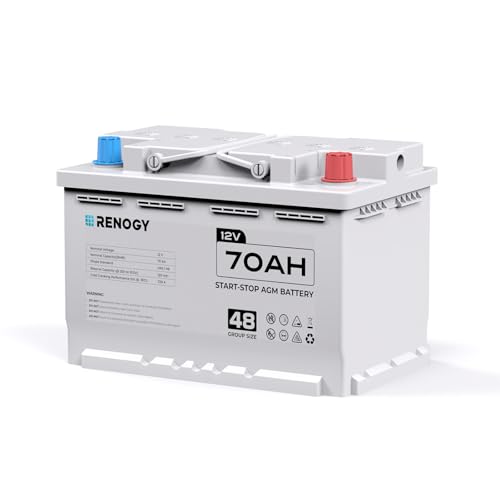
Renogy 12V 70Ah AGM Start-Stop Car Battery
More On The Choices That Made The List
Cold-weather operation is where most lithium chemistries stumble, and this Power Queen unit leans directly into that problem. The self-heating pads warm the cells before charging kicks in, which protects longevity during shoulder-season camping and unheated cabin use. Compared to the SLA units later in this list, the lithium chemistry here is roughly a third of the weight and recharges far more efficiently from a moderate solar array.
Off-grid users in northern climates benefit most, especially those running small inverters for lighting and laptops. Weekend van lifers may find the heating feature overkill in mild regions, but anyone pushing into freezing conditions gets genuine peace of mind from it.
The Helpful Details
- Built-in heating pads let the battery charge in freezing weather without cell damage.
- LiFePO4 chemistry delivers thousands of deep cycles, far beyond lead-acid lifespan.
- 100Ah at 12V translates to roughly a full day of modest cabin lighting and device charging.
- Fraction of the weight of comparable AGM units, easier to mount in tight bays.
- Stable voltage under load means sensitive electronics run without brownouts.
Trade Offs
- Higher upfront cost than any AGM option on this list.
- Requires a lithium-compatible charger for full benefit.
Right Fit For
Anyone building a cold-climate off-grid system who values long cycle life over initial cost.
A Better Fit Elsewhere
For a budget cabin install in a mild climate, the Renogy 12V 100Ah Deep Cycle AGM Battery keeps things simpler and cheaper.
Stepping into 24V territory changes the math for high-draw appliances, and this BtrPower pack handles that shift well. The 140Ah capacity delivers real headroom for induction cooktops, microwave use, or air conditioning cycling on a moderate solar rig. The integrated BMS (Battery Management System) keeps each cell in safe voltage range, which is the kind of background protection that prevents the slow cell drift that plagues cheaper packs.
Full-time RVers and serious off-grid households benefit most. Anyone running simple 12V lighting and phone charging will never tap the potential here, and the price reflects that.
Advantages To Know
- 3584Wh total storage covers multi-day off-grid stays with moderate loads.
- 24V architecture cuts current draw, allowing thinner wiring for the same power delivery.
- Built-in BMS protects against overcharge, over-discharge, and short circuits.
Minor Gripes
- Requires 24V-compatible inverter and charge controller to use safely.
- Larger physical footprint than the 12V lithium option above.
- Not a drop-in replacement for existing 12V AGM banks.
Who Will Love This
Full-time RVers running induction cooking or small inverters from a sizable solar array.
Look Elsewhere When
For straightforward 12V cabin lighting, the Renogy 12V 200Ah Deep Cycle AGM Battery keeps the wiring simple.
Renogy has built a real track record in the solar storage world, and this 100Ah AGM reflects why so many cabins keep coming back to the brand. The sealed AGM construction means no acid spills, no maintenance watering, and safe mounting in enclosed battery boxes. Series and parallel connections expand capacity as solar arrays grow, which makes the platform forgiving for first-time installers.
DIY solar builders and small cabin owners benefit most. Compared to the lithium units above, this AGM trades weight savings for a friendlier price tag and broader charger compatibility.
A Favorable Mix
- Maintenance-free sealed design suits unattended installations.
- Series and parallel expansion lets you scale storage over time.
- Wide operating temperature range handles unheated sheds and garages.
- Lower upfront investment than lithium alternatives.
Points To Note
- Heavier than lithium, often requiring two people to position.
- Shorter cycle life than LiFePO4 chemistry, especially with deep daily discharges.
Made For
DIY solar builders setting up a small cabin or workshop system on a reasonable budget.
Swap It Out When
For maximum storage in a tight space, the Renogy 12V 200Ah Deep Cycle AGM Battery doubles capacity without doubling the footprint.
Small electronics often need small batteries, and this 22Ah SLA fills that exact niche. The sealed lead-acid (SLA) construction resists vibration well, which is why these units show up in mobility scooters, emergency lighting, and kids’ ride-on vehicles. The nut-and-bolt terminal keeps cable connections secure, and the compact footprint fits existing battery trays without modification.
Anyone replacing a worn-out backup battery in a specific device benefits most. Compared to the larger AGM units on this list, capacity is dramatically lower, so it serves a different role entirely.
Real-World Strengths
- Drop-in replacement form factor for common 12V 22Ah applications.
- Spill-proof sealed design works in any orientation.
- High discharge rate handles motor startups in mobility equipment.
Honest Caveats
- Too small for cabin solar or any meaningful household backup.
- No wire harness included, so existing connectors must be reused.
- Limited cycle life compared to lithium equivalents in similar form factors.
Best Suited To
Mobility scooter and emergency lighting users needing a direct-fit replacement.
Reach For A Different Pick When
For UPS-style backup of household electronics, the Mighty Max ML18-12 12V 18AH Battery offers a similar size with broader compatibility.
The ML18-12 has become a quiet standard in the small UPS and security backup world. AGM (Absorbent Glass Mat) technology suspends the electrolyte in fiberglass separators, which keeps the unit sealed and maintenance-free while delivering decent high-discharge performance. Calcium-alloy grid construction supports both float and cyclic applications, which broadens where this battery can serve.
Home networking closets and alarm panel installers benefit most. The small size makes wall-mounting in equipment cabinets straightforward.
Where It Excels
- Wide operating temperature range fits unheated basements and attics.
- Long service life in float standby applications.
- Nut-and-bolt terminals resist loosening from vibration over time.
- Maintenance-free operation with no watering required.
Some Limits To Know
- 18Ah capacity limits runtime during extended power outages.
- Not designed for deep daily cycling like solar storage batteries.
Who Should Grab It
Anyone replacing a backup battery in a UPS, alarm panel, or access control system.
Where A Sibling Pick Shines
For off-grid solar storage at a similar size class, the Power Queen 12V 100Ah LiFePO4 Lithium Battery offers vastly more cycle life.
When solar storage needs to cover real household loads, a 200Ah AGM bank is often the practical starting point. The proprietary quinary alloy plates in this Renogy unit support high discharge currents, which helps when inverters pull heavy surges. The Group 48 case format fits standard automotive-style battery trays, simplifying physical installation compared to specialty lithium enclosures.
Whole-cabin solar systems and large backup banks benefit most. Compared to the smaller Mighty Max units earlier, this is a different scale entirely, more comparable to the lithium packs above in capacity but at a lower upfront cost.
Useful Highlights
- 200Ah capacity covers multi-day off-grid stays with moderate household loads.
- Maintenance-free AGM design avoids the watering routine of flooded batteries.
- Low internal resistance supports high inverter surge demands.
- Series and parallel connections allow up to four units in parallel.
Potential Drawbacks
- Significant weight, around 130 pounds, complicates single-person installation.
- Cycle life falls well short of LiFePO4 chemistry under deep daily discharge.
- Slow recharge acceptance compared to lithium alternatives.
Whose Shelf It Belongs On
Off-grid households running full-size inverters and sizable solar arrays who prefer AGM simplicity.
Consider Something Else When
For a lighter footprint with similar usable capacity, the Power Queen 12V 100Ah LiFePO4 Lithium Battery cuts weight dramatically.
Cranking batteries live in a different world from deep cycle units, and this Renogy H6 model targets that role specifically. With 720 cold cranking amps (CCA), it handles cold morning starts in cars, SUVs, and trucks, while the Group 48 case shape fits a wide swath of domestic and import vehicles. The sealed AGM construction tolerates the stop-start cycling pattern that flattens conventional flooded batteries faster.
Daily drivers and marine engine owners benefit most. Compared to the deep cycle AGM units on this list, the plate design optimizes for short bursts of high current rather than sustained low discharge.
Practical Advantages
- 720 CCA delivers confident cold-weather starting power.
- Sealed AGM design tolerates engine bay heat and vibration.
- 120-minute reserve capacity supports accessories with the engine off.
- Wide operating range handles harsh winter and summer conditions.
A Few Limitations
- Not designed for deep daily cycling like solar storage batteries.
- Heavier than equivalent lithium starting batteries.
Perfect Match For
Owners of start-stop vehicles or marine engines needing a reliable replacement cranking battery.
Skip It When
For powering household loads from solar, the Renogy 12V 200Ah Deep Cycle AGM Battery serves a totally different purpose.
What Matters Most Before Choosing 12 Volt Agm Deep Cycle Battery
Capacity vs Actual Load
Battery capacity, measured in amp-hours (Ah), tells you how much current the unit can deliver over time, but the real question is how your daily load matches that number. A 100Ah AGM bank can run a 5A load for roughly 20 hours before needing a recharge, but most installers recommend staying above 50% state of charge to preserve cycle life, so plan for half the rated capacity as usable energy.
Deep Cycle vs Starting Design
Deep cycle batteries use thicker plates that withstand repeated discharge cycles, while starting batteries prioritize short bursts of high current. Choosing the wrong type leads to early failure, so match the chemistry to the role: deep cycle for solar and trolling motors, starting batteries like the Renogy H6 for engine cranking.
Weight and Footprint Considerations
AGM batteries run roughly two to three times heavier than lithium equivalents at the same capacity. For mobile installations like vans and boats, that weight adds up fast and affects both fuel economy and handling. Stationary installations like sheds and cabins rarely notice the difference.
Climate and Charging Profile
Cold temperatures reduce usable capacity in any battery chemistry, and AGM performs reasonably across temperature swings but still loses some punch below freezing. Charging matters just as much, so verify that your existing solar controller or shore charger matches the battery’s recommended absorption voltage before connecting.
Key Considerations Across These Picks
Where Shoppers Go Wrong
The most common slip up I see is treating deep cycle AGM batteries like starting batteries, or assuming any 12V unit will fit any application. Mismatched terminal types, undersized wiring, and skipped state-of-charge monitoring shorten battery life quickly. Another trap is under-sizing the bank, buying one 100Ah battery when the daily load really needs 300Ah of storage with proper depth-of-discharge headroom.
Where The Extra Money Goes
Premium AGM models like the Renogy 200Ah pack use thicker plates, better internal connections, and more consistent cell matching than budget alternatives. That translates to lower internal resistance, higher cycle counts under deep discharge, and longer real-world service life. The upgrade is worth it for anyone running a daily-cycling solar bank, but a weekend user with light loads rarely recoups the extra investment.
Frequently Asked Questions
How long does a 12V AGM deep cycle battery typically last?
With moderate cycling and proper charging, most AGM units deliver 3 to 6 years of service before capacity drops noticeably. Lithium alternatives in this list can run twice that long under similar conditions.
Can I mount an AGM battery inside my vehicle or cabin?
Yes. The sealed AGM construction on these units resists off-gassing and spills, making them safe for enclosed installations when properly vented and secured.
What’s the difference between AGM and flooded lead-acid batteries?
AGM batteries suspend the electrolyte in fiberglass mats, eliminating the need for watering and allowing sealed, maintenance-free operation. Flooded batteries are cheaper but require venting, regular water checks, and upright mounting.
Do I need a special charger for AGM batteries?
Most modern multi-stage chargers handle AGM profiles, but verify that the absorption voltage matches manufacturer recommendations, typically around 14.4 to 14.7 volts for full charge.
Can I mix AGM and lithium batteries in the same bank?
Mixing chemistries in a single bank causes uneven charging and shortened life for both types. Stick with one chemistry per battery bank for predictable performance.
Closing Remarks
The right battery really comes down to matching chemistry, capacity, and terminal design to your specific load and mounting situation. Solar households running daily cycles will appreciate the lithium options, while weekend cabin users often find AGM gives them everything they need at a friendlier price. Take a hard look at your daily watt-hour draw before committing, and you’ll end up with a system that just works, season after season.
