

A long stretch of cord that holds up to whatever you throw at it changes the day. Whether you’re running a miter saw in the driveway, lighting a tree for a party, or powering a leaf blower halfway down a fence line, the right 100 foot heavy duty extension cord keeps the current steady without drama. I pulled together five solid options worth a look, each one shaped for a slightly different kind of work.
The Main Contenders

CCCEI 12 Gauge Extension Cord with Multiple Outlets, Yellow, 50FT

DEWALT 100 Foot Extension Cord Lighted Click-to-Lock 10/3 SJTW
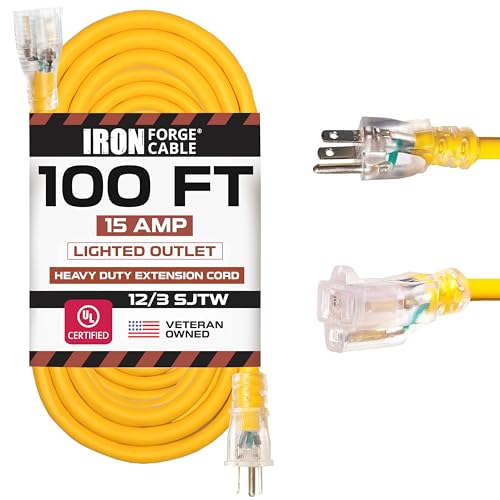
IRON FORGE CABLE 100 Foot Outdoor Extension Cord 12/3 SJTW Yellow

Iron Forge Cable Green Outdoor Extension Cord 100 FT, 16/3 SJTW

CCCEI 12 Gauge Extension Cord with Individual Switches, 50FT
The Strengths Of Each Pick
Think of this one as a hybrid: part extension cord, part multi-outlet hub. The far end terminates in a power strip with eight outlets and a master switch, so a single run from the wall can feed an entire workbench setup without daisy-chaining additional strips. Twelve-gauge wire keeps voltage drop low even with heavier tools pulling current, and the 15A/125V rating matches standard household circuits.
For anyone running multiple tools or chargers from one wall outlet, this format saves the mess of stacking adapters. Compared to the DEWALT pick below, it’s far less about job-site toughness and more about indoor workshop convenience.
The Practical Payoff
- Eight outlets at the far end, so one wall socket powers multiple devices at once.
- Twelve-gauge construction handles heavier draw without noticeable voltage sag.
- Built-in master switch cuts power to everything downstream in one move.
- Overload and grounding protection add a layer of safety for shop environments.
Worth Noting
- The 50-foot length falls short of the 100-foot category, so it works best in single-room shops.
- Bulkier at the outlet end than a plain cord, which makes it harder to coil tightly.
Key Specs
Who It Suits Best
Home woodworkers, garage tinkerers, and anyone consolidating a multi-tool bench into one outlet run.
Consider Something Else When
You need full 100-foot reach across a yard, where the IRON FORGE CABLE 100 Foot Outdoor Extension Cord handles the distance better.
DEWALT leans into the contractor side of things here. Ten-gauge wire (10/3) carries more current with less voltage drop than thinner cords, and the SJTW jacket shrugs off moisture, abrasion, and temperature swings. The standout feature is the click-to-lock connector at the female end, which grips any standard plug so a snag on the cord doesn’t yank your tool off the bench.
Built-in LEDs at both ends add a small but useful touch: amber shows power is flowing, green confirms ground continuity. That matters on a cold site where you can’t tell whether a dead tool means a tripped breaker or a bad cord. Compared to the yellow IRON FORGE pick, this one trades bright visibility for cold-weather tolerance and connection security.
Everyday Wins
- Ten-gauge wire keeps voltage steady when powering larger saws and heaters.
- Locking connector prevents accidental disconnects mid-cut, which owners commonly appreciate on framing days.
- Rated for extreme cold, so it stays flexible in winter job-site conditions.
- UL and cUL listed for verified safety compliance.
- Nickel-coated blades resist heat and corrosion over time.
Honest Caveats
- The thicker 10-gauge cord is heavier to drag around than 12 or 16 gauge alternatives.
- The locking collar only grips compatible plugs, so older cords simply plug in without the lock feature.
- Premium build comes at a higher cost than basic yellow cords.
Right Fit For
Contractors, framers, and serious DIYers working outdoors through cold months who need a cord that won’t quit.
Look Elsewhere When
You’re after a lighter, budget-friendly cord for simple yard work, where the Iron Forge Cable Green Outdoor Extension Cord 100 FT is easier to handle.
This is the classic “I need 100 feet and I need it now” cord. Twelve-gauge wire handles most homeowner-grade tools, from pressure washers to table saws, while the bright yellow jacket stays visible across a lawn or driveway. A lighted female end confirms power at a glance, and the SJTW vinyl jacket holds up to weather, scrapes, and storage in a hot garage.
The honest read is that it doesn’t try to be a premium contractor cord. It’s a dependable middle-of-the-road workhorse for the kind of weekend projects that actually demand length. Set it beside the DEWALT model above and the trade-off is clear: this one is friendlier on the wallet and easier to coil, but lacks the locking connector and extreme-cold rating.
Strong Points
- True 100-foot reach makes it useful across most residential lots.
- Lighted end confirms power without needing to walk back to the outlet.
- Twelve-gauge wire handles mid-range tools without significant voltage drop.
- Bright color improves visibility to reduce trip hazards.
Trade Offs
- Plain vinyl jacket isn’t as cold-flexible as premium contractor cords.
- No locking mechanism, so snags can pull plugs loose on busy sites.
- Not as heavy-duty as the 10-gauge DEWALT option for industrial use.
Feature Snapshot
Best Suited To
Homeowners tackling yard cleanup, deck builds, and seasonal tool runs who want length without contractor pricing.
A Better Fit Elsewhere
You run heavy-duty tools in freezing temperatures, where the DEWALT 100 Foot Extension Cord handles cold and high draw more confidently.
The green jacket sets a different tone from the bright safety cords above. This one disappears into landscaping, runs along a fence, or tucks behind bushes without drawing the eye. Sixteen-gauge wire is the trade-off: lighter and easier to manage, but not built for heavy motor loads.
That makes it a natural match for outdoor lighting, pond pumps, hedge trimmers, and similar lower-draw garden tools. Owners commonly use this kind of cord for holiday displays where aesthetics matter. Next to the yellow IRON FORGE option, this one sacrifices some current capacity for a far less obtrusive look.
Positive Takeaways
- Green color blends into lawns, mulch, and shrubbery for discreet runs.
- Lighter 16-gauge construction is easier to coil and store than thicker cords.
- SJTW jacket resists weather and water exposure in garden conditions.
- UL listed for verified safety standards.
Points To Keep In Mind
- Sixteen-gauge wire limits use to lower-draw tools and lighting; circular saws may experience noticeable voltage drop.
- Green color can be harder to spot on a busy worksite, raising a small trip-hazard concern.
Who Should Grab It
Gardeners, holiday decorators, and homeowners powering outdoor lights or small tools across a landscaped yard.
Swap It Out When
You need to run heavier tools like pressure washers or table saws, where the IRON FORGE CABLE 100 Foot Outdoor Extension Cord in 12-gauge handles the load.
The sibling to the first pick on this list, but with a different priority. Instead of eight outlets under one master switch, this version offers four outlets with a dedicated switch per socket. That sounds small, but it changes the workflow: a soldering iron can stay plugged in while the work light above it gets shut off, no yanking plugs between tasks.
Twelve-gauge wire keeps the same current-handling capacity as the eight-outlet version, and the dedicated circuit breaker still cuts everything off in an overload. Compared to the eight-outlet model, the trade-off is fewer sockets for finer control per device, which suits a more deliberate bench setup.
What Earns Its Place
- Per-outlet switches let you cut individual devices without unplugging.
- Twelve-gauge construction supports heavier workshop tools safely.
- Built-in circuit breaker protects against overloads at the source.
- Standard 3-prong plug fits any household outlet.
- Grounding protection adds a safety layer for stationary setups.
Where It May Fall Short
- Fifty-foot reach won’t cover a large yard or long driveway run.
- Only four outlets means more swapping for busy multi-tool sessions.
Made For
Hobbyists and bench-builders who run a few tools at once and value the ability to switch each independently.
Reach For A Different Pick When
You need full 100-foot reach for outdoor projects, where the IRON FORGE CABLE 100 Foot Outdoor Extension Cord covers the distance better.
What To Weigh Before Choosing Long Reach Cords
Gauge tells you more than length ever will. A cord’s gauge, the thickness of the copper wire inside, determines how much current it can carry without losing voltage along the way. Twelve-gauge is the sweet spot for most homeowner tools, while ten-gauge handles heavier motor loads over distance. Sixteen-gauge is fine for lighting and small electronics, but pushes the limit on anything with a serious motor.
Jacket material decides where the cord can live. SJTW vinyl jackets resist moisture, sunlight, and abrasion, which makes them standard for outdoor use. If you work in freezing temperatures, look for cords rated for subzero flexibility; stiff jackets crack when bent cold.
Connector features matter more than people expect. A lighted female end saves trips back to the outlet to check power. Locking connectors prevent accidental disconnects on busy sites. Per-outlet switches on multi-outlet cords reduce the need to unplug between tasks.
Length is the easiest spec to overbuy. A 100-foot cord is genuinely useful across a yard or driveway, but inside a garage, 50 feet is often plenty and easier to coil. Bigger isn’t always better when storage and weight are part of daily use.
Key Considerations Across These Picks
Common Shopping Slip Ups
Buyers often grab the longest cord available without thinking about gauge, then wonder why their saw feels weak at the far end. Voltage drop over distance is real, and a thin 16-gauge cord at 100 feet can choke a mid-size tool. Match gauge to the tool first, then length to the job.
Another trap is treating outdoor rating as optional. A cord without a weatherproof jacket degrades quickly when left in the sun or run through wet grass. SJTW ratings signal that the cord is built for outdoor exposure.
Where The Extra Money Goes
Paying more typically buys thicker copper, better jacket compounds, and connector features like locking collars or individual switches. For a contractor working daily in tough conditions, that upgrade pays back in fewer replacements and fewer mid-job frustrations.
For occasional weekend use, a mid-range 12-gauge cord often hits the right balance. The honest read is that premium features matter most when the cord earns its keep, day after day, in harsh settings.
Frequently Asked Questions
What gauge extension cord do I need for a 100-foot run? For most homeowner tools like pressure washers and table saws, 12-gauge is the safe minimum at 100 feet. For heavier motor loads or industrial tools, step up to 10-gauge to avoid noticeable voltage drop.
Can I leave an extension cord outside permanently? Most SJTW-rated cords handle outdoor conditions during use, but long-term UV and weather exposure degrades any jacket over time. Owners commonly store cords indoors between uses to extend service life.
Is a lighted end really useful? Yes, especially on long runs. A glowing indicator confirms at a glance that power is reaching the tool end, which saves walking back to the wall outlet when something isn’t working.
How many outlets can I safely run off one extension cord? Stay within the cord’s amp rating and your circuit’s capacity. For a 15A cord on a 15A circuit, the combined draw of all plugged-in devices should stay well below 15 amps at once.
What’s the difference between SJTW and SJEOW jackets? SJTW is the standard weather-resistant vinyl jacket suited to most outdoor use. SJEOW uses a thermoplastic elastomer jacket that stays more flexible in extreme cold, which matters for winter job-site work.
Closing Remarks
A reliable 100 foot heavy duty extension cord is the kind of tool you forget about until it fails, and then you remember fast. The five picks above cover the most common scenarios: workshop convenience, contractor-grade toughness, classic homeowner reach, garden-friendly discretion, and per-outlet control. Pick the one that matches your real workload, and the cord will fade into the background, which is exactly where a good one belongs.
