

A 100-foot run solves the annoying problem of tools or appliances that never quite reach where you need them. On a sprawling construction site, across a yard, or down to a distant workshop, that extra length keeps you from stringing together two shorter cords or dragging a generator closer than it should be. The right cable also handles the weather, the load, and the wear without becoming a tripping hazard or a fire risk. I put together this roundup for folks who want a long run done right: outdoor contractors, RV owners, Starlink installers, and anyone tired of underpowered cables.
A Quick View Of The Lineup

DEWALT 100 Foot Extension Cord Lighted Click-to-Lock 10/3 SJTW
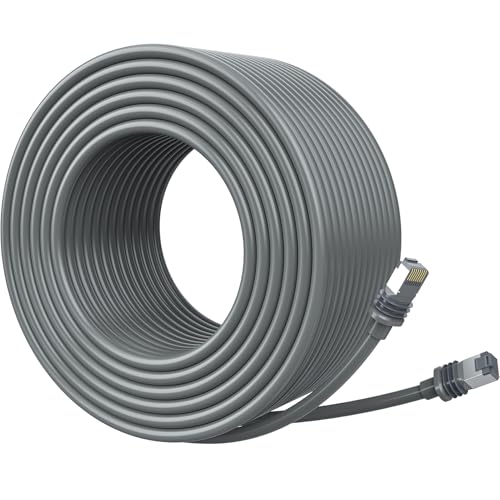
AOPOCKAN TECH Starlink Extension Cable 100 ft
AOPOCKAN TECH Starlink Extension Cable 50 ft

Nilight 100FT 16AWG Copper Clad Aluminum Wire 16/2

Nilight 50 Amp 100FT RV EV Extension Cord Nema 14-50

LifeSupplyUSA 50ft 10/3 SJTW Outdoor Extension Cord Yellow
The Details Behind The Selections
For crews running tools across a 100-foot span, the DEWALT 100 Foot Extension Cord brings the kind of build most homeowners never need but professionals quietly rely on. The 10/3 SJTW jacket (a 10-gauge, 3-conductor thermoplastic rated for hard service) carries heavy loads without the voltage drop that thinner cords suffer over distance. A click-to-lock female end keeps a tool or splitter from pulling loose mid-cut.
I see this fitting contractors framing a deck, electricians running a miter saw across a basement, and homeowners tackling a backyard build where the nearest outlet is far from the work zone. Compared to the LifeSupplyUSA yellow cord later in this list, the DEWALT trades visibility for industrial-grade toughness and smart LED diagnostics.
Practical Pluses
- Locking female end prevents accidental disconnection when a tool yanks the cord.
- Amber LED on the male plug confirms live power at a glance, and a green LED on the female end confirms a safe ground path.
- Nickel-coated blades and pins improve conductivity and resist corrosion in damp outdoor conditions.
- Rated 15A at 125V (1875W), cold-flexible down to roughly -40°F, and built to handle roughly 80 lbs of pull force without damage.
Worth Noting
- The jacket is dark, so it can disappear under leaves or in tall grass; some owners flag it as a trip hazard on cluttered sites.
- 10-gauge copper adds weight, which becomes noticeable when you’re coiling and hauling the full 100 feet.
Built With In Mind
Contractors, electricians, and serious DIYers running high-draw tools across long outdoor distances.
Look Elsewhere When
Pick the LifeSupplyUSA 50ft extension cord instead for shorter home projects where bright visibility and lighter weight matter more than locking connectors.
The AOPOCKAN TECH Starlink Extension Cable solves a problem the standard Starlink kit doesn’t quite address: routing the dish across a long yard or up a tall roofline without signal loss. It carries both power and data in a single shielded run, so you don’t have to splice or jury-rig. The cable is built specifically for the rectangular Gen 3 and later dish connectors, so it snaps in without adapters.
For someone mounting a dish on a detached garage, a barn, or the far end of a rural property, this is the kind of reach that decides whether Starlink is even workable. Compared to the 50-foot sibling below, the 100-foot version gives you more layout freedom but adds a bit more slack to manage.
Strong Points
- Shielded construction minimizes interference, helping maintain stable throughput over the full 100-foot length.
- Compatible with standard Gen 3, Gen 4, and newer dish revisions, including V4 and V5, so it covers most current kits.
- Carries both data and power in one cable, which means fewer weatherproof entry points and cleaner routing.
Points To Keep In Mind
- Shielded Ethernet-style cable is stiffer than typical outdoor power cords, so tight bends and sharp corners are harder to hide.
- Only works with Starlink’s rectangular standard dish connector; older round connectors and third-party mounts need a different cable.
Right Fit For
Rural Starlink owners mounting the dish on a barn, shop, or detached structure well beyond the included 50-foot cable.
Skip It When
The shorter AOPOCKAN TECH Starlink Extension Cable 50 ft below covers the gap just fine and is easier to route indoors.
Sometimes the included 50-foot Starlink cable is just shy of where the dish needs to live, and stretching it with a 100-footer introduces unnecessary slack. That’s where the AOPOCKAN TECH Starlink Extension Cable 50 ft earns its place: a clean, matching extension that doubles the original reach without dragging extra cable across the yard. It’s shielded and shaped for the same rectangular dish connectors as the longer sibling above.
For a typical suburban install where the dish mounts on a side wall or chimney and the router sits in a central hallway, this is usually all the extra length required. I see it working well for apartment dwellers, renters, and anyone who wants a tidy run that doesn’t bunch up behind furniture.
Features That Help
- Same shielding and rectangular connector profile as the 100-foot version, so signal behavior stays predictable.
- Carries data and power together, avoiding the mess of running two separate cables through a window frame.
- Half the length of the 100-foot option, which makes the run easier to tuck along a baseboard or conduit.
Honest Caveats
- Adds another connector inline, which is one more potential moisture entry point if the run is exposed to weather.
- Limited to Starlink’s standard dish; users with the high-performance or mini dish should verify connector shape first.
Who Should Grab It
Starlink subscribers who need a modest boost past the included cable for a side-of-house or chimney mount.
A Better Fit Elsewhere
Reach for the AOPOCKAN TECH Starlink Extension Cable 100 ft when the dish sits far from the house or on a separate outbuilding.
The Nilight 100FT 16AWG Copper Clad Aluminum Wire isn’t a power extension cord in the usual sense; it’s primary wire, the kind you run behind a dashboard or under a floorboard. CCA (copper clad aluminum) keeps the spool light and easy to handle, and the red-and-black color coding makes polarity mistakes hard to commit. The PVC jacket is flexible enough to bend through tight interior cavities.
This is a solid match for a hobbyist installing a subwoofer, LED lighting, or a small accessory circuit. Compared to the power-focused cords elsewhere in this roundup, it trades raw plug-and-play convenience for a custom-install feel. For most home A/V or automotive projects, 16-gauge handles the load without overheating.
Why It Works Well
- Two spools of 100 feet each give enough length for a full vehicle install or a multi-zone LED layout with spare wire for mistakes.
- CCA construction weighs noticeably less than pure copper, which helps when routing across a long chassis or attic.
- Flexible PVC jacket bends around interior corners without cracking the insulation.
Possible Compromises
- CCA wire carries less current than the same gauge of pure copper, so it’s not the right call for high-amperage amplifiers or inverter runs.
- Stripping and terminating CCA requires clean, tight crimps; loose connections can heat up over time.
Key Attributes
Whose Shelf It Belongs On
Hobbyists and installers running accessory power, LED strips, or low-draw audio gear in cars, trucks, or boats.
Reach For A Different Pick When
Use the Nilight 50 Amp 100FT RV EV Extension Cord instead if the goal is plugging in a high-amperage RV or EV charger rather than wiring accessories.
The Nilight 50 Amp 100FT RV EV Extension Cord is the heavy hitter of this roundup, designed for campers and EV owners who need real 240V service across a long stretch. The NEMA 14-50 plug and receptacle (the same four-prong outlet many home EV chargers use) means it doubles as both an RV shore-power cord and a Level 2 EV charging extension. It’s the cable you reach for when the pedestal at the campsite or the charger at the far end of the driveway is just out of reach.
For full-time RVers, weekend campers, and homeowners with an EV parked away from the garage, this cord removes the daily frustration of repositioning a vehicle to charge. Compared to the standard outdoor cords elsewhere in this list, it operates at a different electrical tier entirely.
Notable Upsides
- 50-amp rating handles both RV shore power and Level 2 EV charging without derating, which means faster charging than a Level 1 setup.
- NEMA 14-50 connectors on both ends are widely supported at campgrounds and home charging stations.
- 100-foot length bridges large driveways, long campsites, or awkward parking configurations where repositioning isn’t practical.
Where It May Fall Short
- 6/3 and 8/1 gauge conductors are heavy; expect a real workout unspooling and coiling 100 feet of this cord.
- Storing the cable requires a substantial bin or reel, and it tends to retain coils when stuffed into a small storage bay.
Feature Snapshot
Made For
RVers needing extended shore power at distant pedestals and EV owners parking away from a fixed charger.
Consider Something Else When
The DEWALT 100 Foot Extension Cord is a better fit for general contractor and outdoor tool use rather than 50-amp EV or RV charging.
The LifeSupplyUSA 50ft 10/3 SJTW Outdoor Extension Cord is the bright, friendly workhorse for weekend projects and homeowner chores. The high-visibility yellow jacket does double duty: it stays flexible in cold weather and it shows up clearly across a lawn or shop floor. Rated 15A at 125V (1875W), it covers most power tools, leaf blowers, and pressure washers without breaking a sweat.
I see this fitting homeowners trimming hedges, running holiday lights, or stretching a string trimmer across a big yard. Compared to the DEWALT 100-foot cord earlier, this one trades half the reach and the locking connector for a friendlier price and easier visibility. It won’t replace a true jobsite cord, but for occasional outdoor work it pulls its weight.
Noteworthy Benefits
- High-visibility yellow jacket is hard to miss in grass, leaves, or dim light, which reduces trip hazards.
- 10-gauge conductors handle heavier tools like table saws and pressure washers without noticeable voltage drop at 50 feet.
- SJTW-rated insulation stays flexible in cold conditions, so the cord unrolls without cracking in winter.
Some Limits To Know
- At 50 feet, it won’t reach across the largest yards or job sites without an additional cord or outlet strategy.
- No lighted plug or locking connector, so diagnosing power issues or accidental disconnection requires more attention.
Who Will Love This
Homeowners running outdoor tools, holiday lighting, or yard equipment in spaces where visibility and cold flexibility matter most.
Where Another Pick Suits Better
The DEWALT 100 Foot Extension Cord is the stronger choice when you need the extra reach and a locking connector for heavy-duty tools.
What Matters Most In A 100 Foot Extension Cable
Gauge comes first. Thicker wire (lower AWG number, like 10 AWG) carries more current over distance without overheating or losing voltage, which matters when running table saws, pressure washers, or RV chargers. Thin 16-gauge wire is fine for low-draw accessories, but try to push a circular saw through it at 100 feet and you’ll watch the motor slow down.
Jacket and rating matter next. SJTW (a thermoplastic jacket rated for hard service and outdoor use) handles weather, abrasion, and cold better than indoor-only insulation. For Starlink or low-voltage runs, shielded cable prevents signal loss that an unshielded jacket can’t.
Connector type decides compatibility. NEMA 14-50 is for RVs and EVs, while a standard three-prong plug covers most tools. Starlink dishes need a specific rectangular data/power connector. Buy the wrong end and the cord is useless.
Length is only as valuable as the path it covers. Measure the actual run, account for obstacles, and add slack for bends. A 50-foot cord on a clean path often beats a 100-foot cord that loops around a corner.
Smart Buying Advice
Pitfalls Shoppers Hit
The most common slip is buying gauge that’s too thin for the load, which causes tools to run hot and batteries to charge slowly over distance. Another is grabbing an indoor-only cord for outdoor use, where rain, cold, and UV quickly crack the jacket. Finally, some shoppers forget that RV and EV cables operate at a different electrical tier entirely: a regular outdoor extension cord won’t safely handle 50 amps.
When Paying More Pays Off
Spending up usually buys thicker copper conductors, locking connectors that survive a yanked tool, and LED diagnostics that confirm power and ground before a job starts. For daily contractors and full-time RVers, those extras pay back fast in avoided downtime. For occasional weekend use, a basic cold-flex cord handles most tasks without the premium.
Frequently Asked Questions
What gauge extension cord do I need for 100 feet? For most power tools and outdoor equipment, 10-gauge (10 AWG) is the safe choice at 100 feet because it minimizes voltage drop. Thinner 12 or 14 gauge cords work for small loads but struggle with high-draw tools.
Can I use an indoor extension cord outdoors if it’s long enough? No. Indoor cords lack weather-resistant jackets and insulation rated for moisture, cold, and sunlight. Outdoor-rated SJTW or equivalent cords are built to handle those conditions safely.
What’s the difference between an RV extension cord and a regular outdoor cord? RV and EV cords are rated for higher amperage (often 30A or 50A) and use special connectors like NEMA 14-50 for 240V service. Regular outdoor cords top out around 15A or 20A at 125V, which is fine for tools but not for RV appliances or EV charging.
Do I need a special cable for Starlink? Yes. Starlink’s standard dish uses a rectangular connector that carries both data and power, so a regular Ethernet or power cord won’t work. Use a cable specifically listed as compatible with Starlink Gen 3 and later.
How do I store a 100-foot extension cord properly? Over-under coiling prevents the cord from twisting into knots and extends its life. A cord reel or large storage bin keeps it off the ground and out of the way when not in use.
Wrap Up
For most outdoor projects and tool runs, the DEWALT 100-foot cord earns its place at the top with locking connectors and industrial-grade build. Starlink users should match the cable to their dish layout, and RV or EV owners need the dedicated 50-amp cord for safe high-power reach. Match the gauge, jacket, and connector to the job, and the right 100-foot cable will pay you back every time you don’t have to drag an extra cord across the yard.
