

A dead battery always picks the worst possible morning. The right charger turns that moment from panic into a five-minute fix, and the seven options below cover everything from a trickle-maintainer for a classic motorcycle to a high-output unit that can revive a deep-cycle marine bank. I’ve matched each pick to a real use case, called out the trade-offs honestly, and skipped the marketing fluff.
A Quick View Of The Lineup

Tecmate Optimate 1 VoltMATIC TM-401a Battery Charger
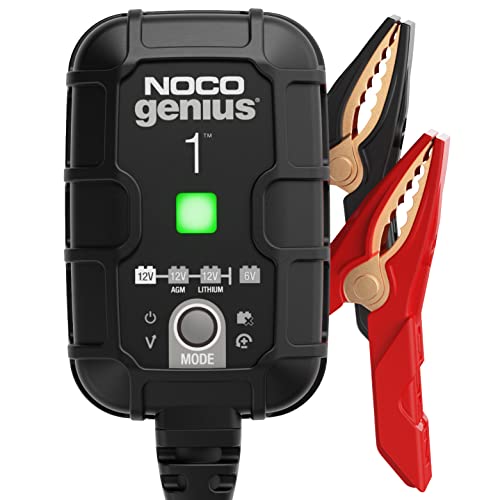
NOCO GENIUS1 1A 6/12V Smart Battery Charger
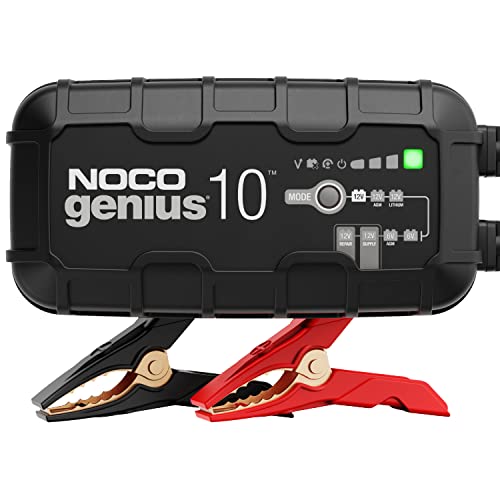
NOCO GENIUS10 10A 6/12V Smart Battery Charger
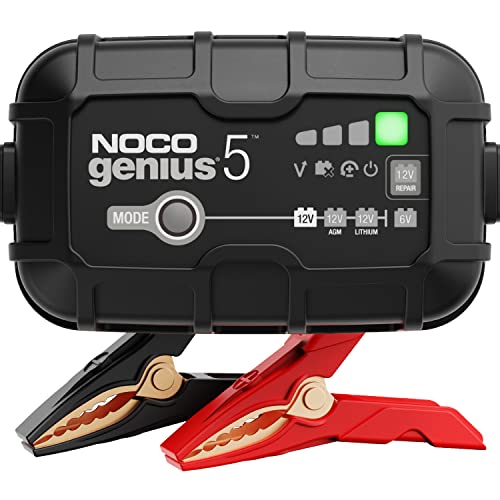
NOCO GENIUS5 5A 6/12V Smart Battery Charger

Schumacher SC1280 6V/12V Battery Charger

VEBU 5A Smart 6V/12V Battery Charger
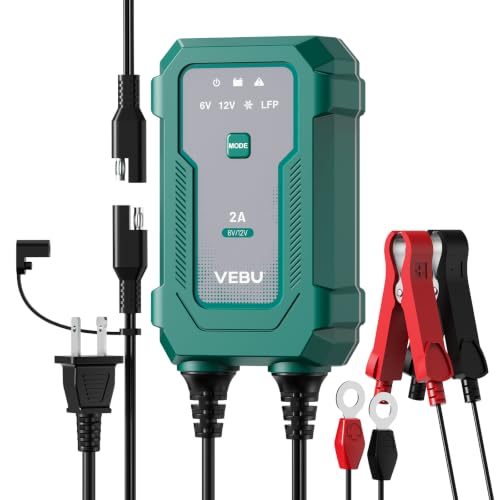
VEBU 2A 6V/12V Charger with Desulfator
Taking A Closer Look At The Options
The Tecmate Optimate 1 VoltMATIC is built for owners who want to walk away and trust the charger to do the rest. Its 4-step program quietly tops off batteries, then drops into a maintenance pulse that fights natural discharge, which is exactly what a classic car or vintage motorcycle needs during a long winter layup. The blue housing feels rugged enough to live in a garage corner, and the 0.6A output is intentionally gentle so it won’t stress older cells.
What separates it from the NOCO units further down the list is the simplicity of the experience. There’s no app, no menus, just a four-stage recovery sequence that handles both 6V and 12V packs. Owners in colder regions tend to appreciate that automatic voltage detection when swapping between a vintage tractor and a modern lawn tractor.
A Few Highlights
- 4-step charging logic covers recovery, bulk charge, equalization, and float maintenance
- Automatic 6V or 12V detection removes guesswork when juggling different vehicles
- Compatible with AGM, GEL, and standard lead-acid batteries
- Continuous connection is safe, making it ideal for stored vehicles that sit for months
Things To Consider
- The 0.6A output is too slow for reviving a deeply discharged large battery overnight
- No lithium (LiFePO4) chemistry support, unlike several competitors on this list
- Indicator lights are functional but minimal, so reading the charge stage takes a glance at the manual
Feature Snapshot
Who Will Love This
Owners of vintage motorcycles, classic cars, and seasonal equipment who want a set-and-forget maintainer that runs through winter without supervision.
Skip It When
You need to recover a large deeply discharged battery, in which case the NOCO GENIUS10 offers the amperage and desulfation work you’d actually use.
The NOCO GENIUS1 is the smallest unit in the GENIUS family, and for small batteries that’s a genuine advantage. It’s the kind of charger you toss in a trunk or stick on a workbench without it taking up space. The 1A output won’t win any speed contests, but the broad chemistry support including lithium-ion (LiFePO4) is rare at this size and price tier.
Compared with the Tecmate Optimate 1 above, this unit adds lithium compatibility and a more polished indicator system. The trade-off is a smaller maximum battery capacity (up to 30Ah), which makes it less suited to large automotive or marine banks. For motorcycles, ATVs, and lawn tractors, though, it’s an easy match.
Everyday Wins
- Supports lead-acid and lithium-ion (LiFePO4) batteries up to 30Ah
- Compact housing fits in tight battery compartments and crowded shelves
- Automatic charging with overcharge protection keeps batteries safe during long connections
Honest Caveats
- 1A output means a full recharge on a typical car battery takes many hours
- Accessory ring terminal or clamp leads often sold separately
Made For
Riders, ATV owners, and anyone maintaining small powersports batteries who values a compact, chemistry-flexible unit.
Look Elsewhere When
You’re charging a full-size car or truck battery regularly, where the NOCO GENIUS5 brings noticeably more useful current in the same ecosystem.
When a battery is genuinely dead, not just tired, the NOCO GENIUS10 is the unit that earns its keep. Its 10A output handles batteries up to 230Ah, which covers everything from a heavy-duty truck bank to a large marine deep-cycle setup. Built-in desulfation (a process that breaks down sulfate crystal buildup on battery plates to restore capacity) and a Force Mode for severely depleted batteries give it real workshop credentials.
This is also the most chemistry-flexible pick in the roundup, working with flooded, gel, AGM, and lithium-iron-phosphate batteries alike. Temperature compensation adjusts output for hot engine bays or cold garages, which matters more than people expect during summer or winter projects. The honest read is that it’s overkill for a stored motorcycle, but for anyone running multiple vehicles, it’s the one charger that does it all.
Benefits That Matter
- 10A output and 230Ah capacity support large automotive and deep-cycle batteries
- Desulfation mode can recover batteries that have been sitting neglected
- Force Mode handles batteries discharged below the normal operating threshold
- Temperature compensation adjusts charging voltage for ambient conditions
- Works on lead-acid (wet, gel, AGM) and lithium (LiFePO4) chemistries
Trade Offs
- Larger and heavier than the GENIUS1 and GENIUS5, so it lives on a bench rather than in a trunk
- 10A into a small motorcycle battery can be excessive without a lower-amp mode for tiny packs
Quick Facts
Best Suited To
Garage tinkerers, multi-vehicle households, and anyone running large automotive, marine, or RV battery banks who needs one unit that handles serious work.
A Better Fit Elsewhere
You only need to maintain a small powersports battery, where the compact NOCO GENIUS1 is a better size and value fit.
The GENIUS5 sits right in the sweet spot of NOCO’s lineup: more current than the GENIUS1, less bulk than the GENIUS10. For a daily-driver car or SUV with a battery up to 120Ah, it’s typically the right answer. The 5A output gives meaningful recovery speed without the weight and cost of the larger unit.
It shares the same chemistry support as the bigger GENIUS10, including lithium-iron-phosphate, which makes it a flexible choice for households mixing traditional and modern battery types. Owners with a sedan in the driveway and a lawn tractor in the shed often find the GENIUS5 covers both without thinking twice.
Advantages To Know
- 5A output balances recharge speed with safe connection to mid-size batteries
- Handles up to 120Ah batteries, covering most cars and light trucks
- Compatible with flooded, gel, AGM, and lithium (LiFePO4) batteries
- Compact enough for a shelf or trunk without dominating either space
Points To Note
- Not designed for heavy-duty truck or large deep-cycle banks where 10A or more is preferable
- Indicator LEDs require a brief learning curve to read at a glance
Core Details
The Right Fit
Daily-driver households and small-fleet hobbyists who want one capable charger that handles most cars and mid-size batteries without stepping up to workshop-class output.
Not Your Match When
You run a large marine or RV bank, where the NOCO GENIUS10 brings the additional amperage and capacity that actually matter.
The Schumacher SC1280 is a microprocessor-controlled charger aimed squarely at car, truck, and marine owners. Its 3A trickle charge is designed to maintain batteries already in good shape, while a multi-stage charging system can restore depleted ones. The automatic voltage detection between 6V and 12V removes a step that catches out a lot of first-time users.
AGM, gel, and deep-cycle support cover the batteries most commonly found under the hood or in a boat compartment. Compared with the NOCO GENIUS5 above, the SC1280 is a bit slower on recovery but typically lands at a friendlier price point, making it appealing for households that want a dependable workhorse without premium-tier features.
Real Benefits
- Microprocessor-controlled multi-stage charging adjusts output based on battery condition
- Works with AGM, gel, and deep-cycle batteries for automotive and marine use
- 3A trickle mode maintains stored vehicles without overcharging
- Automatic 6V/12V detection simplifies hookup
Room For Improvement
- 3A output is on the slower side for reviving a deeply discharged large battery
- No lithium-ion (LiFePO4) support, limiting use with newer lithium chemistry batteries
Perfect Match For
Budget-conscious drivers and boat owners who want a proven automatic charger for traditional lead-acid batteries in cars and marine applications.
Another Choice May Suit
You own a lithium-equipped vehicle or want faster recovery, in which case the NOCO GENIUS5 delivers broader chemistry support and stronger charging speed.
The VEBU 5A is built around simplicity: plug it in, attach the leads, and let the charger sort out the rest. Its winter mode adjusts the charging profile for cold-weather operation, and a memory function recalls the last used setting after a power interruption, which is a small but appreciated touch in garages prone to brief outages.
It handles lead-acid and lithium batteries, plus a desulfation cycle that helps batteries that have been sitting partially charged. The 5A output puts it in the same performance bracket as the NOCO GENIUS5, though the brand doesn’t have the same long track record. For seasonal riders who just want something that works in the background, it’s a low-fuss option worth considering.
Key Advantages
- Winter mode adjusts charging profile for cold conditions
- Memory function restores the last setting after a power interruption
- 5A output supports mid-size batteries including lithium (LiFePO4)
- Plug-and-play design skips complicated setup menus
Softer Spots
- Brand has a shorter track record in this category than NOCO or Schumacher
- Documentation is minimal, which can frustrate first-time users
Built With In Mind
Seasonal riders and powersports owners who want a low-fuss charger with cold-weather adjustments and minimal setup.
Reach For A Different Pick When
Long-term brand support and a more proven track record matter, in which case the NOCO GENIUS5 sits in the same output class with a deeper history.
The VEBU 2A targets a specific problem: batteries that have been left for dead and need real recovery work. Its 9-stage charging program can revive deeply discharged batteries down to 2 volts, which is lower than most chargers in this roundup will attempt. The IP65 water-resistant housing also makes it a natural fit for boats, RVs, and outdoor equipment that live in less-than-pristine conditions.
Winter mode again adjusts output for cold conditions, and a full safety suite covers reverse polarity, short circuits, and overheating. At 2A, it’s a maintenance and recovery unit rather than a fast charger, so it’s worth pairing with a higher-output pick for everyday car use. For neglected batteries and marine applications, though, it earns its place.
Practical Pluses
- 9-stage charging can recover batteries discharged as low as 2 volts
- IP65-rated housing resists water and dust for outdoor and marine use
- Spark-free connection with reverse polarity and short-circuit protection
- Winter mode adjusts output for cold-weather charging
- Compatible with lead-acid and lithium (LiFePO4) batteries
Points To Keep In Mind
- 2A output is intentionally slow; this is a recovery and maintenance unit, not a fast charger
- Less established brand than the NOCO and Schumacher picks on this list
Whose Shelf It Belongs On
Boat, RV, and ATV owners who deal with batteries that sit through long off-seasons and may need real recovery work to come back to life.
Where A Sibling Pick Shines
You mostly charge standard car batteries and want speed, where the NOCO GENIUS10 brings far more amperage for routine top-ups.
What Matters Most When Choosing a 6V/12V Charger
Match the Charger to the Battery Size
The single biggest factor is battery capacity, measured in amp-hours (Ah), which tells you how much energy the battery stores. A motorcycle battery might be 10Ah while a heavy-duty truck bank can run 200Ah or more, and matching the charger’s output to that range matters more than brand loyalty. Charging a tiny battery with a 10A unit works, but a 1A or 2A charger is gentler and safer for small cells.
Understand Chemistry Compatibility
Not all batteries are built the same. Flooded lead-acid (the traditional wet-cell type) is common, while AGM (absorbed glass mat, a sealed lead-acid design) and gel batteries use different internal structures that need specific voltage profiles. Lithium-iron-phosphate (LiFePO4) batteries are increasingly common in powersports and require chargers that explicitly support them. A mismatch can shorten battery life or, in extreme cases, damage cells, so checking compatibility before connecting is worth the minute it takes.
Decide Between Maintainer and Recovery Charger
Trickle chargers and maintainers (low-amp units designed to keep a full battery topped off) shine for vehicles in storage. Recovery chargers with desulfation and force modes handle neglected or deeply discharged batteries. Many households benefit from one of each, but if you can only buy one, the right choice depends on whether your batteries die from sitting too long or from being heavily used.
Plan for Real-World Conditions
Temperature swings, outdoor mounting, and vibration all matter more than spec sheets suggest. Chargers with temperature compensation adjust output for heat and cold, which protects batteries year-round. IP-rated housings (a two-digit rating where the first digit rates dust protection and the second rates water protection) help for marine and workshop environments. Long cable leads and secure mounting points are small details that pay off every time you hook up.
Key Considerations Across These Picks
Mistakes Worth Dodging
The most common error is grabbing any 12V unit and assuming it works on a 6V battery. Some chargers handle both automatically, but others will push too much voltage into a 6V cell and damage it. Another slip is choosing a charger based on peak amps instead of sustained output, since a high peak that tapers quickly doesn’t actually help a deeply discharged battery. Always confirm voltage support and chemistry match before connecting.
Where the Extra Money Goes
Premium chargers typically add desulfation modes, temperature sensors, lithium support, and weather-resistant housings. For a daily driver in a temperate climate, mid-tier units handle the job. For neglected batteries, marine use, or lithium chemistry, the upgrade usually pays for itself through longer battery life and fewer replacements. The honest read is that spending up makes the most sense when you can name a specific feature you’ll actually use.
Frequently Asked Questions
Can one charger handle both 6V and 12V batteries?
Yes, many modern chargers include automatic voltage detection that identifies 6V or 12V packs and adjusts output accordingly. Always confirm the feature exists before connecting, especially with older batteries where a wrong voltage can cause damage.
How long does it take to charge a dead car battery?
A typical 50Ah car battery takes several hours with a 5A charger, longer with a 2A unit, and significantly less time with a 10A charger. Deeply discharged batteries need even more time, especially when desulfation is involved.
Are lithium batteries safe with these chargers?
Only when the charger explicitly lists lithium or LiFePO4 compatibility. Lead-acid charging profiles can overvolt lithium cells, so using a mismatched charger risks damage. Chargers like the NOCO GENIUS line and several VEBU units handle both.
Can I leave a smart charger connected for months?
Most modern maintainers are designed for long-term connection and drop into a float or pulse mode once the battery reaches full charge. Still, it’s worth checking the charger’s manual for its recommended maximum connection time and storage conditions.
Do I need a special charger for AGM or gel batteries?
AGM and gel batteries often need slightly different voltage profiles than flooded lead-acid. Many chargers handle all three automatically, but it’s worth confirming before use, since an incorrect profile can shorten battery life over time.
Bottom Line
The right 6v 12v battery charger depends less on specs and more on what you’re actually charging. A small powersports fleet needs a different tool than a marine deep-cycle bank, and matching capacity, chemistry, and conditions to the unit makes ownership straightforward. Pick the profile that fits your garage, and the rest takes care of itself.
