

Running a new circuit for a subpanel, a heavy 240V appliance, or a detached workshop usually means dealing with thick cable and a few real decisions. The gauge, the jacket, the conductor count, and the length all matter long before the first staple goes in. I’ve spent a lot of time around residential wiring, and the difference between a smooth pull and a frustrating afternoon usually comes down to picking the right 6/2 NM-B (nonmetallic-sheathed building wire, rated for dry indoor runs) before you start.
This roundup looks at five solid 6/2 Romex options (Romex is the familiar brand-name shorthand for NM-B cable used widely in home wiring) suited to common household projects. Whether you’re feeding a hot tub disconnect, a small kiln, or an EV charger on a dedicated branch, one of these should fit the bill without overbuying or cutting corners on safety.
The Picks In Brief
Southwire 6/2 NM-B Wire – Black 50FT

Southwire 75 ft 6/2 Stranded Romex SIMpull and 100ft 10/2 Solid Indoor Cable

Stock Wire 6/2 NM-B Non-Metallic Sheathed Cable 40ft

Wirenco 6/2 NM-B Non-Metallic Sheathed Cable 35Ft Cut
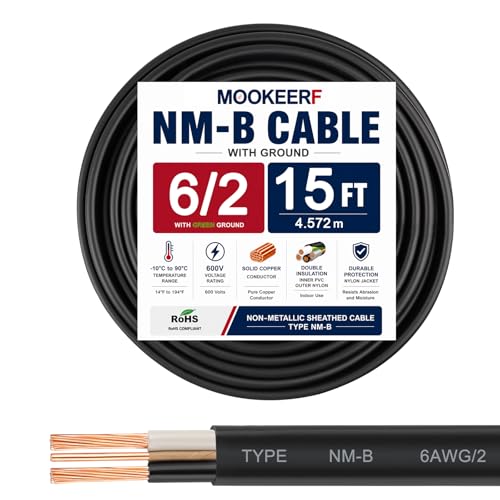
MOOKEERF 15FT 6 Gauge NM-B Cable Pure Copper
Meet The Standout Selections
For most homeowners pulling a single 240V branch, this 50-foot Southwire coil is the workhorse option. It’s a standard 6/2 NM-B with a ground, rated for 600 volts and sized for residential branch circuits feeding outlets, switches, and dedicated loads. I like that the length hits a sweet spot: long enough for a typical garage or basement subpanel feed without forcing you to buy a 250-foot spool.
The jacket pulls cleanly through wood studs and PVC conduit, and Southwire’s reputation in the category means inspectors rarely bat an eye at the listing. In most basic indoor runs, this is the dependable middle-of-the-road pick.
The Case For It
- 50-foot length suits most single-circuit indoor projects without wasted leftover
- 600-volt rating covers standard residential 240V appliance feeds
- Southwire brand recognition helps during rough-in inspections
- Pulls smoothly through standard 3/4-inch conduit for protected runs
Things To Consider
- Only 50 feet may run short on longer detached structure feeds
- Solid conductors are less forgiving when bending around tight corners than stranded
Who It Suits Best
Homeowners and DIYers running a single dedicated 240V circuit in a basement, garage, or addition where the run is under 50 feet.
Where Another Pick Suits Better
For longer shop or outbuilding feeds, the Southwire 75 ft combo bundle gives you extra reach and a companion 10/2 run.
Compared to the first pick’s solid conductors, this bundle starts with 75 feet of 6/2 stranded Romex, and stranded copper flexes much more willingly around corners in conduit. The SIMpull jacket is coated to glide through studs with less drag, which matters when you’re fishing cable through a finished ceiling. Pair that with the included 100-foot coil of 10/2 solid for 30A branch circuits, and you have a one-stop bundle for a small panel rewire or a multi-circuit garage setup.
Both cables share a 600-volt rating and a 90°C heat tolerance (the maximum temperature the insulation can handle before degrading), so they handle most residential loads cleanly. For shop owners wiring a subpanel plus a few 120V branch runs in the same afternoon, this bundle removes the second trip to the supply house.
Bright Spots
- Stranded 6/2 bends easily through tight conduit sweeps
- SIMpull jacket reduces pulling fatigue on longer runs
- Companion 10/2 coil covers both heavy and lighter circuits in one order
- Shared 600V rating keeps spec consistency across the bundle
Trade Offs
- Stranded 6/2 requires careful termination to avoid loose strands under the lug screw
- Heavier total weight can be awkward to coil and store in a small truck bed
Key Product Details
Made For
Garage workshops and small subpanel installs where a feeder run plus several branch circuits all need wiring in one project.
Skip It When
You’re only running a single short circuit, in which case the Stock Wire 40-foot cut keeps things simpler and lighter.
This 40-foot cut is sized for homeowners who only need a short dedicated run, think a water heater replacement in the next room or a new welder outlet behind the garage. It’s standard 6/2 NM-B with copper conductors, rated for 600 volts with an allowable ampacity (safe continuous current-carrying capacity) of 55 amps, which covers most 50A residential breaker applications. The cut also keeps leftover scrap to a minimum, which helps when you’re working in a crowded utility room.
Stock Wire is a less familiar brand than Southwire, but the cable specs line up with NEC expectations for exposed and concealed dry-location work. If your run truly is short, paying for extra footage you won’t use makes no sense.
A Favorable Mix
- 40-foot length suits compact dedicated appliance runs
- 55A allowable ampacity covers most 50A breaker applications
- Approved for both exposed and concealed dry-location installs
- Less leftover scrap means easier cleanup after the pull
Points To Note
- Lesser-known brand may draw a second look from inspectors unfamiliar with it
- Solid conductors don’t bend as easily around tight cabinet corners
Best Suited To
Homeowners running a single dedicated appliance circuit under 40 feet and looking to avoid overpaying for excess cable.
Look Elsewhere When
A longer feeder run or panel-to-panel link is on the plan, in which case the Southwire 75 ft bundle reaches further without splices.
The 35-foot cut from Wirenco is the shortest coil on this list, and that works in its favor for tight indoor jobs where the run starts in the next stud bay. The electrical spec matches the Stock Wire option: #6 AWG (American Wire Gauge, where smaller numbers mean thicker wire) copper conductors, 600-volt maximum, 55A allowable ampacity, dry-location rated to 90°C. It also handles both exposed and concealed work, so it’s flexible for basement joists or finished wall patches.
One honest note: the listing warns that the jacket color may differ from the photo. That’s purely cosmetic, since the conductors and insulation still meet the listed spec, but it’s worth knowing before you order if matching a specific cable run matters to you. For most repair and patch work, this short cut is hard to beat on convenience.
What Stands Out
- 35-foot cut fits tight indoor patch and repair jobs
- Same 600V / 55A rating as longer 6/2 options on the list
- Approved for exposed and concealed dry-location installations
- Minimal leftover simplifies storage in a small parts bin
Small Caveats
- Actual jacket color may not match the listing photo
- 35 feet can run short if the route turns out longer than expected
Feature Snapshot
Whose Shelf It Belongs On
Homeowners and repair-focused DIYers stocking the parts bin for the next short dedicated circuit or appliance swap.
Reach For A Different Pick When
The run length is uncertain or potentially long, since the MOOKEERF 15-foot cut is even shorter and better for bench work only.
MOOKEERF’s 15-foot cable is the shortest piece in this roundup, and it’s clearly aimed at bench-level work rather than full-room pulls. The configuration is three conductors: two 6 AWG current-carrying wires plus a 10 AWG ground wrapped in kraft paper (a thin paper binder used inside NM-B cable to keep the ground wire centered). The dual-layer build pairs an inner PVC (polyvinyl chloride, a common flexible insulation material) jacket for electrical isolation with an outer nylon sheath for abrasion resistance, which is more protection than typical indoor NM-B offers.
For repairing a damaged section, building a small relay panel, or wiring a piece of equipment in the shop, this is a tidy little spool. It’s not the right pick for any meaningful run through a wall, but that’s not the point.
Everyday Wins
- Three-conductor layout includes a dedicated 10 AWG ground from the factory
- Dual-layer PVC plus nylon jacket adds abrasion and chemical resistance
- Pure copper conductors keep resistance low on short feeders
- 15-foot length is convenient for bench wiring and small repairs
Honest Caveats
- 15 feet is too short for any standard wall or ceiling run
- Outer nylon sheath adds stiffness, which can complicate tight box bends
The Right Fit
Hobbyists and shop owners needing short, well-protected cable runs for equipment builds, repair pigtails, or bench panels.
A Better Fit Elsewhere
Anyone running an actual branch circuit through walls should reach for the Southwire 50-foot coil for a more standard indoor solution.
What To Weigh Before Picking 6 2 Romex
Match The Cable To The Circuit First
The most important decision isn’t the brand or the jacket finish: it’s matching the cable’s ampacity and length to the breaker and load it will feed. A 50A breaker for a subpanel, range, or large EV charger typically wants 6 AWG copper, while smaller 30–40A loads may only need 8 AWG. Confirming the circuit’s amperage, voltage, and physical route before ordering saves the headache of returning an undersized or oversized spool.
Stranded Vs. Solid Conductors
Solid conductors are cheaper and terminate cleanly under standard screw lugs, which is why most residential NM-B ships solid. Stranded versions like the Southwire SIMpull bundle flex more easily around sweeps and through conduit, making them friendlier in finished spaces or metal raceways. For open stud runs, solid is fine. For fishing through tight bends, stranded earns its keep.
Length, Jacket, And Indoor Environment
Cable should be rated for the environment it lands in. Standard NM-B is approved for dry, indoor locations only: basements, attics, and inside-wall cavities. The cables in this list all share that 90°C dry rating and 600-volt classification, but none are suited for direct burial, outdoor exposure, or wet locations without additional conduit or a different cable type like UF-B (underground feeder cable rated for direct burial and wet conditions).
Inspectors And Familiar Brands
In areas where the local inspector is strict, a recognized name like Southwire can smooth the rough-in visit. Lesser-known brands like Stock Wire or Wirenco still meet the listed electrical spec, but a quick check with your local building department can confirm acceptance before you commit.
Key Considerations Across These Picks
Pitfalls Shoppers Hit
The most common mistake is underestimating total run length once you account for bends, drops, and service loops. A 40-foot straight-line pull can easily consume 50 feet of cable after routing. The other frequent slip is mixing indoor-rated NM-B with an outdoor or damp-location application, which can create both a code violation and a long-term corrosion risk. Measure the route twice, add at least 10 percent for slack, and confirm the cable is rated for the space it ends up in.
Where The Extra Money Goes
Paying more usually buys a longer-established brand, a smoother jacket for easier pulling, or a stranded conductor that bends without fight. For most homeowners, those upgrades are minor quality-of-life wins rather than safety must-haves, since all the cables here meet the same NEC basics. The upgrade pays off when the run is long, the path is tight, or the inspector knows the brand on sight.
Frequently Asked Questions
What does 6/2 mean on Romex cable?
The 6 refers to the wire gauge, in this case 6 AWG copper, and the 2 means two insulated current-carrying conductors plus a bare ground. Together, it’s a standard configuration for 50A residential circuits.
Can 6/2 Romex handle a 50-amp breaker?
Yes. 6 AWG copper conductors are commonly used for 50A branch circuits feeding ranges, subpanels, and large EV chargers, provided the cable is protected by a properly sized breaker.
Is 6/2 NM-B rated for outdoor use?
Standard 6/2 NM-B is rated for dry, indoor locations only. For outdoor, underground, or wet environments, you need a different cable type such as UF-B or THWN conductors in conduit.
What’s the difference between solid and stranded 6/2?
Solid conductors are stiffer but cheaper and easier to terminate under screw lugs. Stranded conductors bend more easily and pull through conduit with less effort, which helps on longer or tighter runs.
How long does 6/2 Romex last inside a wall?
Properly installed NM-B cable in a dry, protected indoor environment can last the life of the building, often 50 years or more, as long as it isn’t damaged by rodents, renovations, or moisture intrusion.
Bottom Line
Any of these five cables can carry a properly protected 50A residential circuit, so the real decision comes down to length, conductor type, and how much brand familiarity matters in your area. For most single-circuit projects, the Southwire 50-foot coil is the safe everyday call. Multi-circuit shop work shifts toward the Southwire bundle, while tight patch jobs and bench wiring lean on the shorter cuts from Wirenco or MOOKEERF. Pick the cable that fits the route, confirm the breaker size, and the rest of the install usually goes smoothly.
