

A storm knocks the grid out and the fridge starts warming, or the RV finally pulls into a campsite with a 50-amp pedestal waiting. The cable you grab in those moments decides whether power flows smoothly or becomes a frustrating afternoon. I put together this roundup for homeowners, RV owners, mobile welders, and EV owners who need a 50 amp cord that actually fits the way they use it.
The Leading Options At A Glance

Deeklify 100FT 40 Amp Generator Cord (Twist Lock)

Deeklify 15FT 50 Amp Generator Cord (Twist Lock)
Kanayu 1ft NEMA 14-30p to 6-50r Welder Adapter

Deeklify 25FT 50 Amp Generator Cord (Twist Lock)

HORIZVA 25FT RV Extension Cord (NEMA 14-50P/R)
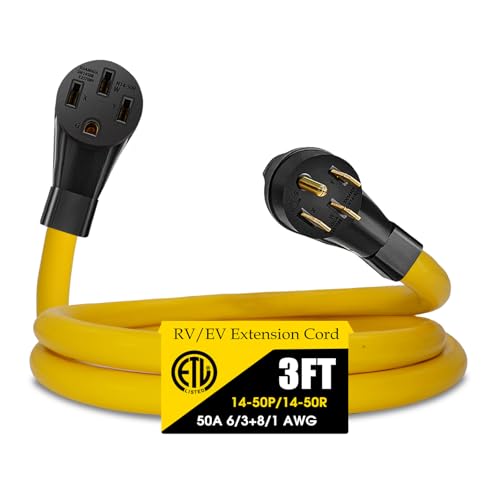
LAZMUMI 3FT 50 Amp RV/EV Extension Cord (ETL)
Taking A Closer Look At The Options
Homes set far back from the driveway run into the same problem every storm: the portable generator has to live near the garage door, but the power inlet sits on the opposite side of the house. A 100-foot cord clears that gap without forcing you to reposition the generator mid-rain. This Deeklify cord is built around that real scenario.
It carries a NEMA 14-50P to SS2-50R twist-lock pairing, which keeps the connection seated even if the cord shifts on the ground. The 40-amp rating covers most large portable generators used for whole-home essentials, though it is not designed for full 50-amp loads. Compared to the shorter Deeklify models further down the list, the extra length here trades convenience for added weight to manage.
A Favorable Mix
- 100-foot reach handles long runs between generator and inlet box
- Twist-lock connectors stay seated when the cable shifts on wet ground
- STW-rated jacket resists abrasion and outdoor weather
- Stranded copper core helps maintain steady current over long distances
Things To Consider
- Rated for 40 amps, not a true 50-amp cable for heavier loads
- 100 feet of cable is heavy and awkward to coil after use
- Storage requires a reel or large bin to keep it tidy
Who It Suits Best
Homeowners with a generator set well away from the inlet box, especially in larger lots or detached garage setups.
Consider Something Else When
The Deeklify 25FT 50 Amp Generator Cord (Twist Lock) is the smarter pick for short hookups where 100 feet would just create excess slack.
RV pads at state parks and small home backup setups often have the generator parked just a few feet from the inlet. A 15-foot cord gets the job done without dragging a coil of unused cable behind the unit. This is the tidy option in the Deeklify lineup.
The 15-foot run uses the same NEMA 14-50P to SS2-50R twist-lock pair as the longer siblings, so the connection behavior is consistent. For most short hookups, that 50-amp rating gives a little headroom over the 100-foot model. It is also easier to handle in tight spaces, though it obviously cannot bridge long distances.
Real-World Strengths
- 50-amp rating handles typical portable generator output
- Compact 15-foot length coils neatly for small storage bins
- Twist-lock design resists accidental disconnection on uneven ground
Worth Noting
- Too short for most whole-home backup layouts
- Limited flexibility if the generator must sit farther away
Made For
RV owners with a tight campsite pad, or homeowners running a small backup setup right next to the inlet.
Look Elsewhere When
The Deeklify 100FT 40 Amp Generator Cord (Twist Lock) is the better choice when the generator lives on the far side of the property.
This is a different kind of cable. The Kanayu adapter is built for welders who already own a generator with a 14-30 outlet and need to plug into a 6-50 welder receptacle, or the reverse in a shop setting. At roughly one foot long, it bridges two specific plug types without adding slack to a working layout.
The STW jacket with 10AWG conductors is the same heavy-duty insulation you find on full generator cords. That matters because shop outlets and welders pull steady, high loads. For most RV owners, this adapter does nothing useful, but for a mobile welder or a small fabrication shop it solves a frustrating plug mismatch.
Why It Works Well
- 1-foot length keeps the workspace tidy with no excess cable
- STW jacket handles shop heat and abrasion
- 10AWG wire supports the typical welder draw
- ETL listing gives an added layer of confidence
Points To Note
- Niche use case, mostly irrelevant to RV and EV owners
- Only solves a specific plug mismatch between 14-30 and 6-50
Best Suited To
Mobile welders and small fabrication shops that need to bridge a generator outlet to a standard welder plug.
Swap It Out When
The Deeklify 25FT 50 Amp Generator Cord (Twist Lock) is the right pick for anyone actually backing up a home or RV instead of running shop equipment.
The 25-foot length is the sweet spot for most residential and RV setups. Generators usually sit on a patio or driveway pad a short walk from the inlet, and 25 feet gives enough slack to route around a corner without piling extra cable on the lawn. This Deeklify cord targets that everyday scenario.
Like the 15-foot version, it uses the NEMA 14-50P to SS2-50R twist-lock pair for a stable connection. It carries a full 50-amp rating, which makes it a slightly stronger pick than the 100-foot model when your generator actually pushes 50 amps. For most homes, this is the cord that lives in the garage and only comes out when the lights flicker.
A Strong Showing
- 25-foot length handles most residential and RV hookups
- 50-amp rating covers typical portable generator output
- Twist-lock ends resist pull-out on uneven ground
- Stranded copper core supports steady current delivery
- Easier to handle than the 100-foot version for routine use
Trade Offs
- Cannot reach generators set far from the inlet box
Who Will Love This
Homeowners and RV owners who want a single cable that handles most backup setups without excess length.
A Better Fit Elsewhere
The HORIZVA 25FT RV Extension Cord (NEMA 14-50P/R) is a stronger match for RV owners who need a true 14-50R receptacle rather than a twist-lock setup.
RV owners spend most of their time at campground pedestals, not at home inlet boxes. The HORIZVA cord is purpose-built for that trip. With NEMA 14-50P and 14-50R ends, it plugs straight into the standard RV pedestal outlet and gives the coach a true 50-amp hookup.
It runs at 125/250 volts and uses 6/3 plus 8/1 gauge STW wire, which is a common rating for 50-amp RV cords. For most RVers, that matches the shore power inlet on the coach without any adapters. Compared to the Deeklify twist-lock cables, the HORIZVA uses a more standard straight-blade plug that fits campground pedestals directly.
What Helps Most
- 14-50P to 14-50R ends match standard RV pedestals and coach inlets
- 25-foot length handles most campsite layouts
- STW jacket rated for outdoor campground use
- UL certification adds an extra layer of confidence for travelers
Honest Caveats
- No twist-lock, so the connection can pull out if tugged hard
- Storage still requires a reel or bin to prevent tangling
Perfect Match For
RV owners looking for a shore-power cord that drops straight into a campground pedestal without adapters.
Reach For A Different Pick When
The Deeklify 100FT 40 Amp Generator Cord (Twist Lock) is a stronger fit for residential backup where a generator sits far from the home inlet.
Tesla owners who charge at home with a 14-50 outlet often find the stock mobile connector just barely reaches. A short 3-foot extension clears that gap without adding another long cable to the garage. The LAZMUMI cord fills that exact role, with NEMA 14-50P and 14-50R ends that work for both RVs and Level 2 Tesla charging.
It is rated for 125/250 volts at up to 50 amps, which is the right level for a Tesla Model 3, S, X, or Y on a 240V home charger. The included cord organizer helps keep it neat on a garage wall. Compared to the longer RV cords in this roundup, this is strictly a short bridging cable for a specific gap.
The Value In It
- 3-foot length solves short-reach outlet gaps without bulk
- 14-50P/R ends work for both RVs and Level 2 Tesla charging
- ETL listing supports safe high-current use
- Included cord organizer keeps it tidy in a garage
Points To Keep In Mind
- Too short for any real generator or campsite run
- Doubles as a charger cable only at 240V, not a substitute for a full mobile connector
Whose Shelf It Belongs On
Tesla owners who need a small extension between their wall outlet and the mobile connector at home.
A Better Fit Elsewhere
The HORIZVA 25FT RV Extension Cord (NEMA 14-50P/R) is the smarter pick for full campsite and shore-power hookups that need real reach.
What To Weigh Before Choosing A 50 Amp Generator Cable
The most important factor is connector type. NEMA 14-50P and SS2-50R are the two plugs you will see most often. Straight-blade 14-50 plugs fit RV pedestals and home EV outlets, while SS2-50 twist-lock ends are common on portable generators. Choosing the wrong pairing means the cord will not seat at all.
Length matters more than people expect. A 25-foot cable covers most homes and RV pads, but anything over 50 feet adds weight and storage headaches. For whole-home setups with a generator far from the inlet, longer is necessary, but it costs handling ease.
Wire gauge and jacket rating both affect long-term ownership. STW jackets resist outdoor weather and abrasion, and 6/3 plus 8/1 gauge copper is standard for 50-amp service. Going thinner invites voltage drop and heat buildup over long runs, especially when the cable sits in summer sun.
Length And Storage Trade-Offs
Longer cables offer flexibility but require a reel or large bin. Shorter cables store easily but limit where the generator can sit. For most households, 25 feet is the practical middle ground that handles both routine and occasional setups without taking over the garage.
Matching The Cable To Your Outlet
RV pedestals almost always use 14-50R receptacles, which means a 14-50P cord plugs straight in. Home backup inlets vary by installer, and some take twist-lock SS2-50R ends. Always confirm the inlet style on the house before ordering, since adapters are an extra cost and a common source of frustration.
Why Safety Listings Matter
ETL and UL certifications indicate the cable has been independently tested for the rated current. That matters when a cord will sit outside in heat, cold, or rain for years. An unlisted cable may perform fine in mild conditions, but certifications add a margin of safety that pays off over time.
Key Considerations Across These Picks
Common Shopping Slip Ups
A frequent mistake is buying a 30- or 40-amp cord for a 50-amp generator. The plugs may look similar, but the lower-rated cable cannot safely carry the full load, especially on long runs. Another pitfall is picking a twist-lock cable for an RV pedestal that expects a straight-blade plug, which forces an adapter into the setup.
Where The Extra Money Goes
Premium cables tend to use heavier copper strands, thicker STW jackets, and tighter strain reliefs at the plug ends. Those details show up over years of coiling, uncoiling, and outdoor exposure. Paying more usually means the cable resists cracking at the connector boots and holds up to repeated bending without internal damage.
Frequently Asked Questions
What Is The Difference Between NEMA 14-50 And SS2-50?
NEMA 14-50 is a straight-blade plug common on RV pedestals and home EV outlets, while SS2-50 is a twist-lock style often used on portable generators and transfer switches. They are not interchangeable without an adapter.
How Long Should My Generator Cable Be?
Most residential setups work well with a 25-foot cord, while longer runs of 50 to 100 feet are reserved for generators parked far from the inlet. Measure the distance ahead of time and add a few extra feet for routing around corners.
Can I Use A 50 Amp Cable On A 30 Amp Generator?
Yes, as long as the plug type matches the outlet on the generator. A 50-amp cord on a 30-amp outlet simply delivers up to the outlet’s capacity, with no harm to the cable.
Are These Cables Safe To Leave Outside?
STW-jacketed cables handle typical outdoor conditions, including sun and rain, but storing them out of direct sunlight when not in use extends the jacket’s life. Repeated wet-dry cycles and UV exposure wear down any cable over time.
Do I Need A Special Cord For A Tesla?
Tesla Level 2 charging uses the same NEMA 14-50 outlet that RVs use, so any 50 amp cable with 14-50 ends works for charging, as long as it supports 240V and the right current rating.
Bottom Line
The right 50 amp generator cable depends on where the generator sits, what outlet you are plugging into, and whether you are backing up a home, an RV, or an EV. The Deeklify 25-foot is the practical pick for most households, the 15-foot is the tidy option for tight RV pads, and the LAZMUMI 3-foot fills the short reach gap for Tesla owners. Match the plug type to your outlet, choose a length that fits your layout, and the cable will quietly do its job every time the power goes out.
