

Swapping a lead-acid pack for a 48V LiFePO4 setup changes the whole ownership experience. The voltage stays the same, but the usable capacity climbs, the weight drops, and the maintenance routine all but disappears. I put this roundup together for golfers, off-grid tinkerers, and anyone running a small solar array who wants a pack that actually delivers what its label promises.
How The Shortlist Stacks Up
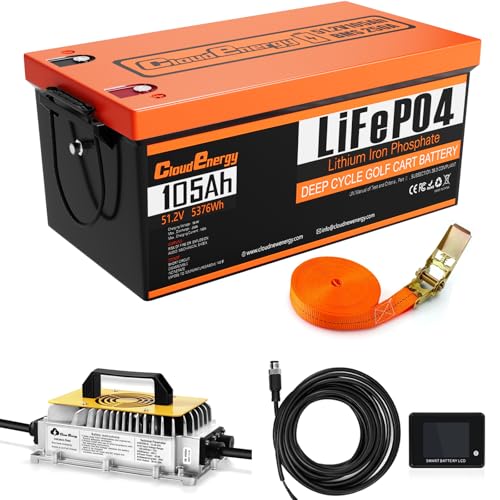
Cloudenergy 48V 105Ah LiFePO4 Lithium Golf Cart Battery

SOK Battery 48V 100Ah LiFePO4 Server Rack Battery

OGRPHY 48V 105Ah Lithium Golf Cart Battery

48V Lithium Battery Golf Cart Batteries Kit
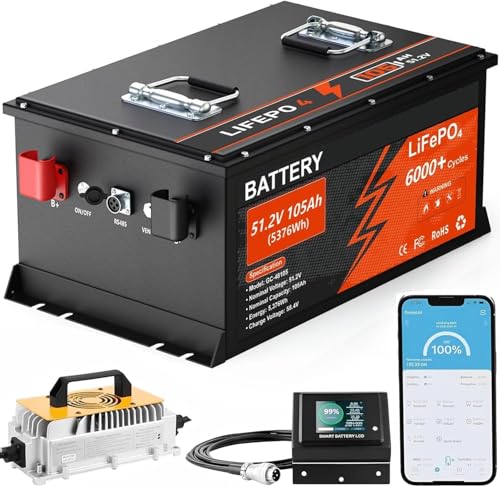
48V 105AH Lithium Battery Golf Cart Metal Case

OGRPHY 48V 105Ah Lithium Golf Cart Battery

OGRPHY 48V 100Ah Lithium Golf Cart Battery
Taking A Closer Look At The Options
The Cloudenergy pack arrives as a complete drop-in solution, with a 250A BMS (the small electronic brain that protects the cells from overcurrent, overheating, and deep discharge), a touch monitor, a mobile app, and a retention strap already in the box. For most cart owners who don’t want to chase down accessories separately, that turns a project into a weekend afternoon. At 51.2V nominal and 105Ah, the real-world capacity lands around 5.37 kWh, which translates to roughly four full rounds on a stock 48V cart before you need to recharge.
The app connection is the quiet win here: owners commonly use it to check state of charge and cell balance without popping the seat. Compared to the lead-acid setups most carts left the factory with, the weight saving alone changes how the cart handles on hills.
Practical Pluses
- Touch monitor plus mobile app give you live state-of-charge and cell health without guesswork.
- Full kit ships with charger, strap, and BMS already matched to the cells.
- 6,000+ cycle rating means years of weekend rounds before meaningful capacity loss.
- Lower weight than lead-acid noticeably improves hill-climbing and braking response.
Points To Keep In Mind
- The included charger is adequate for overnight top-ups, but heavy daily users may want a faster standalone unit.
- Battery dimensions should be confirmed against your specific cart tray before ordering.
Who Should Grab It
Stock 48V cart owners who want one purchase that covers everything and value the app visibility.
Swap It Out When
The OGRPHY 48V 105Ah Lithium Golf Cart Battery fits shoppers who want a touch higher peak current for steeper courses.
Most LiFePO4 owners eventually discover the chemistry’s biggest weakness: cold charging. Charging below freezing can permanently damage the cells. SOK solves this with a built-in 100W heater, so the pack can warm itself before accepting current on frigid mornings. That’s a feature nearly every competitor skips, and it matters more than people expect for off-grid cabins and northern solar sheds.
The server-rack form factor is intentional. Owners commonly mount these in standard 3U or 4U rack enclosures or stack them in custom battery boxes. With 102Ah EV-grade A+ cells, you get 5.12 kWh of usable capacity and a claimed 6,000+ cycle lifespan at 80% depth of discharge (meaning you only use 80% of the rated capacity per cycle, which dramatically extends pack life).
What Stands Out
- Built-in heater lets the pack charge safely in freezing conditions.
- Server-rack profile fits standard enclosures and simplifies cable management.
- EV-grade A+ cells support sustained inverter loads for off-grid living.
- 10-year typical service life expectation at moderate cycling.
Honest Caveats
- No touch monitor or app; you’ll want an external shunt or inverter display for state-of-charge readings.
- Rack form factor means extra planning if you’re building a non-standard enclosure.
- Heater draws power from the pack, so deeply discharged cold starts need a small warm-up window.
Key Specs
Built With In Mind
Off-grid solar users in cold climates who need a rack-friendly pack with genuine winter charging protection.
Look Elsewhere When
The Cloudenergy 48V 105Ah LiFePO4 Lithium Golf Cart Battery is the better route for cart owners who don’t need rack mounting or cold-weather charging.
Where the Cloudenergy focuses on balanced everyday use, this OGRPHY leans into raw output. The 200A BMS pushes a continuous 10.24 kW, with a 1000A peak for three to five seconds to clear tough hills or rough terrain. In our view, that peak headroom matters most on courses with steep climbs or for owners running lifted carts with aggressive tires.
The touch LCD monitor reads state of charge, voltage, and current draw at a glance, which simplifies troubleshooting in the field. Owners commonly mount the monitor in the dash for quick checks between holes.
Where It Delivers
- 1000A peak current clears steep grades and rough ground without bogging the motor.
- Touch LCD monitor displays voltage, current, and remaining capacity in real time.
- 10-year lifespan target with 5,000+ deep cycles under typical use.
- Works with major golf cart controllers without extra adapters.
Trade Offs To Consider
- Higher peak output produces more heat under load, so airflow around the tray matters.
- Slightly heavier than lower-output 100Ah options in the same form factor.
Best Suited To
Cart owners tackling steep courses or running aftermarket motor controllers who need serious peak headroom.
Consider Something Else When
The SOK Battery 48V 100Ah LiFePO4 Server Rack Battery is the smarter pick for off-grid solar builds where rack format and cold-weather charging matter more than cart peak current.
Mehrpow built this kit for first-timers who don’t want to learn battery wiring on a Saturday. The 16 EVE grade A cells arrive pre-assembled with a balanced BMS and a plug-and-play harness, so installation is mostly a matter of dropping the pack into the tray and connecting the existing leads. For cart owners who have never touched a battery upgrade before, that approach removes the intimidation factor.
The 10,000-cycle claim at 80% depth of discharge is the headline number here, far beyond what most golf cart packs advertise. You may find that optimistic in absolute terms, but even at half that lifespan the pack still outlasts several lead-acid replacements.
Standout Benefits
- Plug-and-play wiring removes the need for custom cable work.
- 16 EVE grade A cells with balanced voltage reduce early-life failure risk.
- Exceptional claimed cycle life for a kit at this tier.
- Single-purchase kit covers the core upgrade without accessory shopping.
Things To Weigh
- No app or touch monitor, so you’ll rely on the cart’s factory gauge for state of charge.
- The non-returnable hazardous-materials shipping policy means measuring twice matters.
- Lower continuous output than the OGRPHY 200A BMS options on steep terrain.
Right Fit For
First-time DIYers converting a cart from lead-acid who want the simplest install path possible.
Not Your Match When
The OGRPHY 48V 105Ah Lithium Golf Cart Battery suits shoppers who want app monitoring and stronger peak current.
KEZIMO’s take on the 48V 105Ah form factor leans into a reinforced metal enclosure rather than the more common ABS or plastic shells. On a cart that sees tree branches, cart-path curbs, and the occasional fender bender, that housing provides meaningful peace of mind. The 200A BMS mirrors the OGRPHY performance pack, so peak output stays in the same conversation.
Same story with the touch LCD and mobile app pairing: state of charge, voltage, and current draw all show up in the app, which is a noticeable quality-of-life feature for daily drivers.
Noteworthy Benefits
- Metal case adds impact resistance over standard plastic enclosures.
- 200A continuous discharge with 10.24 kW output handles rough terrain cleanly.
- Touch LCD and mobile app both display real-time battery diagnostics.
- 6,000+ cycle rating supports years of frequent use.
Practical Considerations
- Metal case adds a small amount of weight over plastic-housed alternatives.
- Charger is included but basic; faster charging requires an upgrade.
Key Specs
Whose Shelf It Belongs On
Cart owners running rough terrain, tree-lined paths, or ranch properties where the battery takes occasional knocks.
A Better Fit Elsewhere
The Mehrpow 48V Lithium Battery Golf Cart Batteries Kit is the simpler swap for shoppers who don’t need the upgraded enclosure.
This OGRPHY variant sits in the sweet spot for shoppers splitting time between a cart and a small solar array. The 105Ah capacity works as a daily cart pack and as a usable storage block for off-grid lighting or backup loads. The 200A BMS with 1000A peak handles either job without compromise.
The 4,000+ cycle rating is a touch below the 6,000-cycle competitors, but for mixed-use households that cycle daily, it’s still a multi-year pack. Owners commonly pair this with a small inverter for weekend cabin power.
Everyday Advantages
- Doubles as golf cart power and small solar storage.
- Touch monitor and mobile app both report state of charge in real time.
- 1000A peak current handles motor startup surges comfortably.
- Compatible with major golf cart controllers out of the box.
Small Caveats
- Lower cycle rating than the 6,000-cycle OGRPHY sibling at the same capacity.
- 18A onboard charger means overnight recovery between heavy-use days.
Made For
Shoppers splitting pack use between a cart and a modest off-grid solar setup who want one battery doing both jobs.
Reach For A Different Pick When
The SOK Battery 48V 100Ah LiFePO4 Server Rack Battery is the better answer for dedicated solar storage with cold-weather exposure.
The defining feature here is the onboard 18A charger. Instead of hauling a separate charger in and out of the cart bay, owners can plug a standard extension cord straight into the battery and top up wherever a 110V outlet lives. For carts stored outdoors at a cabin or second property, that convenience is hard to overstate.
Capacity sits at 100Ah (5.12 kWh) with a 200A BMS pushing 10.24 kW continuous. The 5,000+ cycle lifespan lands in the middle of the pack range, solid for daily cart use without being the longest-rated option.
Useful Touches
- Onboard charger eliminates the separate charger-in-the-garage routine.
- 10.24 kW continuous output handles hill climbs and rough ground.
- 5,000+ cycle lifespan covers years of typical daily use.
- Compact 100Ah form factor fits common 48V cart battery trays.
Worth Bearing In Mind
- Onboard charging is slower than high-amperage standalone units.
- 100Ah is slightly less range than 105Ah alternatives from the same brand.
Key Specs
Perfect Match For
Cart owners without a dedicated charger spot who want to plug in wherever an outlet is available.
Where Another Pick Suits Better
The Cloudenergy 48V 105Ah LiFePO4 Lithium Golf Cart Battery suits shoppers who want a touch more capacity and an app to match.
What To Weigh Before Choosing A 48v Lifepo4 Battery
Capacity vs Footprint
The headline Ah number tells you how much energy the pack holds, but the real question is how that maps to your cart or solar setup. A 100Ah pack delivers 5.12 kWh, while a 105Ah pack offers a small bump to roughly 5.37 kWh. For most weekend cart owners that difference is negligible, but daily drivers covering long courses will feel the extra range. Always confirm the physical dimensions against your battery tray before ordering, especially on carts that originally shipped with lead-acid packs of different sizes.
BMS Continuous vs Peak Current
The BMS rating splits into two numbers: continuous output, which is the current the pack can deliver indefinitely without overheating, and peak output, which is a short burst for motor startup or surge loads. A 200A continuous BMS paired with 1000A peak headroom handles lifted carts, steep grades, and rougher terrain. Lighter setups with 250A continuous, like the Cloudenergy option, are perfectly adequate for flat courses and standard motor controllers.
Cold Weather And Storage
LiFePO4 chemistry dislikes cold charging. Below freezing, the cells can be permanently damaged if current is forced in. If your cart or solar setup lives outdoors in a northern climate, the SOK pack’s built-in heater is more than a gimmick; it’s the difference between a pack that lasts a decade and one that fails after a single bad winter. For temperate climates, cold protection matters less and can be skipped.
Cycle Life And Long-Term Cost
Cycle ratings describe how many full charge-discharge cycles the pack handles before hitting 80% of original capacity. A 4,000-cycle pack still delivers many years of service, while 6,000 or 10,000-cycle options push into the decade-plus range. Higher cycle ratings usually come with EV-grade or grade A+ cells and tighter manufacturing tolerances, which is worth considering if you cycle daily.
Display, App, And Charger
Modern 48V LiFePO4 packs often include monitoring touchscreens and mobile apps, while basic kits leave you relying on the cart’s factory gauge. Onboard chargers, like the one in the OGRPHY 100Ah, eliminate the need to haul a separate brick to the cart every night. Think about which convenience features actually match your charging routine before paying for extras you won’t use.
Key Considerations Across These Picks
Traps First Timers Fall Into
The most common mistake is assuming any 48V LiFePO4 pack fits any 48V cart. Battery trays vary by manufacturer and year, and physical dimensions can differ even when the voltage matches. Measure the tray first, then compare against the listed dimensions. Another slip-up is overlooking the charger’s amperage. A small 5A or 10A charger on a 100Ah+ pack means very long charge times, which adds friction to daily use.
What Separates Premium From Basic
The jump to premium tier buys three things that matter over time: grade A or EV-grade cells with tighter internal resistance, higher continuous BMS ratings for demanding terrain, and useful monitoring via touchscreens or apps. You also tend to get more robust enclosures and longer cycle ratings. For casual weekend use, mid-tier packs deliver most of the value, but daily drivers and off-grid users feel the difference within the first season.
Frequently Asked Questions
How long does a 48V LiFePO4 battery actually last?
Under typical weekend cart use, most quality packs deliver 8 to 10 years before capacity drops meaningfully. Daily cycling shortens that, but even heavy users commonly see 5+ years before considering a replacement.
Can I swap my lead-acid batteries for LiFePO4 without changing anything else?
In most cases, yes. The voltage matches, the footprint is often similar, and the existing cart wiring handles the load. The one exception is older carts with voltage-based fuel gauges that read inaccurately with lithium chemistry; in those cases, a small monitor upgrade solves the problem.
Is a higher BMS rating worth the extra cost?
Runners covering hilly courses, lifted carts, and any setup pulling sustained high current benefit noticeably from a 200A or higher continuous BMS. Flat-course casual users with stock controllers can comfortably run a 200A pack without ever approaching its limits.
Do I need to worry about cold weather?
Charging below freezing is the real concern, not discharge. If your cart or solar array sits outdoors in winter, look for a pack with a built-in heater or plan to charge indoors. Owners in mild climates can skip this consideration entirely.
What’s the realistic charging time?
An 18A charger on a 100Ah pack takes roughly five to six hours from empty. Larger packs and smaller chargers stretch that further. Heavy daily users often add a faster standalone charger to cut turnaround time.
Closing Remarks
The right 48V LiFePO4 battery depends entirely on where and how you plan to use it. Cart owners chasing simple weekend upgrades get the most from app-equipped 105Ah kits, while off-grid solar users in cold climates benefit most from rack-formatted packs with built-in heaters. Match the pack to your actual routine, and the rest of the ownership experience takes care of itself.
