

I’ve watched enough friends wrestle with dead golf carts and dead lithium packs to know that the charger matters more than the marketing suggests. A mismatched unit shortens battery life, cooks cells, or simply refuses to top off a pack sitting in a cold driveway. The right pick depends on whether you’re maintaining a stock lead-acid setup, upgrading to LiFePO4, or hunting for a portable brick that handles off-grid storage and DIY solar banks. I put this lineup together for riders, property owners, and tinkerers who want a charger that quietly does its job without babysitting. Here’s what I found when I sorted the genuinely useful options from the noisy ones.
The Lineup, Simplified

FORM 48 Volt Golf Cart Battery Charger for EZGO RXV & TXT Carts

Mehrpow 48V Lithium Golf Cart Battery Conversion Kit

FORM Charge 48V Smart Charger for ICON Carts

DC HOUSE 48V 100Ah LiFePO4 Kit with Bluetooth

Xnvua 58.4V 20A LiFePO4 Charger
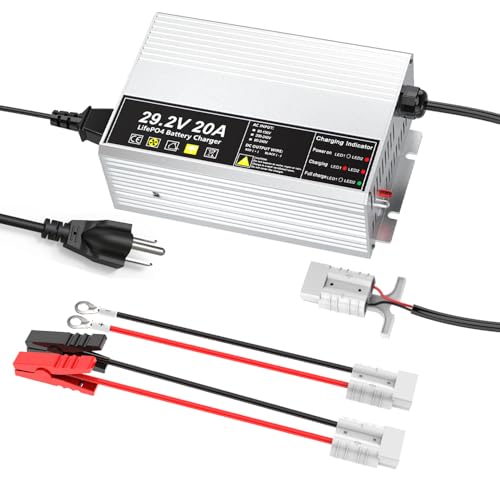
Xnvua 29.2V 20A LiFePO4 Charger
A Deeper Look At The Lineup
EZGO owners have historically gotten the short end of the charger stick, paying OEM prices for heavy units with proprietary plugs. This FORM charger breaks that pattern by shipping with the EZGO triangle connector already attached, so there’s no rewiring and no adapter hunt the first time you plug in. The 15A output hits a sweet spot: quick enough to refill a depleted pack overnight, gentle enough to avoid cooking the lead-acid cells that most stock EZGO carts still run.
The extended 14-foot cable run is the kind of detail you only appreciate after dragging a stock charger across a wet driveway. Owners commonly report the lighter weight makes it easier to hang in the garage or toss in the back of the cart for emergency top-ups at the course.
What Makes Sense
- Native EZGO triangle plug eliminates adapter hassle
- 15A output balances charging speed with battery longevity
- 14-foot total cable reach suits longer driveways and awkward parking spots
- Noticeably lighter than the OEM unit, easier to handle day-to-day
Things To Consider
- Tuned for lead-acid; not the right tool if you’ve already swapped to lithium
- EZGO-only fit, so Club Car and Yamaha owners should look elsewhere in this list
Feature Snapshot
Who It Suits Best
EZGO RXV or TXT owners running stock lead-acid packs who want a lighter, longer-cable replacement for an aging OEM charger.
Look Elsewhere When
ICON owners should pick the FORM Charge ICON unit instead, since their carts use a different receptacle.
Swapping a six-pack of lead-acid batteries for a single lithium drop-in sounds intimidating until you see how the Mehrpow kit is laid out. The pack arrives pre-assembled with grade-A EVE LiFePO4 cells (that’s lithium iron phosphate, the chemistry known for thermal stability and long cycle life) wired through a balancing BMS (battery management system, the onboard circuitry that keeps individual cells from drifting out of sync). At 48V 100Ah, it’s a full replacement for the lead-acid cluster, not a half-measure add-on.
The honest read is that this is a chemistry swap more than a charger swap, and most owners treat it as a once-in-a-decade upgrade. The 10,000-cycle claim matters because it sidesteps the lead-acid replacement treadmill that quietly adds up over a cart’s life.
Key Advantages
- Plug-and-play layout cuts installation to roughly an afternoon for most DIYers
- 10,000+ deep-cycle rating vastly outlasts typical AGM (absorbent glass mat) lead-acid packs
- Grade-A EVE cells with UL-listed safety credentials
- Drops weight from the cart, improving acceleration and reducing suspension wear
Worth Noting
- Hazmat-classified shipping limits return options once the box ships
- Existing charger may need swapping for a LiFePO4-compatible unit
- Higher upfront cost than patching worn lead-acid with a single replacement cell
Made For
Cart owners tired of watering lead-acid cells and ready to commit to a lithium platform with a long service horizon.
Consider Something Else When
Shoppers who want monitoring built into the kit should look at the DC HOUSE 48V 100Ah unit, which adds Bluetooth and an LCD readout.
ICON carts use a different receptacle than EZGO, Club Car, or Yamaha, which is why generic chargers rarely fit them cleanly. The FORM Charge unit ships with that ICON connector pre-wired and accepts lead-acid, AGM, or LiFePO4 packs on the same chassis, which is unusual at this price tier. That flexibility matters if you’re mid-upgrade and don’t want to replace the charger again when the battery chemistry eventually changes.
Ring terminals simplify the wiring side, and the maintain-mode behavior keeps the pack topped off without overcooking it during long storage. For an ICON owner, this fills the same role the FORM EZGO unit plays for that brand.
Advantages To Know
- Multi-chemistry support covers lead-acid, AGM, and LiFePO4 on one unit
- ICON-specific connector ships pre-wired, no adapter or rewiring needed
- Maintenance mode preserves charge without overcharging during off-season storage
- 15A output is a balanced rate for full-pack recovery overnight
Trade Offs
- ICON-only fit, so it won’t help if your fleet spans multiple cart brands
- Onboard form factor may not suit those wanting a portable shop charger
Quick Facts
Right Fit For
ICON cart owners who want a single charger that survives a battery chemistry swap down the road.
Skip It When
EZGO owners should pick the FORM EZGO Triangle Plug unit, since ICON connectors won’t seat in their carts.
Some lithium kits treat you like a back-seat mechanic; the DC HOUSE kit hands you an app. The metal-case battery pairs with a Bluetooth module and an LCD monitor, so you can check state of charge, cell balance, and temperature without popping the seat. The included 18A charger sits between FORM’s 15A and the Xnvua 20A units in raw speed, but the BMS (battery management system) handles a 200A continuous draw with a 670A peak for hill climbs.
If you’ve been burned by mystery battery fault codes in the past, the diagnostic readout earns its place. The unit is targeted at owners who want more visibility than a basic green-or-red status light provides.
Positive Takeaways
- Bluetooth app and LCD monitor deliver real-time cell-level data
- 200A BMS with 670A peak current handles steep terrain
- Drop-in replacement for 6-8V lead-acid banks with no rewiring
- 4000+ cycle rating under typical use conditions
Points To Keep In Mind
- Heavier than compact LiFePO4 packs, so plan help for the install
- App pairing requires a modern phone and patience on first setup
- Mid-range charging speed compared to 20A aftermarket units
Best Suited To
Cart owners who like data and want Bluetooth telemetry rather than guessing at battery state by voltage alone.
A Better Fit Elsewhere
Shoppers prioritizing long cycle life over app features may prefer the Mehrpow 48V 100Ah kit’s 10,000-cycle rating.
Standard golf cart chargers run 10-15A, which works fine overnight but drags when you need a quick turnaround. The Xnvua 58.4V 20A unit pushes higher amperage at the LiFePO4 sweet spot, meaning a deeply drained 100Ah pack refills in roughly five hours instead of seven or eight. The 58.4V cutoff matches what LiFePO4 cells actually want, not the lead-acid voltage curve that bricks chargers tend to apply.
Protection circuitry covers low-voltage, over-voltage, over-current, over-temperature, and short-circuit scenarios, which matters because a stuck fan or a loose connector shouldn’t fry a $1,000 battery.
The Value In It
- 20A output cuts full-pack charging time meaningfully
- LiFePO4-specific voltage profile avoids the slow-burn damage of mismatched chargers
- Multi-layer protection covers thermal and electrical fault modes
Honest Caveats
- Not a drop-in golf cart charger; you wire it to the pack directly
- Requires a LiFePO4 battery to charge, so lead-acid carts need a different pick
- Higher amperage means more heat under load, so ventilation around the unit matters
Spec Overview
Whose Shelf It Belongs On
DIYers with large LiFePO4 battery banks who want faster turnaround than stock 15A golf cart chargers provide.
Reach For A Different Pick When
Stock lead-acid EZGO owners should pair their cart with the FORM 48 Volt EZGO charger instead.
I included the 24V version because not every lithium project is a full-size cart. Trolling motors, mobility scooters, and small solar storage banks all live in the 24V (25.6V nominal) LiFePO4 world, and a 20A charger at that voltage is a useful workshop tool. The same protection suite as its 48V sibling applies, which means you don’t sacrifice safety for the smaller form factor.
The honest read is that this is a specialty pick for the right-sized job, not a substitute for a golf cart charger. It earns its place in the lineup because “48 volt” gets searched by anyone running adjacent lithium setups.
Practical Advantages
- 20A output for 24V LiFePO4 packs refills faster than typical 5-10A units
- Compact brick form factor stores easily on a shelf
- Full protection circuit suite covers common fault modes
Some Limits To Know
- 24V only; mismatching to a 48V pack risks cell damage
- Not a plug-and-play golf cart solution; requires manual wiring to the pack
Perfect Match For
Hobbyists running 24V LiFePO4 banks for trolling motors, small solar setups, or mobility equipment.
Another Choice May Suit
Golf cart owners should grab the Xnvua 58.4V 20A unit, which targets the higher-voltage pack their cart actually uses.
Picking The Right Charger For Your Setup
A 48V battery charger sounds like a single product category, but it’s really three: cart-specific plug-and-play units, lithium upgrade kits with bundled chargers, and standalone LiFePO4 power supplies for DIY battery banks. Matching the connector and chemistry to your pack matters more than chasing amperage. Lead-acid wants lower charging rates to avoid boiling electrolyte; lithium wants a precise voltage cutoff that lead-acid chargers don’t deliver.
Cable reach and weight shape daily use far more than spec sheets suggest. A 14-foot total run means you can park the cart where it lives and reach the nearest outlet, while a brick-style 20A charger works best on a bench near the pack. Onboard units sacrifice portability for a clean installation. Decide which trade-off matches your routine before falling for a higher-amperage number.
Existing battery chemistry is the deciding filter. Lead-acid EZGO and ICON carts get the FORM triangle-plug and ICON-specific units respectively, while lithium conversions pair with the Xnvua 58.4V 20A or skip the dedicated charger entirely if the kit ships one. Mixing a lead-acid charger with a LiFePO4 pack shortens cell life; mixing a lithium charger with flooded lead-acid cooks the water out. The cycle rating only matters if the chemistry profile actually matches.
For most households, a single dedicated charger that matches the cart’s connector and the pack’s chemistry is the right scope. Add a portable 20A unit only if you maintain multiple battery banks or need faster turnaround between rounds.
Key Considerations Across These Picks
Wrong Turns To Avoid
Buying a charger with the right voltage but the wrong connector is the most common slip-up in this category. EZGO, ICON, Club Car, and Yamaha carts each use a different receptacle, and adapters are unreliable at best. Confirm your cart’s plug style before ordering. The second trap is assuming any 48V charger works on any 48V battery. Lithium iron phosphate wants a 58.4V cutoff, while lead-acid wants a lower absorption voltage. Mismatching slowly damages cells, and the failure shows up months later as reduced capacity.
When Paying More Pays Off
Premium models in this category earn their keep through longer cable runs, lighter cases, and multi-chemistry support. A charger that handles lead-acid today and LiFePO4 after a battery swap saves the cost of a second unit. Higher amperage matters only when you actually need faster turnaround; overnight charging on a 15A unit suits most weekend riders. The upgrade pays off when the convenience features line up with how you actually use the cart.
Frequently Asked Questions
Can I use a 48V lithium charger on a lead-acid golf cart battery? No, the voltage profiles differ and a lithium charger’s higher cutoff will cook electrolyte out of flooded lead-acid cells over time, reducing capacity and shortening pack life.
How long does a 48V golf cart charger take to refill a dead pack? A 15A charger typically needs 6 to 8 hours for a full lead-acid pack from empty, while a 20A lithium charger can cut that to roughly 5 hours for a comparable LiFePO4 bank.
Do I need a special charger for LiFePO4 batteries? Yes, LiFePO4 cells require a charger that targets a 58.4V cutoff with a constant-current, constant-voltage profile, which lead-acid chargers don’t deliver cleanly.
Are onboard chargers better than portable ones? Onboard units offer a clean installation with no setup, while portable chargers give you bench flexibility for maintaining multiple battery banks or doing off-cart diagnostics.
Can I leave a smart charger connected for weeks? Quality smart chargers with maintenance or float modes are designed for long-term connection, but it’s worth confirming the specific unit supports that mode before relying on it for seasonal storage.
The Takeaway
The right charger comes down to your cart’s connector, your battery’s chemistry, and how often you actually need a fast turnaround. Match those three honestly, and the rest of the decision is just cable length and ergonomics. I lean toward the FORM EZGO unit for stock lead-acid carts and the Xnvua 58.4V 20A for serious LiFePO4 setups, but the right pick depends on the specifics of your garage, your course, and your patience for overnight charging.
