

I talk to a lot of golf cart owners who feel stuck between tired lead-acid packs and the growing world of lithium options, so I pulled together a list that covers the practical angle. Some picks help you maintain what you already own, others replace aging cables, and a few step into full lithium territory. There’s no single right answer here, just the right fit for your cart, your budget, and how often you actually drive.
The Picks In Brief

Battery Watering System for ICON Golf Cart 6qty x 8v (48 Volt)

10L0L Golf Cart Battery Cables 4 Gauge Set

OGRPHY 48V Lithium Golf Cart Battery 105AH with Touch LCD

48V Lithium Battery Golf Cart Batteries Kit

OGRPHY 48V Lithium Golf Cart Battery 105AH with App

OGRPHY 48V 100Ah Lithium Battery with Onboard Charger
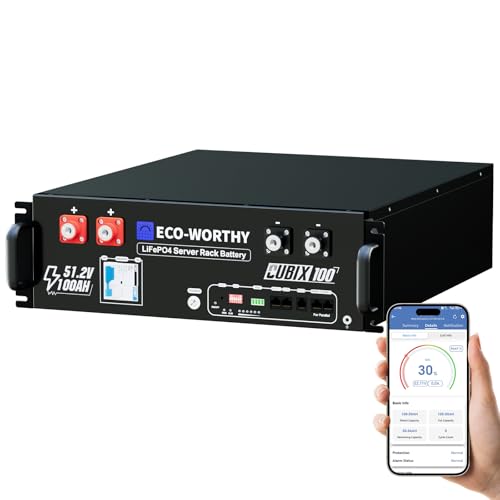
ECO-WORTHY Cubix100 48V 100Ah LiFePO4 Server Rack Battery
Meet The Standout Selections
Lead-acid battery packs (the traditional kind filled with liquid electrolyte) still rule the ICON cart world, and watering them by hand is one of those chores nobody loves. This kit threads a network of valves across your six 8-volt batteries, so each cell fills to the right level without you kneeling with a jug.
For owners who already own an ICON and aren’t ready to jump to lithium, the time savings are real. The system uses a hand-squeeze pump, which means there’s no extra power draw and no controller compatibility questions.
A Few Highlights
- Custom-fit layout for six 8-volt batteries in ICON carts, matching the factory arrangement
- Manual squeeze pump means no extra wiring, no parasitic drain on the pack
- Clear tubing gives a quick visual check that water is actually flowing through each line
- Indicator eye on each valve confirms the cell has reached the correct fill level
- Internal spark arrestor and encapsulated float help keep the working parts safe from electrolyte splash
Worth Noting
- Designed specifically for flooded lead-acid batteries, so it has no use on the lithium picks later in this list
- You’ll still need to check levels based on usage, not just glance at the indicator eye
Whose Garage It Belongs In
ICON owners running Trojan, Powertron, PD+, or Interstate flooded packs and tired of topping off cells one by one.
Look Elsewhere When
Drivers ready to ditch lead-acid entirely should skip this and head straight to the OGRPHY 105AH lithium unit in the third slot.
Before I ever recommend a new battery, I ask one question: when did you last swap the cables? Old, corroded, or undersized wiring silently robs your cart of range and torque. The 10L0L set brings fresh 4-gauge tinned copper (a copper strand coated in tin to resist corrosion) cable runs to Yamaha G2, G8, G9 36-volt carts and Club Car DS models from 1981 onward.
Each pack ships with five 14-inch cables and pre-crimped terminal connectors, so the swap is usually an afternoon project. If your cart feels sluggish even after a full charge, weak cabling is a quiet culprit.
Key Advantages
- Flexible tinned copper strands resist corrosion in humid garage environments
- Replacing old cabling can restore lost power and extend per-charge range
- Pre-attached terminal connectors save a trip to the hardware store
- Covers a wide mix of vintage Yamaha and Club Car DS configurations
Honest Caveats
- Coverage targets older Yamaha and Club Car DS models, so newer E-Z-GO or lithium-native carts won’t match
- Lead-acid carts benefit most; on lithium conversions you may not need this refresh at all
Quick Facts
Right Fit For
Anyone restoring an older Yamaha G-series or Club Car DS and noticing weak cranking or shorter runs.
Consider Something Else When
A lithium drop-in like the Mehrpow kit covered in slot four will replace the whole pack and render this cabling refresh unnecessary.
When the goal is straight-up performance, OGRPHY’s 105AH lithium pack leads this list on raw output numbers. A 200A BMS (the Battery Management System that protects cells from overcharge, over-discharge, and overheating) handles continuous load, with a 1000A peak window for those steep inclines and quick takeoffs. The onboard touch LCD lets you check state of charge at a glance rather than guessing by voltage.
For owners who push their carts hard, hilly terrain, heavy loads, or long back-nine loops, the headroom here is meaningful. It pairs with the included 18A charger, so you don’t have to chase down a separate power supply.
Useful Strengths
- 200A continuous BMS with 1000A peak for short bursts on hills and rough ground
- Touch LCD monitor gives a clear read on charge level and pack status
- LiFePO4 chemistry (lithium iron phosphate, valued for safety and long cycle life) offers a long cycle count versus flooded lead-acid
- 51.2V 105AH capacity covers full-day recreational or neighborhood use
- Compatible with controllers from most major golf cart brands
Things To Consider
- Larger capacity means heavier handling at install time, so plan a second set of hands
- Lithium format requires a compatible charger, though one ships in the box
Feature Snapshot
Built With In Mind
Performance-focused owners with hilly courses, larger payloads, or regular long-distance drives.
Reach For A Different Pick When
Casual neighborhood drivers may find the OGRPHY 105AH with app monitoring (slot five) plenty for the money.
Mehrpow’s kit answers the question I hear most often: “Can I just swap the batteries without rewiring my whole cart?” The answer, for many configurations, is yes. This 48V 100AH LiFePO4 setup is built around grade-A cells (manufacturer-graded cells that meet the top performance bin) with a one-time install and no complicated harness work for most common carts.
The deeper draw depth (the percentage of total capacity you can actually use before recharging) is where LiFePO4 pays off, since lead-acid owners typically only tap half their rated capacity without harming the cells. Mehrpow’s pack supports a higher depth of discharge, so usable range grows even at the same stated capacity.
Benefits That Matter
- Long cycle count at 80% depth of discharge (how empty you can safely drain it before recharging) gives years of service before replacement
- Grade-A prismatic cells (rectangular hard-cased cells that stack neatly and resist swelling) hold balanced voltage across the pack
- Single-unit design removes the need to wire six individual batteries in series
- Drop-in format cuts install time for first-time upgraders
Some Limits To Know
- Marked non-returnable due to hazmat shipping rules, so verify fit before ordering
- Some custom controller setups may still need an adapter or firmware check
Core Details
Best Suited To
First-time lithium upgraders with a standard 48V cart who want a clean, single-pack swap.
Swap It Out When
Drivers who want app connectivity built in should pivot to the OGRPHY 105AH with mobile monitoring covered in slot five.
For owners who like data, this OGRPHY 105AH pack builds on the same platform as slot three but layers in mobile app connectivity. Where the touch LCD tells you state of charge at the cart, the phone app pushes that same info (and more) into your pocket, so you can check on the pack between rounds or while it’s parked in storage.
The 200A BMS and 1000A peak figures match the sibling pack, so you give up nothing on the power side. The 18A charger still ships in the box, keeping the upgrade self-sufficient.
Practical Advantages
- Mobile app gives remote visibility into voltage, temperature, and charge cycles
- Same robust 200A continuous BMS as the LCD-only sibling in slot three
- Grade-A prismatic LiFePO4 cells support thousands of deep cycles
- Higher 5kWh-class capacity replaces eight lead-acid batteries in one unit
Points To Note
- App features require Bluetooth pairing, which adds one extra setup step at install
- You may find the touchscreen redundant if you primarily rely on the phone app
Who Will Love This
Tech-friendly owners who want every cell’s status in their pocket and don’t mind pairing a Bluetooth device once.
Another Choice May Suit
Pure plug-and-play shoppers who want no app setup should step back to the Mehrpow kit in slot four.
This OGRPHY entry solves a quiet annoyance with many lithium conversions: where do you mount the charger? The onboard 18A LiFePO4 charger lives inside or right on the battery unit, so a standard extension cord and a wall outlet is all you need at the end of the day.
At 5.12kWh capacity, this 48V 100AH pack covers typical neighborhood or course use without breaking a sweat. Owners replacing the whole pack plus the old charger get a tidy, single-package solution.
Where It Delivers
- Built-in charger removes the need for a separate cart-mounted charger box
- 10.24kW continuous output supports confident hill climbing
- 1000A peak current handles short high-load bursts without sag
- Long cycle count at deep depth of discharge for years of service
Where It May Fall Short
- Onboard charger placement may not suit every battery tray layout
- Some owners prefer the dedicated external charger that comes with the other OGRPHY entries
Perfect Match For
Shoppers replacing both the battery and the old charger in one go and wanting the cleanest install possible.
Not Your Match When
Drivers who already own a working lithium-compatible charger can save space with the Mehrpow kit in slot four instead.
Not every 48V battery lives in a golf cart. The ECO-WORTHY Cubix100 sits in a server-rack form factor, aimed at stationary setups like solar banks, off-grid cabins, or backup power walls. The 48V 100Ah LiFePO4 chemistry gives a stable platform for inverters and charge controllers that expect that voltage class.
Closed-loop communication lets compatible inverters and chargers talk to the battery, sharing state of charge and protection data in real time. If your project is more shed than fairway, this is the format you actually want.
Notable Gains
- Server-rack form factor fits standard 19-inch equipment racks
- Closed-loop communication enables smarter inverter and charger behavior
- 48V class matches common residential and small-commercial inverter inputs
- LiFePO4 cells give a long cycle count for daily solar cycling
Things To Weigh
- Rack format isn’t a drop-in for golf cart battery trays, so cart owners should look elsewhere
- Best paired with a compatible inverter to unlock the communication features
Made For
Solar users, off-grid cabin owners, and anyone building a stationary 48V backup wall rather than driving a cart.
Skip It When
Cart owners should head back to the OGRPHY 105AH LCD pack in slot three for a true drop-in replacement.
What Matters Most Before Choosing 48 Volt Battery
Match The Pack To Your Existing System
The first decision is whether you’re keeping lead-acid or stepping into lithium. A flooded lead-acid cart (the kind with removable caps and refillable water) needs watering and equalizing charges (periodic overcharges that balance the cells), while a LiFePO4 conversion asks for a compatible charger and BMS. Mismatching these is the most common mistake I see, so confirm your controller and motor specs before buying anything new.
Capacity Versus Real-World Range
Amp-hour ratings look clean on the box, but usable range depends on depth of discharge. Lead-acid typically only delivers about half its rated capacity without shortening life, while LiFePO4 can go deeper safely. A 100AH lithium pack often matches or beats a 200AH lead-acid setup in actual on-course performance.
Form Factor And Mounting
Golf cart trays, server racks, and solar sheds all want different shapes. Measure your battery compartment before ordering, especially on conversions where weight and dimensions shift dramatically between chemistries. Lithium cuts a lot of pounds, which changes how the cart sits and handles.
Cable And Charger Refresh
New batteries paired with old cables and weak chargers leave performance on the table. If your wiring is corroded or undersized, a fresh 4-gauge set plus a modern charger closes the gap between spec-sheet output and what you actually feel at the pedal.
Key Considerations Across These Picks
Pitfalls Shoppers Hit
The biggest trap is treating capacity as the only spec that matters. A 105AH pack with a weak BMS will throttle itself long before it delivers the rated output, especially on hills or with heavy loads. Double-check continuous and peak amperage, not just the headline amp-hours.
Another common miss is ignoring the charger’s role. Lithium chemistries need a charger that speaks their language, with the right voltage cutoff and temperature sensing. A mismatched charger can quietly shorten pack life even when everything else looks correct.
Where The Extra Money Goes
Higher-tier models in this category usually add three things: a more capable BMS, a longer cycle count, and extras like onboard chargers or mobile monitoring. None of those matter for every owner, but they earn their keep for daily drivers or anyone planning to keep the cart long term.
For weekend recreational use, a mid-tier lithium kit delivers most of the practical benefit. For daily work duty, the jump to a high-output pack with peak headroom pays back in fewer headaches and longer service life.
Frequently Asked Questions
How long does a 48V lithium golf cart battery usually last?
A quality LiFePO4 pack typically delivers thousands of deep cycles, which for a daily-driven cart can translate to many years before capacity drops noticeably.
Can I replace lead-acid batteries with lithium without changing my charger?
Most modern lithium packs need a compatible charger to manage voltage cutoff correctly, so it’s safest to use the charger included with the new pack or one specified by the maker.
What does the BMS do inside a 48V lithium battery?
The Battery Management System protects the cells from overcharge, over-discharge, and excessive current draw, which is what lets the pack deliver its rated output safely.
Are 48V lithium golf cart batteries worth the higher cost?
For frequent drivers, lithium often wins on usable capacity, weight savings, and reduced maintenance, while occasional users may not see enough benefit to justify the price jump.
Can a server-rack 48V battery power a golf cart?
A rack-format pack isn’t shaped for a cart’s battery tray, so it usually needs custom mounting and cabling rather than a true drop-in swap.
Bottom Line
The best pick depends on where your cart is today. Owners with healthy lead-acid packs can stretch their investment with a watering system or fresh cables, while everyone else gets a cleaner, lighter ride by stepping into a lithium kit that matches their controller and terrain. Match the format to the cart, refresh the wiring when needed, and the rest of the upgrade tends to take care of itself.
