

A 400ah lithium battery is the kind of upgrade that quietly reshapes how you use a boat, RV, solar shed, or backup closet. Once you swap a heavy lead-acid bank for a modern LiFePO4 setup, you stop rationing amp-hours and start planning trips around where you actually want to go. I pulled together seven solid options across the 100Ah, 280Ah, 300Ah-class, and 314Ah categories, all of which can be combined to hit roughly 400ah of usable capacity. Here’s what each one brings to the table.
An Overview Of The Picks

Litime 12V 100Ah Trolling Motor LiFePO4 Battery (2-Pack)
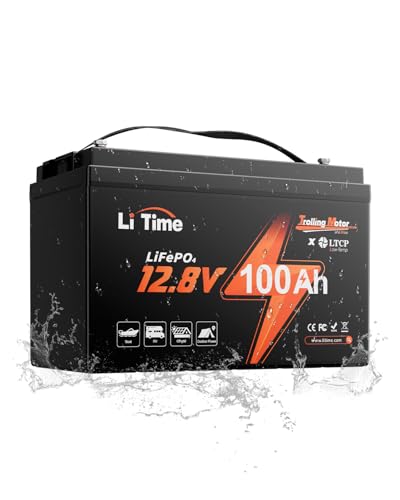
Litime 12V 100Ah LiFePO4 Battery Group 31 IP65

ECO-WORTHY 12V 314Ah LiFePO4 Battery Bluetooth SOC
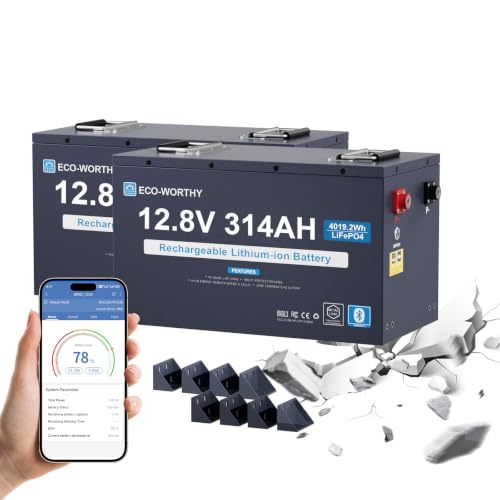
ECO-WORTHY EnergyRock 12V 280Ah LiFePO4 2-Pack
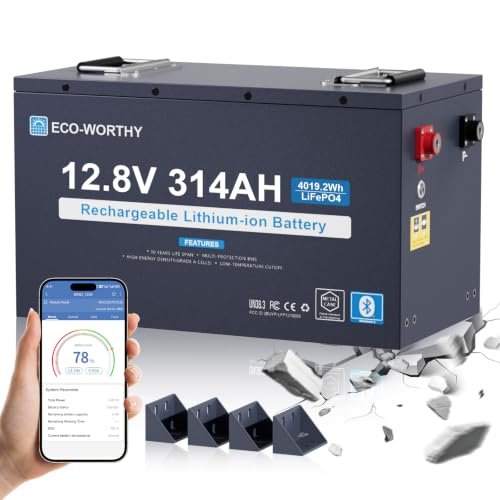
ECO-WORTHY 12V 280Ah Metal Case LiFePO4 Bluetooth

Enjoybot 36V 100Ah LiFePO4 Battery Bluetooth

Renogy 12V 100Ah Trolling Motor LiFePO4 Battery IP67
The Picks, Examined More Closely
Litime’s two-pack of 100Ah Group 24-sized LiFePO4 batteries shows up ready for the kind of weekend where you launch Friday and come back Sunday. Bluetooth links to your phone in seconds so you can check state of charge without popping the hatch, and the BMS (battery management system, the onboard circuit that guards against overcharge, over-discharge, and shorts) shuts charging down below 32°F and discharging below -4°F. Two units wired in parallel (positive to positive, negative to negative) push you to roughly 200Ah of usable capacity at 12V, which doubles overnight if you add a second pair later.
For most backwater anglers and small jon-boat owners, this pairing hits a sweet spot: enough capacity for an electronics-heavy trolling session, without dragging the boat’s weight down. Compared with the larger ECO-WORTHY single-box picks below, you trade a compact single-unit footprint for the flexibility of a swappable pair.
Good Reasons To Consider
- Two matched batteries ship together, so you skip the guesswork of pairing cells from different batches.
- Bluetooth monitoring means a quick glance at your phone replaces crawling into a bilge with a multimeter.
- Low-temperature cutoff protects the cells in shoulder-season mornings when the lake air bites.
- Group 24 sizing drops into common marine trays without custom brackets.
Things To Consider
- Wiring two units in parallel means matching cable lengths and using a proper busbar, otherwise one battery ends up doing more work than the other.
- Two-pack shipping weight adds up, so plan a hand-truck if your dock has stairs.
Built With In Mind
Weekend anglers running a 12V trolling motor on a small boat or kayak support boat who want a turnkey pair rather than building capacity from scratch.
Reach For A Different Pick When
The Renogy 12V 100Ah Trolling Motor LiFePO4 Battery fits tighter Group 24 trays better if your boat’s compartment is unusually shallow.
This single 100Ah Group 31 unit is built around the ABYC E-13 marine safety standard, with a triple-layer BMS that adds dust, water, and salt-spray resistance to the usual electrical safeguards. The IP65 rating (a two-digit ingress standard where 6 means dust-tight and 5 means resistant to low-pressure water jets) keeps spray and rain off the terminals, which matters on open boats where a green season’s worth of splash would otherwise creep into cheaper housings. Litime pairs the cells with EV-grade lithium chemistry for a deeper cycle life than older LiFePO4 mixes.
For saltwater weekends and cabinet installs in Class B RVs, the extra sealing pays for itself over a couple of seasons. Where the Litime 12V 100Ah Trolling Motor LiFePO4 Battery 2-Pack above gives you more total capacity, this single-unit option trades a battery companion for a tougher shell.
Why It Works Well
- ABYC E-13 alignment means the BMS has been designed against a published marine electrical standard rather than a generic industrial one.
- IP65 sealing resists the spray that builds up in rougher saltwater runs.
- EV-grade cells push the deep-cycle rating higher than older consumer-grade LiFePO4 mixes.
- Cold-cutoff charging at 32°F protects cells in early-morning launches.
- Up to 4P4S (four in parallel, four in series) expandability if you want to grow to a 36V or higher-amp bank later.
Honest Caveats
- Group 31 is a taller footprint than Group 24, so measure your tray before committing.
- For freshwater weekenders who never see spray above the waterline, the extra sealing is overkill compared to a standard Group 24 pick.
Feature Snapshot
Right Fit For
Saltwater boaters and Class B RV owners who want marine-standard sealing without stepping up to a 200Ah-plus single box.
Consider Something Else When
The ECO-WORTHY 12V 314Ah LiFePO4 Battery Bluetooth SOC is the better match for off-grid cabins that need one large box rather than paralleled 100Ah units.
The upgraded 314Ah ECO-WORTHY is the single-box answer for anyone who wants to land near the 400ah class without wiring multiple batteries together. Around 4019Wh of stored energy runs a fridge, lights, fan, and small inverter for days in a modest off-grid setup. The built-in SOC (state of charge) LED screen shows remaining capacity at a glance, which is handier than it sounds when you’re not the type to keep a phone on a Bluetooth app.
For solar sheds, van builds with a big inverter, or backup closets that need to ride out multi-day outages, this unit replaces a wall of 100Ah batteries. Compared with the paired Litime options above, you give up the modularity of swapping one bad cell for one fresh unit.
Real Benefits
- One box handles the same capacity that used to require four paralleled 100Ah units.
- SOC LEDs give an instant read without firing up an app.
- 200A continuous BMS handles inverters in the 2000W range without tripping.
- Low-temperature cutoff protects cells in unheated garages and barns.
Worth Noting
- Single-box failure means your whole backup goes dark; with a paired setup, you can limp along on one good battery.
- The large enclosure needs a sturdy shelf or strap-down, especially in moving vehicles.
The Right Fit
Off-grid cabin owners and van-lifers running solar arrays who want one large battery instead of a paralleled bank.
Look Elsewhere When
The ECO-WORTHY EnergyRock 12V 280Ah LiFePO4 2-Pack offers redundancy if you’d rather spread risk across two boxes than one.
Two 280Ah units paralleled give you roughly 560Ah at 12V, which overshoots the 400ah mark with headroom to spare. The metal-cased design (an upgrade from the earlier plastic shell) handles thermal stress better in unventilated battery bays and resists punctures if a loose tool ends up in the wrong place. Bluetooth on each unit means you can monitor both cells independently, which matters for catching imbalance before it becomes a real problem.
For a small home backup, an RV with residential-style loads, or a travel trailer running a 12V fridge and inverter, the redundancy of two units is the headline feature. If one cell ever drops out, the other keeps the lights on.
Where It Excels
- Metal case shrugs off workshop bumps and summer attic heat better than plastic housings.
- Independent Bluetooth on each unit lets you spot the weaker cell before it drags the pair down.
- Two-box redundancy keeps critical loads alive if one battery fails.
- 200A BMS per unit supports common 2000W to 3000W inverters.
Practical Considerations
- Paralleling two large units demands equal-length cables and matched fuses; sloppy wiring stresses one battery harder than the other.
- The combined footprint is bigger than a single 314Ah ECO-WORTHY box, so plan the bay dimensions first.
Key Specs
Whose Shelf It Belongs On
RVers and small-home backup owners who want redundant capacity spread across two boxes rather than one large single unit.
A Better Fit Elsewhere
The ECO-WORTHY 12V 280Ah Metal Case LiFePO4 Bluetooth fits the same capacity profile but as one box, so solo installers with tight bays should look there instead.
This single 280Ah unit delivers the same metal-case durability as the EnergyRock 2-Pack above, but in a one-box form factor for installers who don’t want to wire pairs together. The low-voltage cutoff switch on the housing lets you kill output with a single press, which is a small detail that becomes a big deal when you’re storing the battery for winter or doing maintenance on a downstream inverter.
Garage solar banks, trolling-motor skiffs, and weekend camper vans all benefit from the cleaner single-cable install. You give up the redundancy of the 2-Pack but gain a simpler, tidier build.
Points In Its Favor
- Single-box install means fewer cables, fewer fuses, and less parallel-balancing fuss.
- Metal case shrugs off knocks in a garage or under a van seat.
- Onboard cutoff switch simplifies long-term storage and service.
- Bluetooth gives you app-level visibility without opening the case.
Points To Keep In Mind
- A single-box setup has no fallback if the unit itself fails; the Litime 12V 100Ah Trolling Motor LiFePO4 Battery 2-Pack offers redundant pairing at smaller per-unit capacity.
- The metal case adds a few pounds over plastic-housed equivalents in the same class.
Best Suited To
Solo installers and weekend RV owners who want a tidy single-box install without parallel-cable math.
Swap It Out When
The Enjoybot 36V 100Ah LiFePO4 Battery Bluetooth is the better match for 36V golf-cart and trolling setups where series wiring is the goal.
The Enjoybot drops straight into a 36V golf-cart or 36V trolling-motor setup without the usual string of three 12V batteries. The 100A BMS, peak surge of 500A, and built-in Bluetooth cover the way most people actually drive these carts: long, steady draws with short bursts for hills. Grade-A prismatic cells (large-format, rigid lithium cells favored for their thermal stability and longer cycle life) keep the cycle count respectable, and the cold-cutoff function mirrors the marine-oriented picks above.
For golf-cart owners tired of watering lead-acid banks and RV tinkerers running 36V trolling systems, this one-box approach is the cleanest path. The amp-hour rating lands below the 400ah target, but two in parallel jump to 200Ah at 36V, which packs a serious punch.
A Few Highlights
- Native 36V output eliminates the series-wiring mistakes that plague DIY golf-cart conversions.
- Peak 500A handles hill climbs and heavy throttle bursts without tripping protection.
- Bluetooth app reports state of charge and individual cell health.
- Prismatic cell construction favors long cycle life in daily-driving use.
Less-Strong Areas
- Single 100Ah at 36V is below the 400ah threshold on its own; you need two units in parallel for serious daily range.
- Voltage-specific build means it can’t be repurposed for a 12V solar shed without re-wiring.
Quick Facts
Who Should Grab It
Golf-cart owners and 36V trolling-motor users who want a direct replacement for lead-acid without wiring three 12V batteries in series.
Where A Sibling Pick Shines
The Litime 12V 100Ah LiFePO4 Battery Group 31 IP65 is the better fit for standard 12V marine or RV installs where you don’t need 36V native output.
Renogy’s 12V 100Ah unit takes the Group 24 format (a BCI-standard battery case size, smaller than Group 31) and adds IP67 sealing, meaning the housing is dust-tight and can survive temporary immersion. At roughly 21.8 lbs, it’s about half the weight of an equivalent lead-acid, which matters in kayaks and small jon-boats where every pound affects performance. The 100A BMS and 150A continuous discharge (with a 300A surge for short bursts) cover 12V to 36V trolling motors when stacked in series.
For anglers with tight battery compartments or anyone building a clean trolling setup from scratch, the compact size makes installation noticeably easier. Where the Litime 12V 100Ah Trolling Motor LiFePO4 Battery 2-Pack above gives you two batteries, this single unit gives you a smaller, tougher shell.
Everyday Wins
- Group 24 size fits where Group 31 batteries physically won’t go.
- IP67 sealing survives the wave that swamps the back of the boat.
- Sub-22 lb weight cuts hull drag and hauling fatigue.
- Bluetooth and Renogy’s app give a familiar ecosystem for existing Renogy users.
Where It May Fall Short
- Single 100Ah unit is below the 400ah target, so two or more are needed for any serious house-bank use.
- Smaller BMS rating means high-surge inverters may push its limits where the ECO-WORTHY 280Ah units breathe easier.
Feature Card
Perfect Match For
Anglers and small-boat owners with shallow battery trays who need IP67 immersion protection rather than just spray resistance.
Not Your Match When
The ECO-WORTHY 12V 314Ah LiFePO4 Battery Bluetooth SOC lands better for off-grid homes that want one large box instead of multiple compact units.
What To Weigh Before Choosing 400ah Lithium Battery
Capacity Versus Footprint
The phrase “400ah lithium battery” almost never means a single unit that size. Most folks get there by paralleling two 200Ah-class boxes, four 100Ah units, or buying one large 280Ah to 314Ah battery and accepting a slightly lower total. Big single boxes save wiring time but kill redundancy. Paralleled banks keep the lights on if one cell drops out, but they demand matched cabling and a real busbar (a heavy copper bar that ties multiple battery posts together evenly) to avoid imbalance.
BMS Current And Inverter Loads
The BMS current rating decides what the battery can actually deliver. A 100A BMS is fine for a trolling motor and a few house loads, but a 2000W inverter can pull over 160A at 12V, which trips a 100A BMS instantly. For inverter-heavy setups, the 200A BMS on the ECO-WORTHY 280Ah and 314Ah units is the safer choice.
Cold-Weather Behavior
Lithium chemistries don’t take kindly to charging below freezing. The cutoff circuits on these picks pause charging under 32°F to prevent plating damage (lithium plating, where metallic lithium builds up on the anode and permanently reduces capacity). For unheated garages, open boat lockers, or winter cabin installs, that cutoff isn’t optional, it’s mandatory. Northern shoppers should also weigh the discharge floor: -4°F on most of these picks is fine for most weekend trips, but full-time Arctic setups need heated battery blankets.
Sealed Boxes For Wet Mounting
IP65 handles spray, IP67 handles brief immersion. For bilge areas, kayak hatches, or anywhere a wave might wash over the bank, the IP67 Renogy 12V 100Ah Trolling Motor LiFePO4 Battery is the only pick in this list rated for that level. Marine spray on a center console is well within IP65 territory, which is what the Litime Group 31 unit offers.
Key Considerations Across These Picks
Mistakes Worth Dodging
Mixing batteries of different ages or brands in the same parallel bank is the most common error I see. Cells that came off the production line six months apart already have slightly different internal resistances, and paralleling them lets the stronger one constantly top off the weaker one, shortening both lifespans. The Litime 12V 100Ah Trolling Motor LiFePO4 Battery 2-Pack solves this by shipping matched pairs from the same batch.
Skipping the BMS sizing check is another quiet killer. A battery rated for 200A continuous at 25°C will throttle down or trip well before that in a hot engine bay. The ECO-WORTHY 280Ah units with 200A BMS give more thermal headroom than 100A-class competitors for inverter-driven loads.
Where The Extra Money Goes
Higher-tier lithium batteries spend the difference on cell grade, case material, and a more capable BMS. The metal-cased ECO-WORTHY 280Ah picks cost more than plastic-housed equivalents because steel dissipates heat and resists puncture better, which matters in unattended solar sheds. EV-grade cells, like those in the Litime 12V 100Ah LiFePO4 Battery Group 31 IP65, push cycle counts past 10,000 in spec sheets, compared to 3,000 to 5,000 for entry-level cells. Bluetooth monitoring and IP67 sealing are smaller line items, but they save on frustration when you don’t have to crack open a case to check voltage.
Frequently Asked Questions
How many 100Ah batteries equal a 400ah lithium battery?
Four 100Ah batteries wired in parallel (positive to positive, negative to negative) give you roughly 400Ah at 12V. Two 200Ah units in parallel work the same way. One 314Ah or 400Ah single box is the simplest approach if your bay can handle the dimensions.
Can I mix lithium batteries from different brands in one bank?
Mixing brands or batches is risky because internal resistance differences let the stronger battery constantly top off the weaker one. Owners commonly report shortened lifespan and chronic imbalance. Matched pairs or singles from the same production run are the safer path.
Do these batteries work in freezing temperatures?
Most of these picks charge down to 32°F and discharge to -4°F before pausing. For full-time cold weather, a heated battery blanket or an insulated battery box keeps the cells above the charging floor and protects long-term capacity.
What size inverter can a 200A BMS battery run?
A 200A continuous BMS at 12V supports roughly 2400W of inverter draw before hitting the protection ceiling. Run two 200A BMS units in parallel and the ceiling doubles, which is how off-grid solar sheds hit 4000W to 5000W on common lithium banks.
How long do LiFePO4 batteries typically last?
Spec sheets commonly quote 4,000 to 15,000 cycles depending on cell grade and depth of discharge. In real-world terms, that’s a decade of weekend use for most RV and marine owners before capacity drops to the point of needing replacement.
Closing Remarks
The right 400ah lithium battery is the one that fits your bay, your inverter, and your tolerance for parallel wiring. Pick a single large box if you want simplicity, a matched pair if you want redundancy, and don’t skip the BMS sizing check no matter which route you take. The retailer listings below have full spec sheets, and the right choice is whichever one matches the way you actually use your power.
