

A safe shutdown on a hot roof, a flooded basement, or a backyard solar array comes down to one part: the disconnect switch that lets you cut power fast. Outdoor disconnects handle rain, sun, and salt air while keeping technicians and homeowners safe during service. The six picks below cover whole-home service equipment, AC condensers, RV and marine banks, and solar arrays, so you can match the right rating to the job.
The Main Contenders

Wells 2 Pack AC Disconnect Box 60AMP Non-Fuse Outdoor Waterproof Metal Box Pull Out Switch
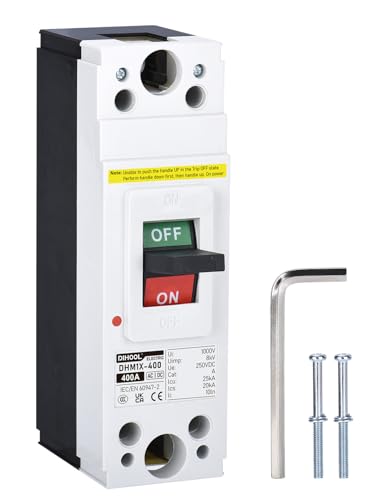
DIHOOL 400 Amp Heavy Duty Battery Disconnect Switch DC Circuit Breaker

Square D QOM2E2200NRB QO 200 Amp Outdoor Circuit Breaker Enclosure
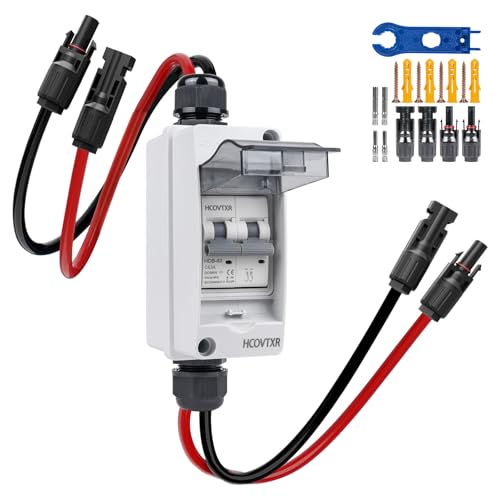
HCOVTXR Solar Panel Disconnect Switch 63A 550V DC PV IP65 Outdoor

Siemens WN2060U Non-Fused AC Disconnect

CNAODUN 60 Amp Disconnect 120/240 Volt 2 Pole Waterproof Pull Out Switch Metal Box
The Picks, Examined More Closely
Wells ships two of its 60-amp non-fuse disconnects in a single box, which makes it a smart match for HVAC contractors running service calls on twin condenser setups or homeowners replacing an aging unit and keeping a spare. The metal enclosure is rated for outdoor exposure, with ventilation paths that let internal moisture escape rather than pool against the wiring.
A pull-out switch design (a removable handle that physically separates the line from the load when pulled) keeps service work simple, and the 120/240 VAC rating suits most residential air conditioners without stepping up to a heavier 200-amp service panel like the Square D pick below. For DIYers managing one outdoor AC unit, the value of getting two boxes for one order is hard to argue with.
Bright Spots
- Two-pack format lowers per-unit cost for contractors handling multiple installs
- Pull-out design lets techs verify power is off without a separate tester
- Ventilated metal shell manages heat during long compressor cycles
- Universal fit for residential 120/240 VAC condenser circuits
Trade-Offs
- At 60 amps, it does not substitute for a main service disconnect on a full panel
- Spare unit may sit on a shelf unused for single-installation homeowners
At A Glance
Who It Suits Best
Contractors and homeowners running one or two residential AC condensers who want a weatherproof, code-friendly pull-out disconnect without overspending on a 200-amp service enclosure.
Where Another Pick Suits Better
Shoppers wiring a full 200-amp service entrance should reach for the Square D QOM2E2200NRB instead, since this Wells unit is sized for branch circuits, not the main service feed.
DIHOOL’s 400-amp DC breaker earns its spot when the application runs on direct current rather than household AC. RV owners with lithium house banks, boaters managing trolling motor circuits, and off-grid solar builders chasing serious amp ratings all need a thermal-magnetic breaker (one that trips on both sustained heat and sudden short-circuit spikes) that can interrupt fault current cleanly. This unit’s silver-alloy moving and stationary contacts are built for repeated cycles without pitting.
The 256 × 80 × 153 mm footprint bolts to a panel, so it works best inside an equipment bay rather than as a standalone outdoor box. For most RVers, this is the right tool for isolating a battery bank during storage or service, but it is not a substitute for the Square D enclosure if you need AC service entrance gear.
Real-World Strengths
- 400-amp rating covers large lithium house banks and inverter feeds
- Thermal-magnetic trip responds to both overload heat and short-circuit spikes
- Wide operating voltage range suits 12V, 24V, and 48V systems
- Silver-alloy contacts resist arc damage across thousands of cycles
Soft Spots
- Panel-mount design requires a dedicated equipment bay or build enclosure
- Spec sheet focuses on DC use, so AC-only residential installs should look elsewhere
Who It Suits Best
RV owners, boaters, and off-grid solar builders who need a robust DC isolation switch rated for high-amp battery banks and frequent cycling.
Not Your Match When
Homeowners wiring a 240 VAC air conditioner should grab the Siemens WN2060U or Wells two-pack instead, since this breaker is engineered for DC battery circuits, not residential AC branch wiring.
Square D’s QOM2E2200NRB is the right step up when a job calls for a real service enclosure rather than a simple pull-out switch. The 200-amp rating puts this in main-breaker territory, sized for whole-home service equipment, large workshop subpanels, or a detached structure fed by a heavy feeder. The QO family name carries weight with inspectors, and electricians tend to reach for it because breakers and accessories are widely stocked.
Compared to the Wells unit above, this is a different class of hardware: a service entrance enclosure, not a branch-circuit disconnect. For homeowners running a new detached garage feed or replacing a corroded outdoor main, the rugged construction and broad breaker compatibility make it a long-term answer rather than a temporary fix.
Notable Upsides
- 200-amp rating covers full residential service or large subpanel feeds
- QO platform means breakers, lugs, and accessories are easy to source
- Outdoor-rated enclosure handles year-round weather exposure
- Compatible with standard Square D tandem and standard breakers
Honest Caveats
- Heavier and costlier than a 60-amp condenser disconnect, so it is overkill for a single AC unit
- Main breaker sold separately in many configurations, which adds a step to the parts list
Who It Suits Best
Homeowners and electricians installing a 200-amp outdoor service entrance, subpanel, or workshop feed who want inspector-friendly hardware that holds up for decades.
A Better Fit Elsewhere
Someone running a single window AC or mini-split should pick the CNAODUN 60-amp disconnect below instead, since this Square D enclosure is over-spec for that scale of work.
HCOVTXR’s PV disconnect is built for the specific hazards of rooftop solar, where DC voltage stays live even after the inverter shuts down. The IP65 rating (a dust-tight seal that resists low-pressure water jets) keeps rain and dust out of the switching mechanism, and the 63-amp, 550 VDC rating is comfortably above the open-circuit voltage of most residential PV strings. A thickened copper coil helps the unit handle the sustained DC current that AC breakers struggle with.
Where the DIHOOL above targets battery banks, this one focuses on the panel side of the system, sitting between the array and the inverter. Homeowners installing or upgrading a grid-tied solar setup need exactly this kind of lockable cutoff for firefighter and service safety, and the genderless connector design speeds up wiring during a one-day install.
What Helps Most
- IP65 enclosure handles rooftop rain and dust exposure year-round
- 550 VDC rating covers typical residential string open-circuit voltages
- Genderless MC4-style connectors cut install time during array wiring
- Transparent cover lets owners verify switch position at a glance
Less Ideal Details
- 63-amp rating caps the size of array it can handle, so large commercial arrays need a bigger unit
- DC-only design means it cannot substitute for an AC service disconnect like the Square D enclosure
Who Will Love This
Homeowners and installers wiring a residential PV array who need a code-friendly rooftop disconnect that seals out weather and confirms shutoff visually.
Swap It Out When
RVers running a small portable solar suitcase should grab the DIHOOL battery disconnect instead, since a full IP65 PV isolator is overkill for a 200-watt camping panel.
The Siemens WN2060U is the seasoned option on this list, a 60-amp non-fused pull-out designed specifically for outdoor condenser service. Where the Wells above ships as a value pair, this Siemens is the single-unit pick for homeowners who want a familiar name on the side of the house. The pull-out head gives a clear visual indication that power has been cut, which matters when a tech or family member climbs behind the unit.
For most homeowners running a standard central air system, this is the right size and shape. It does not try to be a service entrance, so it is not a swap-in for the Square D enclosure, but for its narrow job it does the work without complication. Inspectors recognize the Siemens brand, which can smooth permitting in jurisdictions that scrutinize replacement parts.
The Helpful Details
- 60-amp rating fits most residential AC condensers up to about 5 tons
- Pull-out design makes power status visible without a multimeter
- Outdoor-rated enclosure handles full weather exposure
- Siemens brand recognition can simplify permit and inspection steps
Points To Keep In Mind
- Non-fused design relies entirely on the upstream breaker for overcurrent protection
- Single-unit packaging costs more per box than the Wells two-pack above
Best Suited To
Homeowners replacing a single 60-amp outdoor AC disconnect who want a recognizable brand and straightforward pull-out operation without extra cost for a second unit.
Reach For A Different Pick When
Anyone wiring two condensers or a backup AC circuit should grab the Wells two-pack instead, since two boxes for one shipping cost tends to be the smarter play at this amperage.
CNAODUN’s 60-amp pull-out shares a job description with the Wells and Siemens above, but it leans hard on its powder-coated galvanized steel shell. The galvanized construction (steel coated in zinc for corrosion resistance) shrugs off salt air and humid summers better than plain painted steel, which matters for coastal homes or properties near pool chemicals. The 120/240 VAC, 2-pole, 1-phase, 3-wire configuration is the standard residential AC disconnect wiring, so it drops into most retrofit jobs without reworking the feed.
For homeowners picking one unit for a single outdoor condenser, this is a balanced choice. It does not have the Siemens name recognition, and it is not sold as a multi-pack, but the build quality punches above what the price tier suggests. Where I would hesitate is on a job requiring inspector familiarity in a strict jurisdiction, where Siemens or Square D carry less explaining.
Real Benefits
- Powder-coated galvanized steel resists rust in coastal or humid climates
- Standard 120/240 VAC 2-pole wiring drops into most retrofit projects
- Pull-out switch gives a clear visual lockout for service work
- UL listing supports permit and inspection workflows
Practical Considerations
- Single-unit packaging, so multi-condenser homes pay per box
- Brand recognition lags behind Siemens and Square D with some inspectors
Whose Shelf It Belongs On
Coastal homeowners and anyone replacing one rusted outdoor AC disconnect who values corrosion resistance over brand familiarity at the install site.
Look Elsewhere When
Shoppers wiring a full 200-amp service entrance should grab the Square D QOM2E2200NRB instead, since this CNAODUN box is a branch-circuit unit, not main service gear.
Picking The Right Disconnect For The Job
Choosing a disconnect starts with the kind of current you need to interrupt, since AC and DC behave very differently inside a switch. AC naturally crosses zero volts 60 times per second, which helps breakers quench arcs (sparks that form when contacts open under load), but DC holds a steady voltage that drags an arc across the contacts until something gives. That is why a DC battery disconnect like the DIHOOL uses silver-alloy contacts, while a residential AC pull-out like the Siemens or CNAODUN can rely on simpler geometry.
The next decision is amperage, since a 60-amp pull-out cannot safely back up a 200-amp service panel, and a 400-amp DC breaker is wasted on a small RV lithium bank. Match the rating to the largest continuous load plus a safety margin, and remember that breakers and disconnects are not interchangeable: breakers protect wiring from overcurrent, while disconnects isolate equipment for service. Many disconnects, like the non-fused picks above, rely on the upstream breaker for protection.
Finally, think about the environment. Outdoor enclosures need a NEMA 3R or IP65 rating (both indicate weather-resistant cabinets suitable for rain and ice) to keep rain and dust off the contacts, and coastal installs benefit from galvanized or stainless hardware. Solar rooftops add UV exposure and DC arc risk on top of the usual weather, so a sealed PV isolator like the HCOVTXR is a category of its own. The right pick depends less on brand loyalty and more on matching voltage type, amperage, and enclosure rating to the actual install.
Reading The Labels That Matter
UL listing (independent safety certification from Underwriters Laboratories) tells you the unit has passed baseline safety tests, which most jurisdictions require for permitting. NEMA or IP ratings describe the enclosure’s sealing against solids and water: NEMA 3R is the common outdoor benchmark, while IP65 means dust-tight and resistant to low-pressure water jets. For solar arrays, look for DC voltage ratings well above the string’s open-circuit voltage, since cold sunny days push PV voltage higher than its nameplate.
Matching Size To Load
A rough rule: 60 amps covers most residential AC condensers up to 5 tons, 200 amps handles whole-home service equipment, and 400 amps is reserved for large battery banks and inverter feeds. Going larger than needed adds cost and physical bulk without benefit; going smaller risks nuisance tripping and overheated wiring.
Key Considerations Across These Picks
Pitfalls Shoppers Hit
The most common error is buying a DC-rated disconnect for an AC condenser circuit, or vice versa, since the internal contact materials and arc-quenching design differ between the two. Another slip is underestimating the environment: a non-coated steel box near a salt-water pool can rust through in a few seasons, while an IP65 enclosure in a dry garage is wasted money. Finally, shoppers sometimes treat a pull-out disconnect as a substitute for a breaker, forgetting that pull-outs isolate equipment but rely on an upstream breaker for overcurrent protection.
Where The Extra Money Goes
Higher-tier models earn their cost with thicker enclosures, silver-alloy contacts, and brand-name supply chains that inspectors recognize on sight. A Square D QO enclosure costs more because replacement breakers and accessories stay available for decades, while an off-brand panel may leave a homeowner scrambling for a match in ten years. For solar and battery work, the premium often buys proper DC ratings, which is a safety issue, not just a convenience. Pay up when the install environment is harsh, the load is large, or the inspector will be picky; save when the job is a simple residential AC swap in a mild climate.
