

Picking the right panel setup for a garage, off-grid cabin, or marine electrical system can quickly turn confusing. The seven items below cover the real-world territory most DIYers and contractors actually shop for, from heavy-duty disconnect switches and indoor load centers to outdoor sub-panels and a professional clamp meter for diagnosing existing circuits. Each entry pairs a core use-case with practical trade-offs so the choice fits the job, not the other way around.
The Shortlist At A Glance

DIHOOL Heavy Duty Battery Disconnect Switch 400 Amp

Square D QO 70-Amp 2-Space 4-Circuit Load Center

Square D Homeline 100-Amp 6-Space Load Center

Square D Homeline 125-Amp 12-Space Load Center

Milwaukee 2235-20 400 Amp Clamp Meter
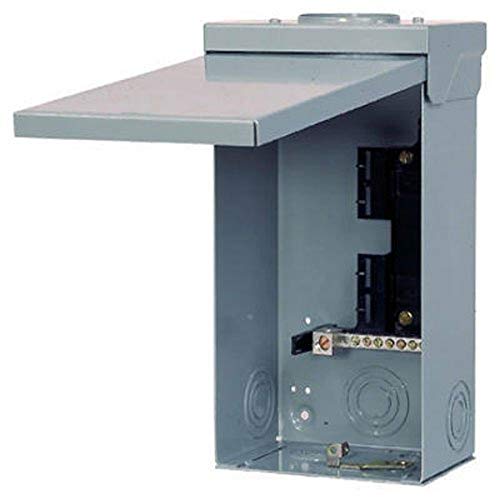
Siemens W0408ML1125U Load Center

Square D Homeline 70-Amp Outdoor Load Center
The Details Behind The Selections
The DIHOOL 400-amp disconnect lives in a different category than the load centers below it: this is a DC-rated switching device, not a residential breaker panel. Built around thermal-magnetic trip protection (a mechanism that responds to both sustained heat from overloads and the sudden spike of a short circuit), it’s aimed at high-current DC systems where a standard household breaker simply isn’t appropriate. For anyone wiring a trolling motor, a solar array with a battery bank, or a UPS setup, the DC voltage rating matters far more than amp rating alone.
Its enclosure measures roughly 256 mm by 148 mm by 153 mm, which is compact enough to mount through a bulkhead or inside a battery box. Compared to the indoor QO and Homeline panels below, this unit handles direct-current loads that those residential units cannot. Owners commonly appreciate the wide operating voltage range when retrofitting older boats or off-grid systems, since the same switch can serve multiple battery configurations.
Strengths Worth Knowing
- Thermal-magnetic trip behavior handles both overloads and sudden shorts in one mechanism.
- Rated for DC 12V through 500V, covering nearly every common battery and solar setup.
- 25kA short-circuit breaking capacity provides meaningful headroom for fault events.
- Moving contacts include 30% silver content and stationary contacts 45%, improving long-term conductivity.
- Panel-mount design with screw fixation keeps the unit firmly secured in vibration-prone marine settings.
Trade Offs
- Not a substitute for a residential AC load center, so it won’t replace the QO or Homeline panels listed below.
- Bulkhead mounting requires accurate cutout planning, which adds install time for first-time users.
- Documentation is sparse, so DC wiring novices may need extra research before connecting batteries.
Feature Snapshot
Made For
Boat owners and off-grid solar installers who need a reliable DC-rated disconnect switch rather than a household AC panel.
Skip It When
Someone running standard residential AC wiring will find the Square D QO 70-Amp 2-Space Load Center a far more appropriate fit.
Square D’s QO line is the premium tier inside the Schneider Electric family, and this 70-amp load center shows why contractors keep reaching for it. The aluminum bus bar (the metal strip that distributes power to each breaker position) is plated for corrosion resistance, and the QO-specific breaker compatibility means tighter tolerances than the Homeline series. For anyone adding a small sub-panel to a workshop, detached garage, or basement finish-out, this unit is purpose-built for that scale of work.
Two spaces and four circuits is genuinely compact, so this isn’t the right cabinet for a whole-house rewire. Compared to the DIHOOL switch above, this is an AC-only residential panel. In most small shops, however, four circuits handle a lighting run, a couple of outlet circuits, and a dedicated appliance feed without crowding the box. The included surface-mount indoor cover means the box arrives ready to wire and finish.
The Practical Payoff
- QO-specific breakers (Square D’s premium thermal-magnetic line) offer tighter trip curves than Homeline equivalents.
- Plated aluminum bus resists corrosion in humid basements and unconditioned spaces.
- Surface-mount cover included, so the box installs in one trip without separate parts runs.
- Compact 2-space layout fits where larger load centers simply won’t.
Room For Improvement
- Only four circuits means expansion requires an additional panel.
- QO breakers cost more per pole than Homeline, which adds up on larger projects.
- Indoor-rated only, so outdoor or wet-location installs need the HOM24L70RBCP covered later in this list.
Whose Shelf It Belongs On
Electricians and confident DIYers wiring a small garage, shed, or basement addition who value QO-grade build quality over maximum circuit count.
Look Elsewhere When
A homeowner planning a larger renovation will find more headroom in the Square D Homeline 125-Amp 12-Space Load Center reviewed below.
The Homeline 100-amp panel is the workhorse choice for value-minded builds, and Square D engineered it specifically for remodelers and homeowners who want Schneider Electric reliability without the QO premium. With six spaces and twelve single-pole circuits (each space can hold a tandem breaker to double the count), this is the sweet spot for an accessory dwelling unit, a detached garage with moderate loads, or a shop addition.
It’s also listed for use as service entrance equipment when paired with a separate ground bar like the PK7GTA-1. That flexibility lets the box serve as the main panel for smaller outbuildings rather than just a sub-panel fed from a larger house unit. The surface-mount design keeps installation straightforward in exposed stud bays.
The Case For It
- 100-amp main lugs handle heavier feeder loads than the 70-amp QO above.
- Listed for service entrance use, so the box can serve as a stand-alone main panel.
- Twelve single-pole circuits from six spaces gives genuine flexibility for growing shops.
- Homeline breakers are widely stocked and noticeably cheaper than QO equivalents.
Honest Caveats
- Ground bar PK7GTA-1 sold separately, which adds a small extra step to the install.
- Homeline breakers have slightly looser trip tolerances than QO breakers under heavy fault conditions.
- Marketed as a closeout-style item in some listings, so availability may shift over time.
Right Fit For
Homeowners and remodelers outfitting a garage, ADU, or workshop who want Schneider-grade construction without paying QO prices.
Swap It Out When
A whole-home renovation or new construction will benefit from the higher 125-amp capacity of the Square D Homeline 125-Amp 12-Space Load Center reviewed next.
Square D calls this the value pack for a reason: it arrives with breakers in the box, a cover, and the bus preconfigured for plug-on neutral arc-fault breakers. For anyone modernizing a home with bedrooms, finished basements, or anywhere code now requires combination arc-fault protection (breakers that detect both parallel arcing and line-to-neutral arcing), that plug-on neutral compatibility removes a common installation headache.
With twelve spaces supporting up to twenty-four circuits through tandem breakers, this is more than a sub-panel, it’s a serious main panel for small to mid-size homes or major additions. Two HOM120 20-amp single-pole breakers come included, so basic circuits can be energized immediately after install. Ground and neutral bars accept up to three #10-14 equipment grounds each, which is more than adequate for residential branch circuits.
What Works In Its Favor
- Plug-on neutral ready across every space, simplifying AFCI (arc-fault circuit interrupter) breaker installation.
- Fully distributed neutral bar allows plug-on breakers anywhere in the panel.
- Each pole space accepts full-size, tandem, or quad breakers for layout flexibility.
- Two HOM120 20-amp breakers and a combination flush/surface cover ship in the box.
- 125-amp capacity comfortably covers most small-home and addition service needs.
Points To Note
- Larger physical footprint requires more wall space than the 6-space HOM612L100SCP above.
- Plug-on neutral breakers still cost more than standard Homeline breakers.
- Designed for indoor mounting, so exterior projects call for an outdoor-rated model like the HOM24L70RBCP.
Feature Rundown
Best Suited To
Homeowners modernizing older electrical systems or wiring additions where code requires combination arc-fault protection across most living-area circuits.
Consider Something Else When
Tight indoor wall cavities call for the smaller Siemens W0408ML1125U Load Center covered later, which fits where 12-space enclosures won’t.
This is the odd one out in the lineup, and for good reason. The Milwaukee 2235-20 doesn’t distribute power; it measures it. For anyone shopping for 400-amp panels, the meter is what confirms the actual load on the panel they’re replacing or upgrading. With TRMS (true root mean square) measurement, the meter reads distorted waveforms accurately, which matters on circuits with variable frequency drives, LED lighting, or computer power supplies where cheaper meters give false readings.
The 600V AC/DC voltage range and 400-ohm resistance measurement capability cover most residential diagnostics in one tool. CAT III 600V safety rating means the meter is rated for use on distribution-level circuits inside a building, including panel boards and feeders. For an electrician commissioning a new Square D Homeline installation like the units above, this clamp meter is the verification tool of choice.
A Few Strong Suits
- 400-amp current measurement covers residential service and most light-commercial panels.
- TRMS sensing reads modern non-linear loads accurately where average-sensing meters fail.
- CAT III 600V safety rating permits use directly on panel boards and feeders.
- MIN/MAX capture helps track intermittent loads that basic meters miss.
- Backlit display improves readability in dim panel-board interiors.
Less Ideal Details
- Annual calibration is recommended for stated accuracy, adding ownership cost.
- Made in Taiwan, which some users prefer to verify before committing to a long-term tool investment.
- Body is rugged but bulkier than pocket-style clamp meters, so jobsite carry adds weight.
Key Specs
Who Should Grab It
Electricians and serious DIYers verifying load on existing 400-amp-class services before sizing a new panel or sub-panel install.
A Better Fit Elsewhere
For pure install work without diagnostic needs, the Square D QO 70-Amp 2-Space Load Center is the hardware pick, not a meter.
The Siemens W0408ML1125U is the smallest panel in the roundup at roughly 13 by 7 by 5 inches and just 6.8 pounds, which sounds like a minor detail until you actually try to fit a panel into a closet, under a stairwell, or behind a utility-room door. Where the Square D Homeline 125-amp unit demands significant wall space, this Siemens box slips into locations other panels physically cannot occupy.
It’s also the most affordable path into the Siemens breaker ecosystem, which has its own dedicated breaker line separate from Square D. For homeowners loyal to a specific brand, that ecosystem lock-in matters. The trade-off shows up in circuit count: this is a small-load box, not a whole-house main panel.
Reasons It Performs
- Compact 13 x 7 x 5 inch footprint fits tight utility closets and stairwell cavities.
- 6.8-pound shipping weight makes single-person mounting practical.
- Siemens breaker compatibility opens a different ecosystem than Square D.
- Lower cost barrier for small sub-panel projects.
Practical Considerations
- Smaller circuit count than the Homeline 125-amp 12-space panel reviewed above.
- Siemens breakers cost slightly more per pole than mass-market alternatives in some regions.
- Less widely stocked than Square D, so replacement breakers may require an extra sourcing trip.
Built With In Mind
Apartment dwellers and homeowners adding a single sub-panel in a cramped utility space where a full-size load center simply won’t fit.
Another Choice May Suit
Anyone needing more than a handful of circuits for a renovation will outgrow this box and find the Square D Homeline 125-Amp 12-Space Load Center a smarter long-term pick.
Outdoor sub-panels occupy their own corner of the electrical world, and the HOM24L70RBCP is Square D’s purpose-built answer. The rainproof outdoor cover means the box can sit on a dock, beside a pool equipment pad, or against an exterior wall without a separate weatherproof enclosure. For waterfront properties, this matters: salt air and driving rain destroy indoor-rated covers in a season or two.
Two spaces and four circuits keep the unit compact, and a 10,000 AIR short-circuit current rating gives the panel meaningful fault tolerance. The 120/240 VAC rating covers standard residential feeders, while the top-fed main lugs simplify wiring from an overhead service drop or a back-fed breaker. Unlike the QO indoor panel reviewed earlier, this unit accommodates a plug-on secondary surge arrestor (a device that clips voltage spikes from lightning or utility events) for properties in lightning-prone regions.
Positive Points
- Rainproof outdoor cover eliminates the need for a separate weatherproof housing.
- 10,000 AIR short-circuit rating handles residential fault events comfortably.
- Optional plug-on secondary surge arrestor slot adds lightning protection.
- Top-fed main lugs simplify overhead or back-fed service wiring.
Soft Spots
- Only two spaces limits this to small loads like landscape lighting or a dock feeder.
- Outdoor enclosures accumulate debris and salt residue, so periodic cleaning pays off.
- Surge arrestor sold separately, adding cost for full lightning protection.
Who Will Love This
Property owners with docks, pools, or detached structures needing a small, weatherproof sub-panel fed from a larger indoor main.
Reach For A Different Pick When
Larger outdoor projects like pool houses or guest cottages need more circuits than the indoor Square D Homeline 100-Amp 6-Space Load Center paired with a weatherproof housing.
Matching the Right Box to the Job
Amp rating tells only part of the story when choosing a panel, and the rest depends on where the box will live and what it will feed. Indoor residential spaces typically demand either QO or Homeline breakers, with the QO series offering tighter trip tolerances for higher-stakes circuits and Homeline giving more headroom per dollar. Outdoor installs require rainproof enclosures regardless of brand, and DC applications like solar arrays or marine battery banks need a switch rated for direct current rather than an AC panel.
Voltage and phase come next. Standard residential service in most of North America runs 120/240V single phase, and every Homeline and QO panel in this roundup handles that profile. Commercial three-phase service, by contrast, calls for three-pole breakers that none of these units accept. Mismatched breaker series also matter: a QO panel takes QO breakers, a Homeline panel takes Homeline, and a Siemens panel takes Siemens. The ecosystem lock-in is real, so picking a brand early simplifies every future breaker run.
Panel physical size often decides the project before amp rating does. The compact Siemens W0408ML1125U fits where a 12-space Square D Homeline 125-amp physically cannot, and that small footprint is sometimes the only practical option in older homes with shallow wall cavities. Conversely, a shop addition with a long list of planned circuits demands the larger Homeline 125-amp panel rather than a 4-circuit QO.
Finally, a clamp meter like the Milwaukee 2235-20 verifies everything before power flows. Confirming actual load on an existing service prevents undersized panel choices, and TRMS sensing ensures the reading isn’t fooled by the LED drivers and electronics modern homes contain. For most installers, the diagnostic step is what separates a successful upgrade from one that trips the moment a hair dryer and microwave run together.
What Matters Most Before Choosing Your Panel
Counting Circuits Honestly
The number of “spaces” a panel advertises understates its actual capacity, since tandem and quad breakers can stack multiple circuits into a single space. A 12-space panel can sometimes serve 24 circuits, but only if the layout actually fits the breaker types being used. Plan for 25 to 30 percent more spaces than the current need, because electrical projects tend to grow.
Breaker Ecosystem Lock-In
Once a Homeline panel is installed, every replacement breaker must be Homeline. Same story with QO, Siemens, and other proprietary systems. Switching brands mid-project means stocking two breaker inventories, which gets expensive fast.
Indoor Versus Outdoor Ratings
Indoor covers warp and corrode outside, even under an eave. For any exterior-mounted panel, a NEMA 3R-rated enclosure (a weatherproof rating for outdoor use) is mandatory for code compliance and long-term reliability.
Key Considerations Across These Picks
Pitfalls Shoppers Hit
The most common mistake is sizing the panel to the existing load rather than the planned future load. A 70-amp panel seems sufficient until the new EV charger, hot tub, and finished basement all arrive in the same year. Counting only present circuits and ignoring planned additions forces an early replacement. The other frequent error is mixing breaker brands in the same panel: a Homeline bus and a QO breaker are not a safe combination, even if they physically fit.
Where The Extra Money Goes
Higher-tier QO panels and plug-on neutral Homeline units cost more because of tighter manufacturing tolerances, better bus-bar plating, and breaker compatibility that simplifies arc-fault installations. For a one-room sub-panel, the premium rarely pays back. For a whole-home rewire where dozens of AFCI breakers will live in the box, the smoother installation offsets the higher panel cost within a single project.
Frequently Asked Questions
What is the difference between main lug and main breaker panels?
Main lug panels accept a feeder from an upstream breaker and don’t include a built-in disconnect, while main breaker panels include a primary disconnect at the top of the box. Sub-panels are typically main lug, while service entrance panels usually include a main breaker.
Can I install a 400 amp panel myself?
In most jurisdictions, residential panel installation requires a licensed electrician and a permit. Even confident DIYers benefit from a load calculation and inspection, since undersizing or improper grounding creates fire and shock hazards.
Do I need a permit to replace a load center?
Yes. Electrical service work almost always requires a permit and inspection, even for direct swaps of the same amp rating. Skipping the permit can void homeowner’s insurance and create problems at resale.
How do I know if my service is 100 amp or 200 amp?
Look at the main breaker at the top of the existing panel: the amp rating is printed on the breaker handle. 100-amp services typically use a smaller physical breaker than 200-amp services, and the main wire entering the panel also gives a visual clue.
Are Homeline and QO breakers interchangeable?
No. QO breakers fit only QO panels, and Homeline breakers fit only Homeline panels. The bus bar designs differ, and using the wrong brand can cause poor contact, nuisance tripping, or failed connection to the bus.
Wrap Up
The right pick depends entirely on the job: the DIHOOL 400-amp disconnect for DC systems, the Square D Homeline 125-amp panel for whole-home renovations, the compact Siemens box for tight utility spaces, and the Milwaukee clamp meter for verifying load before any upgrade. Match the panel to the project rather than the project to the panel, and the electrical work that follows gets dramatically easier.
