

Picking the right breaker box starts with matching the panel to the job. Subpanels, outdoor service entrances, and small indoor load centers each pull from different ends of the spec sheet, so I’ve worked through six options across those scenarios. The goal here is straightforward: help you skip the guesswork and land on a panel that fits your service, your wire gauge, and the space you’re mounting it in.
A quick note on naming. “Load center” and “breaker box” mean the same thing: the steel enclosure that houses your circuit breakers and routes incoming power to each branch circuit. “Main breaker” means a disconnect breaker is built into the panel itself, while “main lug” means the panel feeds power downstream without a built-in disconnect. “Plug-on neutral” describes a bus bar style that accepts a neutral pigtail directly on the breaker, which speeds up wiring and tightens the install.
A Side-By-Side Look
Square D Homeline 100 Amp Outdoor Main Breaker Box
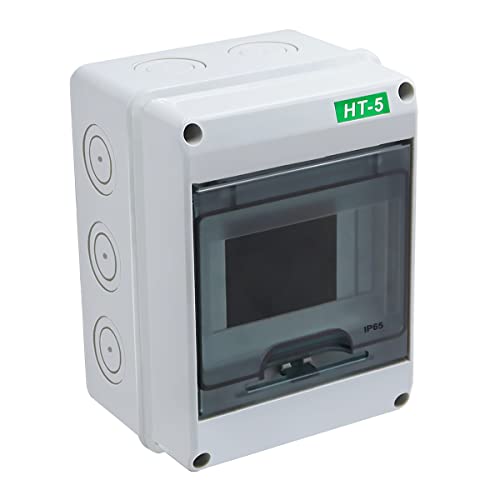
smseace Distribution Protection Box (5 Way)

Square D Homeline HOM612L100SCP Load Center
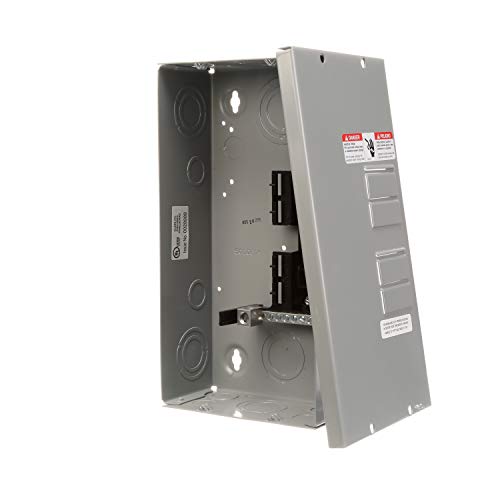
Siemens E0408ML1125SU Indoor Load Center

MOLLOM 8 Way Circuit Breaker Distribution Box
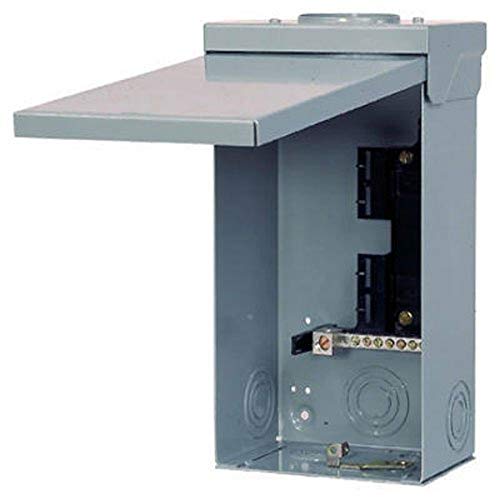
Siemens W0408ML1125U Load Center, Gray
Meet The Standout Selections
The Homeline HOM816M100PRB is the panel you reach for when the meter base sits on the side of the house and the load center has to live outdoors. The enclosure is NEMA 3R rated, which means rain, sleet, and windblown dust stay outside the deadfront. Inside, the tin-plated aluminum bus bar resists corrosion in humid coastal air better than bare copper would, and the welded sheet steel cabinet shrugs off the kind of incidental bumps that happen around a yard.
What I appreciate here is the plug-on neutral design. Running a separate neutral pigtail to every AFCI or GFCI breaker is the slow part of any panel swap, and this layout lets the breaker click directly onto a dedicated neutral bar. For a 100A service entrance on a single-family home, that 8-space, 16-circuit layout covers the basics with room to grow, and the surface-mount cover keeps the install simple.
The Good Stuff
- Baked enamel gray finish holds up against UV and weather without chalking.
- Box lugs accept copper from 6 AWG to 1 AWG or aluminum from 6 AWG to 2/0 AWG, giving flexibility on feeder wire.
- Plug-on neutral bus shortens wiring time on AFCI and GFCI branch circuits.
- Distributed neutral bars keep conductors routed cleanly, which simplifies later troubleshooting.
- NEMA 3R rating means it mounts on a side wall, garage exterior, or detached structure without a soffit.
Trade Offs
- 100A is fine for many homes, but households running central air plus an EV charger may find the bus undersized for future loads.
- Outdoor steel enclosures commonly show water staining at the bottom seam after several seasons, so periodic gasket checks help.
- Only 8 spaces, so anyone planning heavy circuit expansion will outgrow it quickly.
Who It Suits Best
Homeowners replacing an aging outdoor service entrance on a modest single-family residence, or anyone building a detached workshop that needs its own weather-rated disconnect.
A Better Fit Elsewhere
For a tight indoor panel where space is at a premium and weather resistance is irrelevant, the Square D HOM612L100SCP is a more compact pick.
This smseace enclosure isn’t a main load center in the traditional Square D sense. It’s a sealed distribution box designed to house a row of miniature circuit breakers behind a clear polycarbonate door, and it earns its keep in spots where you want quick visual confirmation of breaker status without popping the cover.
The ABS shell with a transparent PC lid and a silicon rubber gasket pushes the rating to IP65, which blocks dust and resists low-pressure water jets. At 160mm by 120mm by 95mm, it fits a five-way breaker row comfortably and mounts on an indoor wall near the meter or in a garage sub-panel setup. Compared with the Square D outdoor unit above, this is the smaller, see-through sibling for indoor branch distribution.
The Helpful Details
- Clear cover means you can read breaker labels and trip indicators without opening the box.
- ABS plastic shell resists corrosion in damp basement or garage environments better than bare steel.
- Tin-plate guide rail gives breakers a stable mounting surface inside the enclosure.
- Compact 160mm footprint suits tight utility closets and workshop walls.
Points To Note
- Five-way capacity limits how many branch circuits you can run through a single enclosure.
- Plastic shells can yellow under prolonged UV exposure, so direct sunlight mounting is best avoided.
- Breakers typically need to be sourced separately since the box ships empty.
Right Fit For
DIYers adding a small garage sub-panel or a basement workshop distribution point where quick visual inspection matters and a full steel load center is overkill.
Reach For A Different Pick When
The MOLLOM 8-way box is the stronger match when you need more branch capacity in a similarly sealed enclosure.
The HOM612L100SCP is a 100A main lug panel built for tight indoor spaces where a full-size load center would be wasted real estate. It uses fixed main lugs rather than a main breaker, which means it’s typically fed from a disconnect upstream and used as a distribution panel downstream. The 6-space, 12-circuit layout is generous enough for a small home, an in-law unit, or a finished basement rewire.
Surface mounting keeps the install straightforward, and the included cover means you’re not hunting for a separate trim kit. For homeowners who already have a primary service disconnect and just need a clean downstream panel, this hits a useful middle ground. The smaller Siemens W0408ML1125U covered later takes the same indoor surface-mount approach but with a higher 125A bus, which is worth weighing if your feeder can supply more current.
What Pays Off
- Compact footprint fits closets, hallways, and basement utility corners where wall space is scarce.
- Square D Homeline breaker compatibility means replacement parts are widely available at supply houses.
- Service entrance rated, so it can act as the primary disconnect when paired with the right upstream breaker.
- Surface-mount design with included cover simplifies weekend project installs.
Small Caveats
- 100A fixed main lugs mean this can’t serve as a standalone service entrance without upstream protection.
- Only 6 spaces, so circuit-heavy remodels will fill it up fast.
- A separate ground bar kit may be needed depending on local code requirements.
Built With In Mind
Homeowners finishing a basement, building a small accessory dwelling unit, or replacing an undersized fuse panel in an older cottage.
Consider Something Else When
The Siemens E0408ML1125SU is the better pick when you want the same indoor form factor with a higher 125A bus rating.
The Siemens E0408ML1125SU leans into the higher-amperage end of the small indoor panel category. With a 125A main lug bus and 4 spaces supporting 8 circuits, it’s the panel to consider when your feeder wire can deliver more current than a 100A panel can safely pass through. For a detached garage fed by a 60A or 100A subpanel feeder, the extra bus capacity leaves headroom for a future welder, mini-split, or EV charger upgrade.
Surface mounting keeps the install approachable, and the compact 4-space format means it tucks into corners where a full-size load center simply won’t fit. Owners working in older homes where the service has already been upgraded to 125A but the existing distribution hardware is tired will find this a sensible replacement. Where the HOM612L100SCP above maxes out at 100A, this Siemens pushes the same form factor further.
Everyday Perks
- 125A bus rating gives margin for load growth beyond what a typical 100A panel allows.
- Compact surface-mount cabinet fits garage corners, basement stairs, and utility closets.
- Siemens breaker compatibility means common replacement breakers are stocked at most supply counters.
A Few Limitations
- Only 4 spaces, so adding circuits beyond eight single-poles requires a different panel.
- Main lug configuration requires upstream disconnect protection, so it isn’t a standalone service entrance.
Key Product Details
Best Suited To
Homeowners running a 60A to 100A feeder to a detached garage or workshop who want extra bus capacity for tool upgrades.
Look Elsewhere When
The Siemens W0408ML1125U is a smarter pick when you want the same form factor with slightly different breaker compatibility preferences.
The MOLLOM box steps up from the smseace unit above by adding two more breaker positions and a tougher shell. Built from PC+ABS alloy with an IK08 impact rating, it’s the enclosure to consider in a workshop where the occasional hammer swing or ladder bump is a real possibility. At 200mm by 92mm by 155mm, it’s deeper than a standard steel panel, which gives the wiring room to breathe inside the cabinet.
The IP65 seal keeps dust and splashing water out, so it tolerates shop environments better than a basic indoor panel would. For a woodshop, metal shop, or covered outdoor workspace, the eight-way capacity covers branch circuits for tools, lighting, and dust collection without needing a second box. Compared with the smseace, this trades some compactness for branch count and impact resistance.
A Few Highlights
- Eight-way capacity supports more branch circuits than smaller distribution boxes.
- PC+ABS shell resists impact up to IK08, which matters in busy shop environments.
- IP65 seal keeps airborne sawdust and water spray outside the breaker row.
- Deeper cabinet makes wire bending and landing easier during the install.
Possible Compromises
- Larger footprint than 5-way enclosures, so wall placement needs more planning.
- Plastic enclosures can fade or chalk under direct sun exposure over many seasons.
- Breakers are typically sourced separately to match the interior rail.
Whose Shelf It Belongs On
Shop owners and serious hobbyists who need a sealed, impact-resistant distribution box for a workshop with several tool circuits.
Skip It When
The smseace 5-way box is the lighter, smaller pick for tight indoor residential sub-panel work.
The W0408ML1125U closes out the list as another compact indoor surface-mount panel from Siemens, sized at roughly 13 inches long, 7 inches wide, and 5 inches deep. At about 6.8 pounds, it mounts cleanly on a wood-framed wall without needing a helper to hold it level.
It sits in the same 4-space, 8-circuit niche as the E0408ML1125SU covered above, so the choice between the two often comes down to which Siemens breaker series you prefer and which trim kit matches your existing hardware. For light commercial branch circuits, a small office expansion, or a tight residential sub-panel, the gray finish and shallow depth let it disappear into utility spaces.
Key Advantages
- Lightweight at roughly 6.8 pounds, so a single person can mount and wire it.
- Compact 13-inch length fits narrow wall studs and shallow utility closets.
- Gray cabinet finish blends with basement and garage walls without standing out.
- Siemens breaker compatibility keeps parts sourcing straightforward.
Where It Is Less Suited
- 4-space layout limits total circuit count, so larger remodels outgrow it.
- Main lug only, meaning an upstream disconnect is required for service entrance use.
- Shallow depth can crowd wiring on heavier feeders, so careful bending helps.
Perfect Match For
Anyone adding a small office branch circuit panel, finishing a bonus room, or expanding an existing Siemens-based residential system.
Swap It Out When
The Square D HOM612L100SCP is the swap when you already run Homeline breakers and want to keep a single brand across the system.
What Matters Most Before Choosing 400 Amp Breaker Boxes
Service rating is the first filter. A 100A panel is plenty for many small homes and cottages, but households with central air, electric water heating, and an EV charger may push the bus harder than it likes. Look for a 125A panel like the Siemens E0408ML1125SU when you want extra headroom.
Main breaker versus main lug changes how the panel sits in your system. A main breaker panel can act as the service disconnect, which simplifies inspections. A main lug panel needs upstream protection, so it’s a better fit for sub-panel work where a feeder already has a disconnect upstream.
Enclosure rating matters whenever the panel lives outdoors or in a damp space. NEMA 3R handles weather on exterior walls, while IP65 sealed plastic enclosures like the smseace and MOLLOM boxes handle dust and splashing water in workshops. For indoor basement or closet installs, a basic steel enclosure is usually enough.
Circuit count is the practical ceiling. Count the circuits you actually need, then add two or three for future expansion. A 6-space panel fills up faster than you’d think once you add a dishwasher circuit, a microwave circuit, and a basement lighting circuit.
Key Considerations Across These Picks
Wrong Turns To Avoid
The most common slip up is buying a panel that’s undersized for the feeder wire already in the wall. A 60A feeder on a 100A bus works fine, but a 125A feeder on a 100A panel is a code violation waiting to happen. Match the bus rating to the upstream protection.
Another trap is confusing “spaces” with “circuits.” A panel rated 8 spaces, 16 circuits uses tandem breakers to double up, but not all jurisdictions allow tandems in every slot. Count carefully before you commit.
What Separates Premium From Basic
Higher-tier load centers tend to use thicker gauge steel, smoother bus bar plating, and better gasket design around the deadfront. Plug-on neutral compatibility, tin-plated aluminum buses, and baked enamel finishes all add up to longer service life in harsh environments. The upgrade makes sense most when the panel lives outdoors, sees temperature swings, or will be opened often for circuit changes.
Frequently Asked Questions
Can a 100 amp breaker box handle a modern home with central air? In many smaller homes, yes, especially if the air handler and condenser share a 30A to 40A breaker and the rest of the loads stay modest. Larger homes with electric heat plus central air often need a 150A or 200A service.
What is the difference between a main breaker and main lug panel? A main breaker panel includes a built-in disconnect that can shut off all power to the home. A main lug panel has lugs for the incoming feeder but no main breaker, so it must be fed from an upstream disconnect.
Do I need a NEMA 3R enclosure for an outdoor panel? Yes. NEMA 3R rated enclosures are designed for outdoor mounting and keep rain, sleet, and dust away from the breakers and bus bars.
Are plastic distribution boxes a substitute for a real load center? They serve a different role. Plastic boxes like the smseace and MOLLOM units are great for sub-panel distribution in shops and garages, but most jurisdictions still require a steel load center as the main service entrance.
How many circuits should my panel support? Count your current circuits, then add room for future additions like an EV charger, a hot tub, or a basement finishing project. A panel with 8 to 12 extra slots beyond today’s count is a comfortable starting point.
Closing Thoughts
The right panel comes down to matching the bus rating, enclosure type, and circuit count to your actual project. An outdoor service swap points toward the Square D Homeline HOM816M100PRB, a tight indoor sub-panel leans toward the HOM612L100SCP, and a sealed shop distribution node points to the smseace or MOLLOM box. Pick the one that fits your wiring and your wall, and the rest falls into place.
