

When a project calls for serious current handling, 4 4 copper wire delivers the kind of headroom most smaller gauges can’t. Whether I’m wiring a subpanel in a garage, running feeder lines to an outbuilding, or replacing a damaged section of service cable, I look for wire that bends predictably and meets recognized safety standards. The picks below cover the same trusted THHN construction (a thermoplastic-insulated, nylon-jacketed building wire rated for heat and moisture) in different lengths and jacket colors, so I can match the run without overbuying.
A Snapshot Of The Selections

FairySandy 4 AWG THHN Copper Building Wire Green 25ft

FairySandy 4 AWG THHN Copper Building Wire Green 50ft
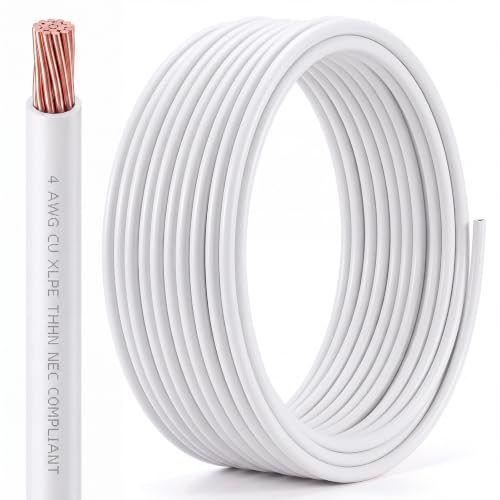
FairySandy 4 AWG THHN Copper Building Wire White 50ft

FairySandy 4 AWG THHN Copper Building Wire Red 25ft

FairySandy 4 AWG THHN Copper Cable 50ft 600V Red
Meet The Standout Selections
A 25-foot pull of green-jacketed 4 4 copper wire is the kind of spare I keep around for grounding electrodes, bonding jumpers, and short service-side repairs. The green insulation is the universal color code for equipment grounding conductors, so reaching for this reel means I’m less likely to mix up a hot and a ground during a hurried repair. For someone wiring a detached shed or replacing a damaged ground run, a short, clearly labeled length reduces the temptation to overbuild.
The 19-strand construction matters more than it sounds. Compared with solid 4 gauge, the stranded bundle feeds through EMT (electrical metallic tubing, the thin-wall steel conduit common in residential work) and around tight box bends without kinking. You may find the 25-foot ceiling limiting on a longer garage run, in which case stepping up to a 50-foot pull makes sense.
A Strong Showing
- Green jacket aligns with NEC (National Electrical Code) equipment-grounding color conventions
- 19-strand conductor pulls smoothly through conduit and around bends
- THHN/THWN-2 dual rating covers wet, dry, and high-temperature environments up to 90°C
- Compact 25-foot reel avoids leftover scrap on small bonding jobs
Things To Consider
- 25 feet runs short fast on longer feeder circuits
- Image listings for some color variants show limited visual detail
Key Specs
Who It Suits Best
DIYers and homeowners tackling grounding electrodes, bonding jumpers, or short service repairs.
Look Elsewhere When
The FairySandy 4 AWG THHN Copper Building Wire Green 50ft is the better match when a full subpanel feeder needs more slack.
Where the 25-foot reel is a patch, this 50-foot green pull is a proper feeder run. I reach for 50 feet of green 4 4 copper wire when I’m bonding a subpanel back to the main panel, running a grounding conductor across a basement ceiling, or feeding a detached structure that still needs a long equipment-ground path. The extra length opens up the kinds of projects where a short reel would leave me splicing mid-run.
The stranded construction carries over from the shorter version, so the same pulling advantage applies. Where this reel differs is in scale: the longer continuous run means fewer junction points and a cleaner path back to the grounding electrode system. In a typical detached garage with a 30- to 40-foot feeder, depending on routing, this gives enough margin for service loops at both ends.
Practical Advantages
- 50-foot length covers most residential subpanel and outbuilding runs without splices
- Stranded jacket feeds through long conduit pulls without binding
- THHN/THWN-2 jacket stands up to outdoor conduit and damp locations
- Green insulation keeps the grounding role visually obvious throughout the run
Worth Noting
- Heavier reel is less convenient for small benchtop repairs
- Some listings show limited photography for color variants
Made For
Homeowners and contractors bonding subpanels or running equipment grounds to detached garages and sheds.
Consider Something Else When
The FairySandy 4 AWG THHN Copper Building Wire Green 25ft is a friendlier size for quick bonding jumpers and small repair patches.
White-jacketed 4 gauge typically signals a grounded conductor (the neutral that returns current to the source) in 240V residential wiring. When a feeder run calls for a neutral alongside the two hots, pulling this color keeps the panel termination obvious and inspector-friendly. Compared with the green reel at the same length, the white version answers a different role in the same physical envelope.
It’s a 50-foot pull of stranded THHN copper, so the same pulling characteristics hold here. Where this reel really helps is in any 120/240V subpanel where the neutral and ground need to land on separate bars. A white-jacketed 4 4 copper wire for the neutral side keeps the visual identification sharp throughout the conduit run.
Well-Handled Touches
- White jacket follows common neutral color conventions for residential feeders
- Stranded design resists kinking on long conduit pulls
- Heat- and moisture-resistant THHN/THWN-2 jacket fits indoor and outdoor conduit
- 50-foot length leaves service loop at the panel termination
Honest Caveats
- Color-coding rules vary by jurisdiction, so a quick local check matters before relying on white as a neutral
- 50 feet may be over-spec for a single-room branch run
Right Fit For
Homeowners and electricians wiring 120/240V subpanels or service feeders that need a clearly identified neutral conductor.
Skip It When
The FairySandy 4 AWG THHN Copper Cable 50ft 600V Red is the better match where the run calls for a hot conductor instead of a neutral.
Red 4 gauge has long been the convention for one of the hot legs in a 240V feeder, and that’s exactly where this 25-foot pull earns its keep. Short hot runs between a disconnect and a subpanel, or a replacement section of damaged feeder cable, fit cleanly on a 25-foot reel without leaving a coil of unused copper in the box. Compared with the white neutral reel, this red version plays the opposite role.
The stranded jacket still matters for tight quarters. Pulling 4 4 copper wire through a back-to-back box bend or an LB fitting (a conduit elbow with a removable cover for wire insertion) is easier when the conductor flexes rather than fights the curve. For someone re-doing a single hot leg after a panel upgrade, this length usually lands in the sweet spot between enough and excess.
What It Does Well
- Red jacket aligns with the conventional L1 or L2 hot-leg color code
- Stranded construction bends cleanly through tight LB fittings
- THHN/THWN-2 rating handles the high-heat environment inside a panel enclosure
- 25-foot pull is easy to handle without a second person on small repair jobs
Points To Note
- 25 feet falls short for a full subpanel feeder run in most installations
- Limited product-page imagery across some color variants
Best Suited To
Anyone replacing a short section of red hot conductor, wiring a small appliance disconnect, or finishing a panel upgrade.
A Better Fit Elsewhere
The FairySandy 4 AWG THHN Copper Building Wire Green 50ft is a smarter choice when the grounding path needs to cover a longer physical run.
Where the smaller red reel handles patch duty, this 50-foot 600V-rated red pull steps up to commercial and industrial feeders. The 600-volt rating is the spec to look at: it clears the threshold for many service entrance and feeder applications that a 300V residential cable can’t safely cover. For a shop with a small three-phase panel or a piece of 240V equipment pulling serious current, that extra voltage headroom is what separates an adequate run from a marginal one.
The stranded THHN/THWN-2 jacket carries the same flexibility story forward, only now with the headroom for longer pulls and heavier loads. Compared with the 25-foot red reel, this 50-foot version removes the splicing temptation on a full run. In our view, it’s the right reach when the wire is going somewhere an inspector is going to look closely at.
Where It Helps
- 600-volt rating covers service entrance and commercial feeder applications
- 50-foot continuous run avoids mid-pull splices on most shop installations
- Stranded conductor feeds through long conduit sweeps without binding
- THHN/THWN-2 insulation is rated for high-heat, oil, and chemical exposure
Practical Considerations
- Over-spec for a typical 120V branch circuit in a home
- Heavier reel is awkward to reposition alone on a ladder or scaffold
Feature Snapshot
Who Should Grab It
Contractors and serious DIYers running feeders in workshops, light commercial spaces, or industrial settings where 600V-rated cable is the requirement.
Reach For A Different Pick When
The FairySandy 4 AWG THHN Copper Building Wire Green 25ft is the more focused choice when the job is a small grounding repair rather than a full commercial feeder.
What To Weigh Before Choosing 4 4 Copper Wire
Gauge, Stranding, And Ampacity
4 AWG copper is a heavy gauge, sized for feeders and subpanel runs that smaller branch wiring can’t safely carry. Ampacity (the maximum current a wire can carry continuously without exceeding its temperature rating) depends on insulation, conduit fill, and ambient temperature, but a 4 gauge THHN conductor typically supports 70 to 95 amps depending on those conditions. Stranded construction makes the same gauge easier to pull, especially through long conduit or around multiple bends.
Insulation Ratings And Environment
THHN/THWN-2 is a dual-rated insulation that handles dry, wet, and high-heat environments up to 90°C. For outdoor conduit, damp basements, or locations near heat sources, this rating matters more than the gauge number on its own. A cable rated only for dry indoor use is the wrong call the moment it enters a wet location.
Color Coding And Application
Jacket color isn’t decorative. Black or red usually means a hot leg, white typically signals a neutral, and green indicates an equipment ground. Matching the color to the conductor’s role keeps the panel termination readable and helps an inspector sign off without a long conversation. Local jurisdictions sometimes amend color rules, so a quick check on local amendments is worthwhile before committing.
Length And Project Scale
Sizing the reel to the run avoids splices inside conduit, which the NEC restricts in many cases. A 25-foot pull works for short repairs and bonding jumps, while a 50-foot reel covers most residential subpanel and outbuilding feeders. Oversizing slightly to leave a service loop at each end usually pays off during final termination.
Key Considerations Across These Picks
Common Shopping Slip Ups
The biggest trap with 4 4 copper wire is grabbing the cheapest reel without checking the insulation rating. A lower-rated jacket in a wet or high-heat location is a code violation and a fire risk. Another common miss is treating color as optional: using a red jacket for a ground or a green jacket for a hot creates real headaches at the panel and during any future service work. Matching color to function keeps the installation readable for years.
Where The Extra Money Goes
Spending more on a heavier reel usually buys a recognized safety certification, higher copper purity, and tighter manufacturing tolerances on strand count. For a casual repair those extras may not matter, but on a feeder that an inspector will scrutinize, a UL-listed (Underwriters Laboratories, an independent safety certification body) cable from a known maker reduces friction. The upgrade is worth it when the wire is carrying real load over a long run, not just patching a short section.
Frequently Asked Questions
What does 4 4 copper wire mean?
The two 4s describe the wire’s gauge and conductor count in a multi-conductor cable, where 4 AWG refers to the American Wire Gauge size. In single-conductor building wire, “4 4” often refers to a 4 AWG conductor used in pairs for 240V service.
Can 4 gauge copper handle a 100 amp service?
In most residential conditions, 4 AWG copper THHN is rated well below 100 amps. A 100 amp service typically calls for 3 AWG copper or 1 AWG aluminum to stay within code. Local code amendments should always be confirmed before sizing service conductors.
Is THHN wire suitable for outdoor use?
THHN/THWN-2 dual-rated wire is approved for wet and outdoor environments when run in approved conduit. Plain THHN without the THWN-2 rating is limited to dry, indoor locations.
Why is 4 gauge wire stranded instead of solid?
Stranded copper bends more easily and resists work-hardening (the brittleness that develops in metal when it’s repeatedly flexed) compared with solid conductors of the same gauge. For conduit pulls and any installation that may be repositioned, stranded is the more practical choice.
Do I need a conduit for indoor 4 gauge runs?
In most jurisdictions, 4 AWG THHN must be run inside conduit, raceway, or other approved enclosure for physical protection. Exposed cable runs are generally not permitted for this gauge, and any specific installation should follow the local electrical code.
Bottom Line
The right 4 4 copper wire for any project comes down to matching color, length, and voltage rating to the job at hand. Short green pulls handle grounding duties, red and white reels cover hot and neutral feeders, and the 600V commercial reel steps in for heavier service work. Pick the reel that fits the run, keep the color honest, and the rest of the installation falls into place.
