

A real power outage hits different when your fridge full of groceries is on the line, or when you’re three days into a campsite with hungry kids and a dead phone. The right 3600 watt generator quietly handles the heavy stuff: fridge, freezer, sump pump, well pump, microwave, even a small window AC, without the noise or fuel hassle of an old gas unit. After sorting through seven strong options, I focused on wattage accuracy, battery chemistry, port variety, and how each unit actually behaves in a real home or campsite scenario. There is no single winner here, just the right tool for different situations.
The Essentials At A Glance

BLUETTI FridgePower Portable Power Station 2016Wh 1800W

EF ECOFLOW Delta 3 Portable Power Station 1024Wh 1800W
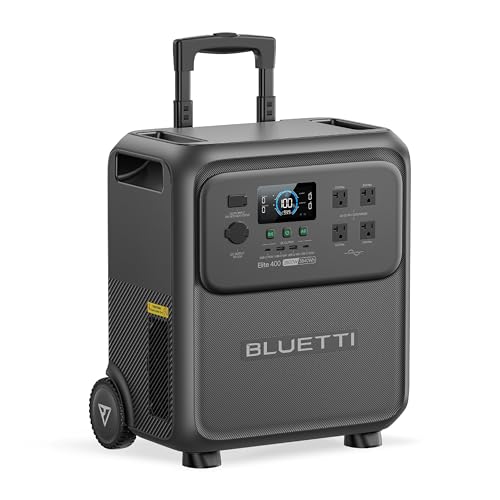
BLUETTI Elite 400 Portable Power Station 3840Wh 2600W

Jackery HomePower 3000 with Hand Truck and Solar Panels

EF ECOFLOW DELTA Pro Portable Power Station 3600Wh 3600W

PowerSmart 2500W Portable Inverter Generator

BLUETTI Elite 100 Mini Portable Power Station 1004.8Wh
More Details On Our Top Picks
The FridgePower exists for one job: keeping a refrigerator alive through a multi-hour outage. Its ultra-low standby draw of around 4 watts means the 2016Wh LFP (lithium iron phosphate) battery sips power when no appliance is actively running, which extends runtime noticeably compared to other stations in its capacity class. Expansion to 8064Wh is supported, so a serious storm week is not out of reach.
This is not the unit I would grab for heavy 3600W tool loads, since output tops out around 1800W. For its actual job, though, the design is purposeful and quiet.
Positive Points
- LFP chemistry typically outlasts NMC (nickel manganese cobalt) cells, giving you more charge cycles over the years.
- Standby draw is low enough that a fridge can keep running for days with modest cycling.
- Expansion batteries let you scale up without buying a second whole unit.
- No fuel, no fumes, no engine noise in a quiet house.
Worth Noting
- 1800W output is well below the 3600W threshold, so plan loads accordingly.
- You may find the unit heavy to relocate once expanded with extra batteries.
Feature Snapshot
Who It Suits Best
Anyone whose main concern is spoiled food during grid outages, with a small kitchen and modest power needs.
Where Another Pick Suits Better
For whole-home or tool-heavy backup, the BLUETTI Elite 400 is the more capable sibling on this list.
The Delta 3 is built for speed. With combined AC and solar input, a full charge is reachable in under an hour, and an 80% top-up happens in roughly 30 minutes, which matters when storms approach on short notice. The 1024Wh capacity sits on the modest side of the lineup, but the station plays well with EcoFlow’s expanding battery family.
At 1800W output, it handles essentials comfortably. It is quieter than a gas generator and tolerates apartment storage, assuming your building allows lithium batteries.
A Strong Showing
- Fast recharge cuts downtime between back-to-back outages.
- Plays nicely with multiple EcoFlow battery expansions for a growing setup.
- Clean, app-friendly interface for monitoring from a phone.
- Portable enough to toss in a vehicle for a weekend trip.
Trade Offs
- 1024Wh is light for an overnight fridge cycle.
- You may find the expansion ecosystem pricier than the base unit suggests.
Made For
Apartment dwellers and weekend campers who want quiet, rechargeable backup without hauling gas.
Look Elsewhere When
For multi-day outage resilience, the EF ECOFLOW DELTA Pro offers far more headroom in the same family.
The Elite 400 is built like a rolling suitcase, because at 3840Wh it really is a wheeled unit. Nine ports cover most household needs, and the 2600W continuous output (surging to 3900W) handles a fridge, freezer, sump pump, and a microwave at the same time, depending on cycling. Compared to the FridgePower, this is the grown-up version of the same BLUETTI line.
The trolley-style rolling handle is a thoughtful touch, since the battery alone would be a chore to lift. For most homes, 2600W of clean inverter power replaces the need for a noisy generator.
Key Advantages
- Massive 3840Wh capacity covers multi-day outages with reasonable load management.
- 3900W surge handles motor start-up for fridges and pumps.
- LFP cell chemistry for longer cycle life.
- Rolling trolley design reduces the strain of moving it across rooms or outdoors.
- Nine ports let you run several appliances simultaneously.
Small Caveats
- It is heavy and bulky, even with wheels.
- You may find recharge times longer than smaller units at the same wattage.
Quick Facts
Best Suited To
Households that want one battery to cover the essentials through storm season without daily recharging.
Swap It Out When
If a pure-fridge focus with expansion is the goal, the BLUETTI FridgePower is the cheaper, lighter entry.
The HomePower 3000 hits a true 3600W AC output with a 7200W surge, which puts it squarely in the 3600 watt generator class, not just the marketing copy. The 3072Wh battery supports household essentials for a long evening, and the included hand truck plus two 200W solar panels means this is a true off-grid package out of the box.
The UPS (uninterruptible power supply) function kicks in fast enough to keep a desktop computer running through a flicker. Setup is genuinely plug-and-play once the panels are positioned.
A Favorable Mix
- True 3600W continuous output matches the category’s headline spec.
- 7200W surge handles tough motor starts like sump pumps and window ACs.
- Bundled solar panels and hand truck eliminate guesswork for first-time off-grid users.
- Fast UPS switchover protects sensitive electronics.
Honest Caveats
- Bundled solar charging depends on direct sunlight and proper panel placement.
- You may find the full bundle heavier to store than a bare station.
Feature Card
Who Will Love This
Prep-focused households and cabin owners who want one package covering battery, transport, and solar.
Another Choice May Suit
For pure home backup without solar dependencies, the BLUETTI Elite 400 keeps things simpler.
The original DELTA Pro remains a 3600 watt generator class heavyweight, with 3600W AC output (expandable to 4500W with the right pairing) and a 3600Wh LFP battery. Where it shines is scaling: extra batteries and smart generators can take total capacity into the tens of kilowatt-hours for serious whole-home backup.
It is the heaviest pick on this list short of the Elite 400, so a hand truck or two-person lift is realistic for permanent placement. For long-duration outages, the headroom is hard to beat.
What Works In Its Favor
- True 3600W continuous output with proven real-world track record.
- Scales into a multi-kWh system, depending on how many extras you stack.
- Multiple charging paths including AC, solar, and even EV stations.
- LFP battery chemistry for long cycle life.
Practical Considerations
- Bare unit is heavy; movement needs planning.
- Full ecosystem pricing rises fast once you add extras.
The Right Fit
Households that want a modular platform that can grow from weekend use into whole-home backup.
Consider Something Else When
For a smaller, lighter package, the EF ECOFLOW Delta 3 is far easier to live with day to day.
The PowerSmart sits below the 3600W headline but earns its place as the fuel-only option on this list. It produces 2500 peak watts with clean inverter power, meaning laptops and phones charge safely, and the 1.06-gallon tank delivers around eight hours of quiet runtime at a quarter load. That covers most overnight camping or short outage windows.
At 52 dBA from 23 feet, it stays campground-friendly and is far quieter than older open-frame generators. Fuel adds weight and storage considerations, but for off-grid trips without access to wall power, gas still wins on energy density.
Points In Its Favor
- Lightweight and portable for a fuel generator, easy to load into a truck bed.
- Clean inverter output safe for sensitive electronics.
- Quieter than traditional open-frame generators at rated load.
- Long runtime per tank for overnight camping.
Things To Weigh Up
- Below the 3600W threshold; not suitable as a full home backup.
- Requires gasoline storage and routine oil changes.
- Not appropriate for indoor or enclosed-space use due to exhaust.
Key Product Details
Built With In Mind
Campers, tailgaters, and RV owners who need real wattage far from any outlet.
Not Your Match When
For indoor-safe backup without fuel hassles, the EF ECOFLOW DELTA Pro is the better household choice.
The Elite 100 Mini is the lightest 1kWh unit on the market right now, weighing around 23.6 pounds with a vertical footprint small enough to live on a kitchen counter or fit behind a car seat. Capacity is 1004.8Wh and output caps at 700W, so this is for personal electronics and small appliances, not a fridge.
For apartment dwellers, van lifers, and short camping trips, it is the easiest grab-and-go option on the list. In our view, the trade-off is real: the 700W ceiling rules out any kitchen-grade appliance.
Where It Helps
- Significantly lighter than comparable 1kWh stations.
- Compact vertical body fits on counters and small shelves.
- LFP battery chemistry in a portable form factor.
- Great for laptops, phones, lights, and small kitchen gear.
Things To Consider
- 700W output is far below 3600W; no fridge or microwave.
- You may find capacity limiting for anything beyond a day or two off-grid.
Perfect Match For
Apartment residents, students, and short-trip campers who want portable power without bulk.
Reach For A Different Pick When
For real outage coverage, the BLUETTI FridgePower is purpose-built for the fridge job.
What To Weigh Before Choosing A 3600 Watt Generator
Match Output To Your Real Load, Not The Headline Number
A “3600 watt generator” label tells you the peak continuous output, but your actual household draw matters more. Add up the running watts of the appliances you cannot lose during an outage: fridge (around 150 to 200W running), freezer (similar), sump pump (800 to 1500W), microwave (1000 to 1500W). Surge wattage matters for motor start-up, so any unit with a surge rating above 6000W handles pumps and window ACs without tripping.
Battery Chemistry Affects How Long The Unit Lasts
LFP (lithium iron phosphate) cells are becoming the standard for serious power stations. They typically deliver more charge cycles before noticeable degradation than NMC (nickel manganese cobalt) chemistry, which matters for a unit you will own for years. The trade-off is often weight and cost, since LFP cells are slightly heavier per watt-hour, but the cycle-life advantage is real.
Decide On Fuel, Battery, Or Both
Battery stations like the BLUETTI Elite 400 and EF ECOFLOW DELTA Pro run indoors without fumes and need no maintenance. Fuel generators like the PowerSmart give long runtime and high energy density for camping but require gasoline storage and outdoor placement. Hybrid households sometimes keep one of each, which is not unreasonable.
Port Variety And UPS Behavior Matter Daily
In most homes, you want at least two pure sine wave AC outlets, several USB ports, a 12V car-style outlet, and ideally a 30A RV-style plug for heavier loads. UPS switchover speed, the time the unit takes to detect a grid loss and switch to battery, decides whether your router or PC stays alive through a flicker.
Key Considerations Across These Picks
Common Slip Ups When Buying A 3600 Watt Generator
The biggest trap is matching headline wattage to your real loads without checking startup surge. A fridge with a compressor may draw only 150W while running but spike to 1200W on start, and a station without enough surge simply trips. Another common miss is ignoring recharge time, since a battery that takes twelve hours to refill is rough during a multi-day outage with limited sun. Storage and weight also catch first-timers off guard, especially with LFP units north of 90 pounds.
What The Higher Tier Buys
The jump from a 1kWh-class unit to a true 3600W station usually pays for itself in two areas: surge headroom and expandability. Higher-tier picks like the Jackery HomePower 3000 and EF ECOFLOW DELTA Pro add 7200W surge handling, which is the difference between a sump pump starting cleanly and stalling. They also support expansion batteries or smart generators, so you are buying a platform, not a one-off device. For households that have already experienced a multi-day outage, that platform approach tends to earn its keep quickly.
Frequently Asked Questions
How Long Will A 3600 Watt Generator Run A Refrigerator?
A modern fridge cycles on and off, so a 3000Wh battery typically covers a fridge for one to two days, depending on door openings and ambient temperature. Larger stations like the BLUETTI Elite 400 stretch that further through efficient inverter design and larger battery banks.
Can A 3600 Watt Generator Power A Whole House?
A single 3600W station can run essentials, but not an entire house simultaneously. Central air, electric ovens, and electric dryers are well beyond its capacity. With load management and the right transfer switch, you can keep the critical circuits alive.
Are Battery Power Stations Better Than Gas Generators?
For indoor use, noise, and maintenance, battery stations are easier to live with. For long runtime in remote locations without solar, a fuel generator still wins on energy density per pound. Many households pair both.
How Fast Can These Stations Recharge?
Recharge times vary widely. The EF ECOFLOW Delta 3 reaches a full charge in under an hour using combined AC and solar input. Larger LFP units like the BLUETTI Elite 400 take several hours from a wall outlet and longer from solar alone.
Do I Need Solar Panels With A Power Station?
Solar is optional but useful if outages stretch into days or you camp off-grid regularly. Bundles like the Jackery HomePower 3000 with panels reduce dependence on grid power entirely once set up.
The Takeaway
Picking the right 3600 watt generator comes down to honest self-assessment: how much wattage your essentials actually pull, how long you need to ride out an outage, and whether indoor operation matters. Battery stations win on quiet and convenience, fuel generators win on runtime, and the smartest setup is the one sized to your worst real-world day, not the best-case brochure scenario. Match the unit to your household, and the next outage becomes a minor inconvenience rather than a crisis.
