

Hooking up an RV safely at home or a campsite starts with the right outlet box. A 30 amp breaker box handles the heavier draw that RVs need for air conditioning, microwaves, and space heaters, and choosing the wrong one risks tripped breakers, weather damage, or worse. I put together this roundup to help DIYers, weekend campers, and full-time RVers find a panel that fits their amp needs and stands up to outdoor conditions.
A Snapshot Of The Selections

Gravimorph 125 Volt 30 Amp RV Outlet Box
Umaogus RV Electrical Panel 50/30/20 Amp

Umaogus RV Electrical Panel 50/20 Amp

Umaogus Temporary RV Electrical Panel

Umaogus RV Power Outlet Box 20/30/50 Amp

Umaogus 50/20 Amp RV Outlet Box
Taking A Closer Look At The Options
A basic 30 amp hookup at home or at a seasonal campsite calls for something focused, and that is exactly where this Gravimorph box fits. The cold rolled steel body and precision welded seams suggest a rigid build that can take a knock from lawn equipment without flexing. The single-pole breaker trips automatically during overload, giving you a fast cutoff before wiring feels the strain.
Unlike the multi-receptacle options later in this list, this one sticks to a single 30 amp purpose. DIYers installing a backyard pad for a travel trailer get a clean, uncomplicated install with fewer moving parts to worry about.
Positive Takeaways
- Single-pole 30 amp breaker cuts power during overloads, protecting your RV wiring.
- Cold rolled steel enclosure holds up to bumps, vibration, and weather over time.
- Compact footprint works well on a post, exterior wall, or pedestal mount.
- Straightforward install for anyone comfortable running a dedicated 30 amp circuit.
Things To Consider
- Single receptacle limits you to 30 amp appliances only.
- No 50 amp or 20 amp outlets means adapters are needed for mixed gear.
Made For
Homeowners adding a permanent 30 amp pedestal for one travel trailer or motorhome.
Where Another Pick Suits Better
Choose the Umaogus 50/30/20 Amp panel when you also want to run household tools alongside the RV.
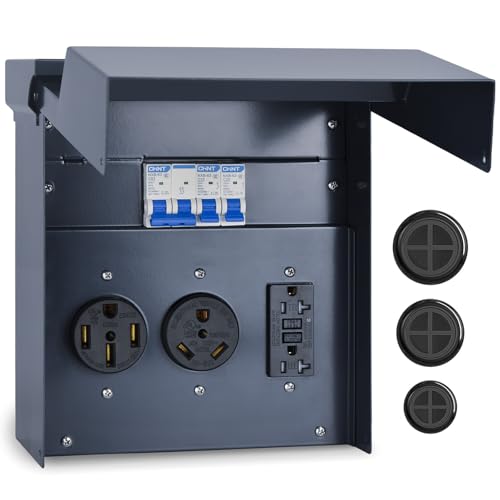
Versatility drives this Umaogus panel, which packs three receptacle types into one weatherproof metal box. Independent UL-listed breakers sit behind each outlet, so a fault on the 20 amp circuit will not black out the 30 amp RV feed. The widened panel closure depth gives bulky plug handles and thick cables enough room to seat fully before you latch the cover.
The triple receptacle setup makes this panel feel like a small outdoor sub-panel rather than a simple RV outlet. Compare that to the Gravimorph box reviewed first, which handles only 30 amp loads. Weekend RVers running a heated hose, outdoor lighting, and power tools alongside the coach benefit from the extra capacity.
Why It Works Well
- Three amp ratings cover an RV, household tools, and outdoor lighting from one box.
- Per-receptacle breakers isolate faults so the RV feed stays live when a 20 amp trips.
- Pre-cut openings with rubber plugs help seal out insects and driving rain.
- Enlarged interior depth accepts chunky industrial plugs without forcing the door.
Worth Noting
- Larger box requires a sturdier mount than a single-purpose outlet.
- More breakers mean slightly more complexity during installation.
Feature Snapshot
Right Fit For
RVers who want one outdoor box for both the coach and household accessories.
Not Your Match When
Pick the Gravimorph box instead for a lean, single-purpose 30 amp install on a small pad.
Not every RV owner needs a 30 amp feed, and this Umaogus panel acknowledges that. It pairs a 50 amp receptacle with a 20 amp standard outlet, both backed by independent UL-listed breakers. The same widened closure and rubber-sealed entry openings carry over from the larger 50/30/20 sibling reviewed above.
For most owners running a smaller coach with a basic shore power cord, this dual setup covers the typical loads without overspending. The slimmed-down receptacle mix also makes the box easier to mount on a narrower post.
Reasons It Performs
- Two-amp design avoids paying for outlets you will not use.
- Independent breakers keep the 50A and 20A circuits from sharing faults.
- Rubber-sealed cable entries keep pests and weather out of the enclosure.
Trade Offs
- No 30 amp receptacle means a 30 amp RV will need an adapter or a different panel.
- Still heavier than a single-outlet box and needs solid anchoring.
- Two breakers to wire up rather than one, adding modest install time.
Best Suited To
RVers with a 50 amp coach who mainly need shore power plus a convenience outlet.
Skip It When
Stick with the Gravimorph box if your rig runs on a standard 30 amp plug.
This panel swaps the typical flip-top lid for a side-opening door with a metal latch. That design choice reduces accidental openings from curious kids or wind gusts, while adding a small theft deterrent on jobsites. Three pre-cut entry openings with rubber plugs seal off cable paths after install.
Compared to the Umaogus 50/30/20 panel reviewed second, this model leans harder on security and family-friendly use. Owners with a yard the neighbors walk past, or contractors worried about tool-site tampering, get peace of mind from the latched side door.
A Few Strong Suits
- Side-opening latch resists accidental opens better than flip-top lids.
- Metal latch adds a small theft deterrent for outdoor installs.
- Triple cable openings with rubber seals help block insects and weather.
- Receptacle set covers 20A, 30A, and 50A gear in one box.
Points To Note
- Latch mechanism adds one more part to inspect over the life of the panel.
- Side hinge means the swing clearance on the mount needs planning.
Perfect Match For
Households with kids or anyone mounting a panel in a shared outdoor space.
Look Elsewhere When
Reach for the Umaogus 20/30/50 amp box when closure depth matters more than latch security.
Big plugs and stiff, heavy-gauge cords are the weak spot of most outlet boxes, and this Umaogus panel directly addresses that. The 3.5 inch closure height swallows large-handle RV plugs and thick cables without forcing the door. Cold rolled steel paired with an electro-galvanized finish shrugs off rain and road grime over years of outdoor exposure.
Where the 50/30/20 panel reviewed second adds 3 inches of extra depth, this one pushes to 3.5 inches for even more clearance. Owners using right-angle adapters or chunky aftermarket cords will not have to wrestle the door shut.
Noteworthy Benefits
- 3.5 inch closure height fits the largest aftermarket RV plugs comfortably.
- Electro-galvanized steel finish resists corrosion in coastal or winter climates.
- Triple receptacle set covers nearly every RV and accessory plug type.
- Cold rolled steel body handles accidental knocks around the yard.
- Wide interior makes wiring terminations easier during install.
Room For Improvement
- Heavier steel adds noticeable weight to the mounting surface.
- Larger enclosure footprint needs more planning on tight sidewalls.
Technical Highlights
Whose Shelf It Belongs On
RVers using heavy-gauge cords or right-angle adapters who need plug clearance to spare.
Reach For A Different Pick When
Pick the Umaogus 50/30/20 panel if you want a similar layout in a slightly smaller box.
Construction sites and temporary setups call for a panel that takes a beating, and this Umaogus box reads like it was designed for that life. Independent UL-listed breakers behind the 50A and 20A outlets isolate faults cleanly. Its oversized interior closure gives even the bulkiest shore power cords room to seat without bending.
This dual-receptacle layout sets it apart from the 20/30/50 amp model reviewed fifth. You give up the 30 amp option in exchange for a simpler two-circuit panel, which keeps the wiring and breaker count down for temporary use.
The Good Stuff
- 50A and 20A receptacles cover large RV coaches plus tool power.
- Per-receptacle breakers isolate faults for safer temporary installs.
- Generous interior depth accepts large-handle plugs with the cover closed.
- Weatherproof metal enclosure handles jobsite dust and rain.
Soft Spots
- Missing 30 amp receptacle limits use with smaller coaches without an adapter.
- No dedicated pedestal mounting hardware, depending on your install surface.
Quick Facts
Who Should Grab It
Contractors and full-time RVers running a 50 amp rig with a side outlet for tools.
Swap It Out When
The Gravimorph box fits better for a permanent 30 amp install on a home pedestal.
Picking The Right Panel For Your Setup
Match The Receptacle To Your Rig
The first question is what amp rating your RV actually needs. A 30 amp coach uses a single three-prong plug and pulls from a single hot leg, while a 50 amp rig has two hot legs and handles heavier rooftop AC loads. Picking a panel without your coach’s plug in mind forces you into adapters every trip, which adds failure points. For most mid-size travel trailers with single AC units, a 30 amp setup is the right starting place.
Consider The Environment
Outdoor boxes live through rain, UV, and temperature swings, so enclosure material and sealing matter. Cold rolled steel with an electro-galvanized or powder finish holds up better than bare steel in coastal or winter climates. Rubber-sealed cable entries keep insects and driving rain from getting into the breaker compartment. Look for UL-listed breakers, meaning the components meet third-party safety standards, before you commit to a panel.
Plan For The Mount
A 30 amp outlet box can weigh anywhere from a few pounds to fifteen once you add a steel enclosure and breakers. Wood posts, masonry, and exterior walls each call for different anchors, and bigger enclosures need more swing clearance for the door. If your install spot is tight, measure first and pick a panel with a lid that opens without hitting a wall or fence.
Think Beyond Shore Power
If you also want to run outdoor lighting, heated hoses, or power tools, a multi-receptacle panel saves you from installing a second box. Single-purpose 30 amp panels stay clean and simple, while dual or triple amp panels add flexibility at the cost of size and weight. Match the choice to how often you actually use that extra capacity.
Key Considerations Across These Picks
Common Shopping Slip Ups
The biggest miss shoppers make is choosing a panel based on outlet count rather than their RV’s actual plug type. A 50 amp coach on a 30 amp box will not run both AC units at once, no matter how many extra 20 amp outlets sit on the front. Another trap is underestimating closure depth: large-handle plugs and right-angle adapters need real room inside the box, or the lid will not shut.
What The Higher Tier Buys
Spending more on a heavier-gauge steel box or a wider closure height is mostly about longevity and plug fit. Premium panels add electro-galvanized finishes that resist corrosion in coastal or winter climates, plus deeper interiors that swallow chunky aftermarket cords. The upgrade pays off when your install lives outdoors year-round, and falls flat on a covered seasonal pad where a basic box would do the job.
Frequently Asked Questions
What Is A 30 Amp Breaker Box Used For In An RV Setup?
A 30 amp breaker box gives your RV a dedicated outdoor outlet with built-in overload protection at a campsite or home pad. It handles the typical shore power draw for a single AC unit, microwave, and other smaller appliances on a 30 amp coach.
Can I Use A 30 Amp Panel For A 50 Amp RV?
A 50 amp RV needs a panel with a 50 amp receptacle, so a pure 30 amp box will not work on its own. Adapters exist, but they limit the coach to running one AC unit at a time and are not a permanent solution.
Do These Boxes Need A Licensed Electrician To Install?
Local electrical codes vary, and many jurisdictions require a licensed electrician for any new circuit run from the main panel. The outlet box itself is straightforward to mount, but the wiring back to your breaker panel often needs a permit and inspection.
How Weatherproof Are Outdoor RV Outlet Boxes?
Most quality outdoor boxes use weatherproof metal enclosures with rubber-sealed cable entries to handle rain and UV. They are rated for outdoor exposure but should still be mounted above standing water and checked for seal integrity each season.
How Long Do RV Outlet Boxes Typically Last?
A well-built steel enclosure can last many years outdoors, especially with an electro-galvanized or powder-coated finish. Breakers tend to outlast the enclosure, but gaskets and rubber seals are the parts most likely to need replacement over time.
Bottom Line
The right panel comes down to your coach’s plug type and where you plan to mount it. A pure 30 amp rig on a home pad pairs well with the Gravimorph box, while mixed-use owners benefit from the Umaogus multi-receptacle panels. Take a quick look at your shore power cord before choosing, and the rest of the decision tends to fall into place.
