

Most homeowners don’t think about the cable behind their dryer until moving day forces the issue. Newer dryers ship with a four-prong plug (NEMA 14-30P), but older homes still have three-prong outlets (NEMA 10-30R). That mismatch is exactly why adapters and replacement cords exist, and picking the right one saves a service call. I’ve put together six solid options covering both directions, plus a flat extension cord for tight appliance alcoves.
The Essentials At A Glance
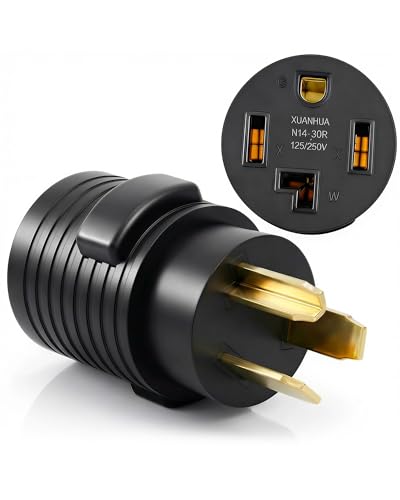
NEMA 10-30P to 14-30R Dryer Adapter
Adoreen 14/3 Flat Appliance Extension Cord 7 Ft

SIPIDEAUT 10-30P to 14-30R Adapter Cord 1FT
RVMATE 4 Prong SRDT Dryer Cord 5 Feet

SIPIDEAUT 14-30P to 10-30R Adapter
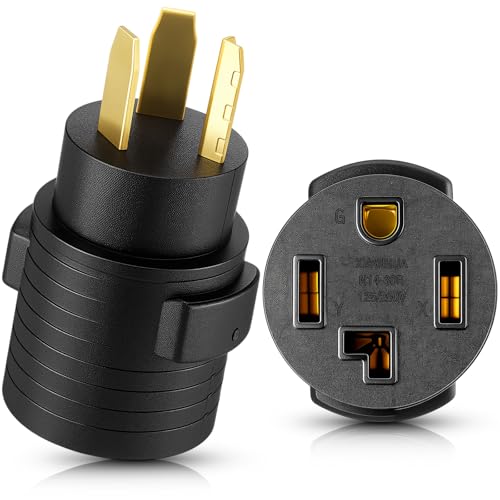
Tellegloww 10-30P to 14-30R Adapter
What Each Pick Brings To The Table
Move-in day frustrations tend to land on small details like a dryer that won’t plug in. This SIPIDEAUT piece solves that gap cleanly: a NEMA 10-30P male end (the older three-prong style, where NEMA is the National Electrical Manufacturer Association that defines plug shapes) drops into an existing 10-30R outlet, and a NEMA 14-30R female side accepts the four-prong plug on a modern dryer. No rewiring, no electrician visit for most homeowners who just need a transitional fix.
It handles the full 30-amp circuit that most residential dryers pull, which means no thermal throttling during long timed-dry cycles. The molded housing keeps prongs aligned, and the compact block barely adds depth behind the machine.
Features That Help
- Translates a three-prong wall outlet into a four-prong dryer receptacle in seconds
- Rated for 30A at 125/250V, matching the circuits most U.S. dryers run on
- Molded plug housing holds prongs steady through repeated connect/disconnect cycles
- One-piece adapter design eliminates cable strain at the wall receptacle
Points To Note
- Not a permanent fix in code-strict jurisdictions, where a four-prong receptacle upgrade may be required
- Older three-prong outlets lack a separate ground wire, so grounding depends on the existing circuit
Best Suited To
Homeowners in pre-1996 houses who just installed a modern dryer and want a fast, no-tools workaround.
Look Elsewhere When
Shoppers running very tight dryer closets should consider the SIPIDEAUT 10-30P to 14-30R Adapter Cord 1FT instead, since its short cable adds flexibility.
Dryers themselves don’t usually need an extension cord, but the flat-appliance category covers a lot of adjacent pain points: window AC units, fridges parked inches from the wall, dehumidifiers in basement corners. The Adoreen cord earns its place here because it’s the kind of cable that quietly solves layout headaches where a round cord refuses to bend flat.
At 7 feet with 14/3 SPT-3 wiring (a 14-gauge, three-conductor thermoplastic cord rated for heavier appliance loads), it carries 15A at 125V, or 1875W. The right-angle plug hugs the wall so furniture can sit flush, and the flat jacket slips behind bookcases and baseboards without bulging.
Reasons It Performs
- Flat profile cord threads through gaps under doors and behind tight furniture runs
- 14 AWG conductors (a thicker American Wire Gauge that handles more current) support heavier appliances without voltage drop on long runs
- Low-profile plug tip is roughly 1.1 inches at the widest point, keeping outlets accessible
- Grounded three-prong design meets standard appliance safety expectations
Honest Caveats
- Not suitable for dryers that pull 30A, which require heavier 10 AWG cable like the RVMATE cord later in this list
- White jacket shows scuffs and dust in garage or workshop settings more than darker cords do
Right Fit For
Apartment dwellers running a window AC or compact fridge from the only outlet across the room, where a standard round cord won’t fit behind the unit.
Swap It Out When
Anyone wiring an actual electric dryer should reach for the RVMATE 4 Prong SRDT Dryer Cord 5 Feet, which is built for the 30A circuits dryers actually require.
Where the first SIPIDEAUT adapter is a rigid block, this sibling version tucks a one-foot 10/3 AWG cable between the two ends, which is the kind of small engineering decision that matters once you slide a dryer six inches from the wall. The cable flex absorbs the push-pull of plugging in, and the 10-gauge conductors handle the same 30A/7,500W load as a hardwired cord.
For tight laundry closets where the rigid adapter barely clears the gas line behind the dryer, the extra inch or two of bend room can be the difference between a clean install and a strained outlet.
Practical Advantages
- 10/3 AWG cable between plugs offers meaningful strain relief compared to one-piece adapters
- Flame-retardant molded housing adds thermal margin in warm utility rooms
- ETL safety listing (a third-party certification from Edison Testing Laboratories) signals it meets recognized electrical standards
- 1-foot length solves tight-clearance installs without leaving cable to manage
Trade Offs
- Same grounding caveat as the rigid adapter: older three-prong circuits carry no separate ground path
- Cable adds slight bulk, so it won’t tuck as invisibly as the block-style version
Made For
Anyone whose dryer sits in a recessed closet with the outlet pushed deep into the wall cavity.
Reach For A Different Pick When
Shoppers wanting a one-piece solution with no cable to dress should stay with the SIPIDEAUT NEMA 10-30P to 14-30R Dryer Adapter.
New dryers increasingly ship without a cord at all, leaving the install decision to the homeowner. The RVMATE 4-prong cord is the proper long-term answer for a four-prong NEMA 14-30R outlet: SRDT-rated cable (a Separator Range Dryer cord with individual conductors wrapped for high-heat tolerance), 10 AWG copper, and a 140°F heat ceiling that shrugs off the warmth behind a running dryer.
It’s the only true replacement cord in this roundup, not an adapter. That distinction matters for code-conscious installs where adapters aren’t acceptable.
A Favorable Mix
- SRDT jacket construction tolerates the elevated temperatures behind running dryers
- Four-conductor design provides the separate ground path modern code requires
- ETL safety certification confirms third-party tested electrical compliance
- 5-foot length suits most laundry rooms without leaving coil to bundle
Small Caveats
- Requires opening the dryer’s wiring compartment to attach the cord, so not for first-time DIYers who haven’t done it before
- Won’t help anyone working with a three-prong wall outlet, since this cord ends in a 14-30P plug
Perfect Match For
New-homeowners or renovators pairing a brand-new dryer with an existing 4-prong outlet who want the cord the manufacturer didn’t include in the box.
A Better Fit Elsewhere
Anyone stuck with a 3-prong outlet should skip this and pick up the SIPIDEAUT NEMA 10-30P to 14-30R Dryer Adapter instead.
Most adapter searches run in the older-outlet, newer-dryer direction. This SIPIDEAUT handles the reverse: a newer four-prong wall receptacle feeding an older dryer that still terminates in a 10-30P plug. Vintage dryer owners, restored appliance enthusiasts, and people who’ve moved into a recently rewired house with an older machine all hit this scenario.
The block-format keeps the install simple, and the same 30A/7,500W ceiling applies so older dryers aren’t underpowered.
Real Benefits
- Soluble bridge for older dryers parked in homes with rewired four-prong outlets
- Compact one-piece adapter means no cable slack behind the appliance
- Straight-blade NEMA 14-30P input grips the modern outlet securely
- Useful for portable generator connections where the dryer becomes a power-distribution anchor
Where It Is Less Suited
- Niche need compared to the more common 10-30P-to-14-30R direction
- Won’t help anyone whose situation runs the other way around
Who Should Grab It
Owners of older dryers who moved into a home with a four-prong outlet and don’t want to replace the cord on the appliance.
Where Another Pick Suits Better
Anyone running a new dryer on an old outlet should pick the SIPIDEAUT NEMA 10-30P to 14-30R Dryer Adapter, since it’s the more common direction.
The Tellegloww adapter pulls double duty for anyone running serious shop equipment off a dryer outlet. It’s rated to the same 30A ceiling as the SIPIDEAUT adapters, but Tellegloww positions it explicitly for tool use: welders, plasma cutters, and high-draw workshop machines that ship with modern four-prong plugs but live in older garages with three-prong dryer receptacles.
The manufacturer specifically calls out non-EV use, which signals the build is tuned for short-duration heavy loads rather than sustained EV charging cycles. Most homeowners will use it for laundry, but the workshop angle is genuine.
Where It Helps
- 30A continuous rating supports high-draw shop tools beyond a typical dryer cycle
- Plug-and-play design skips the cost of hiring an electrician to swap the wall receptacle
- Compatible with portable generators that put out 220V through a 10-30R outlet
Things To Consider
- Limited feature documentation beyond the basic plug spec, so buyers should confirm their tool’s amp draw before relying on it
- Not approved for sustained EV charging use per the manufacturer
Whose Shelf It Belongs On
DIYers with a three-prong garage outlet powering newer shop equipment who need a quick, reversible workaround.
Consider Something Else When
Homeowners with a tight dryer alcove should grab the SIPIDEAUT 10-30P to 14-30R Adapter Cord 1FT, which handles clearance better.
Matching Plugs To Real-World Setups
The first decision is direction: which plug is on the wall, and which plug is on the appliance. A 10-30R wall outlet needs an adapter that ends in a 14-30R receptacle for a modern dryer, while a 14-30R wall outlet feeding an older dryer needs the reverse. Mixing those up is the most common ordering mistake.
Current rating is the next gate. Standard electric dryers pull 30A, which means 10 AWG conductors and a 7,500W ceiling. Anything thinner, like the 14 AWG Adoreen extension cord, is for 15A appliances, not full-size dryers. Mismatched ratings show up as tripped breakers or warm outlet faces during long loads.
Cable format matters once the dryer is in place. Rigid block adapters fit where the wall outlet sits flush and the dryer pushes back tight. Short adapter cords give an inch or two of flex for recessed outlets. Full-length SRDT cords are the proper install for code-strict work and any dryer outlet that doesn’t already have a plug dangling from it.
Heat tolerance is the quiet spec worth checking. SRDT jackets are rated for higher operating temperatures than standard thermoplastic cords, which matters behind a dryer that’s been running timed cycles all afternoon. For workshop use, look for adapters that explicitly handle the inrush current of motor-driven tools.
Common Shopping Slip Ups
The most frequent error is buying the wrong direction adapter. People often assume an adapter bridges any mismatch, but the 10-30P-to-14-30R and 14-30P-to-10-30R versions solve opposite problems. Sketching the outlet and the appliance plug before ordering avoids a wasted return.
Another trap is using a 15A household extension cord on a 30A dryer circuit. The cord itself becomes the weakest link, and the heat generated at the plug face can damage both the outlet and the adapter over time.
What The Higher Tier Buys
Stepping up to a heavier SRDT cord or an ETL-certified adapter typically adds copper mass, better heat-rated jackets, and third-party safety certification. For a primary residence where the dryer runs several times a week, that tier pays for itself in longevity and reduced nuisance tripping.
Key Considerations Across These Picks
Where Shoppers Go Wrong
Buyers often forget to check whether their breaker is 30A before assuming any adapter will work. A 20A breaker feeding a 30A adapter still trips under dryer load, no matter how solid the adapter build is.
What Separates Premium From Basic
Premium adapters usually advertise explicit safety listings, copper conductor cores, and molded strain relief. Basic versions cut those corners, which is fine for occasional shop use but risky as a daily dryer connection.
Frequently Asked Questions
Can I use a 3-prong to 4-prong dryer adapter permanently? Most local electrical codes expect a 4-prong receptacle for permanent installs, since it provides a separate ground path. An adapter is a workable stopgap for older homes, but a receptacle upgrade is the proper long-term solution.
What gauge wire do I need for a 30-amp dryer cord? 10 AWG copper is the standard for 30A dryer circuits. Anything thinner, like 12 or 14 AWG, will overheat under sustained dryer load and is not rated for the full 7,500W a dryer can pull.
Is it safe to plug a dryer into an extension cord? Code generally frowns on dryer extension cords because the 30A draw generates heat over long runs. A short, heavy-gauge adapter or a relocated outlet is the safer path.
Do 3-prong dryer outlets have a ground wire? Older 3-prong dryer outlets combine the ground and neutral into one conductor, which is why newer code required the 4-prong design with separate ground and neutral. That shared path is why adapters work but get flagged in some inspections.
Will a 10-30 to 14-30 adapter work with a generator? Yes, as long as the generator puts out a compatible 220V through a 10-30R receptacle. Adapters like the SIPIDEAUT and Tellegloww picks are commonly used for exactly this scenario.
Final Takeaway
The right pick depends entirely on which plug is on the wall and which plug is on the machine. For most homeowners bridging an older 3-prong outlet to a modern dryer, the SIPIDEAUT NEMA 10-30P to 14-30R Dryer Adapter is the everyday workhorse. Anyone doing a proper new-dryer install on a 4-prong outlet should grab the RVMATE 4 Prong SRDT cord instead. Measure twice, order once, and the laundry room will be back in business before the next load piles up.
