

A flat battery has a way of ruining the day at the worst possible moment. I put together this list for anyone who wants to keep a motorcycle, classic car, boat, lawn tractor, or daily driver topped up without thinking twice about it. These seven smart chargers and maintainers cover the full range of needs, from tiny 0.8-amp trickle units to heavy-duty 15-amp workshop tools, so you can match the gear to your battery, your garage, and the kind of riding or driving you actually do.
A Closer Look At The Lineup
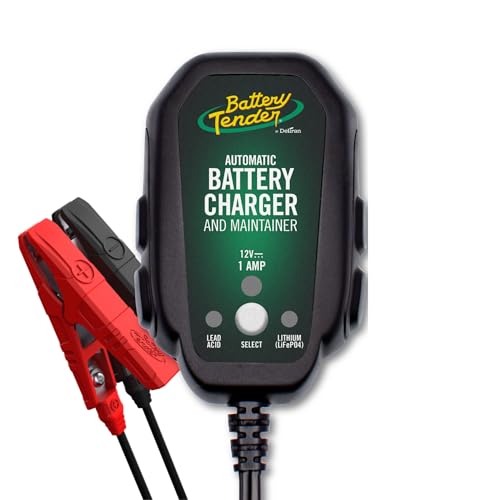
Battery Tender Junior 12V 800mA Charger & Maintainer

NOCO GENIUS1 1A 6/12V Smart Battery Charger

NOCO GENIUS10 10A 6/12V Smart Battery Charger

OptiMate3 0.8A Smart Battery Saver Charger

NOCO GENIUS5 5A 6/12V Smart Battery Charger

NOCO GENPRO10X1 12V 10A OnBoard Marine Charger

PZ.P 15-Amp 12V/24V Smart Battery Charger
The Battery Tender Junior is the kind of unit that quietly lives on a garage shelf for a decade and still does its job. It pushes a gentle 800mA of charging current, which is plenty for topping up a powersports battery over a weekend but not enough to push a deeply drained pack back from the dead in any hurry. That gentle output is also exactly why so many owners leave it connected for months at a time on stored motorcycles and ATVs without worrying about overcooking the cells.
What makes this one flexible is the front-panel chemistry switch. A single button lets you toggle between standard lead-acid types (flooded, AGM, and gel) and lithium iron phosphate (LiFePO4), which matters because lithium batteries need a different charge profile and a different float voltage to avoid damage. Compared to the bigger NOCO units lower in this list, the Junior is far slower but also far cheaper to leave plugged in all winter.
Bright Spots
- Switchable lead-acid and lithium chemistry in one unit, removing the need to own two chargers.
- Low 800mA output keeps battery temperatures down during long storage, ideal for winter layup.
- Compact, lightweight housing is easy to stash under a workbench or in a saddlebag.
- Four-step smart charging routine (initialization, bulk, absorption, float) runs hands-off once connected.
- Affordable entry point for someone outfitting their first seasonal battery on a motorcycle or jet ski.
Things To Consider
- At 800mA, reviving a deeply discharged car or truck battery would take many hours.
- The included lead set with ring terminals is fairly short, so mounting options in larger engine bays may feel limited.
- No repair or desulfation mode, so batteries left flat for long stretches may not respond well.
Key Specs
Who It Suits Best
Riders and weekend hobbyists with one or two motorcycles, ATVs, or lawn tractors that sit for long stretches between uses.
Where Another Pick Suits Better
Owners working with larger car or marine batteries should look at the NOCO GENIUS5, which delivers five times the current for faster top-ups.
The NOCO GENIUS1 is the smallest member of the NOCO GENIUS family and the one I’d grab for a coffee-can-sized battery in a pit bike or a vintage scooter. It delivers one full amp, supports both 6V and 12V systems, and weighs so little you forget it’s in your toolbox. Unlike the Battery Tender Junior covered above, this unit handles 6V batteries too, which opens it up to older tractors, golf carts, and certain motorcycle setups that still use 6V cells.
The trade-off is speed. One amp is enough for trickle maintenance and slow recovery but not for getting a starter battery back into shape before a same-day drive. Think of it as a long-term steward rather than a jump-style rescue tool.
Advantages To Know
- Dual 6V and 12V support covers older vehicles and modern batteries from one charger.
- Compatible with flooded, AGM, gel, deep-cycle, and lithium-iron-phosphate chemistries.
- Force Mode lets you take manual control to recover deeply discharged packs.
- Integrated desulfation routine helps revive batteries that have lost some capacity.
- Spark-proof clamps and reverse-polarity protection for safer hookups in tight engine bays.
Trade Offs
- One amp output means overnight charging is the norm, even for modest batteries.
- The compact housing can warm up during extended sessions, so well-ventilated mounting matters.
- Adapter accessories (eyelets, OBDII plug) cost extra if you want a permanent install.
Made For
Garage tinkerers who need one small charger that can move between a scooter, a lawn mower, and a vintage 6V tractor without skipping a beat.
Look Elsewhere When
Anyone regularly reviving flat car batteries should consider the NOCO GENIUS10 further down the list for its much stronger 10-amp output.
The NOCO GENIUS10 is what I reach for when a battery has been neglected for too long and needs serious help. Ten amps is enough current to actually recharge a flat car battery in a reasonable window, while still being safe enough to leave on a battery for weeks at a time in maintenance mode. It accepts both 6V and 12V packs, supports every common lead-acid chemistry plus lithium iron phosphate, and runs a built-in desulfator that pulses current through sulfated cells to coax capacity back.
Compared to the GENIUS1 and GENIUS5 from the same brand, this is the unit with real recovery punch. The trade-off is heat and weight; ten amps is a lot of current to push through a small housing, so it tends to run warmer during long sessions, and the cable bundle is heavier on the workbench.
A Favorable Mix
- 10-amp output recharges a depleted 12V starter battery in just a few hours, not overnight.
- Temperature compensation adjusts charge voltage based on ambient conditions in the garage.
- Force Mode for manual control over deeply discharged packs that won’t wake on their own.
- Overcharge protection paired with long-term float mode for worry-free storage charging.
- Compatible with batteries up to 230 amp-hours, covering most cars, trucks, and boats.
Worth Noting
- Larger and heavier than the GENIUS5, so storing it in a small toolbox gets awkward.
- At 10 amps, the clamps and internal wiring run warmer, which is worth noting in hot garages.
- Premium price point relative to the lower-amp NOCO models.
Feature Snapshot
Best Suited To
Shade-tree mechanics and road-trip drivers who need one charger that can rescue a dead battery and keep a stored classic topped up.
A Better Fit Elsewhere
Boat owners looking for a permanently installed solution should look at the NOCO GENPRO10X1, which is sealed for marine environments.
OptiMate has built a quiet reputation among motorcycle and powersports enthusiasts, and the OptiMate3 is the company’s most storied charger for reviving 12V lead-acid batteries that other units won’t touch. At 0.8A it won’t win any speed contests, but the smart recovery routine is genuinely aggressive about detecting deeply discharged packs and applying the right pulse pattern to bring them back. If a battery has sat all winter in a shed and reads under 8 volts on a multimeter, this is the unit I’d reach for first.
Where the Battery Tender Junior handles routine maintenance, the OptiMate3 leans into the rescue side of the spectrum. It’s also a fully sealed, weather-resistant design, which makes it forgiving in a damp garage or open carport.
Useful Touches
- Dedicated save mode for batteries discharged below safe thresholds that many chargers refuse.
- Multi-stage program handles AGM, gel, standard flooded, and deep-cycle lead-acid cells.
- Sealed housing tolerates damp storage sheds and uncovered parking spots.
- Long-term maintenance mode with hourly health checks for indefinite connection.
- Comes with both clamp and ring-terminal leads for flexible install options.
Room For Improvement
- No lithium battery support, which limits its usefulness for LiFePO4-equipped machines.
- Lower amp rating means even mild recoveries take many hours.
- Indicator light sequence can confuse first-time users used to a simple LED panel.
Quick Facts
Perfect Match For
Riders with bikes that sit for months between outings and need a charger that can actually wake up neglected batteries.
Reach For A Different Pick When
Anyone using lithium-iron-phosphate batteries in their powersports vehicles should pick the Battery Tender Junior for its switchable lithium mode.
If I could only own one charger for general garage use, it would probably be the NOCO GENIUS5. Five amps is the comfortable middle ground between a slow trickle unit and a heavy recovery box, fast enough to top up a mid-sized car battery in a few hours but gentle enough to leave connected through a long winter. It supports both 6V and 12V systems, accepts every common lead-acid chemistry plus lithium iron phosphate, and runs the same desulfation routine that the larger GENIUS10 uses.
Where the GENIUS1 covers tiny batteries and the GENIUS10 leans into heavy rescue work, the GENIUS5 fits the most common household scenarios. Daily drivers, weekend toys, and small boats all sit right in its wheelhouse, depending on the battery size you pair it with.
The Upside
- 5-amp output is the practical sweet spot for most cars, motorcycles, and lawn tractors.
- Supports batteries up to 120 amp-hours, covering the bulk of consumer vehicles.
- Integrated desulfator helps restore capacity in batteries left sitting too long.
- Temperature compensation adjusts output for cold or hot garages.
- Force Mode for manual control over stubborn packs that won’t auto-recover.
Minor Gripes
- Not as quick as the 10-amp GENIUS10 for large deep-cycle banks.
- The accessory port for eyelet and OBDII adapters is sold separately.
- Plastic housing can scratch easily if tossed around in a busy shop drawer.
Whose Shelf It Belongs On
Most commuters and weekend tinkerers who want one charger that handles the family sedan, the lawn mower, and the occasional project bike.
Skip It When
Owners of large deep-cycle marine banks or RV houses will want the NOCO GENPRO10X1, which is purpose-built for permanent onboard marine install.
Every charger in this list so far has assumed an indoor garage, a workbench, or at least a covered carport. The NOCO GENPRO10X1 is built for the other side of the line, a fully sealed, waterproof onboard charger designed to live inside a boat, mounted near the battery compartment and left there year-round. At 10 amps for a single 12V bank, it pushes enough current to refill a trolling-motor or starter battery overnight, and the sealed housing shrugs off spray, salt air, and bilge humidity.
Where the GENIUS10 covered above is a portable shop tool, this is the permanently installed version. The installation is a bit more involved (you’ll want to mount it through-bolted and run the AC shore-power lead cleanly), but once it’s in place you just plug the boat in when you trailer it home and walk away.
Notable Gains
- Fully sealed, waterproof housing rated for marine engine compartments and bilge areas.
- 10 amps per bank handles large trolling-motor and house banks without overnight runs.
- Compatible with flooded, AGM, gel, and lithium-iron-phosphate marine batteries.
- Onboard mounting frees up the cabin floor and removes the “did I forget to plug it in” worry.
- Built-in thermal sensors adjust output for engine-room temperatures.
Points To Note
- Single-bank design, so multi-battery setups need additional units.
- Installation requires basic wiring skills and a nearby AC outlet at the dock or garage.
- Higher upfront cost than a portable charger of the same amperage.
Feature Snapshot
Built With In Mind
Anglers, weekend sailors, and anyone who keeps a boat on a lift or trailer and wants charging handled the moment shore power is connected.
Swap It Out When
Land-based drivers who only need occasional charging should grab the NOCO GENIUS5 instead for its lower cost and grab-and-go portability.
The PZ.P 15-amp charger is the heavyweight of this list, the unit to keep on the workbench when you want one tool that handles everything from a lawn mower battery to a heavy truck electrical system. The headline feature is dual-voltage support: 15 amps on 12V systems and 8 amps on 24V systems, which opens it up to diesel trucks, farm equipment, and commercial vehicles that run two batteries in series. A nine-stage charging routine manages bulk, absorption, equalization, and float phases, with temperature compensation to keep output honest in hot attics or cold barns.
Where the GENIUS10 tops out at 10 amps and stays 12V-only, the PZ.P gives you extra headroom and a 24V mode in a similar tabletop footprint. It’s also noticeably more affordable than the marine-rated NOCO units, which makes it appealing for home shops on a budget.
Positive Takeaways
- 15-amp 12V mode recharges large truck and SUV batteries noticeably faster than 10-amp units.
- 24V mode at 8 amps opens up diesel trucks, tractors, and commercial vehicle banks.
- Nine-stage program handles LiFePO4, AGM, gel, SLA, and flooded batteries from one menu.
- Temperature compensation tailors output to garage conditions across seasons.
- Repair mode with pulse charging can revive lightly sulfated batteries.
Honest Caveats
- Not waterproof, so marine installs should still favor a sealed onboard unit like the GENPRO10X1.
- Larger housing than the smaller NOCO trickle chargers, so it wants a permanent spot on the bench.
- 24V mode is overkill for anyone only maintaining a single passenger vehicle.
Right Fit For
Home mechanics and small-shop owners who rotate between cars, trucks, motorcycles, and equipment batteries and want one unit to cover them all.
Where A Sibling Pick Shines
Boat owners who need a permanently mounted, water-resistant solution will find the NOCO GENPRO10X1 a better fit for the marine environment.
## Matching Your Charger To The Battery You Actually Own### Voltage And Battery Size Come FirstThe single most important spec is voltage, and 12V is the standard for nearly every consumer vehicle, motorcycle, and piece of small-engine equipment. Six-volt batteries still show up in vintage tractors, golf carts, and some specialty vehicles, so a charger that supports both (like the NOCO GENIUS series) is worth the small premium for mixed fleets. After voltage, look at amp-hours, the rough measure of how much energy a battery holds. A small motorcycle battery might be 12Ah while a deep-cycle marine bank can run 100Ah or more. Match the charger’s amp output to the battery: a 1-amp trickle unit will eventually fill a 100Ah pack, but it’ll take days. A 10-amp unit gets it done overnight.### Chemistry Compatibility Saves BatteriesLead-acid isn’t just one thing. Flooded cells (the classic serviceable kind with removable caps), AGM (absorbed glass mat, sealed and vibration-resistant), and gel (a thicker electrolyte paste) each want slightly different charging voltages, especially during the absorption and float phases. Lithium iron phosphate (LiFePO4) batteries need an entirely different charge profile and a lower float voltage; charging a LiFePO4 pack on a lead-acid profile slowly damages it. Smart chargers handle this with a chemistry switch or automatic detection, which is why a switchable unit like the Battery Tender Junior earns its keep in mixed-chemistry garages.### Maintenance Mode Matters More Than Raw PowerThe whole point of a smart charger is that you can leave it connected. A quality unit shifts from bulk charging into a float or maintenance mode once the battery is full, then tops it up only when voltage drops below a threshold. That matters for anyone storing a vehicle over winter, parking a classic car in a garage for months, or running a boat that sits between weekends. Cheap “dumb” chargers keep pushing current into a full battery and slowly cook it, which is why investing in a smart maintainer pays for itself the first time it saves you from buying a replacement.### Amperage And Use Case Pair UpOutput current determines how fast a battery fills and how big a battery the unit can comfortably handle. Trickle units in the 0.8 to 1.5 amp range are perfect for motorcycles, scooters, and lawn mowers that trickle down slowly. Mid-range 5-amp units like the GENIUS5 are the everyday sweet spot for cars and small boats. Heavy 10 to 15 amp units are for large deep-cycle banks, neglected batteries that need rescue, or shops that want fast turnaround between jobs. Buying more amps than you need wastes money and adds weight; buying too few turns a top-off into an overnight affair.## Key Considerations Across These Picks### Pitfalls Shoppers HitThe most common mistake is grabbing the cheapest dumb charger on the shelf, the kind without a float stage, and leaving it connected to a stored vehicle. Without smart regulation, that charger keeps pushing current into a full battery, evaporates electrolyte, and slowly ruins the cells. The second trap is choosing a charger based purely on amperage without checking chemistry support, which leads to mismatched profiles and shortened battery life, especially on lithium packs. Finally, buyers often forget to match the charger’s amp-hour rating to the battery; a 0.8-amp unit on a 100Ah marine bank will technically work but may take two full days to recover from a deep discharge.### What The Higher Tier BuysStepping up from a basic trickle unit to a smart 5 to 10 amp charger gets you a real float mode, multi-chemistry support, and built-in safety features like reverse-polarity and spark protection. The very top tier adds desulfation recovery routines, temperature compensation for hot and cold garages, and weatherproof housings for permanent marine installs. For most home users, that mid-tier 5 to 10 amp jump is where the value lives, since it covers daily drivers, weekend toys, and storage charging from a single device. The premium tier makes sense for shops, boats, and anyone reviving neglected batteries on a regular basis.## Frequently Asked Questions### How long does it take to charge a 12V lead-acid battery? A fully depleted 50Ah car battery takes roughly 5 to 10 hours on a 5 to 10 amp smart charger. Smaller motorcycle batteries often fill in two to four hours, while large deep-cycle banks can need a full day on lower-amperage units.### Can I leave a smart charger connected all winter? Yes, that’s exactly what maintenance mode is designed for. Once the battery reaches full charge, the charger drops to a low-voltage float and only tops up when needed, making it safe for months of continuous connection in cold storage.### Do lithium batteries need a special charger? They do. Lithium iron phosphate (LiFePO4) batteries require a different charge profile and lower float voltage than lead-acid chemistries, so a charger with a switchable lithium mode (or dedicated lithium support) is essential to prevent long-term damage.### What’s the difference between a charger and a maintainer? A charger delivers bulk current to refill a depleted battery, while a maintainer holds a full battery at the right voltage indefinitely. Modern smart units combine both functions in one device, switching automatically based on the battery’s state of charge.### Can one charger handle different battery types? Most modern multi-chemistry smart chargers support flooded, AGM, gel, and often lithium batteries through a selector switch or automatic detection. Check the spec sheet for the exact chemistries listed before assuming a unit will work with your battery.## Wrap UpThe right charger depends less on raw specs and more on the batteries you actually own and how you store them. A motorcycle owner with a single AGM battery needs something completely different from a boat owner running a lithium house bank. Match the voltage, pick the chemistry support that fits, and don’t overspend on amps you won’t use. With any of these seven picks on the bench, a flat battery becomes a small inconvenience rather than a ruined weekend.