

I help a lot of friends outfit their RVs, build small solar banks, and replace aging trolling-motor batteries, and the same question keeps coming up: which 12v 100ah lithium battery is actually worth the money this year? Lithium iron phosphate (LiFePO4) chemistry has matured to the point where the gap between models usually comes down to fit, features, and packaging rather than raw quality. The seven Redodo options below cover the most common scenarios I see, from a single drop-in upgrade to a full two-pack for off-grid adventures, and I walk through who each one actually suits.
The Picks In Brief

Redodo 12V 100Ah Bluetooth LiFePO4, Group 31

Redodo 12V 100Ah LiFePO4 Battery, Group 31

Redodo 2 Pack 12V 100Ah Trolling Motor LiFePO4 Battery
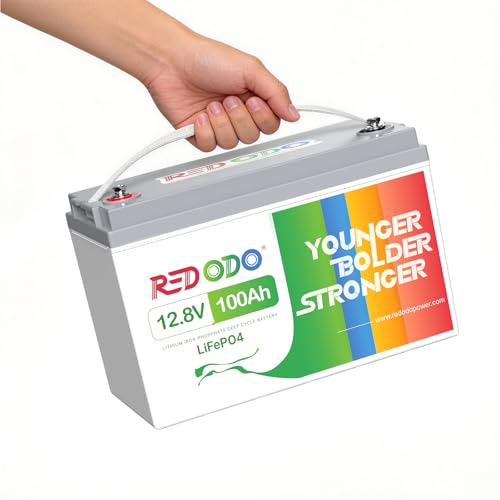
Redodo 12V 100Ah Marine LiFePO4 Battery, Group 31

Redodo 2 Pack 12V 100Ah RV Lithium Battery, Group 31

Redodo 12V 100Ah LiFePO4 RV Battery, Group 31, 1280Wh

Redodo 12.8V 100Ah LiFePO4 Battery with 14.6V 10A Charger
The Picks, Examined More Closely
I tend to recommend this one to people who like data. The Group 31 case drops into a standard RV or marine compartment without modification, and the Bluetooth 5.0 module streams voltage, current, and state of charge to a phone app so you can check on the bank from the cab of a truck or the cabin of a boat.
The built-in battery management system (BMS), which is the onboard circuitry that protects the cells from overcharge, over-discharge, and shorts, also blocks charging below freezing. That single feature matters a lot for winter campers and anyone storing a rig in an unheated shed.
Noteworthy Benefits
- Bluetooth 5.0 lets you monitor state of charge and power draw in real time, which is genuinely useful in a tucked-away battery box.
- Cold-weather charge cutoff protects the cells from damage when temperatures drop below 32°F.
- Group 31 footprint simplifies a swap from an AGM (absorbent glass mat) battery in most factory trays.
- The app allows remote discharge cutoff, a small convenience that becomes significant in storage.
Things To Consider
- Bluetooth adds a small cost over the no-frills sibling, so budget-focused shoppers may prefer a simpler option.
- Phone-app dependency means the battery still works without the app, but diagnostics are limited without it.
- Owners commonly report the Group 31 case runs warm under heavy inverter loads, so plan a vented compartment.
Who It Suits Best
Tech-comfortable RV and boat owners who want live battery data and winter-capable charging in a single drop-in case.
Where Another Pick Suits Better
Shoppers who would rather skip the app and pay less should look at the Redodo 12V 100Ah LiFePO4 Battery, Group 31 instead.
This is the version I point first-time lithium upgraders toward. Same Group 31 dimensions, same automotive-grade LiFePO4 cells, and a self-discharge rate of about 3% per month, which is dramatically lower than a lead-acid battery that loses 15 to 30% sitting unused. The trade-off is that you give up Bluetooth and the cold-weather charging cutoff.
For a basic camper van, weekend trolling setup, or a home backup box that lives in a climate-controlled garage, that simplicity is a feature, not a bug.
Benefits That Matter
- 4000+ deep cycles at 100% depth of discharge (the percentage of stored energy you actually use before recharging) far outlast a typical lead-acid battery.
- Standard Group 31 case fits factory trays with no bracket modifications.
- Low self-discharge means the battery holds its charge through long storage periods.
- 10-year expected service life under regular use.
Worth Noting
- No Bluetooth, so you monitor state of charge with a shunt or voltmeter rather than a phone app.
- Charging below freezing requires a separate low-temperature protection system or a heated model.
- Heavier than some lithium competitors in this category, depending on your perspective.
Made For
Anyone moving from lead-acid to lithium for the first time and prioritizing longevity and simplicity over smart features.
Look Elsewhere When
Cold-climate RVers should step up to the Bluetooth version, which adds the low-temperature charge cutoff.
Anglers who run 24V or 36V trolling motors already know the math: a single 12V 100Ah pack runs out of headroom fast. Two of these in series (wiring positive to negative so the voltages stack) gives 24V at 100Ah, and three or four scale up to 36V systems. The Bluetooth monitoring is genuinely useful here because boat rigging makes a shunt installation awkward.
One logistical note: due to size and weight, the two batteries in this bundle may arrive on separate days, so plan the install accordingly.
What Works In Its Favor
- Doubles available capacity, extending trolling runtime on long fishing days.
- Bluetooth monitoring skips the need for a hardwired shunt display on the dash.
- Same low-temperature cutoff protection that the single Bluetooth version offers.
- Scales to larger systems when paired in 4P4S (4 parallel, 4 series) configurations.
Trade Offs
- Higher total cost than a single battery, which is overkill for casual users.
- Split shipments mean partial arrivals are common, so don’t plan a same-day install.
- Two-pack weight can exceed 50 pounds each, and total bank weight climbs quickly in larger setups.
Best Suited To
Boat owners with multi-voltage trolling motors who want longer runtime and live battery data on their phone.
Skip It When
Shoppers running a single 12V trolling motor should grab one Redodo 12V 100Ah Marine LiFePO4 Battery, Group 31 instead.
This single-pack marine variant leans into raw electrical muscle. The EV-grade LiFePO4 cells are denser than typical consumer-grade lithium, and the built-in 100A BMS handles 1280W of continuous draw, which matters when a 24V trolling setup pulls serious amperage through the battery.
Compared to the Bluetooth sibling at the top of this list, the trade-off is plain: you give up the phone app and the cold-weather charging cutoff in exchange for slightly more rugged cell construction aimed at heavy discharge cycles.
Why It Works Well
- 100A continuous charge and discharge capability covers most inverter and trolling-motor demands.
- EV-grade cell construction supports high cycle counts under deep discharge.
- Full BMS protection covers overcharge, over-discharge, over-current, and short-circuit events.
- Group 31 case drops into standard marine trays.
Points To Keep In Mind
- No Bluetooth means you’ll want a separate monitor for accurate state-of-charge readings.
- No built-in low-temperature charging cutoff, so owners in cold climates should size their storage environment accordingly.
- Heavyweight build can complicate solo installation in tight bilge compartments.
Who Should Grab It
Boaters running high-amperage trolling motors or inverters who want a single, robust battery without smart features.
Consider Something Else When
Shoppers who want both ruggedness and Bluetooth should consider the Redodo 12V 100Ah Bluetooth LiFePO4, Group 31.
Key Specs
This bundle targets the off-grid crowd. Two packs wired together deliver 2,560Wh of usable energy, and the architecture scales up to 51.2V 400Ah (roughly 20kWh) in larger 4P4S configurations, which is enough to run an RV’s lighting, water pump, and residential-size fridge for a long weekend without shore power.
The two-pack also makes sense for anyone building a small cabin solar bank on a budget. As with the trolling-motor pair, shipping often splits the package.
Strong Points
- Doubles capacity to 2,560Wh out of the box, removing the need to buy a second battery later.
- Scales to large 4P4S configurations for serious off-grid energy systems.
- 10-year lifespan under regular deep-cycle use.
- Same Group 31 form factor keeps individual pack handling manageable.
Minor Gripes
- Higher upfront spend than a single battery, even though per-amp-hour cost drops.
- Split shipping can leave you waiting for the second pack before a full install.
- Pairing requires basic series or parallel wiring knowledge for first-time installers.
Perfect Match For
RVers and small-cabin owners planning a multi-day off-grid setup who want headroom for future expansion.
Reach For A Different Pick When
A solo camper needing just one battery should consider the Redodo 12V 100Ah LiFePO4 RV Battery, Group 31, 1280Wh instead.
Feature Snapshot
Sometimes the best pick is the unflashy one. This battery is essentially the workhorse version of the Bluetooth model: same 100A BMS, same Group 31 case, same 4000+ deep-cycle rating, but no phone app and no cold-weather charging cutoff. That combination hits a sweet spot for weekend RVers who store their rig in a temperate garage and don’t need telemetry.
It’s also the most direct one-for-one AGM replacement in this roundup, which matters when an installer wants to swap a battery in a single afternoon.
The Case For It
- Drop-in Group 31 size means no tray or cable modifications during an AGM swap.
- 1280Wh of usable capacity covers typical RV fridge, light, and device loads overnight.
- 100A BMS supports 1280W of continuous inverter draw.
- 4000+ deep-cycle rating extends replacement intervals dramatically.
A Few Limitations
- No Bluetooth, so the only state-of-charge reading is voltage at the terminals.
- No built-in low-temperature charging cutoff, which limits unheated winter storage.
- Single-pack design means doubling capacity requires buying and wiring a second battery later.
The Right Fit
Weekend RVers and overlanders running climate-controlled storage who want a clean, no-fuss lithium upgrade.
Another Choice May Suit When
Off-grid builders planning bigger banks should consider the Redodo 2 Pack 12V 100Ah RV Lithium Battery, Group 31.
Quick Facts
The big trap with lithium batteries is using a charger designed for lead-acid. Lead-acid chargers push an equalization stage, a periodic higher-voltage top-off that helps condition flooded cells, which can push a LiFePO4 pack above its safe voltage ceiling. This bundle solves that problem by shipping the battery with a dedicated 14.6V 10A lithium charger.
It’s the option I recommend to anyone whose electrical experience tops out at plugging in a household extension cord, because the matching charger eliminates the most common first-time mistake.
What Earns Its Place
- Battery and charger ship together, eliminating compatibility guesswork.
- Dedicated 14.6V lithium charger protects cells from over-voltage damage.
- 10A charge rate brings a depleted pack to full in roughly 10 hours.
- Up to 10-year service life with proper charging habits.
Where It May Fall Short
- 10A charger is slower than high-output alternator or solar charging setups.
- Bundle typically costs more than the bare battery alone.
- Single-pack design means no scalability without a second purchase.
Whose Shelf It Belongs On
First-time lithium owners who want a complete, compatible charging setup without researching chargers separately.
Swap It Out When
Anyone already owning a lithium-compatible charger should buy the Redodo 12V 100Ah LiFePO4 Battery, Group 31 alone and save the bundle premium.
Feature Card
What To Weigh Before Choosing a 12v 100ah Lithium Battery
Form Factor and Drop-In Fit
Group 31 is the standard size for most RV and marine battery compartments, and choosing a battery in that case format removes the headaches of tray modifications or cable extensions. If your existing tray is smaller, look at Group 24 options instead.
Battery Management System Specs
The BMS is the unsung hero of any lithium pack. Look for at least 100A continuous discharge if you plan to run an inverter, and confirm the unit guards against overcharge, over-discharge, over-current, and short-circuit conditions. For anyone storing a rig outdoors in winter, low-temperature charge cutoff is a worthwhile addition.
Cold-Weather Charging
Standard LiFePO4 cells cannot accept a charge below freezing without damage. Shoppers in northern climates should either pick a model with a built-in low-temperature cutoff, store the battery indoors during winter, or plan to add a heated option. Owners commonly report the Bluetooth-equipped Redodo variant handles shoulder-season camping without drama.
Capacity and Scalability
A single 100Ah battery delivers 1280Wh, which is enough for a moderate weekend of RV loads. Bigger systems need either two-packs wired in parallel for 24V operation or 4P4S configurations for serious energy storage. Two-pack bundles usually lower the per-amp-hour cost, but factor in split shipping before scheduling an install.
Charging Compatibility
Lithium batteries need chargers with a 14.4 to 14.6V absorption profile, not the equalization stage common to lead-acid chargers. Using the wrong charger shortens cell life. First-time buyers benefit from bundles that include a matching charger.
Smart Choices Across These Picks
Pitfalls Shoppers Hit
The most common mistake I see is buying a 12V lithium battery and plugging it into a leftover lead-acid charger. The equalization stage on those chargers pushes voltage above the LiFePO4 ceiling, slowly cooking the cells. Another slip is underestimating cold-weather behavior: lithium holds capacity in cold weather but refuses to charge below freezing unless the pack has a low-temperature cutoff.
Where The Extra Money Goes
Higher-tier models add Bluetooth monitoring, EV-grade cell construction, and cold-weather protection, all of which add real value rather than just brand polish. The upgrade makes sense for full-time RVers, serious anglers, and cold-climate installers. Casual weekend users will rarely notice the difference, and a basic Group 31 pack usually serves them fine.
Frequently Asked Questions
How long does a 12v 100ah lithium battery actually last?
LiFePO4 chemistry typically delivers 4000 to 15000 cycles depending on depth of discharge, which translates to roughly 10 years of service for most owners. Compared to 200 to 500 cycles on a typical lead-acid battery, the long-term value is substantial.
Can I replace my lead-acid battery with lithium directly?
In most cases, yes, as long as the physical case size matches and the charging system supports lithium profiles. Group 31 lithium batteries drop into the same trays as comparable lead-acid models, though the charger may need upgrading.
Is Bluetooth monitoring worth the extra cost?
For installed battery banks in hard-to-reach compartments, Bluetooth is genuinely useful because it removes the need for a separate monitor or shunt display. For batteries in easy reach, a voltmeter at the terminals is usually enough.
Do lithium batteries work in freezing weather?
They hold capacity in cold weather but cannot accept a charge below 32°F without risk of cell damage. Models with built-in low-temperature cutoffs solve this automatically; without one, the battery should be moved to a warmer space before charging.
How should I store a 12v 100ah lithium battery long-term?
Store it at roughly 50% state of charge in a dry, temperature-stable environment, and check it every few months. Lithium self-discharges at about 3% per month, far lower than lead-acid, so a long winter layup is rarely a problem.
The Takeaway
The right 12v 100ah lithium battery really comes down to how and where the owner uses it: a Bluetooth-equipped single pack for tech-comfortable RVers, a rugged marine pick for serious anglers, a two-pack bundle for off-grid builders, or a charger-included bundle for first-time installers. Any of these Redodo options will outlast a comparable lead-acid battery by years, so the real decision is features and fit, not raw quality.
