

Swapping a tired lead-acid bank for a lithium 12V 100Ah pack changes how a van, cabin, or boat feels day to day. Lighter weight, deeper usable capacity, and a flat voltage curve mean gear runs steadier until the pack is genuinely empty. The seven options below span RV drop-ins, trolling-motor builds, off-grid solar banks, and tight installs where every inch counts.
The Shortlist At A Glance
GrenerPower 12V 100Ah LiFePO4 Battery Group 24

Litime 12V 100Ah LiFePO4 Battery Group 31

Litime 12V 100Ah LiFePO4 Battery Group 24

Litime 12V 100Ah Xtra Mini LiFePO4 Battery

MARSENERGY 12V 100Ah LiFePO4 Battery Group 24
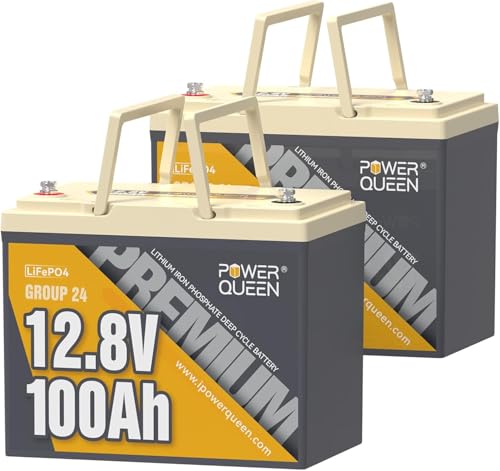
Power Queen 2-Pack 12V 100Ah LiFePO4 Battery Group 24

Renogy 12V 100Ah Trolling Motor LiFePO4 Battery
More Details On Our Top Picks
The GrenerPower pack leans into safety-first thinking, which matters in a garage or closet install where airflow is tight. Cylindrical A-grade cells (round cells in a metal casing, prized for consistent thermal behavior) sit under a 100A BMS (battery management system, the onboard circuit that protects against overcharge, overdischarge, short-circuit, overcurrent, and overheat) arranged in five protection layers.
That kind of layered cut-off is reassuring for home backup or RV house banks, where a slow charger or a missed shunt trip can ruin a cheaper pack. Compared to the Litime Group 31 ahead, this one is more cautious than rugged; it suits stationary or semi-stationary builds more than saltwater spray.
Where It Delivers
- Five-layer BMS protection covers the failure modes that actually destroy lithium banks in real use.
- Cylindrical cells typically dissipate heat more evenly than flat prismatic cells under sustained load.
- Group 24 footprint slots into most standard RV and marine trays without tray modification.
- Claimed 15,000-cycle lifespan translates to roughly a decade of weekend use before noticeable capacity loss.
Points To Keep In Mind
- Owners commonly report the pack runs warm during aggressive DC charging, so ventilation around the box matters.
- Documentation for low-temperature charging protection is sparse, which can be a worry for unheated sheds.
Whose Shelf It Belongs On
Anyone building a stationary home energy wall or a van house bank who prioritizes cell-level safety over splash resistance.
A Better Fit Elsewhere
The Litime 12V 100Ah Group 31 is the smarter match for boaters who need IP65 sealing against rain and spray.
This Litime model steps up to a Group 31 case (slightly larger than Group 24, roughly 13×9×9 inches), which buys extra internal cell mass and better thermal headroom. The IP65 rating (a dust-tight seal that resists low-pressure water jets, but not full submersion) is the real headline for anyone mounting a battery in a wet bilge or open engine bay.
Where the GrenerPower pack felt like an indoor guardian, this one is built for weather. A 100A BMS with 20+ protective routines plus support for up to 4P4S configurations (four packs in parallel, four in series, for a 48V bank) makes it friendly to growing solar systems.
Why It Works Well
- IP65 sealing tolerates spray, road grime, and damp compartments that would stress lesser packs.
- 4P4S expandability means a starter single pack can grow into a full off-grid wall over time.
- Automotive-grade cells are generally screened tighter than commodity cells, lowering the odds of an early weak pack.
- 1280Wh of usable energy covers a weekend of LED lighting, a fridge, and device charging for a small cabin.
Honest Caveats
- Group 31 sizing means it will not drop into smaller Group 24 trays, so measure your bay before ordering.
- Bluetooth monitoring requires the matching Litime app, which adds setup friction for first-time lithium users.
Built With In Mind
Off-grid cabin owners and marine trollers who want a weather-tolerant foundation pack that can scale.
Consider Something Else When
The Litime Xtra Mini makes more sense in a teardrop trailer or kayak hatch where Group 31 simply will not fit.
Litime’s Bluetooth-equipped Group 24 is the everyday workhorse of this list. It is roughly a third the weight of a comparable AGM (absorbed glass mat, a sealed lead-acid chemistry) and slips into the same tray dimensions an RV or camper has held for years. For first-time lithium upgraders, the drop-in fit removes a lot of anxiety.
The integrated Bluetooth 5.0 (a wireless standard that pairs to a phone app for live state-of-charge data) reads voltage and current draw right on the dashboard, which means a quick glance tells you how much runtime is left before lights dim. The honest trade-off versus the Group 31 sibling is slightly less thermal mass.
A Strong Showing
- Direct lead-acid replacement avoids rewiring the existing tray or hold-down hardware.
- Bluetooth monitoring turns battery state from guesswork into a glanceable phone readout.
- 21.9 lb weight is a noticeable relief on tongue-heavy trailers.
- Energy density is several times higher than the lead-acid it replaces, freeing real cargo space.
Soft Spots
- Bluetooth requires the Litime app, which has been reported by some users to lose pairing after long storage.
- No heated variant in this size, so cold-weather charging below freezing can degrade cells over time.
Best Suited To
RV owners and campervan builders stepping up from lead-acid who want a familiar footprint with modern telemetry.
Swap It Out When
Overlanding in sub-freezing climates, where the Litime Xtra Mini (with its lower-temp handling in some variants) or a heated option is a better bet.
At roughly 19 lb with built-in grab handles, the Xtra Mini is the lightest 12V 100Ah LiFePO4 in this lineup. That single detail reshapes what is possible: a kayak hatch, a small truck toolbox, a rear-seat cargo nook, or a pop-up camper battery shelf all become viable locations.
It still ships Bluetooth 5.0 and the same multi-protection BMS Litime uses on its larger packs. Where the standard Group 24 Litime favors a familiar tray swap, the Mini trades that familiar footprint for true portability.
Where It Helps
- Sub-20 lb carry weight means one person can install or relocate it without help.
- Compact shell opens up installs where Group 24 or 31 cases simply will not physically fit.
- Bluetooth 5.0 monitoring arrives standard, matching the larger Litime siblings.
Less Ideal Details
- Smaller case means less internal thermal buffering under heavy inverter loads for long stretches.
- Smaller terminal posts can limit cable lug size, requiring adapters for high-amperage inverter wiring.
Perfect Match For
Tight-space builders, kayak anglers, and weekend overlanders who carry their gear by hand.
Reach For A Different Pick When
The GrenerPower 12V 100Ah Group 24 suits stationary solar walls better, thanks to its larger cylindrical-cell thermal headroom.
Quick Facts
MARSENERGY makes its case on cycle depth. The published numbers claim full DOD (depth of discharge, the percentage of capacity pulled out before recharging) out to 4,500 cycles and useful capacity to 15,000, which for a full-time off-grid cabin or a daily-driven work trailer reads as real long-term value.
It uses a Group 24 case with a 100A BMS, so the physical swap mirrors the Litime Group 24 ahead. Where MARSENERGY stands apart is the focus on long-cycle behavior rather than Bluetooth or weather sealing.
Key Advantages
- Strong cycle-life claims suit full-time solar users who recharge hard every day.
- Group 24 sizing lets it step into AGM trays in many older RV builds.
- 100A BMS handles most residential inverter demands without tripping early.
Some Limits To Know
- No Bluetooth readout means relying on a shunt or multimeter for state-of-charge tracking.
- Lightest documentation around cold-weather charging, so winter cabin owners should verify low-temp specs.
- Fewer premium-tier build details visible from the listing photos, which matters if finish aesthetics count.
Made For
Daily deep-cycle users running solar cabins, off-grid workshops, or full-time RV life on a strict budget.
Skip It When
The Power Queen 2-Pack fits better for those who actually want two matched packs for series or parallel expansion from day one.
Feature Snapshot
Buying two matched packs at once solves a problem many people forget about until it bites: lithium banks perform and age best when their packs share the same internal resistance. The Power Queen 2-Pack ships two Group 24 LiFePO4 units built and shipped together, so the cells track closely from day one.
Each pack runs about a third the weight of a comparable AGM and delivers the full 1280Wh of usable energy versus the partial capacity a lead-acid can safely hand over. For RV trailers running 12V house loads, two in parallel doubles runtime without rewiring the trailer breaker panel.
What Works In Its Favor
- Matched two-pack shipping keeps internal resistance tight, which extends parallel-bank lifespan.
- True Group 24 drop-in means no fabrication when retiring AGM trays.
- EV-grade LiFePO4 cells are screened to higher consistency than commodity cells.
- Full-depth usability roughly doubles effective energy versus a same-sized AGM.
Things To Weigh
- Two-pack pricing locks in a heavier upfront spend than a single starter pack.
- No Bluetooth readout on either unit, so a shunt-based monitor becomes a near-mandatory add-on.
Who Should Grab It
RV trailer owners ready to commit to a 200Ah or larger lithium bank from day one rather than adding a second pack later.
Where A Sibling Pick Shines
Renogy’s trolling-motor battery is the smarter pick for marine users who need surge output and IP67 sealing, which Power Queen’s listing does not specify.
Renogy’s trolling-motor pack is the highest-output unit here. A 150A continuous discharge with a 300A surge window for around 30 seconds means it can push 12V to 36V motors through weed-choked runs without the BMS browning out. At roughly 21.8 lb in a Group 24 case (two-thirds the volume of Group 31), it sheds real weight off a transom.
IP67 sealing (fully dust-tight and rated for temporary submersion up to one meter) steps up from the Litime Group 31’s IP65 rating, which matters in open boats taking spray over the bow. Bluetooth reporting rides along for live state-of-charge while wading a flat.
What It Does Well
- 300A surge headroom keeps high-thrust trolling motors from bogging on startup.
- IP67 rating survives the wetter end of marine use, including splashes and brief dunking.
- Bluetooth readout helps anglers track state-of-charge without climbing into a hatch.
- Group 24 sizing lets it fit trays most anglers already own.
Practical Considerations
- Higher discharge rating typically pairs with a higher price tag than general-purpose packs.
- Surge protection only helps if the trolling motor actually pulls within the rated window, so smaller motors gain less.
Who It Suits Best
Anglers and small-boat owners running modern 36V trolling setups who need sealed, surge-tolerant lithium.
Not Your Match When
Indoor RV owners without splash risk should look at the MARSENERGY 12V 100Ah Group 24 for a simpler, value-oriented build.
Technical Highlights
What To Weigh Before Choosing Your 12V 100Ah Battery
Match The Case To Your Tray
Group 24 is the common RV and camper standard; Group 31 buys extra thermal mass and capacity headroom. Measure the existing tray, including lid clearance, before ordering. A pack that does not physically fit is the most common reason a “great deal” ends up returned.
Read The BMS Spec, Not The Marketing Headline
Every pack here advertises a 100A BMS, but the real story sits in the protection list: overcharge, overdischarge, short-circuit, overcurrent, and overheat cutoffs are the basics. Low-temperature charging protection matters in unheated sheds, garages, and winter cabins. Bluetooth is nice, but redundant protection routines matter more.
Think About Discharge Curves, Not Just Capacity
Lithium packs hold voltage steady until they are nearly empty, then drop fast. For inverters, fridges, and CPAP machines, that flat curve is a major upgrade over lead-acid. For simple LED lighting, a smaller lithium pack can do the same job as a much larger AGM, which is a real budget win.
Plan For Expansion Early
If there is any chance a single pack becomes two, four, or a full 48V bank, choosing a family that supports parallel or series configurations up front (the Litime Group 31 supports 4P4S, for instance) avoids mismatched-cell headaches later. Matched cells shipped together age more evenly than cells bought months apart.
Key Considerations Across These Picks
Wrong Turns To Avoid
Treating “12V 100Ah” as a single spec is the most common slip. Lithium and lead-acid both carry that label, but their usable capacity, weight, and lifespan differ dramatically. Skipping a tray measurement before ordering causes the second most common mistake, leaving a brand-new pack sitting in a garage because it does not drop in.
Where The Extra Money Goes
A higher-tier pack like the Renogy trolling-motor unit spends its premium on surge headroom and IP67 sealing, which only pays off on real water. For indoor RV or cabin use, those dollars go unused, and a value-oriented Group 24 like the MARSENERGY delivers the same usable energy for less. Match the spend to the environment, not the spec sheet alone.
Frequently Asked Questions
How long does a 12V 100Ah LiFePO4 battery actually last?
Most quality LiFePO4 packs rated for 4,000 to 15,000 cycles deliver roughly a decade of regular weekend use before noticeable capacity fade, with daily-use banks typically lasting several years before reaching end-of-service thresholds.
Can I swap a 12V 100Ah lithium battery in place of my lead-acid?
Yes, in most Group 24 RV and marine trays, though a lithium-compatible charger is strongly recommended so the BMS does not have to absorb charging profiles designed for lead-acid chemistries.
Do lithium 12V 100Ah batteries work below freezing?
Some do, but cold-weather charging without low-temperature protection can permanently damage cells, so always check the BMS spec before installing in an unheated space or winter cabin.
Is a higher amp BMS always better?
Not necessarily; a 100A BMS is plenty for typical house loads, but high-surge devices like trolling motors benefit from surge-rated packs like the Renogy model reviewed above.
How should I store a 12V 100Ah lithium battery long term?
A partial charge around 50% to 60% in a cool, dry space keeps the cells happiest during off-season storage, and a top-up charge every few months prevents the pack from drifting to a low-voltage cutoff.
Wrap Up
The right 12V 100Ah battery depends less on the label and more on where the pack lives, what it powers, and whether a single unit will become a bank. Pick the case size that fits, the BMS that protects, and the expansion path that matches the build. The seven options above cover the most common real-world setups, from kayak hatches to cabin walls to saltwater transoms.
