

Swapping out a tired lead-acid bank for a lithium setup used to feel like overkill for most weekend RVers and casual boaters. Now the chemistry has come down in price enough that a 12V 100Ah LiFePO4 battery makes sense for anyone tired of babysitting voltage and topping off distilled water. I’ve put together seven Redodo configurations that cover the common mounting situations, from a single drop-in Group 31 box to a doubled-up pack for serious off-grid runs.
Your Options, Compared

Redodo 12V 100Ah LiFePO4 Battery, Group 31, Bluetooth

Redodo 12V 100Ah LiFePO4 Battery, Group 31

Redodo 2 Pack 12V 100Ah Trolling Motor LiFePO4 Battery
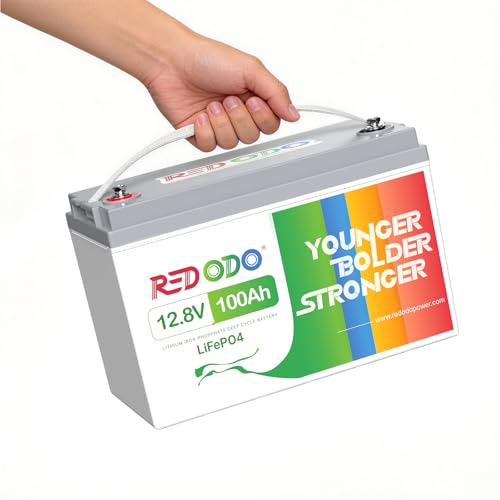
Redodo 12V 100Ah Marine LiFePO4 Battery, Group 31

Redodo 2 Pack 12V 100Ah RV Lithium Battery, Group 31

Redodo 12V 100Ah LiFePO4 RV Battery, Group 31

Redodo 12.8V 100Ah LiFePO4 Battery with 14.6V 10A Charger
Inside Each Recommended Option
The Group 31 footprint matters more than people realize. It slides into the same tray your old AGM sat in, so no fabrication, no extra brackets, and no awkward cable reach. Add Bluetooth 5.0 monitoring and the box starts to feel like a piece of modern gear rather than a dumb brick of chemistry. For RV owners who already check their phone for everything else, pulling up state-of-charge from the cab is genuinely useful.
Where this option earns its keep is during shoulder-season camping, when overnight temps drop into the 30s. The low-temperature cutoff halts charging below freezing, which protects the cells when a cold morning sneaks up on you.
Features That Help
- Bluetooth 5.0 readout of voltage, current, and remaining capacity through the Redodo mobile app.
- Low-temperature charge cutoff preserves cell health when stored or camped in chilly weather.
- Group 31 case drops into standard RV and marine trays without modification.
- App-level remote discharge and power-off control for those who want to manage the pack from inside the cabin.
Honest Caveats
- Bluetooth adds a small cost over the non-connected model, so value-focused shoppers may want to skip it.
- Phone app compatibility shifts over time, which can frustrate those who keep older hardware around.
Feature Snapshot
Right Fit For
RV owners who want phone-based state-of-charge readouts and travel into shoulder seasons where cold snaps are likely.
Look Elsewhere When
Shoppers on a tight budget get more capacity per dollar from the Redodo 12V 100Ah LiFePO4 Battery, Group 31, the no-frills version covered later in this list.
This is the version most people should actually start with. Same Group 31 case as the Bluetooth sibling above, same LiFePO4 cells, no wireless module draining standby power or requiring app updates. I think of it as the workhorse option for someone who just wants to replace a battery and stop thinking about it.
The deep-cycle ratings tell the real story. Automotive-grade cells in a low self-discharge package mean you can leave it in storage between trips and come back to usable voltage, unlike a lead-acid that sulfates if ignored for a month.
Good Reasons To Consider
- Automotive-grade LiFePO4 cells with a low self-discharge rate for long storage stretches.
- Standard Group 31 footprint fits trays already drilled for an AGM box.
- Deep-cycle construction rated for thousands of full and partial discharge cycles.
- No wireless module means one fewer thing to update or troubleshoot.
Points To Keep In Mind
- No built-in monitoring, so you’ll want a separate shunt or voltmeter for state-of-charge tracking.
- Charging hardware from an older lead-acid setup may need to be swapped for a lithium-profile charger.
Best Suited To
First-time lithium upgraders who want the chemistry without the connected features and plan to monitor with a separate gauge.
Skip It When
Cold-weather operators should jump up to the Redodo 12V 100Ah LiFePO4 Battery, Group 31, Bluetooth, which adds the low-temperature charging cutoff.
Two batteries, one order, fewer headaches. Anglers running a 24V or 36V trolling system need matched packs anyway, and buying them together removes the small but real risk of ending up with cells from different production runs. The Group 31 dimensions match common marine trays, so each unit still slots where an AGM used to live.
I’d note that lithium’s lighter weight is the underrated perk here. Pulling a pair of these onto a transom beats wrestling a stack of lead-acid bricks, and the usable capacity is much higher at any given size.
Notable Upsides
- Factory-matched pair takes the guesswork out of running series or parallel trolling setups.
- LiFePO4 weight savings over lead-acid make launching and repositioning easier.
- Deep-cycle tolerance suits the slow, sustained draw of a trolling motor.
- Marine-focused engineering with cell protection suited to wet environments.
Worth Bearing In Mind
- Multi-pack shipments sometimes arrive in separate boxes, which can complicate a single-day install.
- Trolling motor wiring, fuses, and chargers may need upgrading to match the higher lithium output.
Technical Highlights
Built With In Mind
Anglers and small-craft owners who need a matched pair to run a higher-voltage trolling motor without mixing cell batches.
Swap It Out When
Solo setups that only need a single battery fit the Redodo 12V 100Ah Marine LiFePO4 Battery, Group 31 instead, and skip the second unit.
A single-box solution for the solo boater. Where the two-pack above targets multi-battery trolling setups, this one fits the skipper who needs one reliable cell powering electronics, fish finders, and a smaller trolling rig. The integrated BMS (battery management system, the small circuit that protects against overcharge, over-discharge, and short circuits) does most of the protective work in the background.
For most day-trip boats, this is the sweet spot. Compare that to the bundled two-pack option, which makes more sense for serious anglers running a full day on the water.
Everyday Perks
- Built-in 100A BMS handles continuous charge and discharge without external controllers.
- EV-grade LiFePO4 cells aimed at long service life under repeated deep cycling.
- Group 31 dimensions slot into existing marine trays.
- Solid continuous output supports moderate inverters and trolling loads.
Practical Considerations
- Single-unit design means no built-in redundancy if the box fails mid-trip.
- Stored boats in unheated sheds may need low-temp protection, which lives on other variants.
Who Will Love This
Boaters running a single-battery setup with modest trolling or electronics loads who want Group 31 convenience without paying for extras they won’t use.
Reach For A Different Pick When
Anglers planning to run a 24V or 36V trolling motor should jump to the Redodo 2 Pack 12V 100Ah Trolling Motor LiFePO4 Battery for matched series capacity.
Two Group 31 boxes add up to a serious weekend off-grid bank. Wired in parallel, this configuration doubles your amp-hours without doubling your wiring complexity. The cells are also expandable up to a 4P4S array for the more ambitious builds, though most RV owners will never push past two packs.
The honest read here is that double the capacity also means double the charging requirement. Owners running solar or a decent shore charger will be fine, but a small factory converter may not keep up with two of these.
Strengths Worth Knowing
- Combined capacity around 2560Wh supports multi-day off-grid stays.
- Expandable architecture grows with the rig’s energy needs.
- LiFePO4 chemistry handles deep discharges without the lifespan hit lead-acid takes.
Trade-Offs To Consider
- Charging hardware often needs an upgrade to feed both packs efficiently.
- Two-unit shipments sometimes arrive separately, so plan installation time around that.
- Heavier and bulkier than a single unit, which matters in small RV bays.
Quick Facts
Whose Shelf It Belongs On
Full-time or long-weekend RVers who want enough reserve to skip shore power for several days at a stretch.
Where A Sibling Pick Shines
Weekend warriors who only need one battery get better value from the Redodo 12V 100Ah LiFePO4 Battery, Group 31 single unit.
The most straightforward AGM-to-lithium swap on this list. Standard Group 31 dimensions, familiar terminal layout, no fuss. For RV owners with a battery compartment already set up for that footprint, this one slides right in without re-drilling brackets or rerouting cables.
Deep-cycle rating is the headline. Thousands of cycles at meaningful depth-of-discharge translates into a battery that should outlast several lead-acid replacements before it needs recycling.
Where It Helps
- Group 31 sizing matches common AGM installations for true drop-in replacement.
- 1280Wh of usable energy supports fridge, lights, and laptop charging between camp nights.
- 100A BMS handles 1280W of continuous draw for inverter loads.
- Deep-cycle construction rated for 4000+ cycles at meaningful discharge depth.
Where It Is Less Suited
- Single unit only, so off-grid stays longer than a weekend may drain it below comfort.
- No Bluetooth readout, so a separate shunt-based monitor is the typical add-on.
Right Fit For
RV owners replacing a tired AGM who want a direct fit, predictable wiring, and chemistry that handles deep discharges without complaint.
Where Another Pick Suits Better
Anyone chasing multi-day off-grid capacity should consider the Redodo 2 Pack 12V 100Ah RV Lithium Battery, Group 31 instead.
A matched pair in one box. The dedicated lithium-profile 10A unit brings out the chemistry’s strengths without the compatibility worries that come with reusing an old lead-acid charger. For anyone building a first lithium setup from scratch, that removes a real decision point.
Where I’d pause: at 10A output, the charger is slow by RV or solar standards. Fine for topping off overnight at camp, less ideal if you want fast turnaround between heavy draws.
Notable Gains
- Battery and charger ship together, removing guesswork around charger compatibility.
- Recyclable LiFePO4 chemistry with long cycle life expectancy.
- Single-vendor bundle simplifies any support questions down the road.
Points To Note
- 10A charger output means slower refills after heavy use.
- Not the right pairing for solar-first setups that already have their own charge controller.
Spec Overview
Made For
First-time lithium builders who want a battery and a compatible charger without researching each piece separately.
Another Choice May Suit
Shoppers already running solar should pick the Redodo 12V 100Ah LiFePO4 Battery, Group 31 by itself and let the solar controller handle charging.
What To Weigh Before Picking A 12V 100Ah LiFePO4 Battery
Group 31 sizing is the first thing to check against your existing tray. If your RV or boat was designed around that footprint, almost any option on this list drops straight in. Mounting depth and terminal orientation matter more than people expect, so a quick tape measure before ordering saves a weekend of frustration.
Cycle life tells the long-term story. A chemistry rated for thousands of deep cycles costs more up front than a budget lead-acid, but spread over years of real use, the per-cycle math works in lithium’s favor. Cold-weather protection is the other spec that quietly matters; if you camp or store the rig in a climate that dips below freezing, a low-temperature charging cutoff is worth the small premium.
Capacity planning is more art than science. For a basic RV with LED lights, a fridge, and occasional laptop charging, a single 100Ah unit covers a quiet weekend. For inverter-driven coffee makers or hair dryers, expect to double up or move to a two-pack configuration.
BMS and Protection Circuitry
A BMS (battery management system) is the small internal board that monitors cell voltage, current, and temperature. It cuts charging or discharging before the cells get stressed. Look for at least 100A continuous rating, since that covers most RV inverters and trolling motors without tripping protection mid-use.
Cold-Weather Behavior
Standard LiFePO4 cells should not be charged below freezing, since doing so can plate lithium on the anode and permanently damage capacity. Models with a low-temperature cutoff handle this automatically. Heated variants exist for true winter use, but most weekend warriors won’t need that level of protection.
Where Shoppers Slip Up And When Spending More Pays Off
Mistakes Worth Dodging
Mixing a new lithium battery with an old lead-acid charger is the classic misstep. Lead-acid chargers often float at a higher voltage than LiFePO4 wants long-term, which slowly degrades the cells. A lithium-profile charger, ideally the matched one in the bundle above, prevents that.
Another common trap is underestimating charging hardware needs for two-pack setups. Two Group 31 banks in parallel pull more amps than a stock converter is built to deliver. Check the charger’s output before assuming it can keep up.
When Paying More Pays Off
The premium for Bluetooth monitoring and cold-weather cutoff is modest in absolute terms but real in convenience. If you camp into shoulder seasons or simply like seeing state of charge from your phone, the upgraded variants earn their keep over years of ownership.
Higher-tier two-pack configurations also justify the spend for full-time RVers and serious anglers. The extra capacity translates directly into more time off the grid, which has a way of feeling like the most valuable feature of all.
Frequently Asked Questions
How long does a 12V 100Ah LiFePO4 battery actually last?
Most LiFePO4 packs in this class are rated for several thousand cycles at meaningful depth of discharge. For a weekend RV user, that often works out to a decade of service before noticeable capacity loss.
Can I replace my lead-acid battery directly with one of these?
In most cases, yes, especially if your tray is Group 31 sized. The main thing to confirm is that your charger supports a lithium profile, or that you’re willing to swap it for one that does.
Is it safe to charge these batteries in freezing weather?
Standard cells should not be charged below 32°F. Models with a low-temperature cutoff handle this automatically by pausing charging until temperatures climb back into a safe range.
Do I need a special charger for LiFePO4 chemistry?
A lithium-profile charger is strongly recommended. Lead-acid chargers can overcharge LiFePO4 cells over time, which shortens lifespan even though it won’t cause an immediate failure.
Can I connect two of these batteries together?
Yes, in parallel for more capacity at the same voltage, or in series for higher-voltage banks. Matched pairs from the same manufacturer remove the risk of mixing cell batches and are the safer choice.
Closing Thoughts
The right battery depends less on specs and more on how you actually use your rig. A weekend RV owner with a Group 31 tray has different needs than a full-time boater running a trolling motor, and this list is built to reflect that. Pick the configuration that matches your real-world draw, budget for a proper charger if you don’t already have one, and the rest tends to take care of itself.
