

Low-voltage lighting has a quiet kind of magic, turning plain gardens and accent strips into something that actually feels considered. The right transformer makes that magic reliable, sending steady 12V power to every fixture without flicker or dropout. I put this shortlist together for anyone wiring up landscape lights, LED strips, under-cabinet runs, or a workshop project, and who wants gear that handles the job without drama.
The Leading Options At A Glance

LVTINRS 200W 12V Dimmable LED Driver 5-in-1
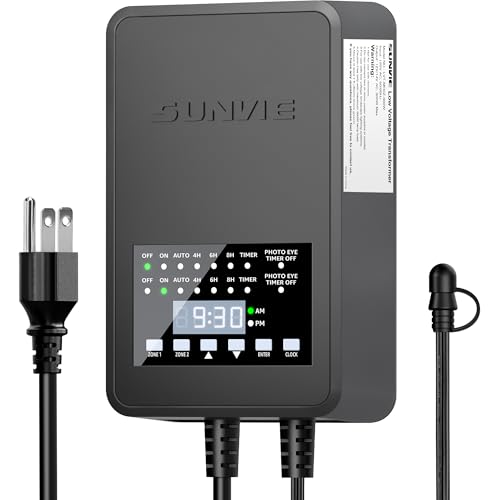
SUNVIE 300W Landscape Transformer Dual Zone Timer Photocell

WOWiViD 12V 60W Dimmable LED Driver 2-Pack

SUNVIE 100W Outdoor Low Voltage Transformer 120V to 12V DC

inShareplus 12V 200W LED Power Supply Switching Converter

SUNVIE 200W Landscape Transformer Timer & Photocell

BTF-LIGHTING 12V 36W ETL Listed Power Supply Adapter
Meet The Standout Selections
The LVTINRS driver is the unit I’d reach for when a remodel involves an existing wall dimmer from Lutron or Leviton, because it speaks just about every dimming language a homeowner might already have in the wall. “Triac” and “MLV” refer to two leading-edge dimming standards; “0-10V” is a low-voltage analog control common in commercial ceilings, and “PWM” (pulse-width modulation) is the digital dimming method most LED strips actually use. Supporting all of them in one metal-housed box removes the trial-and-error loop where someone buys a fancy dimmer only to find their LED driver ignores it.
At 200 watts this driver has enough headroom for a moderate room of tape light plus a handful of puck fixtures, and the UL listing (a third-party safety certification widely required by inspectors) helps if you’re doing permitted work. The honest read is that this is overkill for a single under-cabinet strip, but for mixed-protocol kitchens, finished basements, and primary suites where someone has already invested in a designer dimmer, it earns its place.
Useful Touches
- Five dimming protocols in one unit, sparing you from buying a separate driver per lighting run
- 200W capacity covers a moderate room’s worth of tape light plus accent fixtures
- Compatibility with established dimmer brands means you can keep your existing wall controls
- UL listing supports permitted residential and light-commercial work
Things To Consider
- 200W is oversized for a single short strip run, so budget-conscious projects may leave capacity unused
- Five protocols also mean a slightly deeper learning curve during setup
Who Will Love This
Remodelers and finish-level DIYers who already own a name-brand wall dimmer and want one driver that drops into the existing wiring without rewiring.
Skip It When
The inShareplus 200W switching converter is a cleaner match for someone running a workbench or makerspace rather than a finished living space.
The SUNVIE 300W is the transformer I’d spec for a yard that wants the front path lit at dusk but the back patio kept off until later. Its two independent output channels each carry their own timer, so front-of-house lights can come on at sunset while the rear string lights wait until dinner hour. The removable photocell (a small light-sensing eye that turns the system on at dusk and off at dawn) connects through a 6.8-foot UL-listed cord, letting you mount the brain on a sheltered wall while the sensor sits out in real daylight for accurate triggering.
Stepping the household 120V down to a safer 12V/14V AC keeps cable runs simple for DIY trenching, and the weatherproof housing shrugs off the kind of sideways rain that ruins lesser boxes. Compared with the smaller SUNVIE 100W later in this list, the 300W version is what you pick when you know you’ll be expanding the system over time.
What Helps Most
- Two independently scheduled zones let front and rear yards run on different rhythms
- 300W capacity gives meaningful headroom for a yard that will grow over time
- Photocell on a 6.8-foot cord lets you place the sensor where daylight is honest
- Weatherproof housing suited to outdoor mounting on a wall or post
Worth Noting
- For a one-pathway starter yard, the dual-zone timer is more hardware than needed
- Bigger capacity means a deeper enclosure, so plan mounting space accordingly
Key Specs
Best Suited To
Homeowners planning a multi-zone landscape lighting system who want dusk-to-dawn automation without committing to a smart-home hub.
Another Choice May Suit
The SUNVIE 200W unit is a smarter match for a single-zone yard that doesn’t need two separate schedules.
The WOWiViD two-pack earns its place any time a small project needs drivers in more than one location, like a bedroom ceiling and a separate hallway run from a single shopping trip. Each driver handles 60 watts of Triac or ELV/MLV dimming, where “ELV” stands for electronic low-voltage, a quieter trailing-edge dimming method that tends to play nicely with sensitive LED drivers. Putting two in the box also means you can keep one as a spare, which is the kind of unglamorous insurance I quietly appreciate.
This is the pick for someone wiring a guest bath or a closet where they don’t need a heavyweight 200W unit but still want UL-listed safety and clean dimming. Compared with the LVTINRS driver above, the WOWiViD trades multi-protocol flexibility for a friendlier per-unit footprint.
A Strong Showing
- Two drivers per box covers a small project plus a spare without a second order
- Triac and ELV dimming support covers most residential wall dimmers
- 60W per unit is well matched to a single room’s tape-light run
- UL listing for permitted residential work
Trade Offs
- No 0-10V or PWM support, so commercial-style dimmers are out of reach
- Two-pack format doesn’t help a single-room project that only needs one driver
Right Fit For
A homeowner splitting a small remodel into two rooms who wants matched drivers and the comfort of a backup unit.
Look Elsewhere When
The LVTINRS 200W driver is the better answer when a project mixes dimming protocols across rooms.
The 100W SUNVIE is the right size for a starter yard: a few path lights, a spotlight on a feature tree, and maybe a step light or two along the back porch. It steps 120V AC down to 12V DC, which most modern LED landscape fixtures expect, and the weatherproof housing keeps the internals dry through the kind of storm that would short out an indoor-rated box.
For someone starting from scratch, this is a forgiving first transformer because the wattage matches a typical beginner’s lighting plan without leaving too much unused capacity. The honest read is that you’ll outgrow it once you add a second zone or fountain lights, but right-sized gear at the start is a kindness to your future self.
What It Does Well
- 100W capacity fits a typical starter yard’s lighting plan without waste
- 12V DC output pairs with most modern LED landscape fixtures
- Weatherproof housing tolerates outdoor wall mounting
- Beginner-friendly size keeps the install approachable
Room For Improvement
- Single output means no independent zone scheduling out of the box
- 100W is a hard ceiling, so any expansion plan will require a bigger transformer
Feature Snapshot
Made For
First-time landscape lighting installers running a small front-yard plan with path lights and a single feature spotlight.
Consider Something Else When
The SUNVIE 300W dual-zone transformer makes more sense once a yard needs separate front and rear schedules.
The inShareplus unit earns its spot as the bench-friendly choice. Its 110-250V input range means it can ride out the slightly unstable mains you find in older shops and barns, and the metal-enclosed body helps dump heat during long soldering sessions or 3D-printer runs. Built-in protection against overvoltage, overcurrent, overload, overheating, and short-circuit events means a wiring mistake on your bench is far less likely to become a smoke event.
I’d reach for this when the job is closer to “power supply for a 12V device” than “lighting transformer,” since its output is a regulated 12V DC at up to 16.5 amps. For lighting specifically, the LVTINRS driver above is the better fit, but for hobby electronics this is the dependable middle ground.
Real-World Strengths
- Wide 110-250V input rides through unstable workshop mains
- Metal enclosure supports steady heat dissipation under sustained loads
- 200W headroom covers most bench-top 12V devices plus LED strips
- Multi-fault protection recovers automatically once the issue clears
Points To Note
- No dimming protocol support, so it’s the wrong box for wall-dimmer projects
- Best paired with a clean indoor mounting spot, given the absence of weatherproofing
Feature Card
Whose Shelf It Belongs On
Makers and hobbyists running LED strips, lighting modules, and assorted 12V bench projects from a single dependable supply.
Not Your Match When
The LVTINRS driver is the better fit when the project demands wall-dimmer integration.
The 200W SUNVIE occupies the sweet spot for a mid-sized yard: more headroom than the 100W starter box, but a simpler single-zone brain than the dual-zone 300W. Its dusk-to-dawn photocell takes over the daily on-and-off decision, and the timer lets you trim the schedule so lights don’t burn all night when no one’s outside.
Compatibility with both 12V and 14V AC fixtures gives you flexibility to mix LED path lights with older halogen spots without buying two transformers. Compared with the larger SUNVIE 300W above, this one is for the yard that’s grown past a starter plan but doesn’t yet need separate zones.
Advantages To Know
- Mid-size 200W capacity suits a yard that has grown beyond a starter plan
- Photocell plus timer combination automates dusk operation without a smart hub
- Compatible with both 12V and 14V AC fixtures for mixed-vintage lighting
- Outdoor-rated housing handles permanent exterior mounting
Honest Caveats
- Single output zone is a limitation once front and rear yards want different schedules
- More capacity than a starter yard needs, so budget-conscious projects may overshoot
Built With In Mind
Homeowners with a mid-sized yard running a mix of path, spot, and deck lights who want set-and-forget dusk automation.
Reach For A Different Pick When
The SUNVIE 300W dual-zone transformer is the smarter choice once front and rear schedules diverge.
The BTF-LIGHTING adapter is the pick when the project is a single short LED strip under a shelf or behind a TV, and anything heavier would be visual clutter. At 36 watts it’s deliberately small, which is the point: a tidy brick that disappears behind a media console rather than a metal enclosure that demands a shelf of its own. The ETL listing (a North American safety certification similar to UL) covers inspectors who want documented compliance.
This is the indoor-only member of the shortlist, so anyone planning outdoor or landscape work should skip straight to the SUNVIE outdoor transformers above. For a desktop accent-light build or a single roll of tape light, it’s a quietly capable little box.
What Makes Sense
- 36W adapter size keeps the install unobtrusive behind furniture
- Wide 100-240V input tolerates international mains during moves or imports
- ETL listing supports permitted indoor residential work
- Tidy match for a single LED strip or small accent-light run
Practical Considerations
- Indoor rating only, so it has no place in landscape or damp-location plans
- 36W is a hard ceiling, and adding a second strip will push past the limit
Quick Facts
Perfect Match For
Anyone wiring a short LED strip or accent-light run indoors who wants a tidy, certified adapter that hides behind furniture.
Where A Sibling Pick Shines
The SUNVIE 100W outdoor transformer is the right call for any landscape or damp-location lighting project.
Picking The Right Transformer For Your Project
The first thing I always nail down is where the transformer lives. Indoor-rated adapters like the BTF-LIGHTING 36W are tidy and inexpensive, but they have no business sitting in a damp basement or mounted to a fence post. Outdoor-rated boxes from SUNVIE carry weatherproof housings designed for the kind of sideways rain and temperature swings that finish off indoor gear.
Wattage is the next honest conversation. A common mistake is matching a transformer to the brightest moment and forgetting the safety margin. Leaving roughly 20 percent of rated capacity unused keeps the unit running cooler and extends its life, which is why a yard that “should” need 80 watts is happier on a 100W transformer than a tight 80W one. For multi-room indoor projects, that same buffer matters when LED strips are dimmed up to full output.
Voltage type matters too. AC output suits traditional landscape lighting and most halogen replacements, while DC output is what modern LED strips and many newer path lights expect. Mismatching AC to DC is the single fastest way to kill a fixture, so verifying the polarity and type on the lighting side before buying saves both time and money.
Finally, dimming protocol decides whether the wall switch you already own will actually work. Triac and ELV/MLV cover most residential dimmers, 0-10V is the commercial standard, and PWM is the digital method LED strips speak natively. A driver that supports all five, like the LVTINRS 200W, removes the gamble of mismatched controls.
Key Considerations Across These Picks
Pitfalls Shoppers Hit
A surprisingly common misstep is buying a transformer that technically fits the wattage on paper but leaves no room for the inevitable “one more light” addition. Sizing up a tier costs little today and saves a replacement tomorrow. Another trap is mixing AC and DC fixtures on a single run, which silently damages LEDs even when everything appears to work at first.
Where The Extra Money Goes
Higher-tier transformers earn their cost through better dimming compatibility, weatherproof housings, and longer warranties. For a one-room strip-light project, a budget adapter does the job cleanly. For a multi-zone landscape system that runs every night for years, the upgraded housings, dual-zone scheduling, and photocell automation are worth the step up because they prevent the kind of service calls that erase any savings from buying the cheaper box.
Frequently Asked Questions
What size 12V transformer do I need for my LED strip? Add up the wattage of every fixture on the run, then multiply by roughly 1.2 to leave a safety margin. A 5-meter strip rated at 24 watts per meter wants a transformer rated for at least 150W to stay cool and reliable.
Can I use an indoor-rated transformer outdoors? Most indoor adapters lack the sealed housing and weatherproofing that outdoor installations demand. SUNVIE’s outdoor-rated transformers are the safer match for landscape work.
What’s the difference between AC and DC low-voltage transformers? AC output powers traditional landscape lighting and halogen replacements, while DC output is what modern LED strips and many newer fixtures expect. Always match the transformer type to the fixture specification.
Do I need a special dimmer for a dimmable LED driver? It depends on the driver’s protocol. Drivers like the LVTINRS unit support Triac, MLV, 0-10V, PWM, and potentiometer controls, which covers most wall dimmers, but a basic on/off switch will still work without dimming.
How long do low-voltage transformers typically last? Indoor adapters often run for years when properly ventilated, while outdoor-rated units in sheltered spots tend to last even longer thanks to their sealed housings and thermal headroom.
Wrap Up
The right transformer depends less on marketing claims and more on where it lives, what it powers, and how much growth you expect. Match the wattage with a buffer, pick the right voltage type, and confirm dimming compatibility before you commit, and the install tends to take care of itself. Browse the picks above, weigh your project against the profiles I’ve laid out, and the right unit usually becomes obvious pretty quickly.
