

When the grid blinks out or a remote job site needs juice, a compact generator saves the day. I put together this shortlist of five capable models, mixing traditional fuel-powered units with battery-based power stations for people who want quieter, low-maintenance operation. Each one handles a different priority, from whole-home backup to weekend camping, so the right match comes down to your fuel preference and how much wattage you truly need.
The Essentials At A Glance
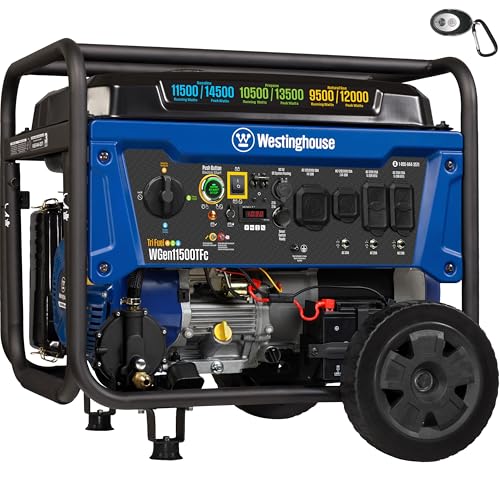
Westinghouse 14500 Peak Watt Tri-Fuel Home Backup Portable Generator

Westinghouse 13500 Peak Watt Tri-Fuel Home Backup Portable Generator

BLUETTI Elite 200 V2 Portable Power Station 2073.6Wh 2600W

STARYLINE Portable Power Station 1000W 1024Wh

STARYLINE 1000W Portable Power Station 1024Wh LiFePO4
A Deeper Look At The Lineup
For homeowners preparing for multi-day outages, the Westinghouse WGen11500TFc tri-fuel generator delivers the kind of output that keeps a fridge, sump pump, and a few room circuits running at once. The 550cc OHV engine pushes up to 14,500 peak watts and 11,500 running watts on gasoline, with propane and natural gas as backup fuel options if gasoline runs dry.
That fuel flexibility is genuinely useful when a storm empties local shelves. Remote electric start and transfer-switch readiness simplify the moment the power drops, and the 9.5-gallon tank (36 L) stretches runtime long enough to get through a full day without refueling. Owners in storm-prone regions commonly appreciate the built-in CO sensor for indoor-adjacent placement.
Everyday Perks
- Tri-fuel design keeps options open during long outages when one fuel type runs out
- 11,500 running watts handle most large household loads at the same time
- Transfer-switch ready, which means simpler integration with a home panel
- 9.5-gallon tank supports extended runtimes without constant refueling
- Remote electric start removes the need to brave bad weather at the unit
Things To Consider
- The size and weight make it a two-person job to position on a permanent pad
- Fuel-powered units need oil changes and air filter checks every few dozen hours of use
Feature Snapshot
Right Fit For
Households in storm-prone or rural areas that want a single unit capable of backing up large appliances and a transfer switch.
Consider Something Else When
Apartment dwellers or neighbors under tight noise rules should look at the BLUETTI Elite 200 V2 Portable Power Station instead, since it runs silently indoors.
The WGen10500TFc sits a step below the heavy-duty model in Westinghouse’s tri-fuel lineup, and that scale works well for mid-size homes that don’t need to run everything at once. Output tops out at 13,500 peak watts and 10,500 running watts on gasoline, which is enough to power a fridge, a furnace blower, and several room circuits during a grid outage.
The 500cc engine and 9.5-gallon tank share the same family DNA as its bigger sibling, including remote start and transfer-switch compatibility. You may find this model’s slightly smaller footprint easier to fit on a back patio or in a shed. The trade-off shows up when running heavy 240V loads simultaneously, where the extra capacity of the WGen11500TFc simply gives more headroom.
What Makes Sense
- 10,500 running watts suit mid-size homes without overbuilding the system
- Tri-fuel flexibility lets owners switch fuels as availability shifts
- Transfer-switch ready for cleaner integration with the home panel
- Remote electric start avoids stepping outside in rough weather
Trade Offs
- Less headroom than the 14,500W model for simultaneous heavy loads
- Fuel maintenance is the same chore as any gas engine: oil, filters, and fuel stabilizer
Feature Snapshot
Made For
Mid-size homes that need genuine backup power without the size or fuel appetite of a larger industrial unit.
Look Elsewhere When
Anyone who only wants to charge phones and run a laptop during outages will find the BLUETTI Elite 200 V2 Portable Power Station far easier to live with day-to-day.
Switching from fuel to battery changes the whole experience of owning a generator, and the BLUETTI Elite 200 V2 is the model that demonstrates it clearly. The 2,073.6Wh battery delivers 2,600W of continuous AC output and pushes up to 3,900W in a temporary power-lifting mode, enough to handle a refrigerator, hair dryer, or small space heater during a blackout.
There are no fumes, no oil changes, and barely any noise, which makes indoor placement in apartments or condos a realistic option. The LiFePO4 battery chemistry is built for longevity, and you can power up to nine devices simultaneously through the array of ports. This is the pick for someone who values clean, quiet energy over raw wattage.
Where It Excels
- Silent operation makes it viable for apartments and indoor use
- Zero fuel or oil maintenance, just periodic charging
- Up to nine simultaneous device connections
- Power-lifting mode handles brief surges from appliances that normally demand more
Honest Caveats
- Capacity limits it compared with a fuel generator running on a 9.5-gallon tank
- Recharging from a wall outlet takes several hours, so a panel or two is helpful for off-grid stretches
Best Suited To
Apartment dwellers, condo owners, and anyone who wants a quiet backup that lives in a closet until needed.
Reach For A Different Pick When
Homeowners needing to run heavy 240V appliances like well pumps should consider the Westinghouse WGen11500TFc Tri-Fuel Generator instead.
STARYLINE’s 1,000W power station targets people who want genuine battery backup without paying for premium-tier capacity. The 1,024Wh battery is enough to charge a phone dozens of times, run a laptop for a full workday, or keep a mini fridge humming through a short outage.
Compared with the BLUETTI Elite 200 V2 above, this unit is simpler and lighter on the wallet, but the trade-off shows up in continuous output and total capacity. It comes in three color options with identical specs, and an optional solar panel bundle makes it practical for campers and RV travelers who spend time off-grid.
Useful Strengths
- 1,024Wh covers phones, laptops, lights, and small appliances for a couple of days
- Optional solar panel bundle supports true off-grid recharging
- Multiple ports let several devices charge at the same time
- Lightweight enough to toss in an RV or car trunk
Worth Bearing In Mind
- 1,000W continuous output limits it to lighter household loads
- Charging speeds depend on wall or solar input and aren’t as fast as premium competitors
Feature Snapshot
Perfect Match For
Casual campers, RV travelers, and budget-conscious homeowners preparing for short power interruptions.
A Better Fit Elsewhere
Anyone who needs higher continuous output or larger capacity should step up to the BLUETTI Elite 200 V2 Portable Power Station.
STARYLINE’s second 1,000W entry leans into the durability of LiFePO4 battery chemistry, which generally outlasts standard lithium-ion by a wide margin in cycle count. The 1,024Wh capacity mirrors the previous model, but the longer battery life suits people who actually take their power station into the field regularly.
Five devices can charge at once through the mix of AC, USB-C PD, and USB-A ports. For most weekend trips, that’s enough to keep cameras, lights, and a small cooler running without breaking a sweat. You may find the 60W USB-C PD port especially useful for fast laptop top-ups between trailheads.
What Pays Off
- LiFePO4 chemistry supports more charge cycles over the unit’s lifetime
- Multi-port layout covers phones, laptops, and AC appliances together
- Compact form factor fits in a trunk or RV storage bay
- Reliable option for outdoor photographers and remote workers
Points To Note
- 1,000W continuous output won’t drive large appliances like microwaves for long
- Solar charging requires a separately sold panel setup
Who Should Grab It
Outdoor creators, weekend campers, and remote workers who value battery longevity over peak output.
Swap It Out When
Homeowners wanting a higher-output battery backup should look at the BLUETTI Elite 200 V2 Portable Power Station for more headroom.
Choosing A Generator That Fits Your Real Life
The first decision is fuel type, and it shapes everything else. Fuel-powered tri-fuel generators deliver the highest sustained output and refuel in minutes, but they require outdoor placement, ventilation, and routine engine maintenance. Battery power stations trade some capacity for silent, fume-free operation that’s safe indoors and apartment-friendly.
Wattage tells you what you can actually run, and the difference matters. Running watts cover continuous loads like refrigerators and lights, while peak watts handle the brief surge when motors start up. Add up the wattage of everything you want to power simultaneously, then add roughly 20% headroom to avoid overworking the unit.
Portability affects how often you’ll actually use the thing. A 200-pound tri-fuel generator stays put once positioned, while a 25-pound power station lives in a closet and rides along on camping trips. Match the size to your realistic use pattern rather than worst-case scenarios.
Finally, consider runtime and refueling. A 9.5-gallon tank stretches to many hours between fill-ups on gasoline, while a 1,024Wh battery needs a wall outlet or solar panel to recharge. For storm-prone regions, longer fuel-based runtime can be a real advantage.
Match Output To Your Load
List the appliances you want to run, then look up their running and starting wattage. A fridge pulls around 150W running but can spike to 1,200W at compressor startup. Add up the worst case before settling on a model.
Think About Where It Will Live
Fuel generators need a flat outdoor surface away from windows and doors. Battery stations can sit in a hallway or closet, which matters for renters and apartment dwellers.
Factor In Maintenance Habits
Oil changes, spark plugs, and fuel stabilizer are part of fuel-generator ownership. If those chores don’t appeal, a battery station sidesteps them entirely at the cost of capacity.
Refueling Versus Recharging
Gasoline refills in five minutes at any station. Battery recharge takes hours from a wall outlet and longer from solar, so plan around that difference.
Key Considerations Across These Picks
Pitfalls Shoppers Hit
Underestimating peak wattage is the classic mistake, since motors and compressors draw several times their running power at startup. Another common slip is choosing a fuel generator for an apartment where exhaust placement becomes impossible. Battery buyers sometimes overbuy capacity they never use, paying for watt-hours that sit idle.
When Paying More Pays Off
Premium battery stations like the BLUETTI Elite 200 V2 buy you longer battery lifespan, faster recharge cycles, and higher continuous output in a quieter package. Tri-fuel generators at the higher tier add remote start, transfer-switch readiness, and bigger engines that handle whole-home loads. The upgrade is worth it when you actually need the headroom.
Frequently Asked Questions
What Can A 1000 Watt Generator Actually Power?
A 1,000W unit handles lights, phone chargers, laptops, routers, and small kitchen appliances like a blender or coffee maker for short stretches. Larger loads such as a microwave or space heater will trip the inverter or drain the battery quickly.
How Long Do Battery Power Stations Hold Their Charge?
Most modern lithium-based power stations lose only a few percent per month sitting idle, so they’re ready when an outage hits. LiFePO4 models tend to hold charge longer than standard lithium-ion in storage.
Are Tri-Fuel Generators Worth The Extra Cost?
For homeowners in storm-prone regions with limited fuel access, the ability to switch between gasoline, propane, and natural gas is a real safety net. Casual users without extended outage risk may not need that flexibility.
How Loud Are Portable Generators?
Fuel-powered generators typically run between 65 and 80 decibels, which is loud enough to bother neighbors. Battery stations operate in the 30 to 50 decibel range with fans only, making them far easier to live with.
Do I Need A Transfer Switch?
For anything beyond plugging a few appliances into extension cords, a transfer switch is the safe way to connect a generator to a home panel. The Westinghouse tri-fuel models are transfer-switch ready out of the box.
The Takeaway
A 1000W generator is genuinely useful whether you live in a storm-heavy region or just want peace of mind during the occasional outage. Pick fuel if you need long runtime and high output, and pick battery if you want quiet, indoor-safe power for everyday electronics. The right choice comes down to your space, your fuel access, and how much wattage your household actually needs to stay comfortable.
