

Anyone who’s crawled behind a desk and found a daisy chain of power bricks knows the struggle. A good wall surge protector turns one stubborn outlet into a safe, organized charging hub, and the nine options below cover everything from a single crowded nightstand to a full home-office battle station.
Your Options, Compared

NANOLAKE Surge Protector Power Strip 10ft Cord 4800J

TESSAN 1800J Surge Protector Outlet Extender
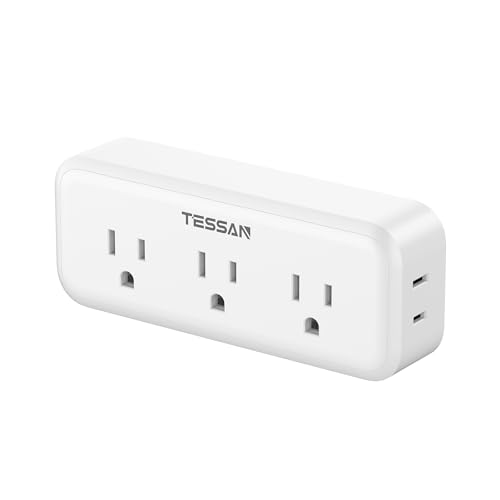
TESSAN Multi Plug Outlet Extender 5-in-1

TESSAN Wall Outlet Extender with USB

Anker Power Strip 900J 35W USB-C

TESSAN 8 Outlet Surge Protector 3 USB

TESSAN Outlet Extender with Shelf and Night Light

TESSAN Outlet Splitter 360 Rotating Plug

TESSAN 1800J Outlet Extender 360 Rotating Plug
Why These Options Stand Out
The NANOLAKE is the closest thing on this list to a small power-distribution box. With 18 wide-spaced AC outlets, a 10-foot flat cord, and USB-C PD at 20 watts, it handles the kind of mess that develops behind a standing desk, a workbench, or a living-room TV console. The 4800-joule rating is the highest figure in this roundup, which matters when you’re plugging in expensive monitors, a desktop PC, or a receiver.
Compared to the wall-hug TESSAN options below, this strip needs a flat surface and slack for its cord. For a permanent command center, that’s a fair trade. Mounting slots on the back let you bolt it to the underside of a desk if the cable jungle bothers you.
A Few Highlights
- 18 widely spaced AC outlets fit bulky wall-warts without blocking neighbors
- USB-C PD port at 20W handles phones and smaller laptops
- Flat plug slides behind furniture where right-angle plugs won’t fit
- 4800-joule capacity sits well above most home-office needs
Honest Caveats
- The 10-foot cord can feel excessive on a small nightstand
- At full loading it occupies a lot of strip real estate on a low-profile shelf
Key Specs
Who It Suits Best
Anyone running a full home-office stack, gaming setup, or workshop bench who wants one strip to rule them all.
Consider Something Else When
For a bedside outlet that only needs to charge a phone and a lamp, the TESSAN 1800J Surge Protector Outlet Extender is a friendlier size.
This little TESSAN hugs the wall and turns one duplex outlet into four AC plugs. There’s no cord to manage, no shelf to dust, and no USB ports to figure out. It does one thing: gives you more open outlets without crowding the outlet.
For a bedroom, a guest room, or a kitchen counter where a lamp and a phone charger already share the wall, it solves a familiar headache. The grey finish also blends into most outlets better than glossy white, which some shoppers seem to prefer.
Useful Highlights
- Converts a single duplex outlet into four usable AC plugs
- 1800-joule rating handles lamps, alarm clocks, and phone chargers
- No cord, so it disappears into the wall
Trade Offs
- No USB ports means you’ll still need a separate charger brick for phones
- Bulky plugs on the bottom row can crowd the unit’s four outlets
Right Fit For
Light-use rooms where you only need to expand the plug count without adding fast-charging or high-joule protection.
Look Elsewhere When
You want USB charging built in, in which case the TESSAN Wall Outlet Extender with USB is the smarter pick.
The TESSAN 5-in-1 takes one outlet and gives you five AC plugs without dropping a cord behind the dresser. The unit is designed to plug into the top receptacle of a duplex outlet, leaving the bottom one free for a lamp or a clock. That’s a small but real win in tight spaces, where every unused plug counts.
If you rent or live in an older building where wall outlets are scarce, this is the kind of splitter that solves a problem without looking like a power strip.
Positive Points
- Five AC outlets in a single wall-hugging block
- Designed to leave the second receptacle free
- Accepts both two-prong and three-prong plugs
Some Limits To Know
- Heavier wall-warts can make the unit sag in the outlet over time
- No surge protection rating listed in the available details, so treat it as a splitter first
Best Suited To
Apartment dwellers and renters who need more plugs without the commitment of a mounted power strip.
Not Your Match When
You’re protecting a desktop computer or entertainment center, where the NANOLAKE Surge Protector Power Strip 10ft Cord 4800J offers clearer rated protection.
This compact TESSAN combines four AC outlets with one USB-C and two USB-A ports in a small wall-hugging block. For a dorm room, a hotel room, or a kitchen with one free outlet and three things to charge, it’s the sort of extender you forget you even plugged in. Total charging capacity runs to about 15W on USB-C and 12W on each USB-A, which is perfectly adequate for phones, earbuds, and small tablets.
Compared to the NANOLAKE strip up top, this is the opposite philosophy: fewer AC outlets, more convenience ports, and nothing to mount or hide.
Real Benefits
- Seven total ports in one small wall block
- USB-C and dual USB-A mean fewer charging bricks on the counter
- White finish matches most standard outlets
Points To Note
- USB-C tops out at 15W, so don’t expect laptop-level fast charging
- Side-by-side AC outlets can crowd oversized plugs
Quick Facts
Made For
Travelers, dorm students, and anyone who needs one tidy wall block for both plugs and USB cables.
A Better Fit Elsewhere
Photographers and laptop-heavy users may prefer the Anker Power Strip 900J 35W, which delivers far more USB-C wattage.
The Anker Power Strip is the choice for desks where a laptop is the center of the workflow. Eight AC outlets pair with two USB-C and two USB-A ports, and the primary USB-C port delivers up to 35W, enough to fast-charge a 13-inch MacBook Air or top off a tablet meaningfully. The 900-joule surge rating covers a typical workstation.
Anker’s slim housing earns its keep under a monitor or behind a standing-desk converter where bulk drives me nuts. It’s also the only corded strip in this roundup besides the NANOLAKE.
What Earns Its Place
- 35W USB-C output charges small laptops at meaningful speed
- 12 total ports, more than most desks can fill
- Slim profile slides under monitor stands
- Anker brand is familiar to anyone who’s owned a portable charger
Practical Considerations
- The 35W rating only applies to a single USB-C port under load, so other ports throttle back when it’s in use
- Not the right pick for an entertainment center needing the highest joule rating
Who Will Love This
Laptop users and remote workers who want real USB-C wattage without giving up AC outlets.
Skip It When
You’re powering a TV or gaming console with no USB-C need, where the NANOLAKE Surge Protector Power Strip 10ft Cord 4800J offers stronger surge absorption.
The TESSAN 8-outlet extender pulls double duty: eight AC outlets for traditional plugs, plus a USB-C and two USB-A ports for the modern cable mess. The 1700-joule rating sits in a sensible middle ground, strong enough to handle a TV or a desktop computer but not as robust as the NANOLAKE’s 4800-joule figure.
For a living-room wall where the router, streaming box, and a few charging cables all share an outlet, this unit covers the basics without requiring a corded power strip on the floor.
Everyday Advantages
- Eight AC outlets plus three USB ports in one wall block
- 1700-joule surge rating for sensitive electronics
- Compact shape that doesn’t dominate the wall
Points To Keep In Mind
- USB-C wattage isn’t specified in the available data, so treat it as a trickle charger for phones and earbuds
- Some users find the side-by-side outlets tight for very wide wall-warts
Feature Snapshot
Perfect Match For
Family rooms, hotel rooms, or dorm common areas where a mix of plugs and USB cables need one shared home.
Reach For A Different Pick When
You need heavy-duty joule protection for a home theater, where the NANOLAKE Surge Protector Power Strip 10ft Cord 4800J absorbs far more energy.
This is the most personality-forward extender in the roundup. It mounts onto the wall outlet and gives you six AC outlets, one USB-C, two USB-A ports, plus a removable shelf on top and a dimmable night light built into the front. The shelf holds a phone, a Bluetooth speaker, or a small camera while it charges.
Bedside tables tend to be cluttered with cables, a clock, and a glass of water. This extender consolidates the cables and adds soft light, which feels like a small lifestyle upgrade in a nursery or guest room.
Noteworthy Benefits
- Nine total ports plus a shelf that lifts devices off the floor
- Built-in dimmable night light saves a plug for a separate lamp
- Removable shelf makes cleaning easier
Some Limits To Know
- The shelf is plastic and won’t support heavy items like a small TV
- Larger than a plain extender, so it stands out visually on the wall
Whose Shelf It Belongs On
Bedside tables, nursery walls, and guest rooms where a soft light and a charging shelf solve two problems at once.
Where A Sibling Pick Shines
The TESSAN 1800J Surge Protector Outlet Extender is more discreet behind a couch or a console, where a shelf and a light are unnecessary.
The swivel plug is the feature that makes this TESSAN worth picking. It rotates 360 degrees and locks at 90, 180, 270, or 360, which sounds gimmicky until you’ve wrestled with a flat outlet behind a refrigerator or a sideways outlet inside a kitchen backsplash. The plug follows the outlet’s orientation instead of fighting it.
It’s an outlet splitter first, with surge protection rated at 1800 joules. Behind a fridge, a washer, or any appliance that hides the outlet, that flexibility makes life easier.
Standout Benefits
- Rotating plug adapts to side-mounted and awkward outlets
- 1800-joule protection handles small appliances
- Compact body fits behind furniture
Things To Weigh
- The pivoting mechanism can feel loose after years of rotating
- AC-only, so phones still need a separate charger
Feature Card
Built With In Mind
Homes with sideways outlets, kitchen islands, and tight spaces behind appliances where a fixed plug just won’t cooperate.
Swap It Out When
You need a full power strip with USB ports, in which case the TESSAN Wall Outlet Extender with USB is the better match.
Compared to the previous TESSAN swivel pick, this model carries the same 1800-joule surge protection and rotating plug, but presents itself with a slightly different body that some shoppers may prefer. Functionally, it solves the same problem: turning one awkward outlet into something usable.
For renters in older buildings with two-prong or sideways outlets, this extender earns its keep without permanent installation. It’s also a low-fuss pick for anyone who has tried bulky chargers in tight spaces.
What Pays Off
- Rotating plug fits sideways, vertical, and reversed outlets
- 1800-joule rating suits phones, lamps, and small appliances
- Wall-mount design leaves the floor and desk clear
Where It May Fall Short
- No USB ports, so charging cables still need a separate brick
- Not designed for high-draw appliances like space heaters
Who Should Grab It
Renters, dorm residents, and anyone adapting to old outlets without rewiring or committing to a power strip.
Another Choice May Suit
Desk-bound users with USB-C laptops should skip ahead to the Anker Power Strip 900J 35W for built-in fast charging.
Choosing the Right Wall Surge Protector for Your Setup
Picking the right wall surge protector starts with three honest questions: how many things you actually plug in, whether you need USB charging, and how much joule protection your electronics deserve. A joule rating is the measure of energy a protector can absorb before failing, and higher numbers mean longer protection. For a lamp and a phone charger, 1800 joules is comfortable. For a desktop PC and a monitor, 3000 or more is the safer bet.
Outlet count matters more than people expect. Wall-warts for laptops and smart-home hubs are wider than they look, so wide-spaced outlets save real frustration. USB-C wattage is the other quiet spec: 15W handles phones, but anything under 30W will struggle to charge a laptop meaningfully.
For renters and travelers, the rotating-plug TESSAN models earn their keep behind furniture where a fixed plug simply won’t cooperate. For permanent desks and entertainment centers, a corded power strip with a higher joule rating and more USB ports is the more grown-up answer.
Key Considerations Across These Picks
Wrong Turns To Avoid
The most common mistake is treating a wall outlet extender and a surge protector as the same thing. A basic splitter just multiplies plugs without absorbing voltage spikes, so a single storm can fry every device plugged into it. Look for a stated joule rating before trusting any unit with expensive electronics.
Another trap is underestimating USB-C wattage. A 5W USB-C port will charge a phone eventually but won’t keep a tablet or laptop topped off during a meeting. Read the fine print on the USB output before assuming it’s useful.
What The Higher Tier Buys
Stepping up to a corded strip like the NANOLAKE usually means three things: a longer cord, more joule protection, and more widely spaced outlets. Each one earns its keep when the setup is permanent and the gear is expensive. Higher joules translate into longer protection over the life of the unit, because each absorbed spike slowly consumes capacity.
The trade-off is footprint and price. A heavy-duty strip wants a desk or a media console, not a kitchen counter. For smaller rooms, a wall-hugging extender with 1800 joules covers everyday gear without dominating the space.
Frequently Asked Questions
How many joules do I really need in a wall surge protector?
For everyday electronics like lamps, routers, and phone chargers, 1000 to 1800 joules is plenty. For desktop computers, monitors, and entertainment systems, 2000 joules or more is the smarter buffer.
Can I plug a surge protector into another surge protector?
Daisy-chaining surge protectors is generally discouraged, because the second strip sees the surge protection of the first and may not respond as intended. If you need more outlets, swap in a unit with a higher outlet count instead.
Do wall outlet extenders actually protect against surges?
Only if they’re rated for surge protection. A plain splitter just multiplies plugs, while a surge-protected extender includes joule ratings and internal components that absorb spikes. Always check the spec sheet.
What’s the difference between a power strip and a wall surge protector?
A power strip is a corded unit that sits on the floor or a desk. A wall surge protector plugs directly into the outlet, often includes USB ports, and leaves the floor clear. Both can offer surge protection depending on their rating.
How long does a wall surge protector last?
Most units last several years under normal household conditions, but every absorbed spike slowly uses up joule capacity. Some models include indicator lights that warn when protection has worn out, which is a useful feature over time.
Final Verdict
The right wall surge protector is the one that fits the room, not the one with the most outlets. A bedside table wants the TESSAN Outlet Extender with Shelf and Night Light. A desktop wants the Anker Power Strip 900J 35W. A full home-office setup wants the NANOLAKE Surge Protector Power Strip 10ft Cord 4800J. Match the unit to the gear, and the cable mess sorts itself out.
