

Walk into any battery aisle and you’ll see the same dilemma: cheap alkaline cells that die quietly in a drawer, or a rechargeable upgrade that promises to save money over time. For smoke detectors, guitar pedals, wireless mics, multimeters, and walkie-talkies, the 9V format shows up in places where a sudden failure matters. I put this list together for anyone who’d rather stop tossing single-use batteries and start with a setup that recharges from any USB-C cable.
The Picks In Brief

Duracell Coppertop 9V Battery, 4-Pack
Energizer MAX 9V Batteries, 8-Pack

Duracell Coppertop Alkaline 9V, 4-Pack

Energizer MAX 9V Batteries, 2-Pack

Quzmo 2-Pack Rechargeable 9V Lithium-ion

Quzmo 3-Pack Rechargeable 9V Lithium-ion
Quzmo 4-Pack Rechargeable 9V Lithium-ion

Quzmo 5-Pack Rechargeable 9V Lithium-ion

Quzmo 6-Pack Rechargeable 9V Lithium-ion

Quzmo 8-Pack Rechargeable 9V Lithium-ion
Inside Each Recommended Option
Duracell’s Coppertop 9V is the cell most people picture when they think of a household battery. It comes in a four-pack sized for a single yearly rotation, which fits how detectors actually get replaced. For homes that prefer the familiar alkaline path, this is the steady anchor of any stockpile.
The trade-off, of course, is that these are single-use. They shine in low-drain safety devices that sip power for months at a time. Anyone chasing recharge cycles should look further down the list at the lithium-ion options.
Advantages To Know
- Widely available and easy to swap into existing detectors without any learning curve
- Long shelf life means a fresh pack stays useful across yearly rotation cycles
- Four-pack count matches a typical home’s detector count for one refresh
- Trusted brand familiarity for safety-critical devices
Things To Consider
- Single-use chemistry means recurring replacements every year or two
Who It Suits Best
Anyone running a small home setup with two or three detectors who values simple, predictable yearly swaps.
Where Another Pick Suits Better
Households that go through 9V cells quickly will save more with the Quzmo 4-Pack Rechargeable 9V Lithium-ion, since it tops up from USB-C.
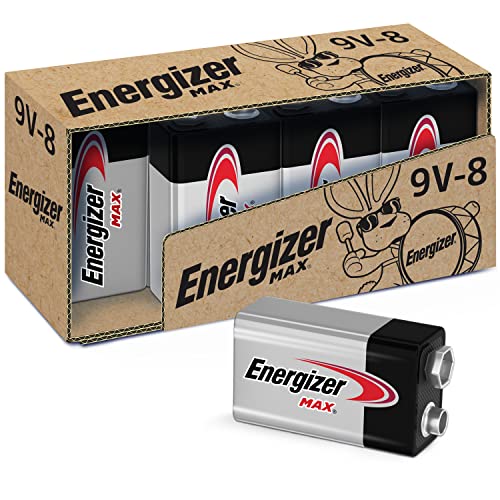
The Energizer MAX 9V 8-Pack is built for households that want to stock up once and forget about it. Eight cells cover detectors, a few toys, a multimeter, and a guitar pedal or two without blinking. Compared to Duracell’s 4-pack above, this is the bulk-buoy option.
These cells trade the rechargeable angle for a straightforward alkaline promise: power that sits ready. Owners commonly mention the packaging keeps the cells organized until needed.
Useful Highlights
- Eight-pack covers a multi-room detector setup plus occasional-use gadgets
- Long storage life means extras stay usable across seasons
- Alkaline chemistry is forgiving across a wide range of devices
Trade Offs
- Single-use design means eight cells eventually need replacing, not recharging
- Larger pack size requires a dedicated drawer or toolbox spot
Quick Facts
Made For
Shoppers who want one bulk purchase to power several rooms’ worth of detectors and devices for a long stretch.
Skip It When
Frequent-cycling households should skip straight to the Quzmo 3-Pack Rechargeable 9V Lithium-ion for a reusable solution.
The MN16RT4Z variant is essentially Duracell’s classic Coppertop line repackaged under a different SKU, with the familiar copper-and-black wrap. It’s a four-cell pack that fits the same annual refresh rhythm as Item 1, with packaging that some stores carry exclusively.
Functionally, the experience mirrors the Coppertop 4-pack above. The honest read here is that picking between them usually comes down to availability and pack design preference rather than chemistry.
What Earns Its Place
- Same Coppertop alkaline chemistry trusted in safety-critical devices
- Four-pack count suits a typical yearly detector refresh
- Alternative SKU helps when the B000K2NW08 listing is out of stock
Honest Caveats
- Single-use cells, so long-term cost still favors the rechargeable options below
- Branding and packaging vary between batches, which can confuse repeat shoppers
Right Fit For
Anyone loyal to the Duracell Coppertop name who wants a four-pack sized for a yearly detector rotation.
A Better Fit Elsewhere
Anyone aiming for a reusable setup will find the Quzmo 2-Pack Rechargeable 9V Lithium-ion more economical over time.
The 2-cell Energizer MAX pack is the smallest format on this list, and that small footprint matters in apartments, single-detector homes, or anyone who just wants one spare tucked in a drawer. Compared to the 8-pack above, it trades depth for compactness.
Like the other alkaline options, these are designed for low-drain, infrequent-replacement scenarios. Anyone running a busy workshop full of 9V gear will burn through two cells quickly.
The Case For It
- Compact two-cell footprint slides into small storage spaces
- Long storage life means the cells stay usable until the next swap
- Familiar MAX chemistry for those already buying other Energizer sizes
Some Limits To Know
- Only two cells, so power-hungry users will need frequent repurchase
- Single-use, so cost adds up versus the lithium-ion packs below
Feature Snapshot
Who Should Grab It
Minimalist households that want a one-detector refresh with a single backup on hand.
Not Your Match When
Multi-device homes that drain 9V cells often should step up to the Quzmo 5-Pack Rechargeable 9V Lithium-ion instead.
Quzmo’s 2-Pack is the entry ramp into USB-C rechargeable 9V cells. Each battery has a built-in charging port and ships with a 2-in-1 USB-C cable, so no external charger is required. The 1300mAh capacity lands well above what older NiMH (nickel-metal hydride) 9V cells used to offer, which means longer runtimes in audio gear and meters.
For one-detector apartments or a single guitar pedal user, the 2-pack hits the sweet spot of “enough, not too many.” Compared to the alkaline Duracell 4-pack at Item 1, this is the first real shift into reusable territory.
Everyday Perks
- Built-in USB-C port means no separate charger to buy or lose
- 1300mAh capacity handles mid-drain devices like wireless mics and multimeters
- Reusable for hundreds of cycles, lowering long-term cost
- LED indicator on each cell shows charging status at a glance
Points To Note
- 2.5–3 hour charge time per cell means planning ahead for swaps
- Lithium-ion cells slowly lose charge sitting unused, so periodic top-ups help
Best Suited To
One-device owners who want a simple USB-C recharging setup without buying extra charging hardware.
Consider Something Else When
Households running several 9V devices at once should look at the Quzmo 4-Pack Rechargeable 9V Lithium-ion instead.
The 3-Pack version keeps the same USB-C charging and 1300mAh capacity as the 2-Pack above, just with one extra cell in the box. That third battery is the one you keep charged while the other two rotate through smoke detectors or a small audio setup. It’s a smart count for two-detector households.
Same charging cable, same LED indicators, same chemistry. The honest difference is purely quantity.
Everyday Wins
- Three cells make rotation practical without owning extras that sit idle
- Same USB-C direct-charge design, no dock or cradle required
- 1300mAh per cell supports microphones, walkie-talkies, and meters
- Long cycle life keeps replacement costs low over years
Less Ideal Details
- Charge time still takes a few hours per cell, so all three in sequence adds up
- Lithium-ion cells prefer partial top-ups over full discharges, a small habit shift
Feature Card
Who Will Love This
Two-detector apartments or single-musician setups that want a charged spare without bulk.
Look Elsewhere When
Larger households with multiple rooms running 9V gear will want the Quzmo 8-Pack Rechargeable 9V Lithium-ion.
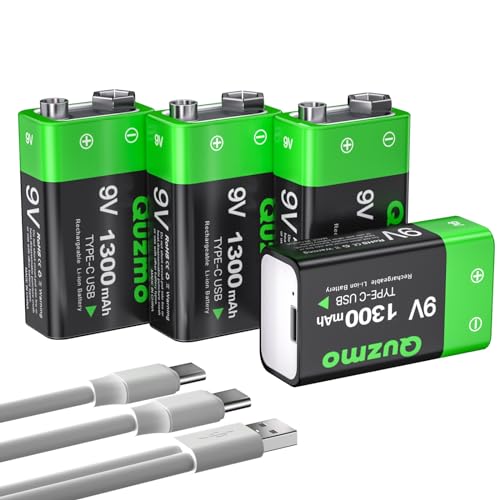
The 4-Pack version of Quzmo’s rechargeable 9V line is the count I see recommended most for full-home detector coverage. Four cells line up neatly with a typical three-detector home plus a rotating backup, so one cell can always sit on the cable.
Capacity and charging hardware match the smaller packs above. The trade is just how many spare cells you want to keep ready in a drawer.
The Value In It
- Four cells cover a typical multi-room detector layout with a spare
- USB-C direct charging means no extra charging dock to clutter a counter
- 1300mAh capacity holds up well in wireless microphones and similar gear
- Same lithium-ion cycle life applies across all four cells
Small Caveats
- Charging four cells in sequence takes real wall time
- Lithium-ion 9V cells can show slightly higher self-discharge than alkaline when idle
Perfect Match For
Multi-detector households ready to leave disposable batteries behind for good.
Another Choice May Suit
Anyone with just one or two devices will find the Quzmo 3-Pack Rechargeable 9V Lithium-ion a less wasteful starting point.
Five cells is where Quzmo’s line shifts from “household coverage” into “active hobbyist territory.” A 5-pack keeps one cell on charge, one in use, and a rotating bench of spares ready for a guitar pedalboard, handheld mic, or walkie-talkie set.
The chemistry and ports stay identical to the smaller packs. The honest difference here is count and how that translates into a smoother rotation rhythm.
The Helpful Details
- Five cells enable a true rotation cycle for power-hungry setups
- USB-C direct-charge design keeps the workflow simple across all five
- 1300mAh capacity supports audio and instrument use without quick drains
- Long cycle life offsets the higher upfront cost of the 5-pack
Practical Considerations
- Charging five cells one or two at a time takes planning
- Storing five lithium-ion cells benefits from a small organizer to track charge state
Spec Overview
Built With In Mind
Musicians, podcasters, and hobbyists who run several 9V devices and rotate cells often.
Reach For A Different Pick When
Light-use households will be better served by the Quzmo 4-Pack Rechargeable 9V Lithium-ion for simpler rotation.
The 6-Pack steps deeper into “working bench” territory. Six cells are enough to dedicate one or two to standby duty while keeping the rest in rotation across smoke detectors, audio gear, and shop tools.
Like the rest of Quzmo’s rechargeable 9V lineup, the format and charging method stay consistent. The only shift here is scale.
The Good Stuff
- Six cells keep spares warm for high-turnover environments
- USB-C charging means any spare cable around the house works
- 1300mAh per cell is consistent across the entire Quzmo rechargeable line
- Long cycle life makes a 6-pack cost-effective over years
Factors To Consider
- Higher upfront cost than smaller packs
- Six cells require a small storage and labeling routine to stay organized
Whose Shelf It Belongs On
Workshop owners and small studios running multiple 9V tools or instruments at once.
Swap It Out When
Anyone with lighter needs should step down to the Quzmo 3-Pack Rechargeable 9V Lithium-ion.
The 8-Pack is the deepest bench in Quzmo’s rechargeable 9V lineup. Eight cells comfortably cover a large household, a busy audio rig, or a small workshop where multiple 9V devices stay in regular rotation.
The honest trade is that eight cells take real organizational discipline to track. With a small label or pouch system, though, this pack becomes a long-term workhorse.
Useful Strengths
- Eight cells support heavy multi-device rotation
- USB-C direct-charge design stays consistent across the lineup
- 1300mAh capacity matches smaller packs in the family
- Cycle longevity spreads the upfront cost over years of use
- LED indicators on each cell simplify charge management
Things To Weigh Up
- Highest upfront cost in the Quzmo lineup
- Charging eight cells in sequence is the slowest workflow on this list
- Storage and labeling matter more with eight loose cells floating around
Whose Drawer It Belongs In
Gear-heavy households and pros who run several 9V devices and want minimal downtime.
Where A Sibling Pick Shines
Smaller homes should pick up the Quzmo 4-Pack Rechargeable 9V Lithium-ion for simpler rotation.
What To Weigh Before Picking Up Rechargeable 9V Cells
Chemistry And Voltage Behavior
Lithium-ion 9V cells (the Quzmo packs above) deliver a steadier voltage curve than alkaline alternatives, but they need a USB-C cable to recharge. Alkaline 9V cells like the Duracell and Energizer entries sit ready longer on a shelf but get tossed after a single use. For low-drain safety devices, either works. For active gear, lithium-ion wins on cycle cost.
Capacity And Runtime
The 1300mAh rating across the Quzmo rechargeable family means similar runtime per cell. Heavier drainers like guitar pedals and wireless mics drain faster than smoke detectors, so pick a pack count that allows rotation. A general rule: two cells per active device, plus one on standby.
Charging Setup
USB-C direct charging removes the need for an external charger, which is convenient for travel or shared spaces. Charge time per cell runs a few hours, so a rotation rhythm matters more than the rating alone.
Use Case Fit
Smoke detectors barely sip power, so alkaline can still be a fine choice. Wireless microphones, walkie-talkies, and pedals draw harder, making the rechargeable path pay off faster. Match the format to the demand.
Key Considerations Across These Picks
Common Shopping Slip Ups
Buyers sometimes grab 9V NiMH cells expecting the same experience as AA rechargeables, but the older NiMH 9V format has lower capacity and weaker voltage under load. Another miss is buying a rechargeable pack without checking the device’s voltage tolerance. Some specialty equipment expects the slightly higher sustained voltage of lithium-ion, while older gear may be calibrated for alkalines. Always confirm your device accepts the chemistry before swapping.
When Paying More Pays Off
The jump from a 2-pack to an 8-pack of rechargeable lithium-ion cells is mostly about convenience rather than chemistry. Higher pack counts cost more upfront but reduce the “I forgot to charge one” moments that force last-minute runs. For households juggling several detectors or active audio gear, that reduced friction is the real upgrade, not a chemistry tweak.
Frequently Asked Questions
How long do rechargeable 9V batteries last per charge?
Most 1300mAh lithium-ion 9V cells run anywhere from several weeks in low-drain detectors to a handful of hours in heavy-use audio gear. Real-world runtime depends on the device’s current draw more than the cell rating.
Can I use rechargeable 9V batteries in any smoke detector?
Most modern detectors work fine with rechargeable 9V lithium-ion cells, though a few legacy models are calibrated specifically for alkalines. Check the detector manual for any voltage or chemistry notes before swapping.
How many charge cycles can I expect?
The Quzmo rechargeable 9V cells in this list are rated for over a thousand recharge cycles, which for most households translates into several years of use before any noticeable capacity loss.
Do rechargeable 9V batteries lose charge sitting in storage?
Yes, all rechargeable chemistries self-discharge over time. Lithium-ion cells lose charge slowly, so a stored cell may need a top-up after a few months of inactivity.
Is a built-in USB-C port better than a separate charger?
For most shoppers, yes. Direct charging means fewer accessories to lose and any USB-C cable around the house will work. Separate chargers are useful only when juggling many cells at once.
The Takeaway
If you’re tired of buying disposable 9V cells every season, the rechargeable lithium-ion packs from Quzmo change the math in a meaningful way. Households with light needs will do fine with the 2- or 3-pack, while gear-heavy users will appreciate the rotation comfort of the 6- or 8-pack. Anyone loyal to the classic alkaline path still has solid options in the Duracell and Energizer entries at the top of the list.
