

The lights flicker, the fridge hum falls silent, and suddenly every phone in the house is at 12%. I have lived that moment, and the difference between scrambling and shrugging it off usually comes down to having the right backup sitting in the garage or under the desk. Power backups for home come in a few very different shapes, and picking the wrong one leaves you either over-prepared or stuck protecting a gaming PC with a 20-pound generator. This roundup walks through nine options I have grouped by what they actually do, so the choice feels less like guesswork and more like a plan.
An Overview Of The Picks

Westinghouse 14500 Peak Watt Tri-Fuel Home Backup Portable Generator

Westinghouse 13500 Peak Watt Tri-Fuel Home Backup Portable Generator

Generator Interlock Kit for Eaton Cutler Hammer BR Series

Honda EU2200i Companion 2200 Watt Inverter Generator

EF ECOFLOW Delta 3 Portable Power Station 1024Wh
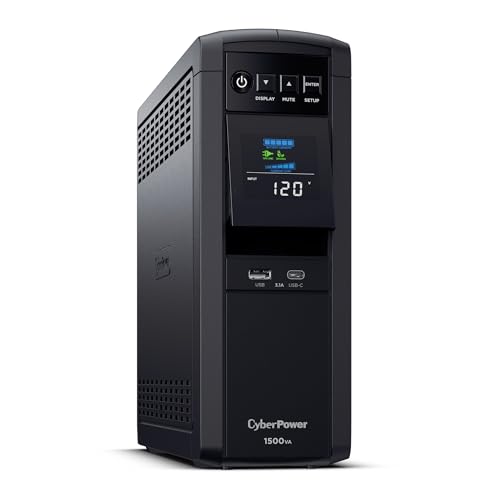
CyberPower CP1500PFCLCD PFC Sinewave Battery Backup

Jackery HomePower 3000 with Hand Truck and Solar

GOLDENMATE 1500VA Lithium UPS Battery Backup

GOLDENMATE 1000VA Lithium UPS Battery Backup
Why These Options Stand Out
This is the model you reach for when “keep the fridge cold” is just the start of the list. The WGen11500TFc delivers up to 14,500 peak watts on gasoline, with the flexibility to switch to propane or natural gas, and a built-in CO sensor that helps shut things down if fumes build up indoors. The 550cc overhead-valve engine with a cast iron sleeve is built for long runs, and a 9.5-gallon tank keeps it humming for up to 19 hours at a stretch.
It is transfer-switch ready, which matters more than it sounds: a properly installed transfer switch lets you power hardwired circuits legally and safely, instead of running extension cords through a window. The remote electric start is a small quality-of-life touch that pays off when the storm hits at 2 a.m.
Everyday Perks
- Tri-fuel flexibility means you can run on whatever fuel you can actually source during a multi-day outage.
- Cast iron sleeve on a 550cc engine is the kind of heavy-duty build detail associated with serious longevity.
- 19-hour runtime on a 9.5-gallon gasoline tank covers most overnight outages without a refill.
- Remote electric start removes the yank-cord scramble in the rain.
- Transfer-switch ready out of the box, simplifying a code-friendly install.
Things To Consider
- This is a 230-plus-pound unit; storage and wheel placement deserve a real plan before delivery day.
- Tri-fuel setups require professional gas-line work if you intend to plumb natural gas in permanently.
Who Should Grab It
Homeowners in storm-prone regions who want to run most of the house, including a well pump or central air, during multi-day outages.
Reach For A Different Pick When
Apartment dwellers or RV travelers should look at the Honda EU2200i Companion instead, since it is far easier to lift and far quieter.
The WGen10500TFc is the slightly trimmer sibling of the unit above. Up to 13,500 peak watts and 10,500 running watts cover a typical home’s critical loads without the extra weight of a larger engine. The same tri-fuel setup is here, accepting gasoline, propane, or natural gas depending on what is available when the grid goes dark.
Its 500cc overhead-valve engine with a cast iron sleeve still feels like a serious piece of hardware, and a 9.5-gallon tank holds the same roughly 19-hour runtime window. Remote electric start and transfer-switch readiness round out a package that suits shoppers who want tri-fuel without going to the top tier.
Reasons It Performs
- Tri-fuel operation across gasoline, propane, and natural gas matches the larger WGen without a fuel penalty in real-world use.
- 10,500 running watts handles fridges, well pumps, and a few room ACs at once for most households.
- Cast iron sleeve on the 500cc engine suggests durable long-term use under load.
- Transfer-switch ready, helping with a code-friendly install.
Points To Keep In Mind
- Still a heavy portable unit, just slightly lighter than its bigger brother.
- Less headroom than the 14,500-peak model for households with central air plus electric heat.
- Regular oil checks and break-in service matter more than people expect on these tri-fuel engines.
Made For
Families in regions with frequent multi-hour outages who want whole-house capability without stepping up to the largest tri-fuel unit on the market.
Where Another Pick Suits Better
Shoppers who rarely need more than a fridge plus electronics should consider the EF ECOFLOW Delta 3 for a quieter, indoor-friendly experience.
This is the unglamorous but critical piece of the home-backup puzzle. The EXCELFU interlock kit fits Eaton Cutler Hammer BR-series panels at 150 and 200 amps, and it makes it physically impossible to run the generator breaker and the main breaker at the same time. That single mechanical constraint is what turns a portable generator into a safe, code-friendly home backup instead of a backfeeding hazard.
An interlock kit is a small steel-and-plastic assembly that mounts to your existing breaker panel. For Eaton owners specifically, this model is one of the more commonly cited options, and pairing it with a Westinghouse or Honda generator turns the setup into something an inspector will actually sign off on.
Noteworthy Benefits
- Prevents dangerous backfeeding into utility lines, protecting line workers and your panel at once.
- Cost-effective compared with a full transfer switch installation for many homes.
- Fits both 150-amp and 200-amp BR-series Eaton panels, including plug-in neutral configurations.
Minor Gripes
- Only works for Eaton Cutler Hammer BR-series panels, so verify your panel label before ordering.
- Installation usually requires turning off power and should be approached with electrical caution or a licensed electrician.
Right Fit For
Eaton BR-series panel owners who already own or plan to buy a portable generator and want a safe, inspector-friendly way to backfeed selected circuits.
A Better Fit Elsewhere
Homeowners with non-Eaton panels should look at brand-specific interlock kits that match their actual breaker box rather than forcing this one.
The EU2200i Companion is what I would call the “friendly” generator. Its inverter design produces clean power that laptops and modern TVs actually want to see, and at 48 to 57 dB(A) it runs at conversational noise levels. The 30-amp outlet and parallel-ready design make it a favorite for RV owners and anyone who values their own hearing.
For home backup, this is the pick when you do not need to power the whole house, just the fridge, internet, and a few lamps. Compared with the Westinghouse tri-fuel units earlier in this list, the Honda trades raw wattage for portability, sound, and fuel efficiency.
Points In Its Favor
- Inverter output delivers clean sine-wave power safe for sensitive electronics like laptops and routers.
- Operating noise in the 48 to 57 dB(A) range means it is far quieter than open-frame generators.
- Built-in 30A outlet and parallel capability cover both RV use and home backup roles.
Things To Consider
- At 2,200 watts peak, it cannot run central air or large electric heaters from a single unit.
- Premium brand pricing means you pay for the quiet-and-clean reputation.
Built With In Mind
Apartment dwellers, RV travelers, and homeowners in dense neighborhoods where a roaring open-frame generator would not fly with the neighbors.
Skip It When
Someone planning to power a well pump or central AC should step up to the Westinghouse WGen11500TFc instead.
The ECOFLOW Delta 3 is the apartment-friendly face of home backup. It is a 1,024Wh battery station with 1,800W of AC output, meaning it can run fridges, internet gear, and even some small appliances from inside the home without fumes, fuel, or noise. Combined AC and solar input gets it to a full charge in roughly 56 minutes per the maker.
It also expands into a larger ECOFLOW ecosystem, so capacity can grow over time by stacking compatible battery packs. For indoor use, this is a very different proposition from the Westinghouse units earlier; there is no engine, no exhaust, no fuel can in the garage.
Where It Delivers
- 1,800W AC output covers essentials like fridges and routers during outages without burning fuel.
- Fast AC plus solar charging hits a full tank in roughly an hour by the maker’s rating.
- Expandable capacity lets you add compatible battery packs as your needs grow.
- Silent operation makes it usable indoors without venting concerns.
Points To Note
- 1,024Wh is meaningful but limited; whole-house backup would drain it in hours under heavy load.
- Charging speed and runtime numbers depend a lot on which appliances you actually plug in.
Key Product Details
Whose Shelf It Belongs On
Urban households and renters who need silent, indoor-safe backup for electronics and small appliances, and want to avoid fuel storage entirely.
Look Elsewhere When
Off-grid households with high daily loads should consider the Jackery HomePower 3000 bundle for substantially more capacity.
The CyberPower CP1500PFCLCD is a desktop UPS, meaning it sits between your wall outlet and your computer gear and quietly takes over when the power drops. Its sine-wave output plays nicely with active PFC power supplies, the kind found in most modern workstations, gaming PCs, and high-end monitors. The multifunction LCD keeps you informed about load and battery status at a glance.
Compared with the ECOFLOW Delta 3 above, this is a smaller, more specialized tool. It will not power a fridge, but it will keep a workstation alive through brownouts and short outages long enough to save work and shut down cleanly.
Well-Handled Touches
- Pure sine-wave output matches what active PFC power supplies actually want to see.
- Color LCD shows load and battery status in real time.
- Mini-tower form factor fits under most desks without dominating the floor.
Honest Caveats
- Runtime is measured in minutes for a full workstation load, not hours.
- Battery replacements down the line are a normal ownership cost on traditional UPS units.
Who It Suits Best
Remote workers, gamers, and home-office users running modern PCs who want clean shutdowns during storms and brownouts.
Swap It Out When
Shoppers wanting longer runtime and longer battery life should consider the GOLDENMATE lithium UPS units later in this list.
This bundle steps the ECOFLOW concept up several notches. The Jackery HomePower 3000 delivers 3,600W of AC output (with 7,200W surge) from a 3,072Wh battery, which is enough to keep a household’s essential circuits running for roughly 15 hours according to the maker. The included hand truck and two 200W solar panels make it a ready-to-roll off-grid kit rather than a single box.
Its UL-certified UPS mode switches over in 20 milliseconds or less, fast enough that desktop gear never notices the grid dropped. Compared with the Delta 3 earlier, this is the choice when capacity and runtime matter more than price.
Benefits That Matter
- 3,072Wh capacity covers home essentials for many hours, not just minutes.
- UL-certified sub-20ms UPS transfer keeps computers and routers online through outages.
- Bundle includes hand truck and two 200W solar panels for genuine off-grid recharging.
Where It Is Less Suited
- This bundle costs noticeably more than single-unit battery stations.
- Solar input is weather-dependent, so cloudy weeks still drain the pack.
- Its size means it lives in a garage or utility room, not a closet.
Perfect Match For
Households wanting generator-like capacity without fuel, paired with enough solar to recharge between outages in fair weather.
Consider Something Else When
A shopper on a tighter budget who only needs overnight fridge protection should consider the ECOFLOW Delta 3 above.
The GOLDENMATE 1500VA/1000W unit swaps the traditional sealed-lead-acid UPS battery for lithium iron phosphate (LiFePO4). That chemistry is rated for over 10 years of use and 3,000+ charge cycles per the maker, which is the kind of longevity that makes a UPS feel like an appliance rather than a consumable. 1,500VA capacity gives it real headroom over the smaller CyberPower unit earlier.
For always-on electronics like networking gear, home servers, or a serious workstation stack, the long-life battery chemistry changes the ownership math.
The Good Stuff
- LiFePO4 battery chemistry promises a decade-plus service life per the maker.
- 1,500VA / 1,000W capacity covers more gear than smaller UPS units.
- Lower long-term replacement cost profile than traditional lead-acid UPS designs.
Factors To Consider
- Higher upfront cost than older lead-acid UPS designs at similar VA ratings.
- Runtime under full load is still finite; this is not a whole-house solution.
Best Suited To
Homeowners running network racks, home servers, or serious workstation setups who want a long-life UPS they can install and mostly forget.
Not Your Match When
Shoppers wanting appliance-level runtime should look at the Jackery HomePower 3000 bundle instead.
The smaller GOLDENMATE unit keeps the LiFePO4 chemistry promise but in a more modest 1,000VA / 800W package. According to the maker, its lithium iron phosphate battery delivers more than 5,000 charge cycles, far beyond traditional lead-acid designs. The reduced total cost of ownership is the real selling point for shoppers who hate replacing UPS batteries every couple of years.
It sits naturally next to a desk or under a TV stand, protecting modems, routers, and a small workstation without dominating the room.
What Makes Sense
- LiFePO4 battery rated for thousands of cycles per the maker.
- Compact form factor fits under desks or beside media cabinets.
- Cleaner long-term cost story than legacy lead-acid UPS replacements.
Softer Spots
- 800W capacity leaves little headroom for power-hungry gaming rigs.
- Runtime under load is still measured in minutes, not hours.
Who Will Love This
Home-office and entertainment-center users protecting networking gear, smart-home hubs, and modest desktop setups from brownouts and brief outages.
Another Choice May Suit
Shoppers running more demanding hardware should consider the larger GOLDENMATE 1500VA unit just above in this list.
What To Weigh Before Buying Power Backups For Home
Match Capacity To Your Real Loads
A 14,500-watt tri-fuel generator is overkill if you really just need to keep a fridge and a few outlets alive. List the circuits or appliances you actually cannot live without, add up their running watts, then add headroom for startup surges from motors and compressors. Refrigerators and well pumps draw a brief spike at startup that can be two to three times their running wattage, so that margin matters more than people expect.
Choose The Form Factor That Fits Where You Live
Generators with combustion engines must live outdoors with proper exhaust clearance. That means thinking about placement, distance from windows, and whether your HOA or local code restricts runtime hours. Battery stations and UPS units can sit indoors, which opens up apartment and condo use cases where a fuel-burning generator simply is not practical.
Pay Attention To Fuel And Recharge Logistics
Tri-fuel flexibility is a quiet superpower during long outages because fuel supplies shift. Battery stations sidestep fuel entirely but need a recharge plan, whether that is wall power restored briefly or solar panels in fair weather. For stationary UPS units, runtime is brief by design, so the right framing is graceful shutdown rather than extended operation.
Think About Installation And Code
A portable generator becomes a home backup only when paired with a proper transfer switch or interlock kit. Skipping that step risks backfeeding the grid, which is dangerous for line workers and likely illegal. Eaton panel owners can use the EXCELFU interlock kit covered earlier; everyone else should match the kit to their specific panel brand and amp rating.
Key Considerations Across These Picks
Pitfalls Shoppers Hit
The most common mistake is sizing the backup by price rather than by load, ending up with a small battery station when the actual need is a hardwired generator. Another frequent stumble is forgetting the transfer switch or interlock kit, which can turn a good generator into an unsafe installation. Treating a battery station as a generator replacement, or vice versa, also leads to frustration when the chosen form factor does not match the home’s electrical layout.
Where The Extra Money Goes
Higher-tier models earn their price through bigger engines, longer-life LiFePO4 chemistry, or bundled solar input. The Westinghouse tri-fuel units add fuel flexibility and runtime; the Jackery bundle adds capacity and solar recovery; the GOLDENMATE lithium UPS adds battery lifespan. The upgrade is worth it when the additional capability matches an actual outage scenario you have experienced or expect, not just a worst-case fantasy.
Frequently Asked Questions
How Long Can A Home Backup Generator Run Continuously?
Runtime depends on fuel tank size and load. The Westinghouse tri-fuel units are rated for roughly 19 hours on a 9.5-gallon gasoline tank, while battery stations are limited by their watt-hour capacity and recharge options.
Do I Need A Transfer Switch For A Portable Generator?
For powering hardwired home circuits, yes, a transfer switch or a properly installed interlock kit is essential. It prevents dangerous backfeeding into utility lines and keeps the installation up to code.
Can A Battery Power Station Run A Whole House?
A 3,072Wh unit like the Jackery HomePower 3000 can run essentials for many hours, but “whole house” with central air and electric heat is beyond any portable battery station on this list. For that, a tri-fuel generator paired with an interlock kit is the more practical answer.
How Loud Are These Generators?
Open-frame generators like the Westinghouse units run noticeably louder than inverter models. The Honda EU2200i is rated at 48 to 57 dB(A), which is roughly the sound of a quiet conversation, while battery stations are effectively silent.
How Long Do Lithium UPS Batteries Actually Last?
LiFePO4 batteries in units like the GOLDENMATE line are rated for thousands of charge cycles and roughly 10 years of use per the maker, well beyond traditional lead-acid UPS designs.
Closing Remarks
Power backups for home are really about matching your outage profile, not chasing the biggest wattage number. A renter with a few essentials to protect has different needs than a rural homeowner running a well pump, and the right pick respects that difference. Start with the loads you actually need, then choose the form factor, fuel, and capacity that fit where you live. The honest read is that any of these nine, picked for the right scenario, will turn the next blackout from a scramble into a shrug.
