

I’ve wired plenty of low-voltage circuits over the years, from LED garden lights to Raspberry Pi clusters drawing steady 5A loads. Picking the right supply matters because the wrong match creates voltage sag, flickering lights, or mysterious reboots. This list covers compact USB-C bricks for single-board computers, weatherproof LED drivers for outdoor runs, and a beefy ATX unit for PC builders who need clean low-rail current.
A Snapshot Of The Selections

Raspberry Pi 27W USB-C Power Supply (White)
CanaKit 3.5A Raspberry Pi 4 Power Supply (USB-C)

ATCD 500W Landscape Lighting Transformer
ATCD 600W Landscape Transformer
ATCD 400W Landscape Transformer
ATCD 300W Landscape Transformer

QNNP 200W 12V DC LED Driver

QNNP 100W 24V DC LED Driver

QNNP 200W 24V DC LED Driver
The Strengths Of Each Pick
The Raspberry Pi 27W USB-C Power Supply (White) is the official brick made for Pi 5 boards, where a standard phone charger often falls short under CPU load. It pushes 5.1V at 5.0A, which is roughly 25.5W of headroom for the board plus USB peripherals.
For anyone running a Pi 5 headless or with SSDs attached, this is the cleanest match. The Pi 5 itself draws more current than a Pi 4, so older bricks brown out during boot. This one stays steady.
The Good Stuff
- 5.0A output handles Pi 5 plus power-hungry USB accessories without tripping the undervoltage warning.
- Wide 100-240V AC input works in most regions without a separate converter.
- White housing matches Pi 5 case aesthetics for tidy desk setups.
Things To Consider
- It is officially Pi 5 territory; running it on a Pi 4 wastes the extra current.
- Like most Pi PSUs, the cable is short for closet or shelf-mounted builds.
Who Should Grab It
Pi 5 users running SSDs, PoE hats, or active coolers benefit most from the rated current.
Skip It When
Pi 4 owners should reach for the CanaKit 3.5A USB-C brick instead since it targets their exact load profile.
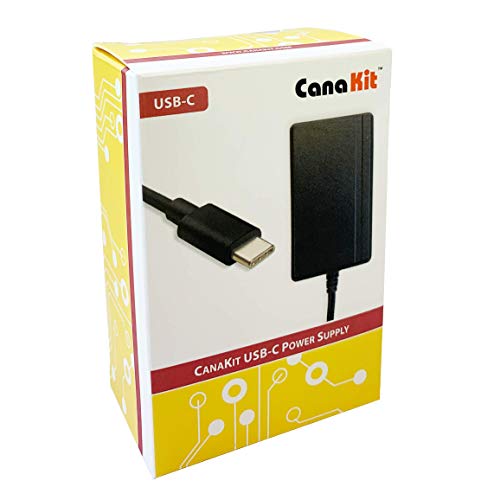
The CanaKit 3.5A Raspberry Pi 4 Power Supply (USB-C) is built specifically around Pi 4 power demands rather than the Pi 5. It carries UL listing and a built-in noise filter to stabilize the 5V rail during burst loads.
Compared to the Raspberry Pi official brick above, this one uses a heavier 18 AWG cable over a 5-foot run, which matters when your Pi sits across the room from the outlet.
Everyday Advantages
- Noise filter smooths ripple that can cause USB peripherals to misbehave.
- 18 AWG cable thickness reduces voltage drop across longer runs.
- UL listing adds a layer of confidence over unmarked third-party bricks.
Worth Noting
- 3.5A is undersized for a Pi 5 under load, so it is strictly a Pi 4 part.
Quick Facts
Made For
Pi 4 hobbyists running retro emulation stations or media servers benefit from the noise filter.
Where Another Pick Suits Better
Pi 5 builders should choose the Raspberry Pi 27W official PSU since it supplies the higher current those boards require.
The ATCD 500W Landscape Lighting Transformer steps 120V AC down to 12V or 15V AC for outdoor LED fixtures. A stainless steel enclosure resists corrosion, and built-in dusk-to-dawn plus timer controls remove the need for a separate photocell.
For a typical yard with a dozen pathway lights and a couple of spotlights, 500W gives a comfortable margin below the 80% rule.
Everyday Perks
- Combined sensor and timer cut out an extra accessory purchase.
- Stainless steel build handles rain and humidity over many seasons.
- Wide 12V-15V AC compatibility covers most low-voltage LED fixtures.
Room For Improvement
- Mounting location still needs a covered spot or weatherproof box for the cord entry.
Whose Shelf It Belongs On
Homeowners planning a mid-size landscape lighting layout get the right balance of capacity and automation.
Look Elsewhere When
Larger estates with dozens of fixtures need the ATCD 600W unit for extra current headroom.
The ATCD 600W Outdoor Low Voltage Transformer delivers the most wattage in this lineup, designed for expansive yards with path lights, pond lights, and accent spotlights all on one run. It also feeds 12VAC-15VAC fixtures, including halogen and LED bulbs.
Compared to the 500W sibling, this one absorbs future expansion without forcing an immediate upgrade.
Positive Points
- 600W headroom handles 30+ fixtures on a single circuit.
- Compatible with both LED and legacy halogen loads.
- Same dusk-to-dawn and timer automation as smaller ATCD models.
Points To Keep In Mind
- Physical size is larger than 300W or 400W units, so wall space matters.
- Over-sizing beyond actual load wastes a bit of efficiency in always-on mode.
Technical Snapshot
Best Suited To
Property owners with expansive driveways, pool areas, and gardens benefit from the 600W overhead.
A Better Fit Elsewhere
Small patios with a handful of path lights can save money with the ATCD 300W unit.
The ATCD 400W Landscape Lighting Transformer slots between the 300W and 500W options for mid-range projects. It carries the same stainless steel chassis and built-in photocell plus timer, so it works for LED spot lights and strip lighting.
For a small-to-medium garden, 400W is often the sweet spot where you avoid overspending on unused capacity.
Strong Points
- 400W capacity covers 15-20 mid-wattage fixtures comfortably.
- Photocell plus timer avoids manual on-off cycles.
- Stainless housing matches the durability profile of larger ATCD units.
Small Caveats
- Owners commonly mount these on exterior walls, so a covered GFCI outlet is recommended.
Who Will Love This
DIYers building out a typical suburban yard benefit from the balanced 400W rating.
Not Your Match When
Installers wiring a full estate should consider the ATCD 600W unit for extra current headroom.
The ATCD 300W Outdoor Landscape Lighting Transformer is the smallest member of the ATCD stainless steel family. It runs 12V-15V AC output with the same dusk-to-dawn and timer automation as the larger siblings.
For a single pathway loop with 8-10 small LED fixtures, 300W is more than enough and easier to tuck beside a hose bib.
What Earns Its Place
- Compact footprint fits tight side-yard mounting spots.
- Stainless body keeps corrosion at bay in coastal climates.
- Sensor and timer come integrated, saving an extra wiring run.
Honest Caveats
- 300W leaves little room for expansion if more fixtures are added later.
- Like all AC transformers, voltage drop on long wire runs can dim distant lights.
Perfect Match For
Homeowners lighting a modest front-yard path or a small koi pond benefit from the smaller capacity.
Reach For A Different Pick When
Anyone planning a phased expansion should grab the ATCD 500W transformer instead for room to grow.
The EVGA SuperNOVA 750 GA PSU is a 750W ATX power supply built for desktop PCs, where stable low-voltage rails (3.3V, 5V) matter as much as the 12V output. It carries 80 Plus Gold efficiency (90% or higher under typical loads) and uses 100% Japanese capacitors for long-term reliability.
Unlike the LED drivers above, this unit goes inside a tower case. The fully modular design means you only plug in the cables you actually need.
The Upside
- Fully modular cabling cuts clutter and improves case airflow.
- LLC resonant circuit plus DC-DC converter design tightens 3.3V and 5V stability.
- Double-ball bearing fan supports an ECO mode for quieter idle operation.
Worth Bearing In Mind
- 750W is more headroom than basic office PCs need, so it’s a poor match for low-power builds.
- Compact 150mm size helps, but very small form factor cases may still require a shorter SFX unit.
Spec Overview
The Right Fit
Gaming PC builders and content creators running power-hungry GPUs benefit from clean low-rail voltage.
Swap It Out When
Single-board or LED projects are better served by the Raspberry Pi or ATCD landscape units above.
The QNNP 200W 12V DC LED Driver is a constant-voltage supply aimed at LED strips and accent lights. The IP67 sealed aluminum housing shrugs off rain and dust, so it can sit outdoors under an eave without a separate enclosure.
Unlike the ATCD AC transformers earlier, this outputs 12V DC, which is what most LED strips require.
The Value In It
- IP67 rating protects against splashes and brief rain exposure.
- Attached plug skips hardwiring for quick installations.
- Wide 85V-265V AC input handles unstable grid situations.
Trade-Offs
- Not dimmable, so adding a dimmer requires swapping the driver.
- 200W is right-sized for short runs; very long strip layouts need a bigger supply.
Right Fit For
Hobbyists running 12V LED strips along a deck or outdoor kitchen benefit from the sealed housing.
Where A Sibling Pick Shines
Longer runs using 24V LED strips should choose the QNNP 200W 24V DC driver below for less voltage drop.
The QNNP 100W 24V DC LED Driver delivers constant 24V output for indoor accent and cove lighting. Internal protection covers overvoltage, overheat, overcurrent, and short circuit conditions, so a wiring mistake won’t fry the supply.
For 24V LED strips, you may find that this driver runs flicker-free thanks to the filtering built into its circuit.
Real Benefits
- Built-in protection circuits guard against common wiring mistakes.
- 100V-265V input range covers international outlet standards.
- Plug-in form factor simplifies closet installations.
Practical Considerations
- Indoor rating means it needs a dry location, unlike the IP67 siblings.
- Not dimmable, so dimming requires a compatible dimmer module upstream.
Built With In Mind
DIYers powering under-cabinet or bookshelf LED strips benefit from the 24V clean output.
Consider Something Else When
Outdoor installations should reach for the QNNP 200W 24V IP67 driver instead for weather sealing.
The QNNP 200W 24V DC LED Driver is the 24V counterpart to the 12V model above, paired with the same IP67 sealed aluminum case. It outputs 24V at 8.3A, ideal for long LED strip runs where 12V would suffer too much voltage drop.
Compared to indoor 24V drivers, this one handles outdoor soffit and landscape accent lighting without a separate weatherproof box.
A Favorable Mix
- 24V output reduces current draw and voltage drop on long strip runs.
- IP67 housing stands up to rain, splashes, and dust ingress.
- Integrated plug speeds up temporary or rental-property installations.
Less-Strong Areas
- Not dimmable, so adding dimming means a new driver model.
- Aluminum case runs warm under full load and needs airflow in enclosed spots.
Best Suited To
Outdoor accent lighting projects spanning facades, pergolas, or fence lines benefit from the 24V headroom.
Another Choice May Suit
Short indoor 12V runs are better served by the QNNP 200W 12V DC driver listed above.
Choosing The Right Match For Your Project
Start by matching the supply to the load. A Pi 5 needs stable 5V at 5A, while outdoor LEDs run on either 12V AC or 12V/24V DC depending on the fixture. Voltage rating, current capacity, and connector type must align before anything else.
AC versus DC is the next fork. Landscape transformers in the ATCD lineup output AC, which is what many low-voltage halogen and AC-rated LED fixtures want. The QNNP drivers output DC, which LED strips and most modern DC LEDs require. Mixing these up leads to flickering or burned-out fixtures.
Build environment matters too. Outdoor installs call for sealed housings like the IP67-rated QNNP units or stainless steel ATCD transformers, while indoor projects can use lighter plug-in supplies without weatherproofing.
Wattage Headroom And The 80 Percent Rule
A good rule of thumb is to load a supply to about 80% of its rated capacity. A 300W transformer should run no more than 240W of fixtures. That buffer prevents thermal stress and extends component life. Future expansion counts here too, so sizing up one step is often the smarter move.
Connector Type And Cable Length
USB-C supplies like the Raspberry Pi and CanaKit bricks use fixed cables with a single output jack. LED drivers and landscape transformers use screw terminals or lead wires that you hardwire to the load. Plan your wire gauge for the run length to avoid voltage drop, which shows up as dim distant lights.
Key Considerations Across These Picks
Pitfalls Shoppers Hit
The most common mistake is undersizing wattage. Adding one more fixture after install can push a supply past its limit and cause thermal shutdown or shortened lifespan. Measure total fixture load first, then add 20-25% headroom before settling on a model.
Another trap is mixing AC and DC loads. AC transformers cannot safely drive DC LED strips, and DC drivers cannot power AC-rated landscape fixtures. Check the fixture label before wiring.
When Paying More Pays Off
Higher-tier models like the 600W ATCD transformer or the EVGA 750W PSU cost more because they use better internal components, longer-lasting capacitors, and more robust housings. For projects that run unattended for years, that extra durability translates into fewer replacements and safer operation. Budget picks work fine for short-term or low-stakes installs, but a permanent outdoor lighting layout benefits from the upgrade.
Frequently Asked Questions
What is a low voltage high current power supply used for?
It steps household AC voltage down to a safer low level while delivering the higher current that LEDs, motors, and single-board computers need to run reliably.
Can I use any USB-C charger for a Raspberry Pi?
A standard phone charger often lacks the current rating a Pi 4 or Pi 5 demands, which leads to undervoltage warnings. A supply rated for the specific board prevents that.
What does IP67 mean on an LED driver?
IP67 means the housing keeps out dust entirely and resists water immersion up to one meter for short periods. That makes it safe for outdoor installations where rain exposure is possible.
Do I need AC or DC for landscape lighting?
Older halogen landscape lights typically use AC, while modern LED fixtures often run on DC. Always check the fixture specifications before connecting a transformer.
How much wattage should my power supply have?
Add up the total wattage of all connected fixtures and add about 20-25% headroom. This buffer keeps the supply cool and extends its working life.
Bottom Line
The right supply depends on your load type, environment, and expansion plans. Match voltage and current first, then prioritize build quality for any install that runs unattended. A well-chosen transformer or LED driver should quietly do its job for years without complaint.
