

A power outage that drags past a few hours starts to feel less like a minor inconvenience and more like a logistical headache. The fridge thaws, the Wi-Fi drops, the kids’ devices die, and suddenly a camping fridge, a CPAP machine, or a coffee maker becomes the difference between a manageable night and a rough one. I put together this roundup for anyone who needs real watt-hour capacity, not just a pocket-sized top-up.
A Closer Look At The Lineup

Enphase IQ PowerPack 1500Wh Solar Generator Kit with 400W Panel and IQ Cart

Enphase IQ PowerPack 1500Wh with 200W Solar Panel Kit

BLUETTI Elite 200 V2 Portable Power Station 2073.6Wh 2600W
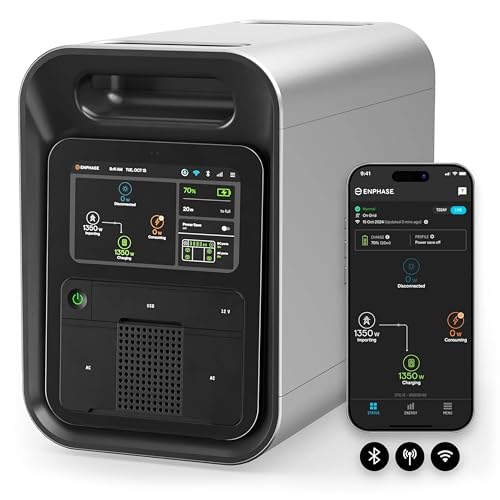
Enphase IQ PowerPack 1500Wh Portable Power Station

EF ECOFLOW Delta 3 Portable Power Station 1024Wh 1800W

Anker SOLIX C1000 Gen 2 Portable Power Station 1024Wh 2000W

Anker SOLIX S2000 Portable Power Station 2010Wh 3000W Peak

BLUETTI AC200L Portable Power Station 2048Wh 2400W

Enphase IQ PowerPack 1500Wh with IQ Cart

Anker SOLIX F3800 Portable Power Station 3840Wh 6000W
The Picks, Examined More Closely
This bundle arrives ready to deploy, which removes a common headache when shopping for backup gear. The 1500Wh LFP (lithium iron phosphate) core pairs with a 400W panel and the rolling IQ Cart, so the only real setup is unfolding the panel and pointing it at the sun.
Compared to the bare Enphase station coming up later in the lineup, this kit skips the add-on steps. The 7-inch color touchscreen gives clear visibility into input and output, and 4G plus Wi-Fi plus Bluetooth means monitoring still works when the home network drops.
Notable Upsides
- LFP chemistry supports long cycle life, helpful for anyone running weekly discharge cycles
- 400W panel brings full recharge inside roughly four hours of solid sun
- UL 9540A certification covers thermal runaway, useful for indoor placement near living spaces
- Rolling cart makes a 1500Wh unit practical for one person to move around
- Three connectivity options keep telemetry reachable even during a router outage
Things To Consider
- The foldable panel needs direct sun and dry weather to hit that four-hour figure
- 1500Wh handles essentials but not a central HVAC system, so plan loads carefully
Who It Suits Best
Households that want one box-and-panel solution and don’t want to piece together accessories later.
A Better Fit Elsewhere
Anyone running a 240V dryer or large RV air conditioner will want the Anker SOLIX F3800 Portable Power Station 3840Wh 6000W instead.
The 200W panel keeps the kit lighter and more apartment-friendly, trading some charging speed for portability. Expect closer to eight hours of sun for a full top-up, which matters more for backpackers and balcony dwellers than for fixed roof setups.
The same Enphase IQ8 microinverter tech and LFP battery show up here, so safety credentials carry over from the larger kit. It also works with the Enphase app, giving real-time state-of-charge and remote toggling, which is the kind of detail that pays off during a multi-day outage.
A Few Strong Suits
- LFP battery chemistry keeps thermal risk low in enclosed spaces
- Smaller panel footprint fits on a balcony or small patio
- UL 9540A rating supports confident indoor placement
- App control means a glance check from another room or remotely
Worth Noting
- Slower solar recharge than the 400W kit, which can be limiting in winter or cloudy regions
- No cart in this bundle, so moving the unit requires carrying it
- Same 1500Wh ceiling as the larger kit, just with a smaller refill rate
Made For
Apartment owners and renters with limited outdoor space who still want certified indoor backup.
Skip It When
Heavy daily cycling is on the table; the BLUETTI Elite 200 V2 Portable Power Station 2073.6Wh 2600W is a better match for sustained high-watt loads.
Stepping up to 2073.6Wh opens doors the smaller Enphase units keep closed. The 2600W continuous output runs a microwave, a hair dryer, or a coffee maker without tripping into protection mode, which is the real-world dividing line for many households.
Power Lifting mode pushes higher watt loads through the inverter when needed, so a brief surge from a kitchen appliance won’t shut the whole system down. That’s a meaningful edge over the EcoFlow Delta 3 and Anker SOLIX C1000 in this list, both of which sit closer to the 1800W to 2000W mark.
Good Reasons To Consider
- 2600W continuous handles everyday high-draw appliances without drama
- 2073.6Wh capacity covers longer overnight outages for most households
- Power Lifting mode tolerates brief surge loads from motors and heating elements
- Useful for tailgating and road trips where a real AC outlet matters
Trade Offs
- Heavier than the 1kWh class units, so consider a cart or two-person carry
- Higher output comes with a louder fan under sustained load
Feature Snapshot
Right Fit For
Power-hungry households that want to keep a microwave or coffee maker running through outages and don’t mind extra weight.
Reach For A Different Pick When
True whole-home backup with expansion is the goal; the Anker SOLIX F3800 Portable Power Station 3840Wh 6000W offers more headroom and 240V support.
Where the kit-form Enphase picks lead with accessories, this one focuses on the station itself. Eleven output ports spread across AC, USB-A, USB-C, and a 12V DC car outlet, so a busy household can plug in phones, laptops, a router, and a lamp at the same time without swapping cables.
Grid-to-backup switching happens in under 10ms, which keeps modems and desktops from rebooting mid-outage. The same IQ8 microinverter tech carries the LFP chemistry through 2,500 cycles, and full AC recharge takes under 75 minutes for a quick turnaround.
Well-Handled Touches
- Eleven ports keep a household’s worth of devices running at once
- Sub-10ms switchover protects modems, desktops, and other sensitive gear
- LFP chemistry holds up to roughly 2,500 cycles for daily-use owners
- Rapid AC refill under 75 minutes helps during short weather events
Honest Caveats
- No panel or cart in this SKU, so solar charging is a separate purchase
- 1500W continuous output is fine for most loads but won’t sustain heavy heating appliances
Best Suited To
Home offices and small apartments that need many ports and clean switchover more than they need high-watt outlets.
Look Elsewhere When
Long fridge runtime is the top concern; the Anker SOLIX S2000 Portable Power Station 2010Wh 3000W Peak is tuned for that exact job.
EcoFlow built the Delta 3 around refill speed, with a claimed 80% in roughly 30 minutes and a full tank in under an hour when AC and solar input combine. That matters when the grid flickers back briefly and you want maximum stored power before the next outage.
The 1024Wh base capacity is modest compared to the BLUETTI Elite 200 V2, but expansion batteries push the ceiling toward 5kWh. That modular approach lets a household grow capacity over time instead of replacing the unit.
Benefits That Matter
- Fast AC plus solar combo recharge saves time during multi-day weather events
- Modular ecosystem supports growth up to roughly 5kWh with extra packs
- 1800W output covers most household appliances short of central HVAC
- Compact form factor is easier to move than the 2kWh class
Points To Keep In Mind
- 1024Wh base means smaller loads than the 2kWh picks on this list
- Expansion batteries are separate purchases, which adds to overall cost
Who Should Grab It
Shoppers who value fast refill and want a path to scale capacity later without swapping the whole unit.
Swap It Out When
Higher watt-hour headroom matters more than recharge speed; the BLUETTI AC200L Portable Power Station 2048Wh 2400W delivers more capacity for the footprint.
Anker’s HyperFlash tech hits a 49-minute full recharge through the app, which is unusually quick for this capacity class. Ten output ports handle camping fridges, laptops, lights, and camera batteries without much fuss.
2000W continuous with 3000W peak opens up more appliance types than the EcoFlow Delta 3, including small space heaters and power tools. The LiFePO4 battery (a safer, longer-lasting lithium chemistry) supports thousands of cycles, and the unit’s compact shape suits car camping, tailgates, and tight garage storage equally well.
Where It Excels
- 49-minute recharge is one of the fastest in this capacity tier
- Ten ports handle a full campsite or remote-work setup at once
- 2000W continuous plus 3000W peak opens more appliance options
- Compact size fits in a car trunk or apartment closet without drama
Room For Improvement
- 1024Wh is still on the lower side for multi-day backup without solar
- Fastest recharge requires HyperFlash mode enabled in the app
Quick Facts
Whose Shelf It Belongs On
Campers, RV weekend travelers, and tailgaters who want fast top-ups and a portable footprint.
Consider Something Else When
Whole-home backup is the goal; the Anker SOLIX F3800 Portable Power Station 3840Wh 6000W gives far more headroom.
The headline number here is the roughly 35-hour fridge runtime, which comes from a low 6W idle draw and slightly improved conversion efficiency. For households that lose power for two or three days, that’s the kind of margin that turns an emergency into an inconvenience.
Anker claims around 10,000 cycles from the LFP cells, which works out to a roughly 15-year service life under normal use. The 1500W solar input ceiling also makes this a strong match for off-grid cabins and longer camping trips, where it pairs well with the EcoFlow Delta 3 ecosystem on different SKUs.
Real Benefits
- Roughly 35-hour fridge runtime is one of the longer figures in this class
- LFP cells rated for around 10,000 cycles suit heavy users
- Compact and lighter than most 2kWh competitors, per Anker
- 3000W peak handles motor startup from fridges and sump pumps
A Few Limitations
- 2010Wh is still under the 2kWh-plus tier, so longer outages need solar top-up
- Peak output is helpful but not a substitute for true 240V support
Who Will Love This
Homeowners whose priority is keeping a fridge running through a multi-day outage without constant refueling.
Where Another Pick Suits Better
Anyone needing 240V appliance support should jump to the Anker SOLIX F3800 Portable Power Station 3840Wh 6000W for dryer-grade loads.
The AC200L earns its keep through expansion. With compatible BLUETTI battery packs, capacity can climb to roughly 8192Wh, which is genuinely useful when weather forecasts stretch an outage to a week.
A 45-minute AC recharge is also among the faster figures in this class, putting it close to the Anker SOLIX C1000’s refill pace at much higher capacity. LiFePO4 cells add the usual long-life bonus, and the 2400W continuous output handles heavier appliance classes than the 1kWh picks above.
Positive Takeaways
- Modular expansion to around 8kWh supports scaling over time
- 45-minute AC recharge is competitive in the 2kWh class
- LiFePO4 cells favor long daily-use ownership
- 2400W continuous handles microwaves and similar mid-tier loads
Potential Drawbacks
- Expansion batteries are sold separately and add meaningful cost
- 2400W is below the BLUETTI Elite 200 V2 for the heaviest household appliances
Feature Rundown
Perfect Match For
Shoppers who want a starting 2kWh setup with a clear path to multi-day backup through expansion.
Not Your Match When
RV owners needing 240V split-phase should consider the Anker SOLIX F3800 Portable Power Station 3840Wh 6000W instead.
Skipping the solar panel in favor of just the cart is a smart move for households that already own panels or plan to charge from the wall. The IQ Cart has a telescopic handle, locking wheel brakes, and a sturdy aluminum plus polycarbonate frame, which means a single adult can wheel it from the garage to the kitchen.
The same LFP battery and UL 9540A certification come through from the larger kit, so safety credentials match. The operating range spans roughly -4°F to 122°F, which matters more than people expect for sheds, basements, and uninsulated garages.
Noteworthy Benefits
- Rolling cart and locking brakes make a heavy unit genuinely portable
- Wide operating temperature range covers garages and outdoor placement
- UL 9540A safety certification supports indoor positioning
- Enphase app keeps telemetry visible during router outages
Things To Weigh
- No panel included, so solar charging is a separate add-on
- 1500Wh is fine for essentials but limited for whole-home coverage
Built With In Mind
Shoppers who already own panels or plan to charge primarily from AC and want easy mobility around the home.
Where A Sibling Pick Shines
Anyone wanting a 400W panel in the box should pick the Enphase IQ PowerPack 1500Wh Solar Generator Kit with 400W Panel and IQ Cart for a turnkey setup.
The F3800 plays in a different league from the rest of this list. 3840Wh of base capacity expands up to roughly 26.9kWh with extra packs, and 120V/240V split-phase support (two-phase power that lets the unit run large 240V appliances like dryers) means it can run an electric dryer or RV air conditioner, which the other picks here cannot.
Six thousand watts of continuous output covers most home circuits short of central HVAC. Compared to the Anker SOLIX S2000 reviewed above, this is a real step up in both capacity and appliance range, with the trade-off of weight and a higher starting footprint.
Everyday Perks
- 120V/240V split-phase output handles dryers and large RV gear
- 3840Wh base plus expansion to roughly 26.9kWh covers long outages
- 6000W continuous output covers nearly any household circuit
- Useful for RV owners, off-grid cabins, and small workshops
Honest Caveats
- Heavier and bulkier than the 1 to 2kWh class, so plan storage space
- Expansion batteries add significant total cost for the full 26.9kWh path
Feature Card
Who Will Love This
RV owners, off-grid households, and homeowners wanting whole-home backup rather than just essentials coverage.
Another Choice May Suit
Casual backup shoppers who don’t need 240V will find the Anker SOLIX S2000 Portable Power Station 2010Wh 3000W Peak easier to live with day to day.
Picking The Right Size And Output For Your Home
Battery capacity and inverter wattage tell different stories, so worth thinking about both. Capacity, measured in watt-hours, determines how long the unit runs; output, measured in watts, determines what it can power. A 1500Wh station with 1500W output covers a fridge and lights for several hours but won’t run a microwave, which can pull 1800W or more. For multi-day backup, larger 2kWh+ models give breathing room that smaller units can’t match.
Port layout matters more than people expect. Households with many phones, laptops, and small appliances need enough USB and AC ports to avoid juggling cables. The Enphase IQ PowerPack 1500Wh Portable Power Station with 11 ports and the Anker SOLIX C1000 with 10 ports solve this in different ways.
Solar input ceilings set the refill ceiling for off-grid use. Stations with 1500W solar input, like the Anker SOLIX S2000, refill faster on sunny days than units capped at 400W. For households planning long grid-down periods, that delta matters.
Weight and portability decide whether a unit stays in one spot or moves around. Anything over roughly 50 pounds benefits from a cart, which is why the Enphase IQ Cart bundle and rolling picks earn their keep. Indoor safety certifications like UL 9540A matter for placement near living spaces, while wide operating temperature ranges help in garages and sheds.
Capacity Planning For Common Outage Lengths
An eight-hour overnight outage with a fridge, a few lights, and phone charging typically needs 1000 to 1500Wh. A 24-hour outage with the same load climbs to 2500 to 3000Wh. Multi-day scenarios push well into the 5 to 10kWh range, which is where expansion batteries or larger base units pay off.
Matching Output To Household Loads
Refrigerators pull 100 to 800W running, with brief startup surges. Microwaves and coffee makers demand 1000 to 1800W. Hair dryers and space heaters push 1500 to 2000W. Match the inverter’s continuous output to your heaviest expected load, with headroom for startup surges.
Solar Charging Realities
Panel wattage on paper rarely matches real-world input. Cloud cover, panel angle, and shade losses typically cut delivered power by 20 to 40 percent. A 400W panel in good sun delivers closer to 250 to 320W to the battery, so factor that into refill time estimates.
Key Considerations Across These Picks
Pitfalls Shoppers Hit
A common trap is buying the biggest battery in the budget without checking output wattage. A 3000Wh station with only 1000W output can’t run a microwave, which limits real-world usefulness. The opposite also happens: shoppers buy a high-watt unit with too little capacity, then watch it drain in two hours during a fridge and a fan. Match capacity and output to the same use case, not separately.
Another miss is ignoring solar input ceilings. Units with low 200W solar ceilings refill slowly even with a 400W panel attached, because the station itself becomes the bottleneck. For serious off-grid or multi-day backup, prioritize solar input alongside capacity.
Where The Extra Money Goes
Higher-tier models earn their price through three upgrades: longer cycle life from LFP chemistry, faster recharge electronics, and modular expansion paths. The Anker SOLIX F3800 Portable Power Station 3840Wh 6000W adds 240V split-phase support, which is a separate capability from watt-hours and unlocks dryer-grade loads that cheaper units cannot touch. Spend up when expansion, 240V output, or long cycle life matches your household needs. Save when a 1kWh class unit covers the essentials you actually plug in.
Frequently Asked Questions
How long can a 1500Wh power station run a refrigerator?
A typical fridge draws 100 to 200W, so a 1500Wh station can power one for roughly 7 to 12 hours, depending on compressor cycling and ambient temperature.
What is the difference between watt-hours and watts?
Watt-hours measure total energy stored, while watts measure the rate at which a device draws power. Capacity is watt-hours; output capability is watts.
Can these stations run a 240V dryer or oven?
Only units with 120V/240V split-phase output, like the Anker SOLIX F3800, can power large 240V appliances. Standard stations output 120V only.
How important is LFP battery chemistry?
LFP batteries offer longer cycle life and lower thermal risk than older lithium chemistries, which matters for daily cycling and indoor placement near living spaces.
Do these power stations work indoors safely?
Units with UL 9540A certification, including the Enphase IQ PowerPack lineup, meet thermal runaway safety standards for indoor home use.
Final Verdict
The right pick depends on what you actually need to keep running. Apartment dwellers and small households get solid mileage from 1 to 1.5kWh stations, while homes with full-size fridges and longer outage risk benefit from the 2kWh tier. For RV owners and anyone needing 240V appliance support, the Anker SOLIX F3800 sits at the top of the capacity ladder. Match the station to your realistic load list and you’ll avoid the most common regret: buying too much battery with too little output, or vice versa.
