

Walk into any home office or living room and you’ll find the same quiet mess: one wall outlet trying to feed a laptop, a phone, a lamp, a monitor, and a gaming console. The right power strip turns that tangle into something manageable, and the energy-saving versions on this list go further by letting you cut power to whole groups of devices the moment you’re done with them. I’ve pulled together nine solid options covering everything from compact desktop hubs to heavy-duty workshop bars, so you can match capacity to the way you actually use your space.
A Closer Look At The Lineup

JUNNUJ Heavy Duty Surge Protector 6 Plug 4 USB Ports 6 FT

JUNNUJ Heavy Duty Surge Protector 12 Gauge Extension Cord 6 FT

KeBen Heavy Duty Surge Protector 6 Outlets Individual Switches 6FT

JUNNUJ Heavy Duty Power Strip 8 Outlets 4 USB Ports 6 FT
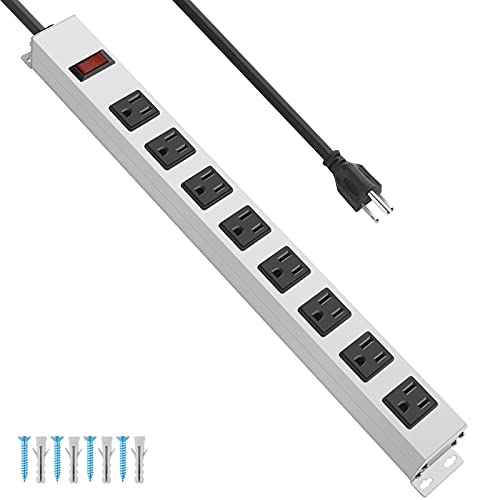
JUNNUJ Metal Long 8 Outlet Power Strip Surge Protector 6 FT

JUNNUJ 12 Gauge 360° Rotating Mountable Power Strip 6 FT

Amazon Basics Surge Protector Power Strip 16-Outlet Metal 600 Joules

Yozisital PD20W 2 Prong to 3 Prong Outlet Adapter

HANYCONY Surge Protector Power Strip 1080J 5 Ft Braided Cord
What Each Pick Brings To The Table
This JUNNUJ unit pulls double duty, giving you six AC outlets plus four USB ports in a single compact bar. For a typical home office where a laptop, monitor, lamp, phone, and tablet all compete for wall power, that mix means you can stop hunting for charging bricks entirely.
The USB ports support 20W PD fast charging, so an iPhone or smaller tablet tops up quickly without hogging a wall adapter. The 6-foot cord reaches behind most desks comfortably, and the metal housing holds up well to the inevitable bump from a chair wheel.
A Few Strong Suits
- Ten total charging points in a compact bar, ideal when wall space is tight
- 20W PD USB-C cuts phone charging time noticeably versus standard 12W ports
- Metal shell resists scuffs and helps with heat dissipation during heavy use
- ETL listing and surge protection add a layer of safety for sensitive electronics
Things To Consider
- USB ports share total output, so charging four devices at once slows each one down
- The AC outlets are not widely spaced, meaning two bulky plugs may crowd each other
Who It Suits Best
Anyone running a desk with a laptop, monitor, and a couple of mobile devices will find this strip covers daily charging without a second thought.
Where Another Pick Suits Better
For a workshop or garage where you’ll plug in heavy tools, the JUNNUJ 12 Gauge Extension Cord model handles higher current loads more comfortably.
This JUNNUJ strip is built around a thicker 12-gauge cord, which is the kind of wire you’d expect on a serious appliance rather than a desktop accessory. Lower gauge numbers mean thicker copper inside, so the cord handles more current over distance without dropping voltage or running warm.
It carries six outlets spaced 1.57 inches apart at the centers, giving you room for chunky transformer plugs without blocking the neighboring socket. The 20A rating and built-in circuit breaker mean a sudden overload trips the unit safely instead of frying your gear.
Where It Excels
- 12-gauge cord stays cool even when feeding power-hungry tools like a table saw or compressor
- 20A capacity comfortably exceeds the 15A standard residential circuit, giving real headroom
- Reset switch and breaker offer a clean way to recover from an overload without unplugging anything
Worth Noting
- Lacks USB ports, so phones and tablets still need their own wall adapter
- Heavier gauge cord makes the whole strip less friendly to frequent repositioning
Made For
Garage workshops and home studios running tools or audio gear that pull sustained current benefit most from the thicker wire.
Look Elsewhere When
If you mainly need USB charging alongside outlets, the JUNNUJ 6 Plug 4 USB model covers that blend better.
KeBen’s strip stands out for a simple reason: each outlet has its own switch. That sounds small, but it changes how you actually use a power strip, because you can kill power to a printer or a stereo amp without unplugging anything.
The 1200J surge rating handles typical household spikes, and the 1875W maximum load covers most appliances you might plug in. The widely spaced design keeps bulky adapters from blocking neighboring sockets, which is a relief for anyone tired of juggling plugs like Tetris pieces.
Advantages To Know
- Per-outlet switches make it genuinely easy to stop standby drain from devices you only use sometimes
- 1200J surge protection suits typical home electronics and small appliances
- Generous spacing between outlets accepts oversized plugs and wall warts side by side
- Clear switch labeling helps everyone in the household know what’s off and on
Points To Keep In Mind
- Switch labels can wear off over years of daily flipping, so a marker pen helps long term
- No USB ports, so mobile charging still requires separate adapters
Feature Snapshot
Best Suited To
Anyone tired of watching their TV and gaming console pull phantom power overnight will appreciate the precise outlet-level control.
Skip It When
You mostly charge phones and tablets, in which case the JUNNUJ 8 Outlet 4 USB option handles USB devices without buying separate adapters.
If the first JUNNUJ model on this list feels almost enough but not quite, this version is the upgrade. Eight AC outlets give breathing room for a full entertainment setup: TV, soundbar, gaming console, streaming box, and a couple of lamps all at once.
The four USB ports still offer PD fast charging, which matters more than people expect when you have a household with multiple phones and a tablet or two. Compared to the 6-plug model earlier in the lineup, the extra two outlets mean you can leave a printer and a router plugged in permanently without rotating devices.
Everyday Wins
- Twelve total ports handle almost any household’s charging stack from one wall outlet
- PD-enabled USB-C ports charge modern phones at meaningful speed
- 4800J surge rating offers serious protection for expensive home theater gear
- ETL listing and metal construction back up the surge claims with real safety testing
Trade Offs
- The long bar shape can be awkward behind narrow furniture or tight TV stands
- Shared USB output means four devices charging at once slows everyone down
Perfect Match For
Living rooms with a TV, console, sound system, and a few mobile devices fit comfortably on this bar without buying extra chargers.
Consider Something Else When
For a workshop where heavy tools matter more than USB ports, the JUNNUJ 12 Gauge Extension Cord model is a better match.
This JUNNUJ strip trades plastic for aluminum, and that single material change makes a real difference in how the strip survives daily use. The white metal shell shrugs off scuffs that would scar a plastic housing, and it dissipates heat better during continuous heavy loads.
The eight outlets sit along a longer bar, which spreads plugs out and makes it easier to identify and reach individual cables. With a 14AWG cord and 15A rating, it handles the same loads you’d expect from a residential circuit, but in a package that takes bumps in stride.
The Helpful Details
- Aluminum housing resists impact damage in busy workshops or shared spaces
- Long bar layout keeps plugs from crowding each other and improves cable management
- 1875W capacity supports a range of appliances and tools under one strip
Soft Spots
- No USB ports means phones and tablets still need dedicated chargers
- White finish can show dirt and scuffs more visibly than black alternatives
Feature Snapshot
Whose Shelf It Belongs On
Anyone working in a garage, basement, or workshop where the strip might get bumped or dragged benefits from the metal build.
A Better Fit Elsewhere
If you want USB ports alongside the metal durability, the JUNNUJ 8 Outlet 4 USB model delivers a similar outlet count plus device charging.
Mounting brackets on both ends plus a 360-degree rotating plug make this JUNNUJ strip the most adaptable install on the list. The rotating plug is a small feature that matters a lot behind furniture, because it lets you orient the cord straight down without bending the plug at an awkward angle.
The 12-gauge cord and 20A rating give it serious current capacity, and the 1.57-inch spacing between outlet centers keeps bulky plugs from crowding each other. Owners commonly mount this under workbenches or inside cabinets to keep cords out of the way.
Practical Advantages
- 360-degree rotating plug prevents strain on the outlet and lets the cord lay flat against walls
- Mounting brackets install in four orientations for under-desk, wall, or workbench placement
- 20A capacity supports demanding tools without tripping breakers mid-project
Things To Consider
- No USB ports, so this strip focuses purely on AC power delivery
- Mounting requires basic tools and a little planning for screw placement
Built With In Mind
Workshop owners and serious hobbyists who want a strip that disappears under a bench or behind a cabinet will appreciate the mounting options.
Not Your Match When
If you want quick grab-and-go charging for phones and tablets, the JUNNUJ 8 Outlet 4 USB version is more convenient.
When eight outlets feels tight, this Amazon Basics strip doubles down with sixteen across a single long aluminum bar. The wide spacing, roughly 2.6 inches between outlet centers, is what makes sixteen practical: bulky power bricks finally stop fighting each other for room.
The 600-joule surge rating is modest compared to the JUNNUJ metal strips earlier in this list, so this one is better suited to electronics than to motors or tools. The mounting holes on the back let you secure it to a rack, shelf, or the back of a desk.
A Favorable Mix
- Sixteen wide-spaced outlets handle server racks, AV cabinets, and creative studios with ease
- Aluminum housing adds durability and helps the strip blend into professional environments
- LED indicator confirms surge protection is active at a glance
Honest Caveats
- 600-joule surge rating is lighter than the 4800J protection on the JUNNUJ metal units
- Long bar requires enough clearance behind furniture or on a workbench
Feature Snapshot
Who Should Grab It
Home studio owners, network enthusiasts, and AV rack builders who need lots of outlets in one organized place get the most value here.
Swap It Out When
For a smaller setup that needs heavier surge protection, the JUNNUJ 8 Outlet 4 USB delivers stronger ratings in a tighter footprint.
Older homes and rental apartments often have two-prong outlets that won’t accept modern grounded plugs. This Yozisital adapter solves that problem with a 2-prong-to-3-prong conversion, so you can plug in any grounded device without rewiring the wall.
It also includes PD 20W USB-C and 12W USB-A ports, which makes it a small charging station in addition to an adapter. The rotating plug and flat cord help when you’re working with outlets tucked behind furniture or low on the wall.
Points In Its Favor
- Converts older two-prong outlets to accept grounded three-prong plugs safely
- PD 20W USB-C charges phones noticeably faster than a standard 12W port
- Compact form factor suits travel and tight outlet placements
Possible Compromises
- Not a substitute for proper grounded wiring, so high-power appliances still need a real three-prong outlet
- USB ports share total output across devices
Right Fit For
Renters and owners of older homes with two-prong outlets finally gain access to grounded strips and chargers without an electrician.
Where A Sibling Pick Shines
For a more robust setup with surge protection across many outlets, the JUNNUJ 8 Outlet 4 USB model offers a step up in capacity.
HANYCONY takes a different layout approach with a three-sided design that fits eight AC outlets and four USB ports into a roughly cube-shaped body. On a nightstand or a small desk, that compact footprint matters more than a long bar that drags across the surface.
The braided cord is a small touch that owners appreciate over time, because fabric jackets resist fraying at the connector where plastic cords often wear first. With 2.2-inch spacing between outlets, large wall warts finally get enough breathing room.
Features That Help
- Three-sided outlet layout maximizes charging capacity within a small footprint
- Braided cord resists wear and kinks better than standard plastic jackets
- 1080J surge rating handles common household voltage spikes
Less Ideal Details
- 5-foot cord may fall short when the nearest outlet sits further away
- Compact body means stacked plugs can warm up faster under sustained loads
The Right Fit
Nightstand users and small-desk workers who need lots of ports in a tight square footprint get the most value from this layout.
Reach For A Different Pick When
Longer cord reach matters most in your setup, in which case the JUNNUJ 8 Outlet 4 USB version’s 6-foot cord is more flexible.
Choosing Energy Saving Power Strips Without Regret
Surge protection rating is the single most important number to compare, and it tells you how much sudden voltage the strip can absorb before it fails. Look for ratings measured in joules: 1000J handles typical home electronics, while 4000J or higher suits expensive home theater gear. Lower ratings, like the 600J on the Amazon Basics 16-outlet unit, are still functional but offer less cushion during a major electrical event.
Outlet spacing matters more than people expect. Standard spacing fits slim plugs fine, but the moment you add a wall wart or transformer, neighboring outlets get blocked. Wide-spaced designs, like the 2.2-inch layout on the HANYCONY unit and the 2.6-inch layout on the Amazon Basics strip, leave room for bulky plugs to coexist.
Cord gauge and amperage determine whether the strip can safely deliver the current your devices need. A 12-gauge cord carries more current over distance with less voltage drop than a 14-gauge cord, which is why workshop-oriented strips like the JUNNUJ 12-gauge models use thicker wire. For tools, heaters, or anything pulling sustained current, thicker is safer.
USB charging ports have become a genuine convenience feature. PD-enabled USB-C ports at 20W charge modern phones meaningfully faster than the older 12W standard, which is meaningful if you top up your phone several times a day.
Individual switches offer the most practical energy savings. The KeBen strip’s per-outlet switches let you kill phantom power draw from a printer or a stereo amp without unplugging, and that small habit can add up to noticeable savings on annual electricity bills.
Mounting options transform a strip from something that sits on the floor to something integrated into your space. Brackets on the back or sides, like those on the JUNNUJ rotating model, let you secure the strip under a desk or inside a cabinet where it’s out of sight but still accessible.
Key Considerations Across These Picks
Mistakes Worth Dodging
The most common error is buying a strip without checking the actual outlet spacing against your plugs. Standard spacing handles slim plugs, but anything with a wall wart will block neighbors. Another trap is underestimating joule ratings, because a 600J strip offers very different protection than a 4800J unit. Pick the rating to match the value of what you’re plugging in.
When Paying More Pays Off
Higher-tier strips earn their keep through thicker cords, metal housings, and stronger surge ratings. For workshops and home theaters with expensive gear, that build quality translates into longer service life and better protection. For a basic bedside phone charger, the premium isn’t necessary and a simpler strip covers the need just as well.
Frequently Asked Questions
What joule rating do I really need?
For everyday electronics like lamps and laptops, 1000J covers most residential surges. For expensive TVs, audio gear, or computers, look for 2000J or higher for a more comfortable safety margin.
Do energy saving power strips actually reduce electricity bills?
Yes, when they include individual switches or smart controls that cut phantom power draw. The savings depend on how many devices you typically leave in standby mode, but the reduction adds up over a year.
Can I plug a power strip into another power strip?
It’s generally not recommended, because daisy-chaining can overload the first strip and create a fire risk. Pick a single strip with enough outlets for your needs instead.
Are metal power strips safer than plastic ones?
Metal housings dissipate heat better and resist impact damage, which makes them a strong choice for workshops and shared spaces. For typical home use, quality plastic strips with proper certifications are still safe.
How long do surge protectors last?
Most surge protectors have a finite lifespan, because the internal components that absorb voltage wear out over time. Replacing your strip every few years, or after a known large surge, keeps protection reliable.
Closing Thoughts
The right energy saving power strip depends less on brand and more on how you use the space around it. A nightstand setup values a compact three-sided layout, while a workshop needs thick cords and serious amperage. Match the strip to the room, lean into the features you’ll actually use, and your electronics will thank you for it.
