

Electrical testers are one of those tools you forget you need until something stops working. A dead outlet, a flickering light, a car accessory that won’t power on, and suddenly the right meter saves an afternoon. I picked six solid options that span home wiring, automotive diagnostics, and circuit tracing, so you can match the tool to the actual job instead of guessing.
The Essentials At A Glance

Fluke T5-1000 Voltage, Continuity and Current Tester

Klein Tools RT250 GFCI Outlet Tester with LCD

Power Probe 3 Circuit Tester Kit (PP319FTCBLK)

Fluke T6-600 Electrical Tester
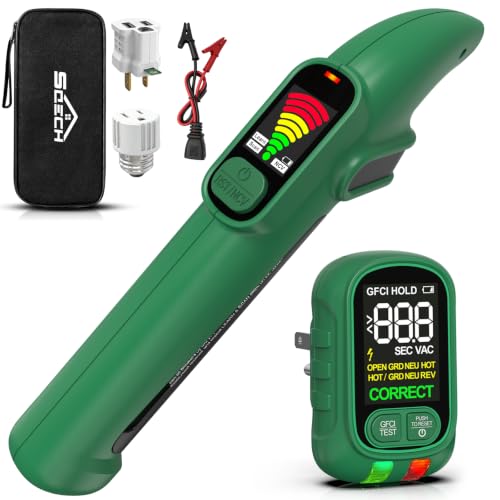
SQECH Circuit Breaker Finder Kit with LCD

SQECH Circuit Breaker Finder Kit 90-135V
A Breakdown Of The Leading Choices
The Fluke T5-1000 is the kind of tool that earns its space in a bag because it handles three different jobs without slowing down. It auto-selects between AC and DC voltage, which matters when you’re jumping between a wall outlet and a low-voltage control wire and don’t want to fiddle with a dial. The OpenJaw current feature, a hinged gap in the probe body that lets you clamp around a single conductor without metallic contact, makes checking draw on a live circuit far less awkward than breaking the loop to insert a traditional meter.
Compared to a basic two-wire tester, this one adds continuity beeping and a slim probe tip that stores neatly in the housing, so the leads don’t end up tangled in the bottom of a toolbox. For most homeowners, that means swapping a battery once a year rather than fighting frayed leads, and for tradespeople, it means a single tool covers quick voltage checks, continuity tracing, and current readings up to 100A.
Everyday Wins
- Auto-ranging between AC and DC voltage saves time on mixed wiring jobs
- OpenJaw current measurement avoids breaking the circuit to insert the meter in series
- Detachable Slim Reach probe tips fit tight panels and can be replaced if damaged
- Compact body and built-in probe storage prevent lead tangles in a service bag
- Continuity beeper gives an audible signal when tracing wiring paths
- Auto-off helps preserve battery life between calls or weekend projects
Things To Consider
- OpenJaw current readings are limited to roughly 100A, so it won’t replace a true clamp meter for high-draw circuits
- The slim probe tips, while handy, are a wear item over years of heavy use
Quick Facts
Made For
Tradespeople and serious DIYers who need one tool that handles voltage, continuity, and current on residential and light commercial jobs.
Consider Something Else When
The Klein Tools RT250 is a better match for homeowners whose work stays limited to outlet and GFCI troubleshooting.
The Klein RT250 is what I reach for when someone calls about an outlet that won’t reset or a kitchen plug that trips the GFCI every time a toaster runs. It plugs straight into a standard North American 3-wire, 120V receptacle, and the LCD shows the actual voltage reading along with the wiring condition, so you don’t have to memorize a chart of blinking light codes. It also times the GFCI trip, which matters because slow-tripping GFCIs are a known safety issue that a basic plug-in tester can miss entirely.
Unlike the Fluke T5-1000, which is built for probing live conductors, this one is a dedicated outlet analyzer, and that focus shows. For homeowners chasing a specific wiring fault rather than chasing a circuit across a panel, the RT250 answers the question faster than a multimeter would.
The Case For It
- LCD readout displays real voltage, wiring faults, and GFCI trip time on one screen
- Designed for North American 3-wire 120V receptacles, so it fits every standard outlet
- Compact plug-in form factor means no loose leads to keep track of
- Identifies common wiring errors like open ground and reversed polarity
Worth Noting
- Limited to 120V receptacle testing, so it won’t help with 240V appliances or low-voltage DC circuits
- The LCD adds cost over a basic LED tester, which may feel like overkill for a single outlet check
Right Fit For
Homeowners and renters troubleshooting outlet wiring faults and verifying GFCI protection in kitchens, bathrooms, and garages.
Look Elsewhere When
The Fluke T5-1000 suits technicians who need to probe live wires and measure current, not just check an outlet face.
The Power Probe 3 is a different animal from the rest of this list because it doesn’t just read voltage, it supplies power and ground to the circuit under test. On a 12 to 24 volt automotive system, that means I can energize a fuel pump, a window motor, or a trailer light socket directly from the probe without jumping wires at the battery. The 20-foot power cable gives enough reach to walk around a full-size truck or follow a harness into the cab.
Where the Fluke T6-600 measures what’s already flowing, this tool lets you command the circuit. For mechanics and mobile auto electricians, that combination of supply, ground, and active voltmeter feedback in one handheld unit replaces several loose jumper wires and a separate meter.
Where It Delivers
- Supplies both power and ground to test components without separate jumper leads
- Works across 12 to 24V systems, covering cars, trucks, and light equipment
- 20-foot cable reaches across large vehicles and into cab interiors
- Resettable 8A breaker protects the tool and the circuit during accidental shorts
- Includes a case and accessories for storage between jobs
Room For Improvement
- Designed for DC automotive work, so it isn’t useful for household 120V/240V troubleshooting
- The all-in-one design costs more than a basic multimeter, which matters for occasional home use
Best Suited To
Automotive technicians and serious DIY mechanics diagnosing 12 to 24V DC circuits on cars, trucks, and trailers.
A Better Fit Elsewhere
The Fluke T6-600 makes more sense for someone working on residential AC panels rather than vehicle wiring.
The Fluke T6-600 uses field-sensing technology, meaning it can detect voltage through the insulation of a wire without a direct metallic connection, which is genuinely useful when a panel is live and crowded. Slide the open fork around a single conductor and it reads voltage and current up to 200A without breaking the circuit or even touching the copper. The backlit display helps in dim mechanical rooms or residential panels buried in a closet wall.
Compared to the T5-1000 covered earlier, the T6 trades detachable probe tips for a wider measurement envelope and that field-sense mode. For electricians troubleshooting energized panels, the ability to read values without exposing conductors is the kind of feature that justifies stepping up.
Advantages To Know
- Field-sensing mode reads voltage without metallic contact on the conductor
- Measures AC current up to 200A through the open jaw without breaking the circuit
- Compact fork fits into crowded junction boxes that block traditional clamp meters
- Backlit display improves readability in low-light panels and mechanical rooms
- CAT III 600V rating supports residential and light commercial panel work
Trade Offs
- Premium pricing puts it well above basic outlet testers in the same kit
- Field-sensing readings can be influenced by adjacent live conductors in tight panels
Who Will Love This
Electricians and HVAC techs who routinely measure on live panels and value speed over probing individual conductors.
Reach For A Different Pick When
The Klein Tools RT250 covers a homeowner who only needs to verify outlets, not read current on a live panel bus.
The SQECH breaker finder solves a problem most homeowners only realize they have after they’ve already killed the wrong breaker halfway through a project. Plug the transmitter into the outlet you’re trying to identify, then sweep the receiver across the panel until the LCD and audible alert flag the matching breaker. The upgraded sensor sensitivity means fewer false hits on neighboring circuits in a crowded panel.
The transmitter and receiver both function independently, so the receiver doubles as a basic AC voltage detector and the transmitter can verify that an outlet is live before you start working. For someone mapping a home’s circuits for the first time, that’s a friendlier learning curve than guessing from a list taped inside a panel door.
Strengths Worth Knowing
- Locates the correct breaker for a specific outlet in seconds rather than trial and error
- LCD readout on the receiver gives a clear visual signal in addition to audio
- Transmitter and receiver each work on their own, extending the tool’s usefulness
- Includes adapters that broaden compatibility with different outlet types
Points To Note
- Performance depends on the home’s wiring being properly labeled and grounded; miswired panels can confuse the signal
- Less useful for ongoing diagnostics once the home’s circuit map is established
Feature Snapshot
Who Should Grab It
First-time homeowners and renters mapping an unfamiliar panel before tackling electrical projects.
Swap It Out When
The SQECH 90-135V kit is a leaner choice for anyone who only needs basic breaker tracing without the extra receiver functions.
The 90-135V version of the SQECH breaker finder strips the kit down to the essentials: the transmitter, the receiver, and the adapters needed to cover standard North American outlets. The 90 to 135V operating range matches normal residential mains, so there’s no risk of confusion with a 240V appliance circuit. The receiver still uses the same high-sensitivity sensor as its sibling kit, which keeps the tracing speed consistent.
Where the LCD-equipped kit earlier in this list adds independent voltage detection on the receiver, this one focuses purely on identifying breakers. For someone who already owns a multimeter and just needs help mapping their panel, that’s a sensible trade.
Where It Excels
- Focused on a single task, breaker identification, without extra receiver modes
- 90 to 135V operating range matches standard residential outlet voltage
- Includes adapters that expand outlet compatibility out of the box
- Lower price than the LCD-equipped sibling kit in this list
Small Caveats
- Lacks the LCD screen and independent receiver functions of the higher-tier SQECH kit
- Limited to residential-voltage circuits, so it won’t trace 240V appliance lines
Built With In Mind
Budget-focused homeowners who want straightforward breaker identification and already have a separate multimeter for voltage checks.
Another Choice May Suit
The SQECH Circuit Breaker Finder Kit with LCD is worth the extra spend for anyone who wants the receiver to double as a stand-alone voltage detector.
What Matters Most Before Choosing Electrical Testers
Start with the system you’ll actually touch most. Homeowners chasing outlet faults want a plug-in tester like the Klein RT250 that reads wiring errors and GFCI trip time without any setup. Auto technicians need something that can supply power and ground, like the Power Probe 3, since reading voltage alone rarely tells you whether a fuel pump or a window motor is functional.
Next, match the meter to the environment. A Fluke T6-600 earns its keep on live panels because the field-sensing fork reads through insulation, while a basic two-wire tester forces you to expose conductors every time. For 120V home outlets, that field-sense feature is overkill, and a simpler tool does the job.
Finally, consider how often you’ll use it. A breaker finder makes sense for the first mapping project but loses value once your panel is labeled. A general-purpose voltage and continuity tester pays off across years of small jobs, which is why the Fluke T5-1000 sits at the top of this list for most people.
Key Considerations Across These Picks
Where Shoppers Go Wrong
The most common mistake is buying a multimeter when the real problem lives in a single outlet. A general voltage tester is great for checking if a wire is live, but it won’t tell you that your kitchen receptacle has an open ground or a reversed polarity, which is exactly what the Klein RT250 is built to catch. Conversely, a plug-in outlet tester won’t help diagnose why a car’s tail light fuse keeps blowing, which is where the Power Probe 3 earns its place.
What Separates Premium From Basic
The jump from a basic tester to a Fluke T6-600 comes down to safety and speed on live panels. Field-sensing voltage measurement means less time exposing copper conductors, and a wider current range covers heavier circuits that budget testers simply ignore. For a homeowner doing the occasional outlet swap, the premium tier is hard to justify, but for anyone working around energized equipment regularly, the time savings and added margin add up fast.
Frequently Asked Questions
What is the difference between a voltage tester and a multimeter?
A voltage tester checks for the presence of voltage and basic continuity, while a multimeter measures exact voltage, current, and resistance values across a range.
Can I use an automotive circuit tester on home wiring?
No, automotive testers like the Power Probe 3 are designed for 12 to 24V DC systems and should never be connected to household 120V or 240V AC circuits.
Do I need a GFCI tester if I already have a voltage tester?
A standard voltage tester confirms that an outlet is live, but a GFCI-specific tester like the Klein RT250 measures trip time and identifies wiring faults that a basic tester cannot detect.
How does a non-contact voltage tester work?
Non-contact testers like the Fluke T6-600 sense the electrical field around a live conductor through its insulation, so no metallic contact with the copper is required.
What does a circuit breaker finder actually do?
It pairs a transmitter plugged into an outlet with a receiver swept across the panel, pinpointing which breaker controls that specific outlet without trial and error.
Closing Remarks
The right tester depends on whether you’re standing in front of a kitchen outlet, under a car dash, or at a live electrical panel. Pick the tool that matches the system you’ll touch most, and the rest of the job gets noticeably easier.
