

Choosing a deep cycle battery used to mean hauling around a heavy lead-acid box and hoping it didn’t die mid-trip. Today’s lithium iron phosphate, or LiFePO4, options weigh less, last far longer, and shrug off the kind of deep discharges that used to wreck older batteries. I’ve put together this list for off-grid cabin owners, RV travelers, marine anglers, and anyone running a garage door backup, so you can match the right battery to how you actually live and play.
A Fast Comparison Of The Options

VICI Battery VB5-12 12V 5AH AGM Garage Door Opener Battery

BtrPower 24V 100Ah LiFePO4 Battery 100A BMS 2560Wh

Compact 24V 100Ah Lithium LiFePO4 Battery 100A BMS

MARSENERGY 12V 100Ah LiFePO4 Battery Group 24 100A BMS
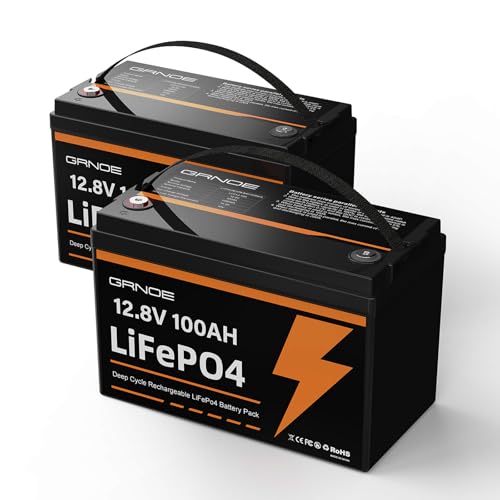
GRNOE 12V 100Ah LiFePO4 Battery Group 31 100A BMS (2 Pack)

Compact 24V 140Ah Lithium LiFePO4 Battery 100A BMS

Power Queen 12V 100Ah LiFePO4 Battery Group 31 100A BMS

BtrPower 24V 140Ah LiFePO4 Battery 100A BMS 3584Wh

BtrPower 24V 50Ah Trolling Motor LiFePO4 Battery 50A BMS

24V 150Ah LiFePO4 Lithium Battery 100A BMS
A Closer Look At Each Pick
This little sealed AGM unit is purpose-built for one job: keeping Chamberlain garage door openers alive during a power outage. If your opener is a 4228 or 485LM model and the backup battery has finally given up, this is the swap-in.
The 12V 5Ah rating sits right where Chamberlain’s spec sheet expects it, and the F1 terminals line up with the existing wiring harness. Sealed Absorbent Glass Mat (AGM) construction means the acid is held in fiberglass mats rather than free-flowing liquid, which keeps the unit spill-proof and safe to mount in any orientation.
Bright Spots
- Exact replacement fit for Chamberlain 41A6357-1 backup systems.
- Maintenance-free sealed AGM design, no water top-ups needed.
- Compact footprint fits inside the opener unit without rerouting.
- Spill-proof casing adds safety in any mounting position.
Things To Consider
- Listed as the battery only, so no wire harness or mounting hardware ships in the box.
- Small capacity means this only runs the opener, not household loads.
Right Fit For
Homeowners with a Chamberlain 4228 or 485LM opener who need a reliable backup during outages and don’t want to mess with hard-to-find specs.
Look Elsewhere When
The BtrPower 24V 100Ah LiFePO4 battery is a smarter fit for anyone running solar or RV house systems, where a 5Ah standby unit simply can’t keep up.
The BtrPower 24V 100Ah swaps in for two old-school 12V 100Ah lead-acid batteries and claims the space back. At about 42 pounds, it’s roughly a third of what two flooded batteries weigh, which makes a real difference when you’re climbing into an RV battery compartment.
The 2560Wh of usable capacity runs lights, water pumps, and a residential fridge through a quiet evening at the campsite without breaking a sweat. A built-in 100A battery management system, the small circuit board that protects each cell from overcharge, over-discharge, and short circuits, handles the safety side, so there’s no need for an external BMS in most installs.
Features That Help
- One unit replaces two 12V lead-acid batteries, freeing up compartment space.
- IP65 housing resists dust and low-pressure water jets.
- Compliant with UN38.3 transport rules, which helps on marine and outdoor moves.
Worth Noting
- 24V output means checking that your inverter and charger accept 24V input before committing.
- Higher upfront cost than two budget 12V lead-acid batteries, though service life is far longer.
Made For
RVers and boaters running a 24V house bank who want a real drop-in upgrade from tired 12V setups.
Swap It Out When
The MARSENERGY 12V 100Ah is a smarter fit if your existing system runs on 12V and you’d rather not rewire chargers and inverters.
This compact 24V 100Ah LiFePO4 unit comes in at roughly 42 pounds and about the size of a small cooler, which makes it appealing for tight battery trays on smaller trailers and skiffs. The spec sheet claims 2.5x the energy of a 12V 100Ah at the same Ah rating, mostly because 24V systems move the same power at half the current.
For a weekend camper running a fridge, a couple of lights, and a phone charger, that’s enough headroom to skip a generator. Owners commonly find the lower weight changes how they pack the cargo area, since shifting a heavy battery forward or aft used to be a real back-and-forth.
Positive Takeaways
- Lightweight enough for one person to wrestle into a compartment.
- Built-in 100A BMS simplifies wiring and protects the pack.
- Lower current draw at 24V means thinner cables can work.
Trade Offs
- Confirm your charger and inverter are 24V-compatible before buying.
- Capacity is fixed at 100Ah, with no modular expansion noted in the listing.
Who Will Love This
Compact-RV owners and small-boat anglers who prize low weight over raw capacity and want a tidy install.
Skip It When
The BtrPower 24V 140Ah makes more sense if you regularly run a microwave or air conditioner and need extra runtime.
MARSENERGY’s 12V 100Ah lands in the standard BCI Group 24 footprint, which is the same case size used by countless lead-acid starting and deep cycle batteries. That means it drops into existing trays without modification on most boats, RVs, and off-grid solar cabinets.
The unit promises a long cycle life when discharged responsibly, with the manufacturer pointing to thousands of cycles at moderate depth of discharge. For someone building a home backup bank or a small solar array, that longevity matters, since lithium packs quietly outlast lead-acid by years in this kind of service.
Advantages To Know
- Group 24 drop-in fit for common marine and RV trays.
- 12V output works with mainstream chargers and inverters.
- Built-in 100A BMS handles charge and discharge protection.
Honest Caveats
- Heavier than a 24V equivalent at the same watt-hour rating.
- Single 12V 100Ah may feel small for whole-home backup needs.
Who Should Grab It
Solar newcomers and cabin owners running modest 12V systems who want a long-life replacement for aging lead-acid.
A Better Fit Elsewhere
Power Queen’s 12V 100Ah Group 31 is the smarter pick if you already have a Group 31 tray and want the slightly larger capacity that size allows.
The GRNOE 2-pack ships one battery per box, which the brand flags up front because the heavy weight often means the boxes ride separate trucks. Once both arrive, you’ve got two Group 31 12V 100Ah LiFePO4 bricks ready to wire.
What makes this kit stand out is the expandability. You can chain four in series for a 48V bank, or four in parallel for a 400Ah wall of capacity, and even combine series and parallel setups for bigger systems. That makes the pack appealing for someone planning to grow their off-grid setup over time.
Well-Handled Touches
- Scalable up to 51.2V and 20.48kWh in larger configurations.
- Group 31 size fits common RV and marine battery boxes.
- Built-in 100A BMS in both batteries.
Points To Keep In Mind
- Split shipping may mean one battery arrives days before the other.
- Two-pack pricing adds weight to the cart, both physically and on the bill.
The Right Fit For
Off-grid system builders planning phased expansion who want flexibility to add capacity later.
Another Choice May Suit
The single Power Queen 12V 100Ah is the smarter fit if you only need one battery today and don’t want to manage two boxes.
Bumping capacity from 100Ah to 140Ah at the same 24V gives you roughly 3584Wh, which is meaningful headroom for a microwave, an inverter-driven coffee maker, or a longer evening of movie watching on a big screen. The casing stays slim enough to fit in most 24V compartments.
The trade-off lands at the wire gauge and BMS rating. A 100A BMS still feeds most house loads comfortably, but you don’t want to push it too close to its ceiling for sustained draws.
Key Advantages
- Higher energy density than the 100Ah sibling at modest added weight.
- 24V output halves current draw compared to 12V setups.
- LiFePO4 chemistry stays stable under heavy cycling.
Small Caveats
- Footprint grows a bit taller, so measure your compartment first.
- 100A BMS may limit very high-draw inverter setups running near full load.
Best Suited To
Boat and RV owners running a 24V house bank who want extra runtime without jumping to a second battery.
Not Your Match When
The 24V 150Ah battery is worth considering if you’d rather eke out a bit more energy in a similarly sized footprint.
Power Queen’s 12V 100Ah is aimed squarely at RV and off-grid solar use, with a Group 31 footprint that fits standard marine and camper trays. The brand talks up 4,000+ cycles at 100% depth of discharge, which is the real-world condition of running the pack nearly empty before recharging.
For road warriors, that cycle life is the headline. Run it down nightly, charge it up by morning from solar, and the pack should hold useful capacity for years. The brand also offers variants with Bluetooth monitoring, which makes sense for someone who likes to peek at cell voltage from a phone.
Useful Strengths
- Group 31 drop-in fit for common RV and marine boxes.
- High cycle rating supports daily deep discharge use.
- Available in Bluetooth-equipped variants for remote voltage monitoring.
Practical Considerations
- Single 12V 100Ah limits sustained inverter loads without paralleling.
- Heavier than 24V equivalents at the same usable watt-hours.
Perfect Match For
Frequent RV travelers and solar enthusiasts who cycle the battery hard and want a long-service-life drop-in.
Reach For A Different Pick When
The BtrPower 24V 100Ah makes more sense if your rig is already wired for 24V and you’d rather run thinner gauge.
Where this BtrPower 24V 140Ah differentiates itself is the IP65-rated housing, which protects against low-pressure water jets and dust ingress. On a center console or sailboat that sees spray, that rating buys real peace of mind during rough weather.
The 3584Wh capacity comfortably runs a trolling motor, a few cabin lights, and a small inverter for charging laptops over a fishing weekend. Compliance with UN38.3 transport rules also makes it easier to ship or fly with if you’re relocating the boat.
A Few Strong Suits
- Sealed housing stands up to spray and humid marine environments.
- 140Ah at 24V delivers solid runtime for trolling and cabin loads.
- UN38.3 compliance simplifies transport and storage.
Soft Spots
- Heavier than the 50Ah trolling option, which matters on small craft.
- Confirm charging source compatibility, since some legacy marine chargers don’t speak LiFePO4.
Made For
Saltwater anglers and cruisers who need a sealed, robust battery that shrugs off spray and humidity.
Where A Sibling Pick Shines
The BtrPower 24V 50Ah trolling battery is the smarter pick for kayak anglers who need a light, compact unit over high capacity.
At around 19 pounds, this 24V 50Ah trolling battery is light enough to slide into a kayak hatch without capsizing the whole rig. The standard BCI Group 24 footprint means it fits the same tray a lead-acid would, only with a third of the weight.
The brand targets 24V trolling motors in the 70 to 100 lb thrust range, which covers most small-boat and kayak setups. The IP65 rating helps when splash and spray are part of the day, and the 50A BMS is sized appropriately for the kind of current those motors pull.
Strengths Worth Knowing
- Lightweight enough for one-handed transport.
- Group 24 drop-in fit for existing trolling trays.
- Sealed housing resists spray and moisture.
Where It May Fall Short
- 50Ah capacity limits runtime compared to larger trolling banks.
- 50A BMS caps peak current, which matters for bigger motors.
Right Fit For
Kayak and jon-boat anglers running small trolling motors who prize portability over long runtime.
Consider Something Else When
The BtrPower 24V 140Ah is worth a look if you fish longer days and need extra capacity under the seat.
Topping out the list at 24V 150Ah, this battery delivers around 3840Wh in a footprint that still fits standard Group-style trays. For a cabin solar setup or a heavy-use RV, that capacity means running a fridge, lights, and a small inverter through an overcast stretch without firing up a generator.
The 100A BMS keeps charging and discharging within safe cell limits, which is the kind of detail that matters when the battery is the heart of a remote power system. Owners commonly find the higher voltage keeps cable runs efficient and inverter stress low.
Everyday Advantages
- High 150Ah capacity supports multi-day off-grid use.
- 24V configuration reduces current draw and cable gauge needs.
- LiFePO4 chemistry offers long cycle life under heavy use.
Things To Weigh
- Heavier than smaller-capacity options, so plan for solid mounting.
- Verify inverter and charger specs accept 24V before committing.
Whose Shelf It Belongs On
Off-grid homeowners with mid-sized solar arrays who need one big battery rather than a chain of smaller ones.
Where Another Pick Suits Better
The Power Queen 12V 100Ah is a smarter pick if your system is already 12V-native and you’d rather not rewire anything.
What To Match Before Choosing A Deep Cycle Battery
Match The Voltage To Your Existing System
The single biggest fork in the road is whether your rig runs on 12V or 24V. A 12V system is the most common for RV cabins, small solar setups, and marine house banks, so a 12V 100Ah battery like the MARSENERGY or Power Queen drops in with no rewiring. A 24V system pulls half the current for the same power, which lets you use thinner cables and smaller fuses, but it requires 24V-compatible chargers and inverters. Picking the wrong voltage is the most common mistake, since you can’t easily rewire a whole rig after the fact.
Get The Capacity Right For Your Daily Draw
Capacity is measured in amp-hours (Ah) or watt-hours (Wh), and it tells you how much energy the battery can hold. A 100Ah 12V battery holds about 1280Wh, while a 24V 140Ah holds closer to 3584Wh. To size correctly, estimate the total watt-hours your appliances draw per day and pick a battery with at least 20% headroom above that number. Lithium iron phosphate batteries can safely run down to 80% or more of their capacity, unlike lead-acid, which degrades fast below 50%.
Check The BMS Rating And Housing Rating
The BMS is the battery’s safety brain, and its amp rating determines the maximum continuous current the pack can deliver. A 100A BMS handles most RV and marine house use, while a 50A BMS suits small trolling motors. Housing ratings like IP65 (dust-tight and resistant to water jets) matter for marine and outdoor installs where spray and rain are common. Skim these two specs before buying and you’ll avoid most compatibility headaches later.
Plan For Footprint And Weight
Battery case sizes follow BCI group numbers like Group 24 and Group 31, which standardize dimensions across brands. Measure your tray before you order so you don’t end up with a battery that’s a quarter-inch too tall. Lithium options weigh a fraction of their lead-acid equivalents, which makes installation easier and frees up payload for gear.
Quick Notes Before You Buy
Where Shoppers Go Wrong
The most common slip-up is picking capacity by price instead of by daily draw. A smaller battery might look appealing on the cart, but it leaves you scrambling for a charge mid-trip. The second pitfall is forgetting the charger. Some legacy lead-acid chargers don’t speak the right voltage profile for LiFePO4, which can lead to incomplete charges or, over time, cell imbalance. Confirming charger compatibility before you commit saves real money.
Where The Extra Money Goes
Higher-tier lithium batteries typically earn their premium through longer cycle life, better BMS protection, and more rigorous cell matching. Spending up usually makes sense for daily-cycling setups like off-grid solar or liveaboard boats, where the battery takes hundreds of discharge cycles annually. For occasional garage door backups or weekend camping, a mid-tier option checks every box without overpaying for cycle headroom you won’t use.
Frequently Asked Questions
What Is A Deep Cycle Battery?
A deep cycle battery is designed to discharge most of its capacity repeatedly without damage, unlike a starter battery, which delivers short, high-current bursts. They are common in RVs, boats, solar setups, and backup systems.
How Long Do Deep Cycle Batteries Last?
Lithium iron phosphate deep cycle batteries commonly last several thousand cycles at deep depth of discharge, often outlasting lead-acid by a factor of five or more in daily-cycling use.
Can I Replace A Lead-Acid Battery With Lithium?
Most lithium drop-in batteries share the same case dimensions as common lead-acid groups, so physical swap is usually straightforward. You may need a charger that supports the lithium voltage profile for full performance.
What Does BMS Mean?
BMS stands for battery management system, an internal electronic board that monitors cell voltage, temperature, and current. It prevents overcharge, over-discharge, and short circuits, which is why it’s the safety backbone of any lithium pack.
What Size Deep Cycle Battery Do I Need?
Size depends on how much energy your appliances draw per day. Add up the watt-hours of everything you plan to run, then pick a battery with at least 20% more capacity than that total.
Bottom Line
The right deep cycle battery comes down to your voltage, capacity, and environment. RV and cabin owners usually find a 12V 100Ah unit covers most needs, while boaters and 24V-native rigs do well stepping up to a higher-voltage pack. Match the spec to your daily draw and your charger, and you’ll get years of dependable cycles out of whichever pick you land on.
