

Bending conduit by hand gets old fast when the kinks won’t sit right, and a crooked run in a finished wall is the kind of mistake you think about for years. Whether I’m pulling wire through a basement, running a feeder to a subpanel, or just helping a friend re-route some EMT (Electrical Metallic Tubing, the lightweight steel pipe most residential circuits use) in a garage, the bender makes or breaks the day. I put this list together for electricians, apprentices, and serious DIYers who want a tool that actually lines up, holds its shape, and survives the back of the truck.
The Picks In Brief

Otoolling 3-Piece Aluminum Conduit Bender Set

Otoolling 3/4-Inch Cast Iron Conduit Bender

Otoolling 3-Piece Cast Iron Pipe Bender Set

Otoolling 1/2-Inch Aluminum Conduit Bender

Otoolling 3/4-Inch Aluminum Conduit Bender

WORKPRO 2.5-Inch Magnetic Torpedo Level for Conduit Bending
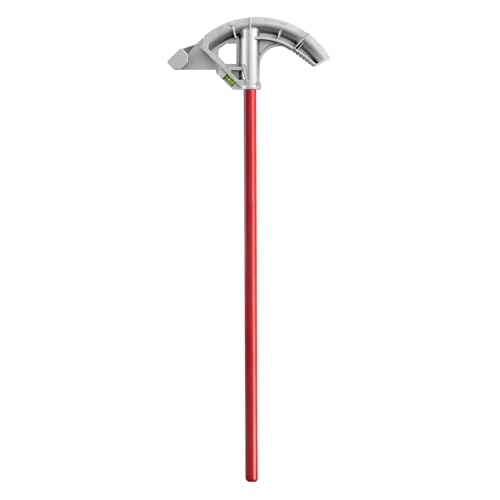
Otoolling 1-Inch Aluminum Conduit Bender

Otoolling 1-Inch Cast Iron Conduit Bender

Klein Tools 50402 14-Inch Cable Bender
Taking A Closer Look At The Options
Starting with the set that covers the most common residential sizes, the 3-Piece Aluminum Conduit Bender Set pairs three matched heads in one purchase, taking the guesswork out of stocking a van for the first time. For someone rewiring a basement, running a new circuit to a detached garage, or pulling wire through a finished basement ceiling, having all three sizes on hand keeps the work moving.
The aluminum build keeps the weight manageable on a ladder or across a long horizontal run, and the same heads work across EMT, IMC (Intermediate Metal Conduit, a thicker-walled version of EMT rated for more abuse), and rigid pipe. Owners commonly report that the lighter heads can flex slightly on stubborn 1-inch rigid bends, so leverage matters.
The Upside
- Three sizes in one kit covers 1/2, 3/4, and 1 inch
- Aluminum body cuts weight for ladder and overhead work
- Works across EMT, IMC, and rigid for jobsite flexibility
- Cost-effective way to start a service truck setup
Things To Consider
- Aluminum can flex on heavy rigid bends, applying foot pressure helps
- Finish may scuff in a crowded truck bed over time
Key Specs
Made For
Residential electricians and DIYers who want a complete starter set without buying each head separately.
Skip It When
The Otoolling 3-Piece Cast Iron Pipe Bender Set is the better call for crews bending rigid daily.
Stepping up in material, the 3/4-Inch Cast Iron Conduit Bender trades the lighter aluminum feel for the kind of mass that stays planted on a tough bend. Service electricians bending 3/4-inch EMT through a commercial drop ceiling, or working in a shop where every job involves a few offsets, want a head that doesn’t bounce or twist mid-pull.
Cast iron absorbs the shock of repeated bends without deforming, and the head handles both 1/2 and 3/4 inch so a single tool covers two common sizes. The weight is the honest trade-off, and you’ll feel it after a long day overhead. The previous aluminum set is noticeably lighter for solo work on a ladder.
Strengths Worth Knowing
- Cast iron mass resists flex on stubborn rigid bends
- Dual-size head handles 1/2 and 3/4 inch EMT and IMC
- Holds shape through heavy daily use without warping
Points To Note
- Heavier than aluminum, tiring on long overhead runs
- Cast iron can chip if dropped on concrete
Feature Snapshot
Best Suited To
Working electricians bending 1/2 and 3/4 inch rigid or IMC on service calls.
Reach For A Different Pick When
The Otoolling 3/4-Inch Aluminum Conduit Bender fits homeowners doing lighter remodels.
Where the cast iron story really earns its keep, the 3-Piece Cast Iron Pipe Bender Set brings all three common sizes in the heavier-duty material. Crews running commercial feeders, working on industrial jobsites, or bending a lot of rigid underground conduit benefit from the same mass in every head, so the muscle memory stays consistent across sizes.
The set handles EMT, IMC, and rigid across 1/2, 3/4, and 1 inch, making it a single purchase that can stock a journeyman’s truck. Owners commonly note the heads arrive with a light oil film that wipes off easily, and a coat of rust-prevention spray now saves headaches in a damp truck. Compared to the aluminum set in slot one, this trades weight for staying power.
Advantages To Know
- Full cast iron construction across all three sizes
- Covers 1/2, 3/4, and 1 inch EMT, IMC, and rigid
- Consistent feel from one head to the next
- Built for daily professional use on industrial sites
Honest Caveats
- Noticeably heavier than the aluminum set
- Cast iron needs a wipe-down to prevent surface rust in wet conditions
Whose Shelf It Belongs On
Commercial and industrial electricians bending rigid every week.
Look Elsewhere When
The Otoolling 3-Piece Aluminum Conduit Bender Set is the better fit for solo residential work.
For a first-time bender on a home rewire, the 1/2-Inch Aluminum Conduit Bender is the smallest, lightest head on the list. Most residential branch circuits use 1/2-inch EMT, so a tool that does one size well often beats a heavier multi-size head that nobody learns properly.
The aluminum body keeps the tool friendly on a stepladder, and the head handles EMT, IMC, and rigid for 1/2-inch raceway. Hobbyists pulling a few circuits through a basement or shed generally find this is enough. Owners commonly report that the lighter head feels easier to control for learning bend geometry and spring-back.
What Makes Sense
- Lightest head in the lineup, easy on a stepladder
- Aluminum body keeps the cost low for a starter tool
- Handles 1/2-inch EMT, IMC, and rigid
Less-Strong Areas
- Single-size head, no help on 3/4 or 1 inch runs
- Aluminum flexes more than cast iron on aggressive bends
Right Fit For
First-time DIYers running 1/2-inch EMT through a basement or small addition.
A Better Fit Elsewhere
The Otoolling 3/4-Inch Aluminum Conduit Bender covers both 1/2 and 3/4 inch for a small price step up.
A solid middle ground, the 3/4-Inch Aluminum Conduit Bender covers both 1/2 and 3/4 inch sizes in a single head while staying light enough for solo residential work. Remodels, small additions, and garage subpanel runs all live in this size range, so a tool that handles both is genuinely useful.
The aluminum construction keeps the weight down compared to the cast iron 3/4-inch version earlier, which matters on a long overhead pull. Owners commonly report that the cast counterpart holds up better to repeated rigid bends on commercial sites, but for homeowner use, the lighter tool is easier to live with.
Everyday Perks
- Two sizes (1/2 and 3/4 inch) in one head
- Lighter than the cast iron 3/4-inch equivalent
- Handles EMT, IMC, and rigid for the common sizes
- Aluminum body keeps cost accessible
Worth Bearing In Mind
- Won’t bend 1-inch conduit, separate tool required for that
- Aluminum flexes under heavy force on rigid runs
Perfect Match For
Homeowners and remodel electricians running 1/2 or 3/4 inch EMT through attics and garages.
Not Your Match When
The Otoolling 1-Inch Aluminum Conduit Bender is a better fit for subpanel feeder work.
Shifting from benders to an accessory that lives in the same tool pouch, the WORKPRO 2.5-Inch Magnetic Torpedo Level is the kind of small tool that quietly prevents dog legs (the unintended secondary bend that forms when a single angle goes slightly sideways). The thumb screw clamps onto the conduit, so the level rides on the pipe during the bend instead of getting propped somewhere it slides off.
The high-visibility vial reads 90 degrees for the common stub-up bend, and the rare-earth magnet on the bottom adds hands-free measuring on flat steel. Owners commonly report that the small body fits in a back pocket, which is genuinely the point. Compared to the bender heads above, this is an accuracy companion rather than a primary tool.
Notable Gains
- Thumb-screw clamp holds the level on the conduit during a bend
- Rare-earth magnet on the base for hands-free use on steel
- Pocket-sized body stays on the belt without bulk
Trade-Offs To Consider
- Single 90-degree vial, no 45-degree reference
- Small body can feel fiddly with thick gloves on
Who Should Grab It
Anyone bending conduit who wants a quick angle check on every stub-up and offset.
Swap It Out When
The Klein Tools 50402 14-Inch Cable Bender is the right answer for bending large cable rather than raceway.
For larger runs, the 1-Inch Aluminum Conduit Bender steps up to the size that matters for subpanel feeders, garage service lines, and longer commercial drops. A head rated for 3/4 and 1 inch covers the heavy end of residential work without dragging cast iron weight onto a ladder.
You may want help on stubborn 1-inch rigid, since the aluminum head needs solid foot pressure to keep the bend true. Owners commonly report that the lighter weight makes it easier to maneuver into a tight attic or vaulted ceiling where a cast head would be exhausting.
Everyday Wins
- Covers 3/4 and 1 inch EMT, IMC, and rigid
- Aluminum body keeps it lighter than cast iron equivalents
- Right size for subpanel feeders and garage services
Practical Considerations
- Not ideal for 1/2-inch EMT, too large for tight residential runs
- Aluminum flexes more on heavy rigid without solid footing
Who Will Love This
Electricians running subpanel feeders and service drops in 3/4 or 1 inch raceway.
Where A Sibling Pick Shines
The Otoolling 1-Inch Cast Iron Conduit Bender fits better for crews bending 1-inch rigid daily.
The 1-Inch Cast Iron Conduit Bender brings the mass to match the size, and for 1-inch rigid or IMC, mass is what keeps the bend true. Heavy service entrances, long feeder pulls, and industrial drops are the kind of work where a flexing aluminum head costs you a rework.
The cast iron stays planted during the bend and holds its shape through years of commercial use. Owners commonly report that the heavier head rewards proper foot placement and a clean pull, and a wipe-down after wet days prevents the surface rust that iron is known for. Compared to the aluminum 1-inch version, this trades arm fatigue for bending confidence.
What Pays Off
- Cast iron mass resists flex on 1-inch rigid
- Handles 3/4 and 1 inch EMT, IMC, and rigid
- Built to hold shape through years of daily commercial use
Soft Spots
- Heavy on a long ladder run, pace yourself
- Cast iron needs occasional oil to prevent rust in damp trucks
Built With In Mind
Commercial crews bending 1-inch rigid and IMC on service and feeder work.
Consider Something Else When
The Otoolling 1-Inch Aluminum Conduit Bender is easier overhead on solo residential jobs.
Stepping outside the conduit raceway world entirely, the Klein Tools 50402 14-Inch Cable Bender handles thick conductors rather than the pipe around them. For electricians pulling large cable into a panel, around a corner, or through a tight enclosure, this is the hand tool that makes the cable actually go where it should.
The forged one-piece steel body and angled head help in tight, hard-to-access places where fingers can’t do the job. Owners commonly report that the double-dipped handle holds up to the sweat and grit of a long day, and the black-oxide finish resists corrosion in damp basements. This is a different job than the bender heads, and it pairs well with any of them on a service truck.
The Practical Payoff
- Forged one-piece steel for high-strength cable bends
- 22-degree angled head reaches tight corners
- Double-dipped handle holds up to daily jobsite use
Some Limits To Know
- Specialty tool for conductors, won’t bend conduit raceway
- 14-inch length can feel bulky in shallow enclosures
Quick Facts
Who It Suits Best
Panel work and large-cable pulls where bending the conductor, not the raceway, is the goal.
Where Another Pick Suits Better
The Otoolling 3-Piece Aluminum Conduit Bender Set is the right call when bending the pipe itself.
What Matters Most Before Choosing Conduit Bending Tools
Match The Size To The Work
Conduit benders are size-specific, and the markings on the head tell you exactly which EMT, IMC, or rigid pipe the head fits. A 3/4-inch head handles both 1/2 and 3/4 inch raceway on most of the picks on this list, which is why those heads earn their keep for residential work. Running a subpanel feeder? Step up to the 1-inch head.
Pick The Body Material For The Job
Aluminum is lighter and easier to handle on a ladder, which matters for solo residential work. Cast iron is heavier but stays planted through repeated rigid bends and absorbs the shock of heavy daily use. For most homeowners and remodel electricians, aluminum is plenty. For crews bending rigid every week, the cast iron holds up longer.
Don’t Skip The Accuracy Tool
A torpedo level that clamps to the conduit during the bend prevents the dog legs that waste ten minutes of grinding and re-pulling. The WORKPRO level on this list is a small add-on that pays for itself the first time it stops a bad bend.
Think About How You’ll Carry It
A three-piece set fits in a truck bed or job trailer, but a single head climbs a ladder easier and stores in a tighter shop. Crews who drive to the jobsite want the full set; homeowners working weekends usually want one good head and a level.
Key Considerations Across These Picks
Mistakes Worth Dodging
Buying a bender head without checking the conduit type on the actual raceway you use is the most common slip. EMT, IMC, and rigid all look similar on the shelf but bend differently, and a head rated for one may not seat the other cleanly. Match the marking on the head to the print on the conduit before you bend.
Where The Extra Money Goes
The jump from aluminum to cast iron is mostly mass and longevity, and for crews on commercial sites that mass translates to fewer bad bends and longer tool life. For a homeowner pulling wire through a basement once a year, that upgrade rarely earns its keep. The right tier depends on how often the bender leaves the truck and meets heavy rigid.
Frequently Asked Questions
What Size Conduit Bender Do I Need For Residential Work?
A 3/4-inch head that also fits 1/2-inch EMT covers most branch circuits in a home, and a separate 1-inch head handles subpanel feeders.
Can One Bender Head Fit Multiple Conduit Sizes?
Most of the heads on this list are dual-sized, with the 3/4-inch head bending both 1/2 and 3/4 inch raceway. The 1-inch head usually fits 3/4 and 1 inch.
Aluminum Or Cast Iron For A Conduit Bender?
Aluminum is easier overhead and friendlier to occasional use. Cast iron stays planted through heavy daily bending on rigid and IMC, and lasts longer on a commercial truck.
Do I Need A Level For Bending Conduit?
A torpedo level that clamps to the conduit during the bend helps keep stub-ups and offsets at true 90 degrees, and prevents the small angular drift that becomes a visible dog leg in the finished run.
What Is The Difference Between EMT, IMC, And Rigid Conduit?
EMT is thin-wall steel tubing for most indoor residential circuits. IMC is thicker-walled for more abuse and outdoor runs. Rigid is the heaviest, threaded-wall steel for service entrances and exposed outdoor runs.
Closing Thoughts
A good conduit bender pays for itself the first time a stub-up lands where it should, and a torpedo level in the same pouch keeps the next one honest. The right pick depends on how often the tool leaves the truck and how heavy the raceway is. Start with the size you actually run, match the body to the workload, and keep the level close.
