

Tracing a wire through drywall, underground, or behind a panel can feel like guessing in the dark. I remember the first time I tried to find which breaker fed a kitchen outlet, flipping switches at random and hoping for the best. A good circuit tracer turns that guessing game into a quick, confident read, whether you’re a homeowner chasing a dead outlet or a pro mapping a panel on a remodel. This roundup covers eight tools built to make that process faster and less frustrating.
The Main Contenders

Fluke T5-1000 Voltage, Continuity and Current Tester
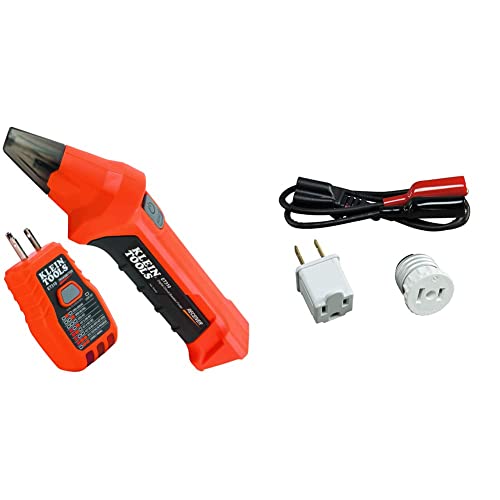
Klein Tools Circuit Breaker Finder and Tester Kit

Fluke T6-600 Electrical Tester
Zeltor Outlet Tester with GFCI and Wire Break Detection

Klein Tools ET450 Advanced Underground Circuit Breaker Finder

OTC 3633 Mini-Coil Cord Circuit Tester

NOYAFA NF-8301 Circuit Tracer and Multimeter
NOYAFA NF-816LS Underground Wire Locator
The Strengths Of Each Pick
The Fluke T5-1000 is the kind of tool that earns a permanent spot in a toolbox because it handles three jobs at once: voltage, continuity, and current. Its OpenJaw design (the wide hook at the tip) lets you measure current up to 100A without breaking the circuit or stripping a wire, which matters when you’re checking a live feed on a panel and don’t want to shut anything down.
Compared to a basic outlet tester like the Zeltor covered later, this is a true measurement tool for someone doing real electrical work. The SlimReach probe tips detach for easier access in recessed boxes, and the auto-selecting AC/DC voltage mode means less dial-twiddling. In a busy kitchen remodel or a service van, that combination of flexibility and durability makes it a daily-carry pick for me.
The Upside
- OpenJaw current measurement saves time when checking live circuits
- Detachable SlimReach probes reach into recessed outlets cleanly
- Auto AC/DC voltage selection reduces guesswork on the job
- Built to the durability standard Fluke is known for in the trade
- Compact body fits in a side pouch or a jacket pocket
Things To Consider
- Not a tracer, so it won’t follow a wire behind drywall on its own
- Continuity beeper is helpful but basic compared to dedicated tracers
- Test leads accept Fluke accessories, which means buying into a system
Feature Snapshot
Built With In Mind
Tradespeople, electricians, and serious DIYers who want a single tester that handles voltage, current, and continuity on a daily basis.
Reach For A Different Pick When
Homeowners chasing a dead outlet behind drywall will find the Klein Tools Circuit Breaker Finder and Tester Kit more directly useful for locating circuits.
The Klein Tools Circuit Breaker Finder and Tester Kit pairs a transmitter with a receiver, so the workflow is simple: plug the transmitter into the outlet, then sweep the receiver across the breakers until it lights up and beeps. That visual-plus-audible cue is a small thing, but it spares you from playing “is this the right one?” with a partner yelling from the kitchen.
This kit also bundles a GFCI outlet tester, which checks for common wiring faults like open ground or reversed polarity in one plug-in motion. For a homeowner labeling a messy panel or a renter trying to figure out which switch feeds the bedroom, this covers the basics without the cost or learning curve of a pro-grade tracer. It’s a confident first step up from guessing.
Standout Benefits
- Transmitter-and-receiver system locates the correct breaker quickly
- Audible and visual indicators confirm the match without second-guessing
- Includes a GFCI outlet tester for wiring fault checks at the same time
- Setup is straightforward enough for one person to run
Points To Note
- Designed primarily for indoor breaker panels rather than buried lines
- Older or crowded panels can produce weaker signals that take patience
Who Should Grab It
First-time homeowners, renters, and casual DIYers who need to label a panel or troubleshoot which breaker controls a specific outlet.
Look Elsewhere When
Anyone tracing wires through soil or concrete should pick the Klein Tools ET450 Advanced Underground Circuit Breaker Finder instead, since it’s built for buried runs.
The Fluke T6-600 brings FieldSense technology into play, which is the ability to measure voltage and current through the insulation of a wire without making metallic contact. For someone working in a tight residential panel where every conductor is already landed and there’s no room to strip a lead, this is the difference between a clean read and a frustrating one.
Rated to 600V CAT III, the T6-600 is aimed at higher-energy environments than the T5-1000 covered earlier, and the backlit display makes readings legible in dim breaker rooms. The trade-off is real: it costs more than basic plug-in testers, and the open fork only handles conductors up to a certain gauge. For pros in commercial or light-industrial settings, the time saved on every call adds up fast.
Everyday Advantages
- FieldSense reads voltage and current without test leads on the conductor
- 600V CAT III rating handles commercial and light-industrial loads
- Backlit display remains readable in dark mechanical rooms
- Open fork slides around individual wires for current checks
Trade Offs
- Premium pricing puts it out of reach for casual homeowners
- FieldSense requires a known reference point to function reliably
- Bulkier than the T5-1000 for pocket carry
Made For
Licensed electricians and HVAC technicians working on live commercial panels where contact-free measurement is a real safety and speed advantage.
Consider Something Else When
A homeowner troubleshooting a single dead outlet gets more direct value from the Klein Tools Circuit Breaker Finder and Tester Kit at a fraction of the cost.
The Zeltor outlet tester is a plug-and-read tool aimed squarely at homeowners who want answers without owning a multimeter. Plug it into any 120V standard receptacle and the LED chart tells you whether you’re dealing with a correct wiring setup, an open ground, an open neutral, or a reversed hot/neutral. It also triggers GFCI devices to verify they’re working.
For someone walking through a house they just bought or chasing a tripping breaker, this is enough diagnostic muscle for a low cost. Compared to the Fluke T5-1000 covered earlier, it does far less, but it does the most common checks at a fraction of the price. The army green housing is a small touch, though I’d still drop it in a drawer rather than toss it loose in a tool bag.
Strong Points
- Identifies six common wiring conditions in a single plug-in
- Verifies GFCI receptacles trip and reset as expected
- No batteries or settings required for basic operation
- Affordable enough to keep one in a drawer and one in a service van
Honest Caveats
- Limited to 120V standard outlets, not for 240V appliance circuits
- Won’t trace a wire’s path behind walls the way a true tracer will
Best Suited To
Renters, first-time homeowners, and real estate walk-through inspectors who need a quick, no-learning-curve wiring check.
A Better Fit Elsewhere
Anyone needing to follow a wire through drywall or underground should choose the Klein Tools ET450 Advanced Underground Circuit Breaker Finder for that deeper tracing work.
The Klein Tools ET450 is built for the messy reality of tracing wires that don’t live inside a clean panel. It tracks both energized and de-energized circuits through drywall, cement block, and even underground, with adjustable sensitivity on the receiver that lets you tune out noise from adjacent conductors. For a contractor mapping a service run before a dig, that matters more than any spec sheet.
The kit includes a transmitter, receiver, blade, and ground prong, so a small crew can set up and trace without buying accessories separately. Where the Fluke T6-600 covered earlier measures what’s already accessible, the ET450 goes after what’s hidden, and that’s a fundamentally different job. For a one-off project, it’s overkill, but for anyone doing this work weekly, the time recovered is the real value.
What Pays Off
- Adjustable receiver sensitivity cuts through signal clutter on crowded jobs
- Works on both live and dead circuits, which is rare at this level
- Penetrates drywall, masonry, and soil for above- and below-grade tracing
- Kit ships with transmitter, receiver, blade, and ground prong included
Less Ideal Details
- Larger kit footprint than a single handheld tester
- Steeper learning curve than a plug-in outlet tester
- Best results depend on a clean ground path, which older wiring may not provide
The Right Fit
Electricians, low-voltage contractors, and facility maintenance crews who trace buried or concealed wiring as part of regular work.
Skip It When
Homeowners only checking one outlet should reach for the Zeltor Outlet Tester with GFCI and Wire Break Detection instead, since it’s faster and cheaper for that narrow job.
The OTC 3633 is an old-school circuit tester aimed at automotive and 12V/24V electrical work rather than household wiring. The 12-foot mini-coil cord stretches from a battery to a tail light without unspooling a full jumper, and the needlepoint stainless steel probe pierces wire insulation for a quick back-probe without cutting.
The bright red housing and replaceable incandescent bulb make it easy to spot in a cluttered garage. Where the Fluke T5-1000 covered earlier assumes AC mains work, this one assumes a truck or a tractor, and that’s a deliberate specialization. The threaded probe accepts a screw-on alligator clip for hands-free grounding, which is genuinely useful when both your hands are buried in a dash.
Key Advantages
- 12-foot mini-coil cord reaches across most vehicle bays without tangling
- Needlepoint probe pierces insulation for quick back-probing
- Screw-on alligator clip adds a hands-free grounding option
- Replaceable bulb keeps the tool in service for years
Things To Weigh
- Not designed for 120V household outlet diagnostics
- Bulb-based design lacks the digital precision of modern multimeters
Whose Shelf It Belongs On
Mechanics, classic car restorers, and farm equipment owners who trace 12V circuits under the hood or behind a panel.
Another Choice May Suit
Homeowners troubleshooting wall outlets should choose the Klein Tools Circuit Breaker Finder and Tester Kit for household panel and receptacle work.
The NOYAFA NF-8301 pairs a circuit tracer with a digital multimeter, so one kit covers both finding a wire and measuring what’s on it. With eight adjustable sensitivity levels on the receiver, it adapts to everything from a short branch circuit to a buried line that’s been quiet for years. The transmitter identifies energized and de-energized targets, including cable breaks and short circuits.
For someone who already owns a separate multimeter, the dual nature might feel redundant, but for a small shop or a serious hobbyist, consolidating two tools into one kit saves drawer space. Compared to the Klein Tools ET450 covered earlier, the NF-8301 trades some of the American-brand jobsite feel for a wider feature set at a more approachable cost. In most home basements and garages, it gets the job done.
Benefits That Matter
- Eight sensitivity settings help isolate the right conductor in crowded runs
- Traces both energized and de-energized circuits, plus cable breaks
- Integrated digital multimeter reduces the number of tools in the bag
- Suitable for underground, in-wall, metal conduit, and heating pipe tracing
Some Limits To Know
- Multimeter side is functional but not a replacement for a dedicated Fluke
- Setup takes longer than a single-purpose tracer like the Zeltor outlet tester
Perfect Match For
Hobbyists, low-voltage installers, and small-shop technicians who want a single kit for tracing and basic electrical measurement.
Not Your Match When
Licensed electricians running daily service calls should consider the Fluke T6-600 for its contact-free FieldSense measurement and proven trade-grade ergonomics.
The NOYAFA NF-816LS is aimed at the specific headache of finding a buried cable before a shovel or a trencher turns it into a repair bill. The flexible T-shaped receiver probe holds its shape while sweeping, which means steadier contact against the ground and more accurate locating than a floppy straight rod. For a homeowner planning a fence or a landscaper flagging an irrigation line, that’s the difference between a confident dig and a nervous one.
The kit also traces live and dead lines through walls, so it pulls double duty for indoor branch circuits when needed. Compared to the Klein Tools ET450 covered earlier, it leans toward lighter residential outdoor work rather than heavy commercial runs, and the smaller price tag reflects that scope. In most yards, that’s a fair trade.
What Earns Its Place
- T-shaped probe stays stable against soil for steadier locating
- Locates buried cable breaks as well as intact runs
- Works indoors as well as outdoors for in-wall tracing
- More approachable cost than pro-grade underground kits
Worth Bearing In Mind
- Not built for high-current industrial cable runs
- Performance depends on soil moisture and ground conditions, which vary by region
Who It Suits Best
Homeowners, landscapers, and fence installers who need to locate low-voltage or residential cables before digging in a yard.
Where Another Pick Suits Better
Contractors running weekly underground locates on commercial sites should choose the Klein Tools ET450 Advanced Underground Circuit Breaker Finder for heavier-duty performance.
What Matters Most Before Choosing a Circuit Tracer
Match the Tool to the Wire You’re Actually Tracing
The biggest fork in the road is whether you’re chasing wires inside a panel, behind drywall, or underground. For panel-level work, a transmitter-and-receiver kit like the Klein Tools Circuit Breaker Finder is fast and forgiving. For in-wall and underground runs, you want adjustable sensitivity and a probe designed for soil or masonry contact, which is where the ET450 and the NOYAFA NF-816LS earn their place.
Household current in North America runs at 120V for most outlets and 240V for large appliances. Make sure any tester you buy is rated for the voltage and category (CAT II, CAT III) of the circuits you plan to probe. A tool rated only for 120V household use will not survive a service-panel mistake, and overrating a homeowner’s needs just adds bulk and cost.
Single-Purpose vs. Multi-Function Picks
A pure outlet tester like the Zeltor does one job well, and that simplicity is a feature for someone who only checks a few receptacles a year. A combination tracer and multimeter, like the NOYAFA NF-8301, trades simplicity for the ability to measure voltage, current, and resistance in the same kit. For a homeowner, simpler usually wins. For a working technician, consolidated gear reduces trip weight and tool count.
Ergonomics and Real-World Handling
Pay attention to grip, weight, and probe shape. Slim probes like Fluke’s SlimReach tips reach into recessed boxes where bulkier testers simply won’t fit. The OpenJaw fork design on the Fluke T5-1000 saves you from breaking a circuit just to measure current. For outdoor use, a T-shaped or reinforced probe handle stays useful in soil and grass where a thin straight rod would bend or flop.
Build Quality and Long-Term Cost
Cheap plastic housings crack after a drop in a truck bed; metal-reinforced bodies and replaceable bulbs or batteries stretch a tool’s life. The OTC 3633 uses a replaceable bulb for exactly that reason, and Fluke’s reputation for drop-tested gear is real. Spending slightly more up front typically means fewer replacements, which is the honest math over five to ten years.
Key Considerations Across These Picks
Wrong Turns To Avoid
The most common slip-up is buying a tracer rated for low-voltage signaling and expecting it to follow a live 120V branch circuit reliably. Always check the voltage and CAT rating before assuming a tool can handle your panel. Another trap is treating an outlet tester as a tracer, since plug-in devices like the Zeltor diagnose wiring at the receptacle but don’t follow the wire through a wall.
Where The Extra Money Goes
Premium tier picks like the Fluke T6-600 add features that compound over time. FieldSense measurement, backlit displays, and contact-free reading shave seconds off every test, and across a workday those seconds add up to real billable hours. Higher-grade probes, sealed housings, and longer warranties are also where the extra dollars land. For occasional use, the value math doesn’t justify the step up. For professional use, it usually does.
Frequently Asked Questions
What is a circuit tracer used for?
A circuit tracer locates and follows the path of an electrical wire, whether it’s hidden behind drywall, buried underground, or routed through conduit. It pairs a transmitter that sends a signal along the wire with a receiver that detects where that signal travels.
Can a circuit tracer find a break in a wire?
Yes, many tracers, including the Klein Tools ET450 and the NOYAFA NF-8301, can identify where a wire has broken or shorted by detecting the loss of signal beyond the fault point.
Do I need a tracer if I already have a multimeter?
For measuring voltage or current at a known point, a multimeter is enough. A tracer is what you need when you don’t know where the wire actually runs, which is a different problem entirely.
Are circuit tracers safe to use on live wires?
Many models, including the Fluke T5-1000 and the Klein Tools ET450, are rated for energized circuits and designed for live work. Always confirm the voltage and CAT rating of your tool matches the circuit before testing.
What’s the difference between a circuit breaker finder and a circuit tracer?
A breaker finder locates which breaker in a panel controls a specific outlet, while a circuit tracer follows the wire itself through walls, ceilings, or soil. They overlap, but the tracer covers a wider range of jobs.
The Takeaway
The right circuit tracer depends entirely on where your wires actually hide. Homeowners chasing a dead outlet will get plenty of help from a simple plug-in tester or a breaker-finding kit, while anyone digging in a yard or mapping a remodel benefits from a more capable tracer with adjustable sensitivity. Pick the tool that matches the work in front of you, not the biggest one on the shelf.
