

Picking the wrong circuit breaker turns a simple upgrade into a service call, and that’s true whether I’m rewiring a small garage or adding a sub-panel for a workshop. The ten options below cover home panels, RV hookups, marine runs, and 12V/24V DC systems, so the list works for DIYers, road travelers, and boat owners alike. I’ll walk through each pick by what it actually does, who it’s built for, and where another option on the list handles the job better.
The Picks In Brief

GLOSO E9A Waterproof Breaker Auto Reset 80A

Kooprimit RV 30A to 110 Adapter with Breaker

GLOSO E39 Manual Reset ATO/ATC Breaker 20A 3-Pack

Square D HOM120 Plug-On Breaker 20A 10-Pack
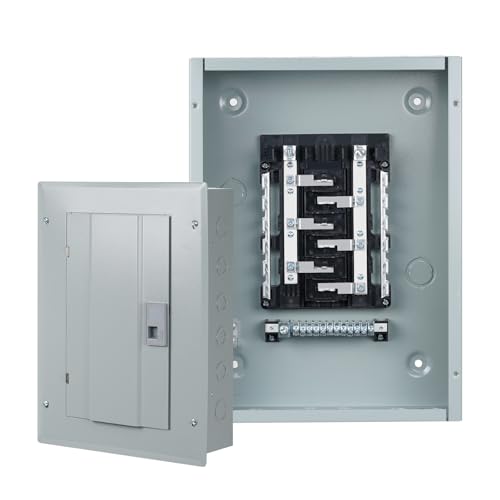
JINDOUZI 12-Space 125A Load Center
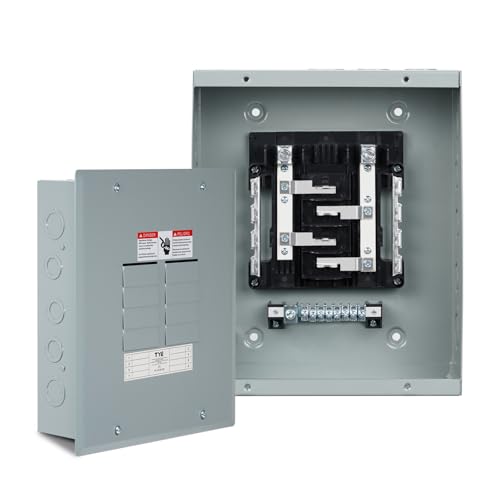
JINDOUZI 8-Space 125A Load Center
JINDOUZI 4-Space 125A Load Center

Erayco 50A Manual Reset DC Breaker

ERAYCO 150A Manual Reset DC Breaker

ERAYCO 250A Manual Reset DC Breaker
Inside Each Recommended Option
Wet engine bays and saltwater spray punish electrical parts fast, which is exactly where this GLOSO breaker earns its keep. The IP67 rating means it’s sealed against dust and short-term immersion, so a sudden downpour or a sloppy bilge pump won’t kill the circuit. The 80A rating gives plenty of headroom for inverters, heavy audio amps, and trolling motor banks without tripping under normal loads.
What I like most is the auto-reset function, which reconnects the circuit once a fault clears instead of forcing me to pop the hood every time. The side-by-side stud layout makes wiring clean when space is tight behind a battery box. Compared to the smaller Erayco breakers below, this one trades compactness for raw current capacity.
Advantages To Know
- IP67 sealing handles spray and brief submersion
- 80A rating suits inverters and heavy accessories
- Auto reset saves a trip to the breaker after a minor fault
- Side-by-side studs simplify crowded installs
Trade Offs
- Larger footprint than lower-amp marine breakers
- Auto reset can re-energize a circuit before you finish troubleshooting
Who It Suits Best
Anyone running higher-current DC accessories on a boat, tractor, or work truck needs this kind of sealed protection.
Where Another Pick Suits Better
For a compact 12V car audio add-on, the Erayco 50A Manual Reset DC Breaker is a tighter, lighter fit.
Plugging an RV into a household 110V outlet feels simple until a space heater and coffee maker trip something downstream. This adapter solves that by stepping the RV’s 30A plug down to a standard household socket with a built-in 15A breaker as the safety net. Reset is a simple button press once the load drops, no fuse to replace.
The honest read is that this is an emergency or convenience tool, not a permanent wiring solution. Travelers running short weekend stops at a relative’s garage get genuine peace of mind from it. The compact adapter shape stores easily in an exterior compartment.
Noteworthy Benefits
- Built-in breaker avoids blowing camp fuses
- Reset button instead of a replaceable fuse
- Lightweight and easy to stash
- Clear 30A to 110V step-down labeling
Honest Caveats
- Not rated for full-time RV hookups
- 15A ceiling limits simultaneous appliance use
Made For
RV owners borrowing power from a garage outlet on short visits or dry-camping at a friend’s place.
Swap It Out When
Anyone needing permanent in-vehicle DC protection should look at the GLOSO E39 Manual Reset ATO/ATC Breaker 20A 3-Pack instead.
Stock blade fuses blow at the worst time, and finding the right amperage mid-trip is annoying. The GLOSO E39 swaps into standard ATO/ATC fuse blocks and trips at 20A, so I can reset it with a button press instead of digging for spares. The UL-rated 94V0 thermoplastic body resists heat around engine bays, and tin-plated copper terminals fight corrosion over time.
Three units ship per pack, which covers an audio amp, a lighting circuit, and a spare in one go. The 5.2mm blade profile matches common automotive fuse blocks without modification. Owners commonly report the manual reset button holding up well to repeated trips.
The Case For It
- Drops into ATO/ATC fuse blocks with no rewiring
- Manual reset avoids spare fuse stash
- Three-pack covers multiple accessory circuits
- Heat-resistant thermoplastic body
Small Caveats
- Manual reset means a stop to troubleshoot before driving on
- 20A rating is specific; not a one-size-fits-all solution
Right Fit For
Car and truck owners adding aftermarket lighting, audio amps, or auxiliary accessory circuits benefit most here.
Reach For A Different Pick When
Anyone needing higher amperage for a trolling motor should step up to the ERAYCO 150A Manual Reset DC Breaker.
Square D’s HOM line is a familiar sight in residential load centers, and this 10-pack gives me enough 20A single-pole breakers to finish a remodel without leaving the jobsite for more. The plug-on design snaps into a Homeline panel without busbar clips or extra mounting hardware. Magnetic trip technology handles standard overload conditions reliably.
The 120/240V rating suits typical branch circuits for general receptacles, lighting, and small appliance runs. Storing the extras in a labeled bin pays off when an unexpected tripped circuit shows up months later. These only fit Homeline panels, so anyone running a QO panel needs a different part number.
Points In Its Favor
- Bulk 10-pack covers whole-room renovations
- Plug-on installation without extra hardware
- Standard 20A rating fits most branch circuits
- Compatible with widely available Homeline panels
Where It Is Less Suited
- Only works with Square D Homeline panels
- Single-pole design limits 240V appliance use
Best Suited To
Homeowners and electricians finishing out a Homeline residential panel with multiple 20A branch circuits.
Not Your Match When
Someone installing an entirely new sub-panel should consider the JINDOUZI 12-Space 125A Load Center instead.
Bigger projects need breaker space, and this 12-space panel leaves room for future circuits without crowding the box. The NEMA 1 steel enclosure fits dry indoor locations like garages, basements, and utility rooms. The 125A main lug rating handles a healthy mix of lighting, receptacle, and small appliance circuits.
For workshop owners running table saws, dust collectors, and welder outlets on separate breakers, the extra slots prevent the juggling act of sharing circuits. The indoor rating keeps the price reasonable compared to weatherproof alternatives. The square D HOM120 breakers above won’t drop in here without checking compatibility first.
Real Benefits
- Twelve spaces leave headroom for expansion
- 125A rating supports larger residential sub-panels
- NEMA 1 steel enclosure for indoor durability
- Compatible with standard THQL breakers
Practical Considerations
- Indoor-only rating, no direct weather exposure
- Larger footprint demands wall planning
Feature Snapshot
Who Will Love This
Workshop owners and homeowners adding a sub-panel for a garage conversion or finished basement should look here.
Look Elsewhere When
Someone wiring a small shed with only a few circuits is better served by the JINDOUZI 4-Space 125A Load Center.
Eight circuits hit the sweet spot for most room additions and detached garages. The same NEMA 1 steel enclosure and 125A main lug rating carry over from the larger 12-space sibling, just in a smaller footprint. Wall space stays free for storage shelves and workbenches.
For homeowners adding a hot tub disconnect, a small kitchenette, or a dedicated office circuit, this size avoids the wasted space of an oversized panel. The 120/240V rating accepts both standard and double-pole breakers. Anyone needing more than eight circuits should jump up to the 12-space version.
The Good Stuff
- Eight spaces handle most room addition projects
- Compact wall footprint compared to larger panels
- 125A main lug supports typical residential loads
- NEMA 1 indoor-rated steel construction
Points To Note
- Limited expansion room beyond eight circuits
- Indoor-only mounting, no direct weather exposure
Perfect Match For
Room addition projects and small detached garages fit well with this mid-size capacity.
Skip It When
Anyone outfitting a full workshop with multiple heavy tools should look at the JINDOUZI 12-Space 125A Load Center.
Small outbuildings don’t need a 12-circuit panel, and this 4-space box covers the basics without wasted slots. A shed with lights, a receptacle, and maybe a small heater fits comfortably in four circuits. The 125A main lug rating still supports heavier branch loads even though the slot count is modest.
The compact footprint mounts cleanly on a narrow wall section between studs or in a tight utility closet. For pool pump sheds and detached offices, this keeps wiring tidy and accessible. Owners commonly pair it with a single 240V breaker for a small window unit or compressor.
Where It Delivers
- Compact footprint suits tight spaces
- 125A rating despite the small slot count
- NEMA 1 steel enclosure for indoor protection
- Straightforward install for small loads
Less Ideal Details
- Only four circuits limits growth
- Indoor mounting restricts outdoor placement
Built With In Mind
Shed owners and small workshop builders with a handful of dedicated circuits should consider this.
A Better Fit Elsewhere
Anyone running a larger workshop with multiple tools needs the JINDOUZI 12-Space 125A Load Center.
Mid-range DC accessories like compact trolling motors and modest audio systems don’t need a heavy 150A breaker. This 50A unit covers that gap without overspending. The 12V to 48V DC rating handles most automotive, marine, and solar battery banks without modification.
The waterproof housing tolerates bilge splash and engine bay heat, and the manual reset button gives a clear visual indicator of a tripped circuit. Compared to the ERAYCO 150A below, this is lighter and easier to fit in confined wire runs. Small solar setups and pontoon boat owners get exactly the protection they need.
Positive Points
- 50A rating suits compact trolling motors and audio
- 12V to 48V DC range fits common battery banks
- Waterproof sealed housing
- Manual reset button for clear status
Things To Consider
- Lower current ceiling than the larger Erayco models
- Manual reset requires a physical stop to restore
Quick Facts
Whose Shelf It Belongs On
Pontoon and small boat owners running compact trolling motors should reach for this 50A breaker.
Where A Sibling Pick Shines
Anyone running a higher-output inverter or larger trolling motor should pick the ERAYCO 150A Manual Reset DC Breaker instead.
Boats running 24V or 36V trolling motors pull serious current, and that’s where the 150A rating pays off. This breaker slots between the modest 50A model and the top-tier 250A unit, covering most mid-sized marine setups. The ignition-protected rating (SAE J1625, J1171, UL1500) keeps things safer around fuel vapors.
Off-grid solar builders with mid-sized inverter banks get reliable overload protection at this rating. The 12V to 48V DC window fits battery banks from a single 12V marine battery up to a 48V solar array. The manual reset button stays accessible even after the unit is mounted in a tight compartment.
What Pays Off
- 150A rating covers mid-sized trolling motors and inverters
- Ignition-protected safety ratings for marine use
- Waterproof sealed housing
- Wide 12V to 48V DC voltage range
Factors To Consider
- Bigger and heavier than the 50A version
- Manual reset means stopping to check after a trip
Feature Rundown
Who Should Grab It
Boat owners running 24V or 36V trolling motors and off-grid solar builders get the right protection level here.
Consider Something Else When
Anyone pushing a 250A-plus inverter bank should step up to the ERAYCO 250A Manual Reset DC Breaker.
Large marine banks and serious off-grid solar arrays push past what mid-range breakers can handle. The 250A rating gives serious headroom for high-output inverters and big trolling motor banks. Like its smaller siblings, the waterproof housing tolerates marine conditions and engine bay heat.
The accessory kit ships with wire lugs and copper washers, which simplifies the install for someone building a battery bank from scratch. For most backyard solar setups, 150A is plenty, so this is genuinely the heavy hitter of the lineup. Owners commonly report the manual reset holding up well across many trip cycles.
A Favorable Mix
- 250A rating handles the largest DC battery banks
- Included wire lugs and copper washers
- Waterproof sealed housing
- Wide 12V to 48V DC voltage range
Where It May Fall Short
- Overkill for typical small marine setups
- Larger body needs careful space planning
At A Glance
Right Fit For
Off-grid solar builders and serious marine owners running large battery banks should land here.
Another Choice May Suit
Anyone running a smaller boat audio setup is better served by the Erayco 50A Manual Reset DC Breaker.
What Matters Most Before Choosing Circuit Breakers
Match the Breaker to the System Type
The biggest fork in the road is AC versus DC. AC breakers like the Square D HOM120 and JINDOUZI load centers handle residential power at 120V or 240V. DC breakers like the GLOSO and Erayco models protect 12V to 48V battery systems in vehicles, boats, and solar banks. Mixing them up means the trip curve won’t match the actual fault behavior, and that’s a safety problem. Always confirm the breaker type matches the system before ordering.
Check Amperage, Voltage, and Panel Compatibility
Three specs do most of the work: amperage rating, voltage ceiling, and physical fit. The amperage must match the wire gauge downstream, and the voltage rating has to cover the system. For home panels, the breaker needs to physically fit the busbar style, Homeline versus QO versus THQL. RV owners care more about plug type and adapter form factor. Marine owners should look at ignition-protection ratings for any breaker near fuel systems.
Think About Reset Type and Environment
Manual reset breakers require a physical button press after a trip, which prevents an immediate restart while a fault is still active. Auto-reset breakers reconnect automatically once the fault clears, which is convenient for non-critical systems. Weatherproof or sealed housings matter anywhere water or dust can reach the breaker. For outdoor panels, look for a NEMA 3R or higher enclosure rating.
Consider Future Expansion
A breaker panel that’s full on day one leaves no room for additions. Oversizing the panel by a few spaces now is cheaper than replacing a crowded panel later. The JINDOUZI lineup scales from 4 to 12 spaces for exactly this reason. DC systems can be expanded later by stacking breakers, but wire runs get longer and harder to manage as loads grow.
Key Considerations Across These Picks
Common Shopping Slip Ups
The most frequent mistake is matching amperage to the appliance instead of the wire gauge. A 30A breaker on 14-gauge wire creates a fire hazard because the wire heats up before the breaker trips. Another slip is buying a DC breaker for AC use or vice versa, which produces unreliable trip behavior. Skipping the enclosure rating for outdoor installs leads to early corrosion and failure. Always verify breaker type, wire gauge match, and enclosure rating before clicking through to the product page.
When Paying More Pays Off
Premium marine breakers like the GLOSO E9A earn their higher cost through sealed housings and ignition-protected ratings. The Square D HOM120 ten-pack saves money per breaker compared to single-pack purchases for whole-panel renovations. Higher-amperage Erayco breakers cost more because they use heavier conductors and sturdier contacts. The upgrade is worth it whenever the breaker sits in a hard-to-reach location, near fuel vapors, or on a critical circuit where failure isn’t an option.
Frequently Asked Questions
What’s the difference between AC and DC circuit breakers?
AC breakers trip based on alternating current characteristics, where the voltage crosses zero regularly and helps extinguish arcs. DC breakers handle steady voltage and need stronger arc suppression, which is why they cost more and look physically different. Using an AC breaker on a DC system risks the contacts welding shut during a fault.
How do I know which amperage breaker I need?
Match the breaker amperage to the lowest-rated component in the circuit, whether that’s wire gauge, outlet rating, or appliance draw. Most household receptacle circuits use 15A or 20A breakers, while a water heater or dryer needs 30A or more. For DC accessory circuits, match the breaker to the fuse rating the device would normally use.
Can I install a circuit breaker panel myself?
Local electrical codes vary, but many jurisdictions require a licensed electrician for panel work, especially anything tied to the utility feed. Sub-panels in detached buildings often allow homeowner installation where permitted. DC automotive and marine circuits are typically fair game for DIYers with basic electrical knowledge.
What does IP67 actually mean for a marine breaker?
IP67 means the enclosure blocks dust completely and survives brief immersion in water up to one meter deep. For bilge areas and exposed decks, this rating handles splashes and the occasional dunking without failure. Lower ratings like IP65 only handle water jets, not submersion.
How often should breakers be tested or replaced?
Residential breakers don’t have a fixed replacement schedule, but testing the trip mechanism annually is reasonable. Owners commonly replace breakers when they fail to reset, show scorch marks, or trip repeatedly under normal loads. Marine and automotive breakers see more vibration and heat, so visual inspection during routine service catches problems early.
Final Take
Each breaker on this list solves a specific problem, from home renovations to marine runs to RV travel. The right pick depends on the system type, current draw, and environment. Take a minute to verify the breaker matches the wire, the panel, and the load before checking out, and the rest of the install usually goes smoothly.
