

Most folks reach for a multimeter when something electrical goes sideways, whether that’s a dead outlet in the garage or a suspicious reading on a solar install. A solid meter pays for itself the first time it saves a service call. I’ve put together a list of cheap multimeters that balance price with the features real users need, so you can spend less time second-guessing your tool and more time getting the job done.
The Main Contenders

Fluke 117 Digital Multimeter, Non-Contact AC Voltage Detection, Measures Resistance/Continuity/Frequency/Capacitance
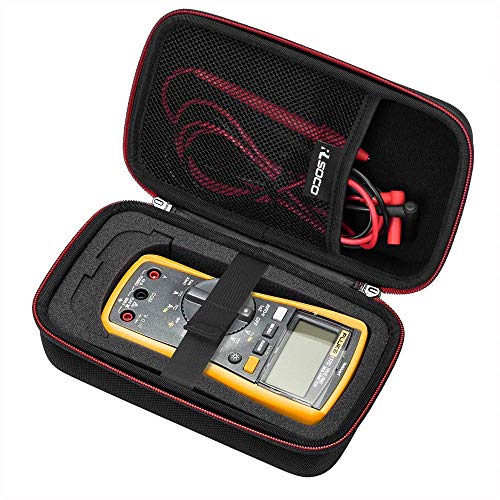
RLSOCO Hard Case for Fluke Multimeters with DIY Foam

Fluke 117/323 Kit Multimeter and Clamp Meter Combo Kit

Klein Tools Digital Multimeter Test Kit with 11-in-1 Screwdriver

Fluke 107 AC/DC Current Handheld Digital Multimeter (Gray)

Klein Tools MM320KIT Digital Multimeter Electrical Test Kit

Fieldpiece Compact HVACR Clamp Multimeter SC260

RLSOCO Carrying Case for Fluke 789/787B/787 Process Meter

KAIWEETS HT118A/HT118E Multimeter Case, Protective Hard Storage Bag

Fluke 115 Multimeter
The Details Behind The Selections
The Fluke 117 is the kind of meter that quietly disappears into your workflow. True RMS, which means accurate readings on modern electronics with non-linear loads, and a low-impedance mode that helps stop ghost voltages from giving false positives. VoltAlert non-contact sensing is genuinely useful for quick checks before you ever touch a conductor.
For someone working in residential or light commercial panels, the auto-selecting AC/DC function saves time, and the white LED backlight is bright enough for crawl spaces and unlit basements. The operating range from -10°C to 50°C covers most climate zones.
What Makes Sense
- True RMS readings keep numbers honest on variable-frequency drives and LED lighting
- Low-Z mode reduces misleading phantom voltage, a common headache on older building wiring
- VoltAlert lets you check live wires without breaking the circuit
- AutoVolt picks AC or DC automatically, removing one dial-flipping step in a busy service call
- Bright white backlight holds up in dim panels and exterior junction boxes
Things To Consider
- It is a premium-priced unit, so it sits at the top end of the cheap multimeters range
- No current measurement for high-amperage clamps, which is why Fluke pairs it with the 323 in a kit
- Commonly reported wear on the rotary dial after years of heavy gloved use
Whose Shelf It Belongs On
Electricians, HVAC techs, and serious DIYers who want pro-grade accuracy without stepping into industrial territory.
Swap It Out When
The Fluke 115 is a more straightforward pick for general field techs who don’t need the low-Z and VoltAlert extras.
The RLSOCO hard case isn’t a meter itself, but anyone who tosses a Fluke into a truck toolbox learns fast that the rubber boot only does so much. This shell fits an enormous range of compact multimeters, including the Fluke 117, 115, 106, and 107, plus a few non-Fluke models from Klein, Greenlee, Crenova, and IDEAL.
Inside, the DIY foam lets you trim custom cavities for your meter, leads, and maybe a small clamp accessory. The middle strap holds everything in place, and the YKK zipper is a real upgrade over generic plastic zippers that crack after a season in a service van.
Everyday Advantages
- Customizable foam protects the LCD and dial from compression damage in transit
- Wide compatibility makes it useful across multiple meters in a shop or classroom
- YKK zipper resists the kind of splitting that plagues cheaper carrying cases
- Hard outer shell shrugs off drops onto concrete shop floors
Honest Caveats
- Meter and accessories are not included, so this is purely a storage upgrade
- Cutting the foam takes a steady hand and a sharp blade for clean edges
- Larger Fluke process meters, like the 789, need a different case such as the RLSOCO B0C2G7G3C8
Best Suited To
Anyone transporting a compact multimeter between job sites, classrooms, or home workshops without wanting to risk a cracked screen.
A Better Fit Elsewhere
KAIWEETS HT118A/HT118E Multimeter Case is a better match if you own a KAIWEETS-style meter and want a mesh pocket for leads.
This combo pairs the Fluke 117 multimeter with the Fluke 323 clamp meter, which is the missing piece in many tool bags. The 323 reads up to 400 amps of AC current without breaking the circuit, so you can clamp around a conductor in a live panel and walk away with a real number.
For the technician who already knows the 117 is a daily driver, the kit adds serious capability. The TPAK hanging strap and C115 soft carrying case keep both pieces organized, which matters when you’re climbing ladders and the toolbox is back in the van.
Everyday Wins
- Adds non-invasive current measurement to a trusted multimeter platform
- Test leads and TPAK strap are included, so there’s no accessory scramble on day one
- 400A clamp capacity covers most residential HVAC and service-panel loads
- C115 soft case keeps both meters together, reducing the chance of leaving one on a job site
Points To Note
- The combined cost stretches beyond what most casual DIYers want to spend
- True RMS on the clamp side helps with electronics, but it’s still AC-only current
- Batteries in both tools mean twice the routine replacement schedule
Key Specs
Right Fit For
Working electricians and HVAC pros who routinely troubleshoot live panels and need both contact and clamp readings.
Consider Something Else When
The Fieldpiece SC260 is the better match for HVAC-focused techs who want temperature and capacitance in one tool.
Klein has bundled the MM320 digital multimeter with an 11-in-1 impact-rated ratcheting screwdriver, which is a smarter pairing than it sounds. The MM320 covers voltage up to 600V AC/DC, 10A DC current, and resistance down to 2 ohms, while also testing batteries, diodes, and continuity.
The screwdriver’s 1/4-inch quick-connect end swaps between screwdriver handle and impact driver duty, so a single tool tightens back panel screws, loosens cover plates, and drives bits into wood. Together, this kit covers roughly 80% of what a residential or light commercial job demands on any given visit.
A Favorable Mix
- 600V AC/DC range handles most residential panel scenarios
- 11-in-1 ratcheting driver reduces tool count on a service van
- Precision-machined bit tips resist cam-out, especially on painted cover screws
- Carrying case keeps everything organized for fast truck-to-job transitions
Trade Offs
- 2-ohm resolution is limited for low-resistance troubleshooting like ground bonding
- 10A DC current is enough for most jobs but short of industrial motor work
- Non-contact voltage tester is helpful, though it’s a separate piece to keep track of
Who Should Grab It
Full-time electricians and facility maintenance staff who want a meter plus a versatile screwdriver in one grab-and-go kit.
Look Elsewhere When
The Klein Tools MM320KIT is a better call for whole-home diagnostics where you also need a GFCI receptacle tester.
The Fluke 107 is the smallest Fluke in the consumer line, and it really does fit in a palm. It measures AC/DC voltage and current, resistance, and capacitance, all in a body that disappears into a shirt pocket or a small pouch on a tool belt.
The TL75 hard-point test leads are included along with the smart magnetic lanyard, which is genuinely handy for clipping the meter to a panel door while you read the display hands-free.
Notable Upsides
- Palm size means it actually fits where larger meters can’t, like inside control cabinets
- Magnetic lanyard frees both hands during panel diagnostics
- Two AAA batteries are easy to find at any hardware store on the road
- Fluke build quality in a pocketable form factor
Some Limits To Know
- Smaller display means smaller numbers, which can be tough to read across a wide panel
- Current capacity is lower than full-size Fluke meters
- For frequent residential use, the Fluke 115 or 117 offer more measurement range
Made For
Field techs and electronics hobbyists who value portability over maximum range and screen real estate.
Another Choice May Suit
The Fluke 115 gives you a larger display and broader range for general technician work where pocketability is less critical.
The MM320KIT pulls together the MM320 digital multimeter, an NCVT-3P non-contact voltage tester with a flashlight, an ET45 voltage tester, and an RT210 GFCI receptacle tester. That’s a complete residential electrical diagnostic kit in a single padded pouch.
For homeowners and property managers, this is one of the more useful cheap multimeters setups because the GFCI tester alone can save a service call by checking bathroom and kitchen outlets in seconds.
Practical Advantages
- GFCI receptacle tester catches tripped or miswired outlets without opening walls
- NCVT-3P flashlight on the non-contact tester is genuinely useful in dark basements
- Padded pouch keeps everything together for occasional household use
- Batteries are included, so the kit is ready to use right away
Factors To Consider
- Not a True RMS meter, so readings on modern electronics can drift slightly
- 2-ohm resistance resolution is limiting for low-impedance troubleshooting
- The pouch is soft-sided, so it won’t protect as well as a hard case like the RLSOCO B077GTBJG6
Feature Snapshot
Best Suited To
Homeowners, landlords, and handypersons handling whole-home diagnostics without calling an electrician.
Reach For A Different Pick When
The Klein Tools Test Kit with 11-in-1 Screwdriver is the better fit if you also need a versatile driver for cover plates.
The Fieldpiece SC260 is purpose-built for HVACR service, which means it’s designed for the realities of working in attics in summer and unheated crawl spaces in winter. True RMS gives accurate readings on inverter-driven compressors, and the swivel magnet on the back hangs the meter right where you need it.
Beyond standard electrical measurements, the SC260 includes temperature and capacitance, both daily-use functions for refrigeration techs checking capacitors and reading suction-line temps.
Benefits That Matter
- True RMS on VAC and AAC keeps readings honest on modern inverter compressors
- Temperature input is useful for refrigerant line diagnostics
- Auto Select mode picks capacitance or resistance without manual dial switching
- Swivel magnetic hanger keeps the meter readable on ductwork or fan housings
Worth Bearing In Mind
- Specialized HVACR focus makes it less useful for general residential electrical work
- Temperature probe is often sold separately, depending on the package
- Clamp jaw capacity is smaller than industrial-grade options
Who Will Love This
HVAC and refrigeration techs who want one clamp meter that handles electrical and temperature diagnostics in the field.
Not Your Match When
The Fluke 117/323 Kit is the smarter bundle for general electricians who don’t need the temperature function.
Process meters like the Fluke 789, 787B, and 787 don’t fit standard multimeter cases, which is exactly why this RLSOCO hard case exists. The high-density EVA shell resists water splashes and the rough handling that comes with industrial process work.
For instrumentation techs and control engineers moving between plant floors, the anti-slip soft rubber handle and all-around padding keep an expensive meter safe.
What Stands Out
- Custom-fit interior shaped for Fluke process meters, not a generic cavity
- Waterproof EVA surface handles rain, condensate, and shop-floor splashes
- Anti-slip rubber handle stays grippable with greasy or gloved hands
Soft Spots
- Process meter is not included, so this is purely protective gear
- Not compatible with smaller Fluke models like the 115 or 117
- Foam insert is fixed, so no DIY customization for accessories
Perfect Match For
Process technicians and instrumentation engineers transporting a Fluke 789 or 787 through industrial environments.
Where A Sibling Pick Shines
The RLSOCO B077GTBJG6 with DIY foam is a better choice if you need a customizable interior for multiple meters.
The KAIWEETS hard case is designed for HT118A and HT118E meters, which are popular auto-ranging models with TRMS readings up to 6000 or 20000 counts. The EVA material is crush-resistant, anti-shock, and water-resistant, so it handles the bumps of mobile work.
The standout detail is the elastic mesh accessory pouch inside, which keeps wire clips, cutters, probes, and chargers organized so you stop digging through the case looking for that one probe.
Useful Highlights
- Crush-resistant EVA shell protects against accidental drops and stacking damage
- Mesh pocket organizes accessories alongside the meter
- Light water resistance handles light rain and shop-floor splashes
- Snug fit designed specifically for KAIWEETS HT118A and HT118E models
Practical Considerations
- Designed for KAIWEETS models, so it may not fit other brands snugly
- Meter itself is not included, which is worth remembering during checkout
- Smaller interior than universal cases like the RLSOCO B077GTBJG6
Right Fit For
KAIWEETS HT118A or HT118E owners who want a purpose-built case with room for accessories.
Skip It When
The RLSOCO Hard Case is the better call if you own a Fluke or another brand and want a customizable foam interior.
The Fluke 115 is the workhorse compact True RMS meter in Fluke’s field-tech lineup. It covers true-RMS voltage and current, plus resistance, continuity, frequency, and capacitance, which is the practical kit for most service calls.
CAT III 600V safety rating means it holds up around distribution panels and industrial equipment, while the Min/Max/Average recording helps track signal fluctuations that a single reading might miss.
The Good Stuff
- True RMS readings on variable-speed drives and modern electronics
- Min/Max/Average recording captures intermittent faults that a single reading would miss
- CAT III 600V safety rating for distribution panel work
- Large white LED backlight for dim electrical rooms
Things To Weigh Up
- Lacks the low-Z mode of the Fluke 117 for ghost voltage troubleshooting
- No non-contact voltage detection, so a separate NCVT tester is often paired with it
- Premium pricing puts it at the top of the cheap multimeters bracket
Feature Card
Who It Suits Best
Field technicians, electronics techs, and serious DIYers who want proven Fluke accuracy without the extra features of the 117.
Where Another Pick Suits Better
The Fluke 117 is the stronger choice for electricians who need low-Z mode and non-contact voltage detection on every call.
What To Weigh Before Picking a Multimeter
True RMS matters more than people expect. Standard meters assume a clean sine wave, but most modern electronics draw in pulses, so readings on LED lighting, variable-speed motors, and computer power supplies drift without True RMS.
Safety rating is non-negotiable for panel work. CAT III 600V is the practical minimum for residential and light commercial panels, while CAT IV covers outdoor service entrance gear.
Range and resolution set the floor on what you can troubleshoot. A meter that reads down to 0.1 millivolts catches sensor issues that a coarse meter would smooth over.
Auto-ranging versus manual range comes down to workflow. Auto-ranging speeds up quick checks, while manual range gives faster settling on repetitive measurements like a string of outlet readings.
Common Shopping Slip Ups
Buyers often pick the cheapest meter without checking the CAT rating, then discover it isn’t rated for panel work. Others ignore the difference between counts and resolution, getting a meter that displays 6000 counts but only resolves to 1 ohm in the resistance range.
A frequent mistake is skipping accessory kits. A bare meter leaves you hunting for test leads, clips, and a case, while a kit like the Klein MM320KIT or the Fluke 117/323 combo arrives ready to work.
Where The Extra Money Goes
Higher-tier meters earn their premium with better temperature stability, tighter accuracy specs, longer warranties, and features like low-Z mode that prevent false readings from ghost voltage. For occasional household use, a mid-range True RMS meter is plenty. For daily professional work, the upgrade pays back quickly in saved troubleshooting time and longer service life.
