

A good Ethernet cable quietly solves a problem most people blame on Wi-Fi: random lag spikes, jittery video calls, buffering during game night. Cat8 cables handle up to 40 Gbps data transfer and a 2000 MHz bandwidth ceiling, which means future-proof headroom for gaming rigs, home servers, 4K streaming setups, and busy offices where multiple devices compete for bandwidth. I’ve put together ten solid Cat8 options covering different lengths, pack sizes, and builds so you can match the right cable to your specific setup without overspending on features you won’t use.
The Leading Options At A Glance
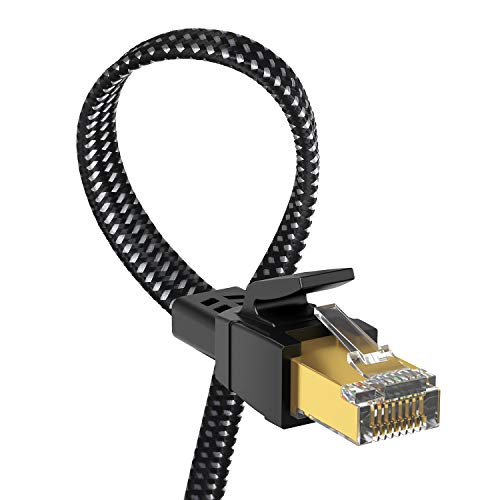
Orbram Cat 8 Ethernet Cable 15FT Braided 40Gbps

Orbram Cat 8 Ethernet Cable 15FT Braided White
Orbram Cat 8 Ethernet Cable 50FT Braided 40Gbps

Orbram Cat 8 Ethernet Cable 3ft 5-Pack Braided

Orbram Cat 8 Ethernet Cable 1ft 10-Pack Braided
Orbram Cat 8 Ethernet Cable 3FT Braided 40Gbps
Orbram Cat 8 Ethernet Cable 6FT-2PACK Braided

Orbram Cat 8 Ethernet Cable 6FT-2PACK Braided 40Gbps

UGREEN Cat 8 Ethernet Cable 3FT Flat Braided
DDMALL Cat8 LAN Cord Multi-Length
The Picks, Examined More Closely
The Orbram Cat 8 Ethernet Cable 15FT sits in the sweet spot for most households. A 15-foot run reaches from a living-room router to a gaming console, across a bedroom to a desktop tower, or from an office switch to a workstation without much slack. Braided outer jackets tend to resist scuffs and pet-chew damage better than bare PVC, which matters in homes where cables disappear behind furniture for years.
Compared to the bundled Cat5e cables most ISPs hand out, the shielded twisted-pair construction (a design where each wire pair is wrapped in foil to block electromagnetic interference) here shrugs off the noise from power bricks and microwaves. For most home offices and gaming setups, the honest read is that 15 feet covers about 80% of real-world runs without forcing you to coil extra length behind the desk.
What Helps Most
- 15-foot length handles most room-to-room runs without needing an extension
- Braided exterior resists tangles and adds durability in high-traffic spots
- Shielded design reduces interference from nearby electronics, useful in crowded entertainment centers
- 40 Gbps and 2000 MHz headroom means the cable outlasts several router upgrades
Points To Note
- 15 feet may run short for two-story homes or basement office setups
- Braid can snag on rough cable clips during installation
- Slightly stiffer than flat cables, which limits tight bends around door frames
Key Specs
Who It Suits Best
Home gamers and remote workers running a single wired device in the same room as their router.
Where Another Pick Suits Better
For longer runs across a basement or attic, the Orbram 50FT braided cable gives you the same shielding without daisy-chaining.
The Orbram Cat 8 Ethernet Cable 15FT in white takes everything the previous pick does and dresses it up. Same shielded Cat8 construction, same 40 Gbps ceiling, same 2000 MHz bandwidth. The white braided jacket simply blends into light wood desks, white walls, and Scandinavian-style setups where a black cable would jump out like a blemish.
This is a small thing, but cable aesthetics matter in home offices visible on Zoom calls or streaming setups where cameras catch every cord in frame. Most reviewers reach for the black version first, but the white option exists for people who think about the visual side of their workspace.
Strengths Worth Knowing
- White braided jacket disappears against light walls and furniture
- Identical 40 Gbps performance to the black sibling cable
- Shielded construction handles the same interference-prone environments
Worth Noting
- White braiding shows dust and grime faster than darker cables
- Only available in 15-foot length in this listing
Made For
Content creators and minimalist desk builders who want clean cable management in visible workspaces.
Skip It When
If you need a longer reach, the Orbram 50FT braided cable handles the distance without leaving you stuck with white in a dark corner.
The Orbram Cat 8 Ethernet Cable 50FT solves the “my router lives in a weird spot” problem. A 50-foot run reaches from an upstairs hallway closet down to a basement office, across an open-concept living room to a wall-mounted TV, or out to a detached garage workshop. You rarely need exactly 50 feet, but having the slack means you avoid the worst mistake in cable management: pulling too tight.
The braided jacket here earns its keep over longer distances because the cable is more likely to drape across floors or wrap around corners where bare PVC would kink. Owners commonly find that the extra length disappears into cable raceways or behind baseboards with room to spare.
Good Reasons To Consider
- 50-foot reach handles multi-room or basement installations
- Shielded twisted-pair design maintains signal integrity over the longer distance
- Braided exterior prevents kinks during routing around corners
- Future-proofs the connection for upcoming multi-gig internet plans
Trade Offs
- Excess length can create tangles if coiled carelessly behind furniture
- Heavier than shorter cables, so it may pull loose from light-weight wall plates
Best Suited To
Homeowners running wired connections to a detached office, basement media room, or upstairs gaming PC from a ground-floor router.
Not Your Match When
A simple same-room connection doesn’t justify the extra bulk; the Orbram 15FT braided cable handles that with less cable to manage.
The Orbram Cat 8 Ethernet Cable 3ft 5-Pack exists for people wiring up multiple devices at once. Short 3-foot patch cables are the right length for connecting a switch to a router, linking nearby gaming consoles in an entertainment center, or tidying up the spaghetti behind a desk where every cable needs to fit in a tight space.
Buying a multi-pack like this makes more sense than ordering individual cables once you count the devices. In a typical family entertainment setup, you’ll need at least three or four short patches: one for the smart TV, one for the console, one for the streaming box, maybe one for a soundbar with Ethernet. The braided jacket here keeps the bundle manageable behind the cabinet.
The Case For It
- Five cables at once eliminates piecemeal ordering for whole-room setups
- 3-foot length avoids the messy coils that come with longer cables in tight spaces
- Shielded design holds up against the dense electronics in entertainment centers
- Same Cat8 rating means every cable handles the maximum bandwidth your gear can use
Minor Gripes
- Five cables is overkill for users with only one or two wired devices
- 3 feet can be too short if your switch sits on a different shelf than your router
Right Fit For
Anyone setting up a media center, home lab, or small office rack with multiple devices clustered close together.
Consider Something Else When
Just one short connection is needed; the Orbram single 3FT cable covers that without a stack of extras.
The Orbram Cat 8 Ethernet Cable 1ft 10-Pack is a specialty pick for tight installs. One-foot patch cables exist for rack-mounted switches where every centimeter of front-panel space matters, or for stacking network gear like a modem sitting directly on top of a router. Anywhere two Ethernet ports sit within a foot of each other, this length is the cleanest answer.
Ten cables in a single pack signals serious intent. Most people don’t need ten 1-foot cables. The audience here is small office server racks, homelab enthusiasts building out networking stacks, or anyone deploying multiple switches in a structured wiring panel.
Real Benefits
- Eliminates cable slack in dense rack and panel installations
- Bulk pack suits homelab builders who wire multiple switches at once
- Shielded construction handles the interference from nearby power cables in racks
Honest Caveats
- 1-foot length is too short for almost any consumer living room or bedroom setup
- Ten cables is excessive unless you maintain serious networking hardware
Who Should Grab It
Homelab enthusiasts and IT folks wiring rack-mounted switches where panel real estate is tight.
A Better Fit Elsewhere
Living-room and home-office users will find the Orbram 3ft 5-Pack more useful for typical device clusters.
The Orbram Cat 8 Ethernet Cable 3FT sold as a single unit answers the most common Ethernet question: how do I connect my modem to my router when they sit right next to each other? Three feet covers the distance for the typical ISP gateway-and-router stack without the leftover coil that longer cables force you to hide.
Compared to the bundled cable that ships with most routers (usually around 4-5 feet of Cat5e), this one steps up the spec significantly. The braided jacket and shielded construction match the rest of the Orbram family, so you can mix and match lengths without losing consistency in cable management.
Real-World Strengths
- Single-cable purchase fits users who only need one short connection
- 3-foot length eliminates the messy coil behind stacked gear
- Shielded twisted-pair construction shields against modem and router interference
Things To Consider
- Only useful when modem and router sit close together
- No pack option for users who want spares
Key Specs
Who Will Love This
Apartments and small homes where the modem and router share the same shelf or media console.
Look Elsewhere When
You need more than one short cable or want different lengths in the same purchase; the DDMALL multi-length cable covers that scenario.
The Orbram Cat 8 Ethernet Cable 6FT-2PACK finds the middle ground most people overlook. Six feet is enough to reach from a media console to a wall plate, from a desk to a nearby router, or from a gaming PC tower (often sitting on the floor) up to a router on a shelf. Two cables in the pack cover the common case of a console and a streaming device, or a PC and a laptop dock.
This mid-length option doesn’t get the spotlight like the 15-foot or 50-foot versions, but in many real living rooms it’s the right size. Buying two at once also lets you wire up a guest room or office later without reordering.
A Few Highlights
- 6-foot length suits the typical console-to-router distance in living rooms
- Two cables per pack covers multi-device setups without leftovers
- Braided jacket stays flexible across routing behind furniture
Some Limits To Know
- 6 feet may fall short for larger living rooms or open floor plans
- Only two cables means users with more devices will need another pack
Perfect Match For
Living-room gamers and casual streamers running a console and one additional Ethernet device from the same router.
Reach For A Different Pick When
You need a single short cable to start and may add more later; the Orbram 3ft 5-Pack gives you room to grow.
The Orbram Cat 8 Ethernet Cable 6FT-2PACK offers the same six-foot length as the previous pick in another bundle configuration. The distinction comes down to colorway, branding generation, or regional availability. For practical purposes, you’re looking at the same shielded Cat8 performance, same 40 Gbps ceiling, same 2000 MHz bandwidth.
The two-pack format here suits households with a gaming PC and a console, a workstation and a printer with Ethernet, or a living-room TV setup that needs both a smart TV and a soundbar wired at the same time. Six feet covers most desk-and-tower pairings without leaving visible cable loops on the floor.
The Good Stuff
- Two cables let you set up console-and-PC or TV-and-soundbar pairs simultaneously
- Cat8 spec keeps multi-gig internet plans from bottlenecking at the cable
- Shielding matters when cables run parallel to power strips behind desks
Things To Weigh
- Similar to the previous 6FT-2PACK, so choice between them often comes down to availability
- 6 feet won’t reach across larger rooms or to opposite walls
Built With In Mind
Multi-device households that want to wire up a primary gaming setup and a secondary entertainment device in the same order.
Swap It Out When
A single cable for one device is all that’s needed right now; the Orbram single 6FT option is leaner.
The UGREEN Cat 8 Ethernet Cable 3FT stands apart from the round cables in this roundup with a flat profile. Flat cables slip under carpets, along baseboards, and behind wall-mounted TVs where round cables would bulge visibly. In tight home theater setups or minimalist installations, this difference is the entire reason to pick it.
UGREEN targets the gaming crowd here, and the 26AWG wire gauge (a measurement of wire thickness, where lower numbers mean thicker conductors) keeps the cable slim without sacrificing the Cat8 spec. The flat design has one real downside: it’s harder to coil neatly for storage, so it’s best treated as a permanent install rather than a cable you move around.
Where It Helps
- Flat profile disappears under carpets and along baseboards
- 26AWG construction keeps the cable thin without dropping below Cat8 performance
- Shielded design handles the noise from adjacent power cables in entertainment setups
- Compatible with gaming PCs, consoles, and routers via standard RJ45 connectors
Potential Drawbacks
- Flat cables don’t coil as neatly for storage or transport
- 3-foot length limits placement to stacked or adjacent devices only
At A Glance
Whose Shelf It Belongs On
Wall-mounted TV owners and gamers wanting a clean look where round cables would bulge visibly.
Another Choice May Suit
Users who move their setup often will find a round braided cable easier to manage; the Orbram 6FT-2PACK handles that.
The DDMALL Ethernet Cable earns the last spot by offering something none of the other picks do: a multi-length assortment. With options running from 1.5 feet up to 30 feet, households with mixed device distances can pick exactly the size each connection needs without settling for “close enough.”
The flexibility here is the selling point. A typical home might need a 3-foot patch for the modem-router stack, a 6-foot for the living-room console, and a 25-footer for the basement office. Buying all three as separate items gets complicated, while a length menu from a single source simplifies the whole wiring project.
What Works In Its Favor
- Multiple length options cover every common install in a single purchase decision
- Cat8 rating ensures even the longest run maintains high bandwidth
- Shielded construction handles both short patches and long runs reliably
Worth Bearing In Mind
- Length variety requires more careful selection at checkout
- Single-cable purchase rather than a multi-pack bundle
Feature Snapshot
Right Fit For
Mixed-setup households wiring multiple rooms and devices where no single length fits everything.
Not Your Match When
One specific length is all you need; the dedicated single-length Orbram cables keep the decision simpler.
What To Weigh Before Choosing Your Cat8 Cable
Cat8 cables all share the same headline specs (40 Gbps, 2000 MHz) on paper, but the real-world experience varies based on build, length, and pack size. Here’s what actually matters when sorting through options.
Length And Reach
Measure the distance from your router to your device before anything else. Buy enough slack to route around furniture without pulling taut, but not so much that you spend the next decade hiding coiled cable behind the desk. A 15-foot cable covers most same-floor setups, while anything over 25 feet signals a multi-room install where you should measure twice and order once.
Shielding And Build Quality
Shielded twisted-pair construction protects the signal from electromagnetic interference, the kind produced by power bricks, microwaves, and dense electronics clusters. In a typical living room with a TV, soundbar, and game console, this shielding matters more than the raw bandwidth number. Braided outer jackets add a layer of physical durability that bare PVC cables lack.
Pack Size Versus Single Cables
Multi-packs make sense when you’re wiring multiple devices at once. A single cable works when you have one specific connection in mind. The cost-per-cable in a pack is usually lower, but only if you’ll actually use the extras before the next wiring upgrade in a few years.
Flat Versus Round Profile
Flat cables excel at disappearing under carpets and along baseboards. Round cables coil more neatly and are easier to move around. Choose flat for permanent installs and round for setups you might rearrange.
Key Considerations Across These Picks
Where Shoppers Go Wrong
The most common mistake is buying a Cat8 cable longer than needed and coiling the excess behind furniture, where it creates signal reflection points and a tangled mess. Measure your run, add about two feet for routing, and stop there. Another slip-up is assuming all Ethernet cables perform identically at the rated speed. Shorter cables always outperform longer ones at the edge of their spec, so running a 50-foot cable to a device three feet away wastes both performance headroom and desk space.
What The Higher Tier Buys
Cat8 cables cost more than Cat6 or Cat6a because of tighter manufacturing tolerances, more aggressive shielding, and higher-grade copper conductors. For most homes with gigabit internet, a Cat6a cable delivers the same practical experience at lower cost. The upgrade to Cat8 pays off for users planning multi-gig internet service in the near future, running cables through walls where replacement is difficult, or building out a homelab with 10-gig networking gear that can actually push the higher bandwidth.
