

Picking the right Cat6 connectors starts with knowing what you’re actually building. A home network rack, a small office patch panel, and a server closet each want something slightly different from the parts inside. I put this shortlist together to cover the most common scenarios, from quick patch cable runs to custom-length builds where you crimp your own.
The lineup mixes pre-made slim patch cables, shielded and unshielded pass-through plugs in different pack sizes, a crimping tool, and a network tester. Together, they cover the bulk of what most people tackle when they upgrade or repair wired Ethernet. Read on to see which pieces fit the job in front of you, and where a different pick would serve you better.
How The Shortlist Stacks Up

Sokqovt Cat6a Slim Patch Cables 0.5ft 24-Pack Blue

iMBAPrice Cat6 Ethernet Patch Cable 6 Inch 10-Pack

Monoprice Cat6A Ethernet Patch Cable 2ft Green 2-Pack

PETECHTOOL RJ45 Cat6 Pass Through Connectors 100-Pack
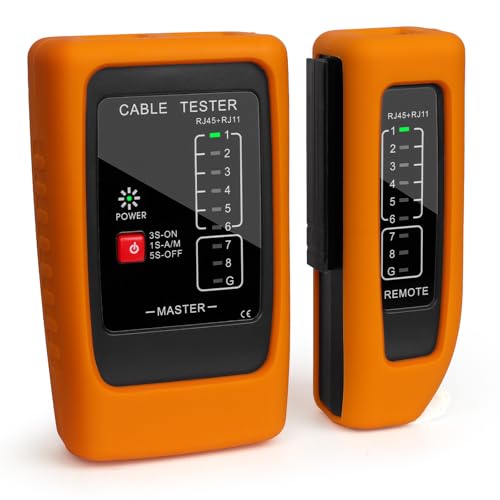
Brileine Network Cable Tester with POE Detection

PETECHTOOL RJ45 23AWG Cat6a Cat6 Pass Through Connectors 100-Pack

Brileine RJ45 Crimp Tool Pass Through Kit

PETECHTOOL RJ45 Cat6 Cat5 Pass Through Connectors 100-Pack

Brileine 50-Pack Cat 6 Shielded Pass Through RJ45 Connectors
Inside Each Recommended Option
Half-foot patch cables sound like a specialty item, but in a packed switch panel they’re the difference between a clean build and a tangled mess. The Sokqovt set ships 24 of them in a slim 28AWG jacket rated for 10Gbps at 550MHz, which is plenty for almost any home or small-office backbone.
Pure copper conductors matter here. CCA (copper clad aluminum) cabling tends to run hotter and crimp less reliably, especially on longer runs. With 24 of these in a box, you can label and color-route an entire rack without running out mid-project. Most people setting up a 24-port switch will find this hits a sweet spot for density and signal quality.
What Works In Its Favor
- Slim 28AWG jacket routes easily behind switches and through cable managers, improving airflow.
- 24-pack covers a full rack or patch panel without leaving you short on day one.
- 10Gbps / 550MHz headroom future-proofs a home lab or small office for years.
- Pure copper conductors hold up better to repeated unplugging than CCA alternatives.
Points To Keep In Mind
- Half-foot cables only suit gear sitting right next to each other; longer runs need different lengths.
- 28AWG is thinner than 24AWG patch cable, so it isn’t ideal for Power over Ethernet at the upper wattage range.
- Blue-only coloring limits your color-coding options in larger installations.
Right Fit For
Anyone wiring a 24-port switch panel or short-hop patch panel where clean cable management matters more than reach.
A Better Fit Elsewhere
Run long in-wall drops instead? The Monoprice Cat6A 2ft cables handle distance and shielded environments more comfortably.
Six-inch patch cables are a niche product, but they solve a real problem: stacked switches with ports facing each other. The iMBAPrice 10-pack lands in that awkward gap where regular 1-foot cables coil up behind the rack and look sloppy.
These run 24AWG copper with gold-plated RJ45 ends, rated to the same 550MHz, 10Gbps ceiling as the Sokqovt set above. Where the slim Sokqovt cables prioritize routing density, these offer a more traditional jacket that handles PoE devices a bit more conservatively. The trade-off shows up in flexibility: thicker cable means slightly less give in tight spaces.
Good Reasons To Consider
- Ten-pack is enough for one full stacked switch or two small patch panels.
- Gold-plated connectors resist oxidation over years of plugging and unplugging.
- 24AWG copper suits PoE cameras and access points without straining.
Honest Caveats
- Six inches is too short for most rack-to-rack or rack-to-wall runs.
- Black-only coloring offers no visual distinction between networks.
- Stiffer jacket than 28AWG slim cables, so corner routing needs more space.
Best Suited To
People stacking two switches in a single rack shelf and needing short, dependable patch cords to bridge them.
Swap It Out When
Your switch sits more than a few inches from the device it connects to; the Sokqovt half-foot set or a longer cable handles that better.
Where the slim Sokqovt cables play in tight quarters, the Monoprice Cat6A 2-foot cables bring shielding and pure bare copper to the table. STP (shielded twisted pair) construction matters in spaces where fluorescent lights, motors, or dense cable bundles generate electromagnetic interference.
Green coloring is unusual in patch cables, which actually helps color-coding when you’re separating networks or devices. The 2-foot length and 26AWG build put these between the ultra-short jumpers and full-length runs. Two cables per pack keeps the count modest, so this suits targeted buys over wholesale rack fills.
Where It Excels
- Shielded design rejects interference in electrically noisy spots like workshops or server rooms.
- Pure bare copper conductors (not CCA) maintain signal integrity at 550MHz and 10Gbps.
- Green color stands out for network segmentation and visual labeling.
Trade Offs
- Only two cables per pack, so bulk rack builds need multiple orders.
- Shielded cable requires grounded RJ45 jacks to deliver the full noise-rejection benefit.
- Stiffer than unshielded cable, demanding more bend radius in tight trays.
Key Attributes
Who It Suits Best
Installers running cables near electrical noise sources or anyone who needs color-coded runs for segmented networks.
Reach For A Different Pick When
You’re filling a 24-port rack on a budget; the Sokqovt 24-pack delivers more cable per dollar for unshielded work.
When you start making your own patch cables, the real cost adds up fast in connectors. PETECHTOOL’s 100-pack of pass-through RJ45 plugs keeps the per-cable cost down while simplifying the termination itself. With pass-through design, the individual wires emerge through the front of the plug so you can confirm the order before crimping.
These are aimed at 24AWG cable, which covers most stranded patch cord stock. The 8P8C pin layout is standard, so they mate cleanly with any keystone jack or equipment port. A wire stripper comes in the box, which saves a separate trip to the tool aisle for first-time builders.
Reasons It Performs
- Pass-through design lets you verify wire order visually before crimping, reducing failed terminations.
- 100-pack pricing makes custom cable builds practical for home labs and small offices.
- Works with any pass-through crimp tool, so you’re not locked into one brand.
- Included wire stripper saves an extra purchase for first-time builders.
Practical Considerations
- Designed for 24AWG cable, so 23AWG Cat6a bulk stock won’t fit cleanly.
- Owners commonly report a learning curve for consistent crimp pressure on first attempts.
Made For
DIY networkers building custom-length patch cables on a budget and learning the crimping process.
Consider Something Else When
You’re terminating 23AWG Cat6a runs; the PETECHTOOL 23AWG-specific plugs in this list handle thicker cable correctly.
Most cable problems show up after the install, when a port won’t link or PoE doesn’t power up. The Brileine tester catches those issues at the source by scanning RJ45, RJ11, and RJ12 cables for continuity, opens, shorts, and crossovers.
What sets this apart from a basic continuity tester is PoE detection. Power over Ethernet (PoE) sends voltage over the data pairs to power access points, cameras, and phones, and a miswired cable can deliver that power to the wrong place. With 300-meter long-distance testing, you can check installed runs from one end without running back and forth between rooms.
What It Does Well
- Automatic scan quickly flags wiring faults across RJ45, RJ11, and RJ12 cables.
- PoE detection identifies whether a cable is carrying power, useful for camera and AP installs.
- BNC/RJ45 compatibility covers older coaxial and modern Ethernet runs in one tool.
- 300-meter range suits whole-home and small-office cable runs.
Things To Weigh Up
- Doesn’t certify cables to TIA standards, so it’s a troubleshooting tool, not a compliance tester.
- Display and menu take some practice to interpret on the first few runs.
Feature Snapshot
Who Should Grab It
Anyone installing or troubleshooting home and small-office cabling, especially with PoE cameras or access points.
Look Elsewhere When
You only need to crimp a handful of cables; the Brileine crimp tool kit covers basic termination without the tester overhead.
Not all RJ45 connectors are interchangeable. The PETECHTOOL 23AWG plugs exist because 24AWG plugs (like the earlier PETECHTOOL set) won’t seat properly on 23AWG solid conductor cable, which is the standard gauge for in-wall Cat6 and Cat6a runs. Forcing the wrong plug produces flaky crimps and intermittent links.
Gold-plated contacts and a transparent body let you see the wire order through the plug during termination. The pass-through design still applies, so you slide all eight conductors through and confirm the sequence before crimping. For new home runs and Cat6a permanent links, this is the connector to reach for.
Standout Benefits
- 23AWG sizing fits standard in-wall Cat6 and Cat6a solid cable, where 24AWG plugs fail.
- Transparent body makes wire order errors visible before you crimp.
- Gold plating resists corrosion across years of service.
- 100 connectors cover a full set of room drops plus spares.
Some Limits To Know
- Only suits UTP (unshielded) cable, so STP runs need the Brileine shielded connectors in this list.
- Pass-through design produces a small bit of wire stub past the front; trimming flush is part of the workflow.
Perfect Match For
Home and small-office installers running Cat6 or Cat6a solid cable through walls and needing a reliable termination plug.
Not Your Match When
You’re making patch cables from stranded 24AWG stock; the PETECHTOOL 24AWG plugs handle stranded cable better.
A pass-through crimper does three jobs in one tool: cut, strip, and crimp. The Brileine kit covers 23AWG to 28AWG cable across Cat5, Cat5e, Cat6, and Cat6a connectors, which is the practical range for nearly every Ethernet project someone tackles at home.
Where the PETECHTOOL connectors above work with any pass-through crimp, this tool focuses on the pass-through style specifically. It also handles standard non-pass-through plugs, so you aren’t locked into one connector family. The yellow body makes it easy to find in a drawer or toolbox.
Useful Highlights
- One tool cuts, strips, and crimps, reducing kit clutter for first-time builders.
- Works across 23AWG to 28AWG cable, covering Cat5 through Cat6a termination.
- Compatible with both pass-through and traditional RJ45 connectors.
- Ratcheting action applies even pressure, which matters for solid conductor cable.
Worth Bearing In Mind
- Plastic handle construction feels lighter than all-metal professional crimpers.
- First-time users may need a few practice crimps on scrap cable to find the right pressure.
Quick Facts
Right Fit For
First-time cable builders and home networkers who want one tool that handles most of the work without a separate stripper or cutter.
A Better Fit Elsewhere
You already own a quality ratcheting crimper and only need connectors; the PETECHTOOL 100-packs here deliver better value for connectors alone.
For hobbyists and first-time cable builders, the forgiving pass-through design of these PETECHTOOL plugs takes a lot of the stress out of termination. The wires travel all the way through the connector, so misordered pairs are obvious before the crimp lands.
These work with both Cat5 and Cat6 cable, though they’re optimized for 24AWG stock. The gold plating helps with long-term signal clarity, and a 100-pack leaves room for mistakes and rework. Compared to the 23AWG PETECHTOOL plugs above, this set fits stranded patch cable better, which is what most people start with.
Useful Touches
- Pass-through design makes wire order errors visible, reducing failed crimps for beginners.
- Gold plating helps maintain signal quality over years of plugging and unplugging.
- Works for both Cat5 and Cat6 cable, so you don’t need separate plugs for legacy runs.
- 100-pack leaves margin for learning mistakes and rework.
Smaller Limitations
- 24AWG focus means these don’t fit 23AWG solid in-wall cable cleanly.
- After crimping, the wire stubs past the front and need trimming flush for a clean finish.
Made For
Hobbyists and first-time cable builders working with stranded 24AWG patch cable who want a forgiving connector to learn on.
Where A Sibling Pick Shines
You’re running solid 23AWG in-wall cable; the PETECHTOOL 23AWG connectors in this list fit that gauge properly.
Shielded cable without shielded connectors gives up most of its noise-rejection benefit. The Brileine 50-pack of shielded pass-through RJ45 plugs is built specifically to terminate STP (shielded twisted pair) Cat6 cable properly, with a metal shell that maintains the cable’s shield all the way to the equipment port.
These fit 24AWG to 26AWG solid or stranded cable, which covers most shielded patch and horizontal runs. The 1.1mm through-hole matches standard pass-through crimper dies, and the shielded design pairs naturally with the Monoprice Cat6A cables earlier in this list. A 50-pack is a reasonable middle ground for a small shielded installation.
Useful Strengths
- Metal shell maintains shield continuity from cable to connector, preserving noise rejection.
- Works with 24AWG to 26AWG solid or stranded cable, covering most STP stock.
- Pass-through design simplifies wire order verification during termination.
- 50-pack fits small shielded installations without overbuying.
Trade-Offs To Consider
- Shielded plugs cost more per connector than unshielded equivalents.
- Pair with grounded keystone jacks to realize the full shielding benefit; ungrounded installs waste the metal shell.
Feature Card
Who Will Love This
Installers running shielded Cat6 cable in electrically noisy environments who need connectors that match the cable’s shielding.
Skip It When
Your runs are unshielded; the PETECHTOOL unshielded 100-packs in this list deliver more connectors for less money.
What Matters Most Before Choosing Cat6 Connectors
Match the Plug to the Cable Gauge
The single biggest decision is whether your cable is 23AWG or 24AWG. 23AWG is the standard for solid copper in-wall runs (Cat6 and Cat6a), while 24AWG covers most stranded patch cords. Forcing a 24AWG plug onto 23AWG cable creates a loose crimp, and oversized holes let pairs shift out of order. The 23AWG PETECHTOOL and the 24AWG PETECHTOOL packs in this list exist to remove that guesswork.
Choose Shielded Only When the Environment Demands It
STP cable and shielded connectors add cost and stiffness, and they only pay off where electromagnetic interference is real. Workshops with motors, server rooms with dense cable bundles, and runs parallel to fluorescent fixtures are common culprits. For a quiet home office, UTP (unshielded) cable and connectors deliver the same 10Gbps performance at a lower price.
Pass-Through vs Standard Connectors
Pass-through connectors let the individual wires exit the front of the plug during termination, so you can confirm the T568A or T568B order visually before crimping. That visibility saves beginners from miswired cables and speeds up the workflow for everyone. Standard connectors demand a closer eyeball on the wire order before insertion, but they don’t leave wire stubs past the front that need trimming. The Brileine crimp tool in this list handles both styles.
Don’t Skip the Tester
A cable tester like the Brileine unit above catches miswires, opens, shorts, and crossovers in seconds. For one-off patch cables, eyeballing the order and trusting the crimp often works. For in-wall runs, the cost of fishing a new cable through a finished wall far outweighs the cost of a tester. PoE detection adds confidence for camera and access point installs where a bad pair can mean a dead device.
Smart Buying Angles For Cat6 Connectors
Mistakes Worth Dodging
The most common error I see is buying the cheapest connectors without checking the gauge rating. A 24AWG plug on 23AWG cable looks like it seats fine, then fails weeks later as the copper shifts and contact resistance climbs. The second is using shielded connectors on unshielded cable, which adds cost without benefit. The third is skipping the wire order check on pass-through connectors; the visibility is a feature, not a guarantee, and a rushed crimp still produces a bad cable.
Where The Extra Money Goes
Premium connectors earn their keep in three places: tighter manufacturing tolerances on the gold-plated contacts, more consistent plastic bodies that feed cleanly into the crimp die, and metal shielding on shielded variants. For a one-room project, the difference is small. For a whole-house rewire or a small office build, the consistency shows up in fewer failed crimps and longer service life before corrosion becomes an issue. The 23AWG-specific plugs and the Brileine shielded pack in this list are examples of that premium tier applied to a real need.
Frequently Asked Questions
What Is the Difference Between Cat6 and Cat6a Connectors?
Cat6 connectors work fine for Cat6 cable at up to 1Gbps and 250MHz. Cat6a connectors are built to handle 10Gbps at 500MHz, with tighter tolerances that reduce crosstalk (signal bleed between pairs). For new runs at 10Gbps, choose Cat6a-rated plugs. For legacy Cat6 cable at gigabit speeds, standard Cat6 connectors are sufficient.
Can I Use Cat6 Connectors on Cat5e Cable?
Yes, Cat6 connectors are backward compatible with Cat5e cable. The 8P8C pin layout is the same, and the Cat6 plug handles the slightly different wire gauges without issue. The cable will only perform to its Cat5e rating, but the connection will be reliable.
How Many Cat6 Connectors Do I Need Per Cable?
Two connectors per cable, one on each end. A 100-pack of plugs covers 50 cables with zero spares, or 40 cables with 20 spares for re-dos. For a typical home network with 8 to 12 room drops plus patch cords, a single 100-pack of the right gauge usually covers everything.
Do I Need a Special Crimp Tool for Pass-Through Connectors?
Yes, pass-through connectors need a pass-through crimper that cuts the excess wire flush as it crimps. Standard crimpers leave wire stubs past the front of the plug. The Brileine RJ45 Crimp Tool Pass Through Kit in this list handles both styles in one tool, which is the most practical choice for mixed projects.
Are Gold-Plated Connectors Worth the Extra Cost?
Gold plating resists oxidation, which matters in humid environments or outdoor enclosures where standard plating can tarnish over years. For indoor runs in climate-controlled spaces, the practical difference is small. For outdoor cameras, garage runs, or damp basements, gold plating adds real longevity.
Closing Thoughts
The right connector depends on the cable you’re terminating, the environment around it, and how often you’ll be building or reworking runs. Match the gauge first, decide whether shielding is justified, and grab a tester before you commit cable to a wall. Start with one 100-pack of the right gauge and a pass-through crimper, and you’ll have the core kit to handle almost any home or small-office Ethernet project.
