

A long weekend off-grid, a tailgate party that runs past sundown, a power outage that drags on for days. Camping power supplies sit at the center of all three, and the right one quietly runs your phone, coffee maker, or RV air conditioner without ruining the mood. The wrong one sputters, rattles, or drains your budget in fuel.
After sorting through nine portable generators, power stations, and battery-driven inverters, I pulled together the ones that actually deliver in 2026. Some lean toward raw wattage, others toward silence or clean sine wave output. Here’s where to start.
The Leading Options At A Glance

Evernexta 4000W Portable Inverter Generator

Evernexta 4000W Portable Inverter Generator (Gas)

BLUETTI Elite 200 V2 Portable Power Station

Honda EU2200i Companion Inverter Generator

Evernexta 4800W Open Frame Inverter Generator

BLUETTI AC200L Portable Power Station

Evernexta 4800W RV-Ready Inverter Generator
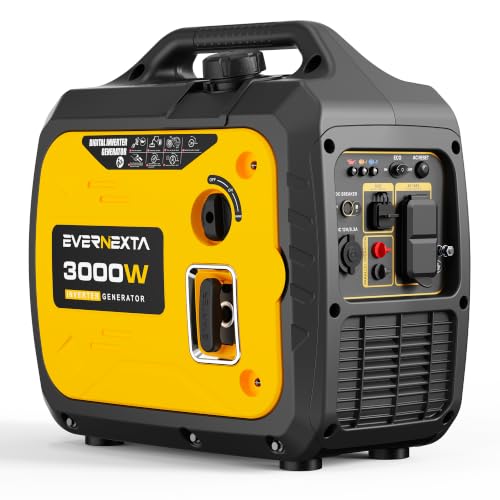
Evernexta 3000W Ultra Quiet Gas Generator
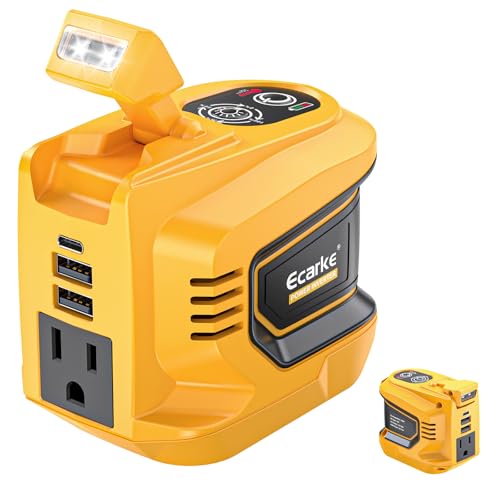
Ecarke 220W DeWALT Battery Power Inverter
The Picks, Examined More Closely
Evernexta’s 4000W inverter generator hits a sweet spot for campers who also want a backup plan at home. The headline numbers, 4000 peak watts and stable inverter output, comfortably handle a fridge, a few lights, and a phone or laptop charger without breaking a sweat.
Where this unit earns its keep is sound. At roughly 56 dB from 23 feet, conversation-level noise means you can park it near a tent or a neighbor’s site without earning side-eye. For families upgrading from a louder contractor-grade generator, the drop in noise alone feels like moving into a different category of product.
Notable Upsides
- Low 56 dB operation keeps campsite relationships intact
- Clean inverter output under 3% THD (total harmonic distortion, a measure of electrical “cleanliness”) protects sensitive electronics like laptops and cameras
- Dual-purpose design works as well at home as it does off-grid
- Solid running wattage for the size class
Trade Offs To Consider
- Gas-powered, so fuel storage and routine oil changes are part of ownership
- Heavier than battery stations, which matters if your camping involves long walks from the car
Quick Facts
Who Will Love This
Families and RV owners who want one generator that handles both weekend trips and unexpected home outages.
Where Another Pick Suits Better
Strictly tent campers who prize silence and zero fuel may prefer the BLUETTI Elite 200 V2 portable power station for its battery-only operation.
This sibling to the first Evernexta leans harder into home backup. Its 4000 peak watts and 3200 running watts cover a refrigerator, lights, a router, and a few small appliances during a multi-day outage, which is the realistic floor for most households.
An ECO mode helps trim fuel use when the load is light, and at roughly 59 dB from 23 feet it is quieter than traditional open-frame units. Compared with Evernexta’s camping-tuned model, this one prioritizes runtime and home convenience over campsite stealth.
Where It Delivers
- 3200 running watts cover essential household loads
- ECO throttle extends fuel economy under lighter demand
- Inverter output stays clean enough for sensitive electronics
- Practical noise level for a residential setting
Points To Note
- Fuel and oil maintenance come with the territory
- Slightly louder than the camping-tuned Evernexta above
Made For
Homeowners in storm-prone regions who want a generator that starts a fridge plus a few extras without skipping a beat.
Skip It When
Overlanders who want silent, fuel-free power should look at the BLUETTI AC200L portable power station instead.
The BLUETTI Elite 200 V2 packs 2073.6Wh of battery capacity and 2600W of continuous AC output into a single quiet unit. For users who want to run a hair dryer, coffee maker, or full-size fridge off-grid, that headroom changes the conversation.
The 3900W power-lifting mode handles brief surges from motors and heating appliances. In a long-haul RV scenario, a multi-day power outage, or a basecamp with several people charging devices, the V2’s size-to-output ratio is hard to beat. Compared to the gas generators above, this one trades fuel logistics for silent operation and indoor-safe use.
A Strong Showing
- 2600W continuous output covers most household appliances
- 2073.6Wh capacity supports multi-day light loads
- Silent operation makes it apartment- and tent-friendly
- No fuel, no fumes, no engine maintenance
Things To Consider
- Substantial upfront investment versus gas alternatives
- Recharging depends on wall, solar, or car inputs, which can be slow off-grid
Feature Snapshot
Whose Shelf It Belongs On
Off-grid enthusiasts and preppers who already own or plan to add solar panels and value silent, indoor-safe power.
Reach For A Different Pick When
Shoppers who need maximum wattage on a tighter budget should consider the Evernexta 4800W Open Frame generator for its raw output.
Honda’s EU2200i Companion is the long-running favorite of RV owners and dispersed campers for good reason. The 2200W output, paired with a built-in 30A outlet, is purpose-built for RV hookups and parallel operation with a second unit.
The 48 to 57 dB(A) range puts it among the quietest gas generators in its class. In real-world terms, neighbors at the next site typically cannot hear it across a couple of campsites. For RV travelers running a microwave or small AC unit, this is the proven benchmark other brands keep chasing.
Reasons It Performs
- Built-in 30A outlet simplifies RV hookups
- Quiet operation is well-suited for campsite etiquette
- Parallel-ready for users who later want to double capacity
- Honda’s reputation for long engine life
Practical Considerations
- Premium price relative to lesser-known brands
- Lower peak output than the Evernexta 4000W units above
Right Fit For
RVers and campers who want a gas generator with a long track record and RV-specific outlets built in.
Swap It Out When
Shoppers needing higher wattage on a tighter budget should consider the Evernexta 4800W RV-Ready inverter generator.
When the priority is raw wattage for emergencies, this Evernexta 4800W unit steps up. Two 120V AC outlets, a 12V DC port, and a 30A RV outlet let you run several essential devices at once, which matters during a power outage or a crowded RV site.
Inverter output under 3% THD keeps phones and laptops safe even while a fridge and AC cycle on and off. For homeowners building an emergency kit or RV travelers running a 15,000 BTU AC unit, the headroom here removes the calculator work that smaller generators force on you.
Where It Excels
- 4800W output covers demanding household and RV loads
- Multiple outlet types reduce adapter clutter
- Clean inverter output for electronics
- Strong emergency backup value
Smaller Limitations
- Open-frame design is louder than fully enclosed models
- Heavier to move, especially for older shoppers
- Fuel and oil maintenance required
Key Attributes
Best Suited To
Homeowners preparing emergency kits and RV travelers running mid-sized AC units who value outlet variety.
Look Elsewhere When
Strict tent campers who need truly silent operation may prefer the Ecarke 220W battery inverter for their phone and laptop only.
The BLUETTI AC200L blends 2400W of AC output with a LiFePO4 battery (a lithium iron phosphate chemistry known for long cycle life and thermal stability) rated at 2048Wh. For shoppers who already use BLUETTI’s expansion batteries, the modular story gets genuinely useful.
Capacity can grow to a maximum of 8192Wh with compatible expansion packs, which is closer to a small home backup than a camping battery. Fast 45-minute recharge to 80% means short top-ups between stops keep trips on schedule. Versus the Elite 200 V2, this unit offers similar runtime with broader expandability.
What Helps Most
- 2400W output handles kitchen-grade appliances
- LiFePO4 chemistry supports long cycle life
- Expandable up to 8192Wh with compatible battery packs
- 45-minute fast recharge minimizes downtime
Honest Caveats
- Expansion batteries sold separately, raising total cost
- Heavier than minimalists expect from a “portable” station
Perfect Match For
Power users planning a scalable system who want one platform that grows with their energy needs over years.
A Better Fit Elsewhere
Shoppers who do not need expansion should consider the BLUETTI Elite 200 V2 portable power station, which delivers similar output in a simpler package.
This 4800W Evernexta is the road-trip version of the open-frame generator above. A 223cc OHV engine (overhead valve, a design that improves efficiency and longevity) drives the unit, and the 30A RV outlet means trailers plug in without extra adapters.
The combination of 1×30A RV, 2×120V AC, and 1×12V DC outlets covers the typical camping load, from fridge and lights to phone charging, all in parallel. Compared to the 4800W open-frame model, this one is built with a slightly different port layout focused on RV travelers and tailgaters rather than stationary home backup.
Everyday Wins
- RV-ready 30A outlet removes adapter hassle
- 4800W peak covers larger campsite appliances
- Inverter output stays under 3% THD
- 223cc engine offers a balance of power and longevity
Less Ideal Details
- Open frame generates more noise than enclosed models
- Requires fuel, oil changes, and occasional carburetor care
Who Should Grab It
RV travelers and tailgaters who want a generator that handles AC units, microwaves, and electronics without complex setup.
Where A Sibling Pick Shines
Shoppers focused on home backup may prefer the Evernexta 4800W Open Frame generator, which has a similar output profile in a stationary-friendly build.
Evernexta’s 3000W generator is the quietest gas option in this lineup, at roughly 53 to 56 dB from 23 feet. A 97.7cc 4-stroke OHV engine keeps weight down while still delivering 3000 starting watts and 2350 running watts.
ECO mode adjusts engine speed to match the load, which trims fuel use during lighter camping evenings. In real-world use, this is the kind of generator you can run an hour before bed to charge phones and still hear the crickets. Compared to the 4000W Evernexta, it sacrifices some headroom for a meaningfully lighter, quieter package.
Advantages To Know
- 53 to 56 dB operation is unusually quiet for gas power
- Compact 97.7cc engine keeps weight manageable
- ECO mode improves fuel economy during low loads
- 2350 running watts covers most small camping setups
Possible Compromises
- Not strong enough for a 15,000 BTU RV AC unit at peak
- Smaller fuel tank than larger Evernexta models, depending on configuration
Feature Overview
Who It Suits Best
Campsite-first users with small electronics who want a quieter, lighter gas option without jumping to a 4000W unit.
Not Your Match When
RVers running mid-sized AC units should look at the Evernexta 4800W RV-Ready inverter generator instead.
Ecarke’s 220W inverter is a different kind of camping power supply entirely. At roughly 0.68 lb, it slides onto a DeWALT 20V battery and turns it into a small AC outlet, which means contractors and DeWALT tool owners have power already in their bag.
You get one AC outlet, two USB-A ports, one USB-C, and an LED light. It runs laptops, phone chargers, and small accessories, but not a kettle or a hairdryer. Compared with the BLUETTI stations and gas units above, this is the lightest, simplest answer for campers who just need to keep devices alive away from an outlet.
Real-World Strengths
- 0.68 lb weight fits in a tool bag or backpack
- Uses existing DeWALT 20V batteries, no new system to buy
- Multiple ports cover phones, laptops, and small accessories
- Built-in LED light adds emergency value
What To Weigh
- Battery and charger not included, so total cost depends on what you already own
- 220W continuous limits it to small electronics, not appliances
- Runtime scales directly with battery size, which may surprise first-time users
Built With In Mind
DeWALT tool owners who want ultra-portable charging for phones and laptops on camping or job-site weekends.
Consider Something Else When
Campers needing to run appliances or multiple devices simultaneously should step up to the BLUETTI AC200L portable power station.
What To Weigh Before Picking A Camping Power Supply
Match Output To Your Real Load
Before anything else, list the devices you actually want to run. Phones and LED lights barely register on any generator, while a microwave or RV AC unit can draw 1500W or more on startup. Choosing a unit with 20 to 30% headroom above your peak load prevents constant strain on the engine or battery.
Decide Between Fuel And Battery
Gas generators deliver high output and quick refueling, but they add noise, fumes, and oil maintenance. Battery stations trade some peak output for silent, indoor-safe operation and zero engine upkeep. Campers with a vehicle and a quiet site tend to favor gas; campers in tent-only sites or with noise-sensitive neighbors usually lean battery.
Check The Outlet Mix
RV owners need a 30A outlet, while tent campers may only need USB ports and a single AC socket. Looking at the outlet layout before buying prevents a stack of adapters in your bag. For shoppers with DeWALT tools already, a battery-swap inverter covers the simplest loads with no extra ecosystem.
Weight, Noise, And Storage
A 4800W open-frame generator is a beast to move and store, while a 3000W inverter or a battery station fits in an RV bay. For most casual campers, anything over 80 lb starts to feel like real effort on the second trip out, so plan ahead for how it gets from the car to the site.
Common Pitfalls Shoppers Run Into
Buying Wattage You Will Never Use
It is tempting to size up to the biggest generator on the page. The honest read is that paying for wattage you never use adds weight, fuel cost, and noise without any practical gain. Match the unit to your actual peak load, then add modest headroom.
Ignoring THD And Electronics
Total harmonic distortion, or THD, measures how “clean” the AC power is. Sensitive electronics like laptops and modern appliances can act up on generators above 5% THD. Inverter generators typically stay under 3%, which keeps gear safe across longer camping trips.
Where The Extra Money Goes
Spending more usually buys quieter operation, cleaner inverter output, longer runtime, or larger battery capacity. Premium picks from BLUETTI and Honda pay back the cost through engine longevity, sound quality, and expandability. The honest call is whether those upgrades matter more to your use case than the upfront savings on a basic model.
Frequently Asked Questions
How Big Of A Generator Do I Need For Camping?
A 2000 to 3000W inverter handles most small-to-medium camping loads like phones, laptops, lights, and a small fridge. For RV travelers running a microwave or AC unit, 4000W or higher gives the headroom needed for startup surges.
Are Inverter Generators Worth It?
Inverter generators produce cleaner power, run more quietly, and use less fuel at partial load. For campers with sensitive electronics or noise-sensitive neighbors, the upgrade is well worth considering over traditional open-frame models.
How Long Can A Portable Power Station Run?
Runtime depends on battery capacity and the devices you run. A 2000Wh station powering a 100W load gives roughly 15 to 20 hours of use, while heavier appliances drain it much faster. Solar or car charging extends runtime on longer stays.
Can I Run A Generator In A Tent?
Gas generators should never run inside a tent or enclosed space due to carbon monoxide risk. Battery stations are safe to use in tents and enclosed areas, making them a better choice for tent campers and winter camping.
How Loud Is A Quiet Inverter Generator?
Most quality inverter generators run between 50 and 60 dB at 23 feet, similar to a normal conversation or background music. For comparison, traditional contractor generators often run above 70 dB at the same distance.
Closing Remarks
Camping power supplies come in three flavors: high-output gas generators for serious loads, battery stations for silent clean power, and lightweight inverters for keeping small devices alive. The right pick depends on what you actually need to run, how far you carry it, and how much noise your campsite can handle. Match the unit to your real-world scenario and the rest takes care of itself.
