

Picking a breaker panel for a house can feel like stepping into a wiring closet full of jargon: amperage, main lugs, NEMA ratings, plug-on neutral. Most folks only think about the panel when an old fuse box finally gives up, a renovation demands more circuits, or a new outbuilding needs its own feed. I put together this roundup to make that decision less abstract. These ten picks span whole-home load centers, sub‑panels, and outdoor RV/tower outlet panels, with notes on what each one actually does well, where it falls short, and who should grab it.
The Lineup, Simplified

Siemens TL137US Talon Temporary Power Outlet Panel
PAULINN 30 Amp RV Power Outlet Box
JINDOUZI THQL 12-Space 125A Load Center
JINDOUZI THQL 8-Space 125A Load Center
JINDOUZI THQL 4-Space 125A Load Center

Square D HOM612L100SCP Homeline Load Center

PAULINN RV Electrical Panel with Breaker

PAULINN 50 Amp RV Outlet Box NEMA 14-50R

Siemens TL137US Talon with 125A Main Breaker

Square D HOM2448M100PCVP Homeline Load Center
Why These Options Stand Out
The Siemens TL137US Talon is built for one specific job: delivering usable power where a building hasn’t been wired yet. It ships with three receptacles already in place, a 20-amp, a 30-amp, and a 50-amp, so contractors can run small tools, heavier saws, and an RV hookup from the same gray enclosure.
Unlike a standard residential load center, this unit is rated for outdoor exposure and pairs with a padlockable cover to keep curious hands off the breakers. Compared to the PAULINN RV outlet box below, it offers three receptacles instead of one, but it’s a temporary power panel rather than a whole-home breaker box. For job sites without permanent power yet, that’s exactly the trade-off you want.
What Helps Most
- Three pre-installed receptacles (20A, 30A, 50A) cover nearly every common site tool and RV cord.
- Outdoor-rated enclosure handles weather exposure on open job sites.
- Padlock-friendly cover adds a layer of physical security.
- Surface or pole mount offers installation flexibility for crews.
Things To Weigh Up
- Unmetered, so it’s not a fit for permanent billing applications.
- Bulkier than single-purpose RV outlet panels; plan mounting space.
Right Fit For
Contractors and builders who need a temporary, multi-receptacle feed on an active construction site.
Skip It When
The Square D HOM2448M100PCVP suits full-house installations far better when you actually need a permanent residential load center.
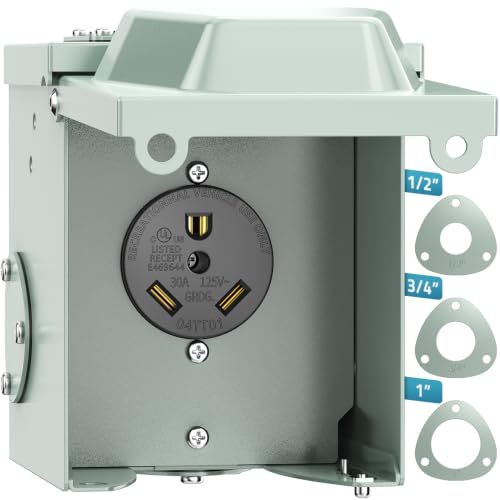
The PAULINN 30 Amp RV Power Outlet Box is a focused solution for anyone parking a travel trailer or pop-up that draws only basic 125-volt power. The TT-30R receptacle is the standard found on most RVs with a single air conditioner and modest appliance load.
It’s a simpler product than the Siemens Talon panel above, since it handles a single 30A outlet rather than three receptacles. The lockable, swing-style weatherproof cover is the headline feature here: owners commonly appreciate that the cover closes over the plug and can be padlocked, which discourages casual theft of power or tampering in unattended camp setups.
Everyday Advantages
- UL Listed for safety assurance in outdoor installations.
- Weatherproof, lockable swing cover protects the receptacle when not in use.
- Compact footprint fits tight exterior walls and small utility pedestals.
- Compatible with standard 30A RV power cords.
Points To Keep In Mind
- Only handles 30A; larger motorhomes with 50A service should look at the PAULINN 50 Amp RV Outlet Box.
- Single receptacle means no flexibility for an extra tool or appliance at the same pedestal.
Feature Snapshot
Made For
Travel trailer owners and small-RV households that only need a single 30A outdoor outlet.
Look Elsewhere When
The PAULINN RV Electrical Panel with Breaker fits larger RVs and full-hookup sites that need 20/30/50 amp receptacles on one pedestal.
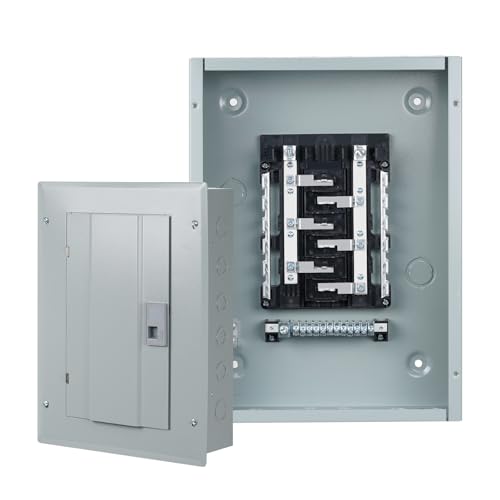
The JINDOUZI 12-Space, 125A panel is a comfortable middle ground for whole-home electrical distribution. Twelve circuits give a typical small-to-mid house enough room for kitchen, laundry, HVAC, and a few spare slots for future circuits, all on a 120/240V split-phase system.
It’s a more generous option than the 8-space and 4-space siblings below, but it skips the brand-name recognition of a Square D Homeline. For homeowners comfortable sourcing their own breakers and who aren’t locked into a specific panel brand, this steel-enclosed load center is a practical residential fit.
Advantages To Know
- 125A rating covers most average suburban homes’ draw.
- Steel enclosure offers solid physical protection for indoor mounting.
- 120/240V split-phase compatibility matches standard residential service.
- Twelve spaces give headroom for room additions or workshop circuits.
Trade-Offs
- Brand has less installer familiarity than mainstream US panel names.
- No factory main breaker mentioned; verify your local code on main lug setups.
Whose Shelf It Belongs On
Homeowners rewiring a modest single-family house who want more circuit headroom than the 8-space model.
Reach For A Different Pick When
The Square D HOM2448M100PCVP gives you 24 spaces and a plug-on neutral bus, which suits larger homes with bigger expansion plans.
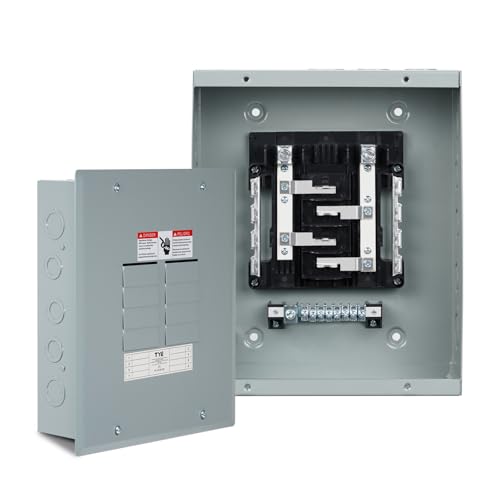
Eight circuits sounds tight, but for small homes, accessory dwelling units, and detached garages, it can be plenty. The JINDOUZI 8-space panel keeps the same 125A capacity and 120/240V compatibility as its larger siblings, just in a smaller box.
This is the kind of panel I think of when someone wants a sub-panel off their main service to feed a workshop. Compared to the 12-space panel above, it sacrifices four circuits in exchange for a tighter physical footprint on the wall.
Real-World Strengths
- 125A capacity leaves ample headroom for sub-panel use.
- Compact size suits tight utility rooms and garage walls.
- Steel enclosure is built for long-term indoor mounting.
- 120/240V split-phase matches most home branch circuits.
Some Limits To Know
- Eight circuits can fill up fast once you add HVAC, water heater, and kitchen small appliances.
- Less common than name-brand panels at big-box stores; plan ahead on parts.
Best Suited To
Garage sub-panel installs and small ADU projects where circuit count is modest.
Consider Something Else When
Whole-home rewires typically want the JINDOUZI THQL 12-Space panel for breathing room.
The 4-space JINDOUZI is the smallest residential-flavored panel I’m comfortable pointing homeowners toward. It still offers genuine 125A capacity at 120/240V, but the four-circuit ceiling makes its purpose very specific: power a shed, a small workshop, or a handful of dedicated loads.
Where the 8- and 12-space versions of this same panel are reasonable choices for compact homes, this one is really a targeted sub-panel. Compared to the larger JINDOUZI options above, you trade most of your expandability for the smallest possible wall footprint. In most sheds, that’s enough.
A Few Strong Suits
- Smallest wall footprint of any panel on this list.
- 125A capacity is generous for a shed or workshop sub-panel.
- Same 120/240V compatibility as larger JINDOUZI models.
- Steel indoor enclosure keeps dust and debris off the breakers.
Practical Considerations
- Four circuits fills up the moment you add lighting, a receptacle circuit, and a dedicated tool circuit.
- Not UL Listed, which can complicate permitting in stricter jurisdictions; verify with your local inspector.
Perfect Match For
Shed and small workshop owners who just need a few dedicated circuits off a sub-feed.
Swap It Out When
Anyone outfitting a livable space should step up to the JINDOUZI 8-space panel for actual breathing room.
The Square D HOM612L100SCP is one of those panels electricians install without thinking twice. It’s a 6-space, 12-circuit Homeline unit with 100A main lugs, designed for indoor surface mounting in small homes, accessory structures, and modest service upgrades.
The Homeline line is a familiar name at supply houses, so finding compatible breakers and accessories rarely takes a phone call. Compare that to the JINDOUZI options above, where breaker compatibility may need an extra check; Square D Homeline breakers are stocked almost everywhere electrical work happens. For homeowners who care about ease of service years down the road, that ecosystem matters.
What Stands Out
- Homeline breakers and accessories are easy to source locally.
- 100A main lugs cover most small-home service scenarios.
- 6 spaces accept up to 12 single-pole circuits using tandem breakers.
- Indoor surface-mount design suits basement and utility room installs.
Where It May Fall Short
- Six spaces fill up quickly in homes with central air or modern kitchen appliance counts.
- 100A service is on the low end for many newer builds; verify your utility’s minimum.
Feature Card
Who Should Grab It
Homeowners and contractors doing small-home service upgrades who want a panel brand stocked everywhere.
Where A Sibling Pick Shines
The Square D HOM2448M100PCVP is a better fit for full-house installs that need 24 spaces and room to grow.
The PAULINN RV Electrical Panel is the three-receptacle counterpart to the single-outlet RV boxes elsewhere on this list. It arrives pre-wired with 20A, 30A, and 50A receptacles, each on its own dedicated breaker, ready to drop into an RV pedestal or a backyard hookup post.
It borrows the trio-of-outlets concept from the Siemens Talon panel above but is purpose-built for RV living rather than construction sites. In our view, this is the cleanest answer for a permanent RV site that needs to welcome any visitor rig, from a small trailer to a 50-amp motorhome. The extra-wide interior space is genuinely useful when wrestling with thick RV cords.
What Pays Off
- Three receptacles (20/30/50A) handle virtually any RV that pulls in.
- Pre-wired design saves installation time at the pedestal.
- UL Listed for outdoor RV hookup applications.
- Lockable, weatherproof enclosure for unattended camp setups.
Less-Strong Areas
- Heavier and bulkier than single-outlet RV boxes.
- Specialized use case; overkill for a single-RV household with one cord size.
Who Will Love This
RV park operators and homeowners hosting a variety of rig sizes in their yard.
Not Your Match When
Solo RV owners with a known 30A trailer should pick the smaller PAULINN 30 Amp RV Power Outlet Box and save space.
The NEMA 14-50R receptacle is the same outlet many garage EV chargers use, so this PAULINN box pulls double duty. It delivers 125/250V at 50A, which is enough for a large motorhome with dual air conditioners, or for a Level 2 EV charger at home.
It’s a different creature from the 30A RV outlet box above, which only handles 125V service. The 14-50R’s 250V capability opens up options for higher-draw appliances, and the anti-theft lockable cover is a small but appreciated detail for outdoor installations where the outlet might otherwise sit exposed for days.
Key Advantages
- NEMA 14-50R handles both large RVs and Level 2 EV charging.
- 125/250V capability broadens supported appliances.
- UL Listed for residential outdoor use.
- Lockable, weatherproof swing cover deters casual power theft.
Possible Compromises
- Single outlet; multi-RV households need the PAULINN RV Electrical Panel with Breaker.
- Requires thicker 6 AWG or larger feeder wire; budget for that and the breaker.
Quick Technical Notes
Best Suited To
Homeowners setting up a 50A RV feed in the driveway or a backyard Level 2 EV charging outlet.
Another Choice May Suit
The PAULINN 30 Amp RV Power Outlet Box is a smarter pick for owners of smaller travel trailers on 30A service.
The 125A main breaker version of the Siemens TL137US Talon takes the original temporary power panel and adds a real main breaker inside. For active job sites, that’s the meaningful upgrade: a single disconnect for the whole pedestal instead of relying on upstream protection.
Compared to the unmetered Talon at the top of this list, the difference is more about installation flexibility than everyday use. In most active job sites, this is the safer-feeling choice, though the trade-off shows up in cost and a slightly heavier enclosure.
Where It Delivers
- Built-in 125A main breaker adds a clear local disconnect point.
- Same 20/30/50A receptacle trio as the original Talon.
- Outdoor-rated, UL Listed enclosure.
- Padlockable for site security.
Honest Caveats
- Unmetered design still means it’s not a billing panel.
- Heavier than the main-lug Talon, so wall mounting needs solid backing.
Built With In Mind
Contractors running long-duration job sites where a built-in main breaker simplifies inspections.
Where Another Pick Suits Better
The Square D HOM2448M100PCVP is the better fit when the goal is whole-home residential distribution, not temporary site power.
The Square D HOM2448M100PCVP is the panel I’d hand to most homeowners building or rewiring a real house. Twenty-four spaces accommodating 48 circuits, a 100A two-pole main breaker, plug-on neutral design, and a tin-plated aluminum bus bar inside a welded steel enclosure: that’s a serious residential load center.
Compared to the smaller HOM612L100SCP earlier in this list, the difference is sheer scale. For a typical suburban home with central air, an EV charger, and a finished basement, you want that room. The plug-on neutral design also speeds up wiring for AFCI and GFCI breakers, which most jurisdictions now require for living-area circuits.
Where It Excels
- 24 spaces, 48-circuit capacity covers most whole-home electrical plans.
- Plug-on neutral bus simplifies AFCI/GFCI breaker wiring.
- Welded sheet steel enclosure with baked enamel finish for indoor durability.
- Includes a 30A two-pole and a 20A single-pole breaker to start.
Soft Spots
- Larger physical box requires planning the wall opening for flush mount.
- 100A service may fall short of larger all-electric homes; verify against your load calc.
Feature Rundown
Who It Suits Best
Homeowners and electricians doing full-house rewires who want mainstream Homeline parts availability.
A Better Fit Elsewhere
The JINDOUZI 12-space panel is a tighter, simpler pick for small homes or modest budgets.
What Matters When You’re Choosing a Breaker Panel
Match the Amperage to Your Service
The panel’s amp rating (100A, 125A, and so on) should match or exceed the service your utility brings into the home. A 100A panel handles most small-to-mid homes, while larger all-electric houses may need 200A. Undersizing shows up quickly as nuisance tripping when HVAC, dryer, and oven run together.
Count Your Circuits Honestly
Spaces are physical breaker slots, while circuits are the actual protected runs. A panel advertised as 12-space, 24-circuit uses tandem breakers to double up, which can be useful but has code limits. For renovation projects, count what you have, add a 20% cushion for future circuits, and pick from there.
Indoor vs Outdoor Rating
Panels with a NEMA 1 rating are indoor-only. Outdoor installations need a NEMA 3R or similar weatherproof enclosure like the Siemens Talon or the PAULINN RV boxes. Mounting an indoor-rated panel outside is a code violation in most jurisdictions and a real corrosion risk.
Main Breaker vs. Main Lugs
A main breaker gives you a single disconnect for the whole panel, which many inspectors and electricians like. Main lug setups rely on an upstream disconnect, which is fine for sub-panels but can complicate whole-home installs. Confirm which one your project needs before ordering.
Picking the Right Fit Without Overpaying
Common Shopping Slip Ups
The most frequent mistake is buying a panel with too few spaces, then solving it later with tandem breakers where the code doesn’t allow them. Another is mixing brands of breakers and panels, which inspectors in stricter jurisdictions reject. Always match the breaker brand to the panel brand, and oversize the space count rather than undersizing.
Where The Extra Money Goes
Higher-tier panels like the Square D HOM2448M100PCVP charge more for the plug-on neutral bus, the welded enclosure, and the wider ecosystem of stocked breakers. For a full-house rewire you’ll live with for decades, that ecosystem and build quality are genuinely worth it. For a backyard shed, the JINDOUZI 4-space is plenty.
Frequently Asked Questions
What’s the difference between a breaker panel and a load center?
They’re the same thing. “Load center” is the term most panel manufacturers use in product specs, while “breaker panel” is the more common homeowner phrase. Either label points to the same enclosure that houses your branch circuit breakers.
Can I install a breaker panel myself?
In most jurisdictions, homeowners can do electrical work on their own property with a permit, but many localities require a licensed electrician for service entrance equipment. The Square D and JINDOUZI panels here are designed for professional installation, and the main lug versions especially need careful torqueing and conductor prep.
How do I know if my panel is undersized?
Frequent breaker tripping when large appliances start up is a strong clue. So is a panel that runs warm, hums audibly, or shows scorch marks around breakers. If you see any of those, an electrician should evaluate the service before you replace or upgrade components.
Do I have to match breaker brands to the panel?
Yes, in practice. UL listings pair specific breakers with specific panel bus designs, and mixing brands can void the listing. Square D Homeline panels take Homeline breakers; the JINDOUZI THQL panels take THQL breakers. Always verify compatibility before ordering.
How long does a residential breaker panel last?
Most modern panels are designed for decades of service, often 30 years or more. The first signs of aging are usually breakers that won’t reset, warm covers, or rust on the enclosure. Replacing breakers individually is common; replacing the whole panel is rarer and usually tied to a service upgrade or a renovation.
The Takeaway
A breaker panel isn’t a glamorous purchase, but it’s the one component of the house that quietly keeps everything else running. For full-home installs, the Square D HOM2448M100PCVP earns its place at the top of the shortlist. For sheds, garages, and outdoor RV feeds, the smaller JINDOUZI and PAULINN units cover the use cases without overspending. Match the panel to the service, the spaces to your circuit count, and the enclosure rating to where it will live, and the rest tends to fall into place.
