

Picking the right breaker box feels intimidating until you realize what it actually does. It’s the quiet hub that quietly splits incoming power into branch circuits, with breakers that trip when a circuit overloads and protect everything downstream. I pulled together eight options worth a look, from compact DIN-rail enclosures to a full 100A residential load center, so you can match capacity, environment, and code reality to your project.
The Shortlist At A Glance

QILIPSU 6 Way DIN Rail Circuit Breaker Box IP65 Waterproof Enclosure

QILIPSU 9 Way DIN Rail Circuit Breaker Box IP65 Waterproof Enclosure

Box of 10 Square D HOM120 Plug-On Circuit Breakers 20A
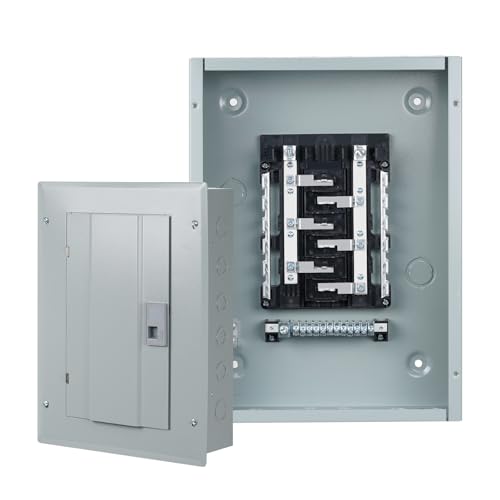
JINDOUZI THQL 12-Space 125A Indoor Main Lug Load Center
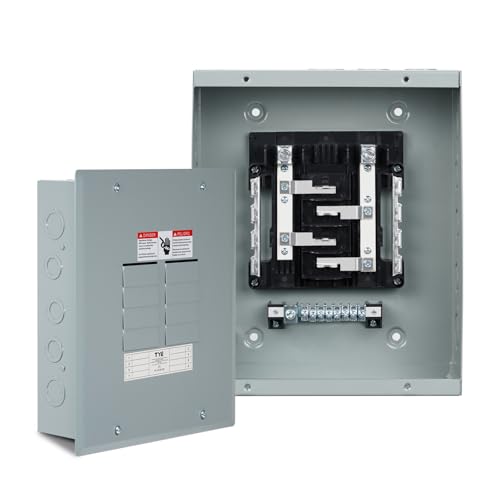
JINDOUZI THQL 8-Space 125A Indoor Main Lug Load Center
JINDOUZI THQL 4-Space 125A Indoor Main Lug Load Center
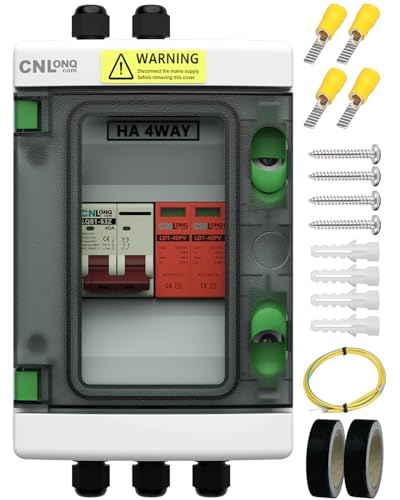
CNLonQcom 40A DC 500V Solar Disconnect with Surge Protection

Square D Homeline 100A 24-Space Indoor Breaker Box HOM2448M100PCVP
What Each Pick Brings To The Table
Subpanels in damp locations like carports, detached garages, or pool equipment pads have one enemy: water vapor. This QILIPSU 6-way enclosure addresses that head-on with an IP65 rating (meaning it blocks dust and low-pressure water jets) and a molded PC/ABS shell built to a UL94-V0 flame rating (a plastics test where the material self-extinguishes in under 10 seconds). A DIN rail (the standardized metal strip breakers clip onto) accepts standard modular breakers, and longer copper bus bars (the conductive strips that distribute power between circuits) give you more landing points than entry-level enclosures.
I see this fitting someone adding a small workshop off the back of a house. Six ways covers a lighting circuit, a couple of receptacle circuits, and maybe a dedicated 240V feed for a small compressor. The sealing means you don’t have to baby it about weatherproofing as much, though you should still mount it where it doesn’t sit in standing water.
A Favorable Mix
- IP65 sealing handles rain, splashes, and dusty environments without extra gasketing.
- UL94-V0 plastic shell resists flame spread, a real plus near woodworking or welding areas.
- Extra-long copper bus bars ease wiring in tight quarters and reduce hot spots under load.
- Compact 6-way footprint tucks into utility corners where a 12-space panel would feel wasteful.
Things To Consider
- This is an enclosure, not a complete service panel, so you’ll still need to source breakers separately.
- Outdoor plastic enclosures can fade under direct UV, so shaded mounting prolongs the cosmetic finish.
Right Fit For
Homeowners adding a small detached garage, garden shed, or carport subpanel who need sealed protection without overspending.
Look Elsewhere When
Someone outfitting a full home needs the Schneider Electric Homeline panel reviewed below instead, which ships as proper service equipment.
The 9-way sibling of the QILIPSU enclosure uses identical IP65 sealing and PC/ABS construction, just stretched to fit more circuits. Where the 6-way version covers a workshop on the lean side, this one handles a slightly larger load, a string of low-voltage DC gear in a solar shed, or a backyard setup with a subpanel feeding lighting, a pump, and several outlets. The deeper chassis leaves more room behind the rail for cable bending, which matters when you’re routing 6 AWG feeders.
For most DIYers planning a PV array disconnect combiner, this box earns its keep. I’ve seen similar enclosures used to land DC disconnects, charge controllers, and surge devices in one tidy location, and the extra three slots compared to the 6-way feel worth the step up once you start filling circuits.
The Value In It
- Three extra ways over the 6-way model let you grow into more circuits without swapping enclosures.
- Same proven IP65 and flame-retardant shell, so you don’t trade safety for capacity.
- Generous internal depth supports thicker conductors and tidy bend radius.
Points To Note
- Larger enclosure needs more wall space; verify your stud bay or post mount before committing.
- Like all DIN-rail enclosures, it relies on separate breakers and bus hardware that you source and assemble yourself.
Feature Snapshot
Made For
Off-grid enthusiasts and solar DIYers consolidating PV disconnects, surge protection, and branch circuits inside one weatherproof housing.
Swap It Out When
You only need three or four branch circuits; the smaller 6-way QILIPSU enclosure keeps the install tighter and lighter on the wall.
This one’s a refill pack rather than a panel. It’s a box of Square D HOM120 breakers, the 20-amp single-pole units designed for the Homeline panel family, sold in a 10-pack for stocking up. Each breaker is rated 20A at 120/240V, so it covers the most common household branch circuit: general receptacle and lighting runs.
The honest case for buying in bulk is when you’re building out a new Homeline panel and need a stack of identical breakers, or you manage rental units and want a few spares on the shelf for fast swap-outs. Square D’s Homeline platform is the dominant residential panel family, so compatibility here is essentially guaranteed if your panel accepts HOM breakers.
What Stands Out
- Bulk packaging trims cost per breaker versus buying singles at the hardware store.
- Plug-on design clips directly onto the Homeline bus without separate lug hardware.
- Square D brand familiarity is reassuring for inspectors and insurance adjusters.
Trade Offs
- Single-pole 20A only, so a real panel build also needs 15A, 30A, 2-pole, and GFCI or AFCI breakers sourced separately.
- Homeline compatibility is essentially required; mixing brands across panels can cause fitment headaches.
Best Suited To
Homeowners finishing a Homeline panel install or stocking spares for a property portfolio with Square D service equipment.
A Better Fit Elsewhere
If you don’t already have a Homeline panel, the Square D Homeline 100A breaker box reviewed below pairs naturally with this refill stock.
Mid-sized renovations and detached workshops usually land here, in the 12-space zone. This JINDOUZI panel offers 12 breaker spaces inside a NEMA 1 steel enclosure (a basic indoor rating that protects against incidental contact but not water), rated at 125A with a main lug setup. A main lug panel means there’s no factory main breaker; the upstream disconnect does the heavy lifting.
Compared with the larger Square D Homeline, this trades name recognition for capacity headroom at lower amperage. Twelve spaces handles a garage subpanel feeding a few receptacle circuits, lighting, a small HVAC disconnect, and a dedicated outlet for a welder. You may find the steel cabinet somewhat utilitarian next to a Homeline’s flush-mount cover, but for a working garage, function beats polish.
The Practical Payoff
- 125A bus supports most residential subfeed needs without bottlenecking branch circuits.
- 12 spaces leave room for future expansion as needs grow.
- NEMA 1 steel shell handles typical indoor dust and incidental contact.
- THQL breaker compatibility means parts are readily available.
A Few Limitations
- No main disconnect inside the panel itself, so you’ll need an upstream breaker or fused disconnect.
- Indoor rating only; even covered porches can let in enough weather to warrant a sealed enclosure.
Quick Facts
Right Fit For
Property owners feeding a medium-sized garage or addition from an existing service panel who need more branch circuits than a small subpanel offers.
Not Your Match For
Whole-house service applications belong on the Square D Homeline 100A panel, which arrives with a main breaker already installed.
When 12 spaces feels like overkill, the 8-space version of the same JINDOUZI panel steps in. It carries the same 125A bus and NEMA 1 steel enclosure, just compressed into a tighter box that disappears into smaller utility rooms. Small workshops, basement finishing projects, and outbuilding subpanels all line up as natural fits.
Eight breaker positions is enough for lighting, a couple of receptacle circuits, a dedicated dryer or EV outlet, and headroom for one more circuit later. It pairs nicely as a feeder off a 100A or larger main panel, and the THQL breaker family is shared with the larger model, so you keep parts commonality across builds.
Strengths Worth Knowing
- Compact chassis fits shallow utility closets and basement stair landings.
- Same 125A bus as the 12-space version, no downgrade in current handling.
- Shared breaker family means stocking one type across multiple panels.
Possible Compromises
- Only 8 circuits limits what you can power; a kitchenette subpanel would feel cramped fast.
- No main breaker, requiring upstream disconnect coordination.
Best Suited To
Homeowners adding a small workshop, finishing a basement, or feeding a modest outbuilding who want 125A capacity without a 12-space footprint.
Skip It When
You need fewer than four circuits and don’t want a main lug at all; the 4-space JINDOUZI panel below offers a leaner option.
Four spaces is the smallest practical breaker box for a real subpanel, and JINDOUZI uses that space wisely. Same 125A bus, same NEMA 1 steel construction, just pared down for a single-room addition, a tiny studio apartment, or a backyard casita. You can run a lighting circuit, a receptacle circuit, a small appliance circuit, and still have one spare.
This box is also popular as a disconnect adjacent to equipment like a mini-split or a subfeed from a solar inverter. Without a main breaker, you’ll usually pair it with a fused disconnect upstream. The trade-off worth flagging: this listing specifically notes no UL approval, which can matter to inspectors.
Positive Takeaways
- Truly tiny footprint slips into shallow walls and equipment closets.
- 125A rating carries the same capacity as the larger siblings.
- Useful as an equipment disconnect when paired with a fused upstream switch.
Honest Caveats
- No UL listing per the manufacturer description, so check with your local inspector before pulling a permit.
- Four circuits fills up fast; plan for the inevitable expansion panel in a year or two.
Built With In Mind
Tiny dwellings and ADUs where a subpanel needs to live in a shallow wall cavity with a minimal circuit count.
Where A Sibling Pick Shines
When more circuits are inevitable, the 8-space JINDOUZI panel above keeps the same 125A rating with double the breathing room.
Solar arrays behave differently from household AC circuits, so they need their own protection gear. CNLonQcom’s PV combiner box lives between the panels and the inverter, carrying a 40A DC breaker rated up to 500V, plus a surge protection device (SPD) that shunts lightning-induced spikes to ground before they fry your inverter. The IP65 enclosure lets it live outdoors next to the array.
This is a niche pick, but for off-grid cabins, RV solar setups, or grid-tied arrays where the AHJ (Authority Having Jurisdiction, the local inspector or utility) wants a visible disconnect at the array side, it’s purpose-built. I wouldn’t try to repurpose a QILIPSU DIN enclosure for this job; DC switching and surge clamping call for properly rated components.
Real Benefits
- Purpose-built for PV, with breakers and surge devices matched to DC array behavior.
- 500V DC rating covers most residential string inverter setups.
- Integrated surge protection saves a separate SPD purchase.
- IP65 enclosure tolerates rooftop or pole-mount exposure.
Less-Strong Areas
- Niche application, so it sits unused for any non-solar project.
- DC breakers and surge arresters should be inspected periodically, especially after major storm events.
Feature Snapshot
Right Fit For
Solar installers and off-grid homeowners who need a code-friendly DC disconnect with built-in surge protection near the array.
Consider Something Else When
You’re not running PV. The QILIPSU 9-way enclosure reviewed above is the more versatile general-purpose pick.
This is the panel most residential electricians reach for first. The Square D Homeline HOM2448M100PCVP arrives as full service equipment: a 100A main breaker, 24 breaker spaces, support for up to 48 circuits via tandem breakers, plug-on neutral (PoN) compatibility for faster AFCI and GFCI wiring, and a tin-plated aluminum bus bar (a conductive strip that distributes electricity between breakers) inside a welded sheet steel enclosure with a baked enamel finish. UL listed, which matters for inspectors.
For whole-home service on smaller houses, ADUs, or full panel replacements where 100A is still acceptable to the local utility, this is the workhorse. Compared with the JINDOUZI panels above, you trade lower cost for brand backing, code listing, and a plug-on neutral that simplifies arc-fault and ground-fault breaker wiring. You can pair it with the HOM120 refill pack from earlier in this list and have a complete, easily expandable system.
Notable Upsides
- 24 spaces with 48-circuit tandem support grows with most household needs.
- UL listing smooths inspections and insurance paperwork.
- Plug-on neutral cuts wiring time on AFCI and GFCI circuits.
- Welded steel cabinet with enamel finish handles decades of basement or garage duty.
Where It May Fall Short
- 100A main is undersized for large modern homes with EV chargers and electric HVAC, so verify utility requirements.
- Cover and interior ship separately on some orders, so check the listing before scheduling the install.
Technical Highlights
Perfect Match For
Homeowners replacing an outdated fuse box, finishing new construction on smaller homes, or anyone who needs UL-listed service equipment that passes inspection the first time.
Where Another Pick Suits Better
You only need a weatherproof subpanel for a shed; the QILIPSU 6-way enclosure covers that job without paying for service-rated hardware.
Picking The Right Capacity And Enclosure Type For Your Project
The most useful first question is whether you need service equipment or a subpanel. Service equipment (the kind that ties directly to the utility meter) must include a main breaker or main lug setup that’s listed for service entrance use, and it usually requires UL or equivalent third-party certification. Subpanels downstream of the main service can be simpler, but they still need a safe enclosure, proper grounding, and breakers matched to the bus.
Amp rating (the maximum continuous current the panel can safely carry) is the next decision. A 100A panel suits small homes, ADUs, and modest renovations. Larger modern houses with central air, EV charging, and electric water heating often step to 150A or 200A. For a workshop or shed subpanel, a 125A main-lug panel like the JINDOUZI 8-space or 12-space gives breathing room without overspending on hardware you won’t fully load.
Enclosure rating matters whenever the panel lives outside a conditioned space. IP65 means the box is dust-tight and resists water jets, which covers most outdoor installations including solar disconnects. NEMA 1 ratings cover only indoor dust and incidental contact. A damp basement or unheated garage may not warrant IP65, but a carport, pool equipment pad, or rooftop solar combiner does.
Finally, breaker compatibility is often overlooked. Square D HOM breakers, GE THQL breakers, and Siemens QP breakers are not interchangeable. Once you pick a panel brand, stock breakers from the same family. The Square D Homeline pair in this list, the panel and the HOM120 refill pack, illustrate the most common residential compatibility in the US market.
Where Shoppers Go Wrong And When The Upgrade Pays Off
Common shopping slip ups usually trace back to three things: undersizing ampacity (picking a 100A panel for a home that really needs 200A), ignoring environment rating (installing a NEMA 1 indoor panel under an eave that sees sideways rain), and mixing breaker brands across panels. Each one passes a quick inspection at the store and a real failure in the field.
Higher-tier gear earns its keep in three places: UL or third-party listing (the inspector rarely argues with listed service equipment), copper bus bars (conductivity and heat dissipation improve over aluminum), and plug-on neutral compatibility (which slashes AFCI and GFCI wiring time on modern code cycles). For whole-home service equipment, those three justify the brand-name premium over a no-name import. For a garden shed subpanel, the savings matter more than the listing, so a QILIPSU or JINDOUZI enclosure makes more sense.
Frequently Asked Questions
What size breaker box do I need for a typical house? Most modern homes run on 150A or 200A service to handle central air, electric ranges, and EV charging. Smaller homes, ADUs, and older houses still get by with 100A panels like the Square D Homeline in this list.
Can I install a breaker box myself? Most jurisdictions allow homeowners to do their own electrical work with an owner-builder permit, but service equipment often requires a licensed electrician and an inspection. Check with your local building department before starting.
What’s the difference between a main breaker and main lug panel? A main breaker panel includes a built-in disconnect at the service entrance. A main lug panel relies on an upstream breaker or fused disconnect to serve that role. Both are legitimate; the choice depends on where in the distribution system the panel sits.
How many circuits can I fit in a 24-space panel? Twenty-four spaces accept 24 full-size breakers, but many slots accept tandem breakers (two breakers in one slot), so the HOM2448M100PCVP supports up to 48 circuits. The exact count depends on how many of your breakers need to be full-size, like a 2-pole 30A dryer breaker.
Do outdoor breaker boxes need to be rated for water? Yes. Any panel exposed to rain, splash, or hose-down water needs at least an IP65 or NEMA 4 rating. Indoor NEMA 1 panels will eventually corrode if mounted outside, even under an overhang.
Wrap Up
The right breaker box depends less on a single product ranking and more on what your project actually needs. A small shed wants a sealed 6-way enclosure. A whole-home service replacement wants a UL-listed panel with a main breaker. A solar array wants a purpose-built DC disconnect. Use the picks above to match the box to the work, and the rest of the install tends to fall into place.
