

A loose or corroded battery terminal is one of those small problems that turns into a big headache fast. From rough morning starts to flickering electronics, the connectors at each battery post quietly carry the load. I picked out 10 options that cover the common repair scenarios, whether the goal is a direct-fit replacement or a quick-disconnect setup for a trickle charger.
The Essentials At A Glance

EDS 926-200 Replacement Positive Battery Terminal

EDS 18790-01315 Replacement Multilink Fuse Link

SPARKING 6-Pack SAE to O Ring Terminal Harness 2FT
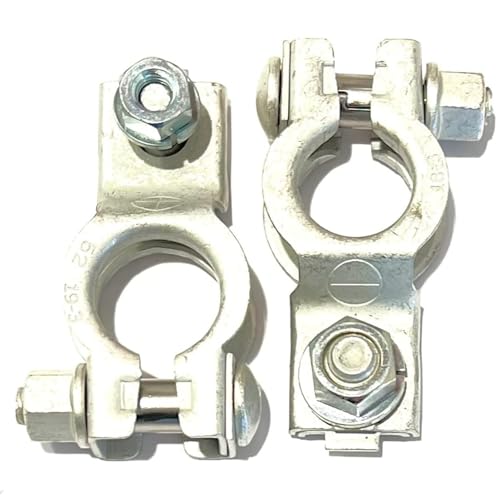
EDS 926-496 & 926-497 Positive & Negative Battery Terminal Connectors

EDS 91982-2M000 Positive Battery Terminal

EDS Custom Positive Battery Terminal 91980-3X010 with Crimp Cap
EDS 926-708 Negative Battery Terminal Connector

EDS 91980-3X010 Positive Battery Terminal Connector
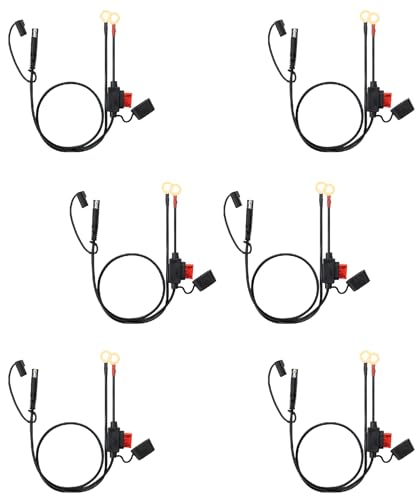
Bates SAE to O Ring Terminal Harness 2FT 6 Pack
EAPP 18790-01318 150 Amp Battery Fuse A
A Breakdown Of The Leading Choices
I keep coming back to direct-fit replacements like this one because they save the headache of fabricating or adapting a generic terminal. The EDS 926-200 is engineered as a swap for the 91982-2W000 positive terminal found on certain Hyundai and Kia vehicles, so a Santa Fe or Sportage owner is usually back on the road within an hour. The kit ships with both an M6 and M8 nut, which covers the common accessory cable sizes you might already have under the hood.
Where this stands out compared to the multi-pack SAE harnesses I cover later is its factory-style geometry. You’re not adapting a generic post clamp; you’re reinstalling the same shape and angle as the original part.
Key Advantages
- Engineered as a direct swap for the 91982-2W000 positive terminal, removing the need for shimming or reshaping
- Comes with both M6 and M8 hardware, so cable reattachment is usually straightforward
- Left-side positive orientation matches several Hyundai and Kia layouts, keeping routing tidy
- Restores clamping force that tends to loosen once a stock terminal has been removed a few times
Things To Consider
- This is the left-side terminal only; the right-hand counterpart is a different part number that needs to be ordered separately when both posts are shot
- You should still verify the 926-200 matches your specific year and trim before installing
Best Suited To
Owners of compatible Santa Fe and Sportage models who want a clean factory-style swap without improvising clamps.
Look Elsewhere When
Drivers needing both posts replaced should consider the EDS 926-496 & 926-497 set, which delivers a matched positive-and-negative pair in one box.
The multilink fuse, sometimes called a fusible link block, lives closer to the battery than most people realize and quietly protects multiple circuits at once. The EDS 18790-01315 swaps in for the factory unit on certain Hyundai and Kia models, with eight circuits rated across a range of amperages from 40 to 80 amps. For an Elantra, Sonata, or Optima owner chasing a parasitic draw or a sudden no-start condition, this is often the unsung culprit.
Unlike the simple ring-terminal harnesses on this list, this is a circuit-protection module rather than a connection lead. Its job is to sacrifice itself before damage reaches downstream wiring.
Features That Help
- Eight integrated circuits replace a tangled web of inline fuses and keep the under-hood layout tidy
- Multiple current ratings allow each circuit to match the load of the component it feeds
- Direct replacement for the 18790-01315 part number simplifies sourcing for older Hyundai and Kia vehicles
- Acts as a single inspection point when chasing electrical gremlins instead of probing scattered fuses
Honest Caveats
- Installation requires careful labeling of each circuit before removal, especially on vehicles that have had aftermarket accessories tapped in
- Not a universal battery terminal, so this only solves a problem if the multilink is genuinely the failed component
Who It Suits Best
Hyundai Elantra, Sonata, and Kia Optima owners troubleshooting cluster-wide electrical issues who want a clean factory-style fuse replacement.
Consider Something Else When
Someone needing a high-amp main fuse for newer Hyundai and Kia models will find a more direct fit in the EAPP 18790-01318 150 Amp Battery Fuse.
For anyone running a small fleet of powersports vehicles or just likes to keep spares in the garage, a multi-pack of SAE harnesses is the kind of thing you forget you own until you need it. The SPARKING six-pack includes 2-foot cables with 16 AWG conductors, a 10-amp inline fuse, and ring terminals that bolt right onto the battery post. The SAE quick-disconnect on the other end makes hooking up a trickle charger or a tender almost effortless.
Compared to the direct-fit OEM terminals earlier on the list, this is the opposite philosophy: a universal harness designed to live between the battery and whatever accessory you’re maintaining.
Positive Takeaways
- Six cables mean you can outfit multiple bikes, mowers, or ATVs without reordering next time
- The SAE quick-disconnect lets you plug in a tender in seconds without fumbling with alligator clips
- Rated for 12 to 24V DC, covering most cars, motorcycles, and small equipment
- The inline 10A fuse adds a layer of protection before current reaches the battery itself
Trade Offs
- The 2-foot length can feel short on larger vehicles or when the battery sits deep in a side compartment
- SPT-2 jacket insulation handles garage temperatures fine, but owners in extreme heat report the cable stiffening over time
Made For
Garage tinkerers and motorcycle owners who want a tidy, repeatable way to keep batteries topped off across multiple machines.
A Better Fit Elsewhere
Someone needing a quick-disconnect for a single car battery might prefer the Bates SAE harness, which uses slightly thicker 18 AWG wire for a sturdier feel.
When both battery terminals show corrosion or the originals have been overtightened one too many times, replacing them in pairs just makes sense. The EDS 926-496 and 926-497 set delivers a matched positive and negative replacement engineered for select Chrysler vehicles. Buying the pair also ensures the clamping force and finish match across the battery, which tends to look cleaner under the hood.
This is a different beast from the SAE quick-disconnects. These are direct-fit OEM-style clamps meant to bolt permanently back onto the battery posts.
Practical Pluses
- Matching pair keeps the battery side consistent in both fit and finish
- Engineered to match factory dimensions for part numbers 926-496 and 926-497
- Restores solid clamping force that tends to relax once a stock terminal has been cycled several times
- Direct fitment removes the need to bend, file, or shim a universal terminal into place
Possible Compromises
- Buyers still need to confirm fitment against their specific Chrysler model and trim before installing
- For owners only replacing one side, the single-positive EDS 91980-3X010 is a more focused purchase
Right Fit For
Chrysler owners refreshing both battery posts at once who want a matched factory-style replacement pair.
Skip It When
Someone only chasing a single bad post on a Chrysler Town & Country might find the dedicated EDS 926-708 negative terminal a more cost-effective pick.
Material choice is one of those quiet details that separates a connector that lasts from one that goes green after a year. The EDS 91982-2M000 uses a C2680 copper alloy body with a tin plating, which both improves conductivity and slows down corrosion on the surface. For Genesis, Hyundai, and Kia owners who deal with salted winter roads, that finish matters more than most people expect.
Where the EDS 926-200 covers earlier Hyundai/Kia layouts, this terminal targets the 91982-2M000 part number found on different model years, including some Genesis vehicles.
Reasons It Performs
- C2680 copper alloy body handles sustained current without heating up
- Tin plating resists the white-green corrosion that plagues bare copper terminals
- Covers part numbers 91982-2M000, 919822M000QQH, 91982-2M010, and 91981-2M000 for broader compatibility
- Direct-fit geometry removes the improvisation that generic clamps often require
Worth Noting
- The matching negative terminal is sold separately, so replacing both posts means ordering two items
- You should still cross-check the specific OEM part number on your existing terminal before committing
Who Will Love This
Genesis, Hyundai, and Kia owners in corrosion-prone climates who want a long-lasting plated replacement over a bare-copper generic.
Swap It Out When
Drivers needing an integrated fusible link in the same Hyundai/Kia family should look at the EDS Custom Positive Battery Terminal 91980-3X010 with Crimp Cap.
Some positive battery terminals do double duty, clamping the post while routing current through a small fusible link. The EDS 91980-3X010 combines both into one assembly, designed for select Hyundai and Kia models like the Sonata, Tucson, Optima, and Sportage. The integrated link gives the circuit a sacrificial weak point before current reaches downstream wiring, which is the kind of protection most people don’t realize they were missing.
Compared to the EDS 91982-2M000 covered earlier, this one trades the tin-plated finish for an integrated fuse function.
Well-Handled Touches
- Integrated fusible link adds circuit protection that a plain clamp can’t offer
- Custom design for the 91980-3X010 layout avoids the universal-clamp improvisation that frustrates first-timers
- Crimp cap simplifies attaching accessory leads without improvising ring terminals
- Direct fitment for several popular Hyundai/Kia nameplates keeps sourcing simple
Small Caveats
- Fitment varies by model year and trim, so the OEM part number on the existing terminal should be confirmed first
- If the original fusible link is intact, swapping to this part means intentionally adding a fresh protection element
Perfect Match For
Sonata, Tucson, Optima, and Sportage owners who want both a clean clamp and built-in overcurrent protection in a single part.
Another Choice May Suit
Drivers with the earlier 91982-2W000 layout will find the EDS 926-200 a closer match for their vehicle.
The negative post doesn’t get the same attention as the positive side, but it’s often the one that cracks from over-tightening or corrodes from battery off-gassing. The EDS 926-708 is built as a direct replacement for the 68226708AA terminal found on select Chrysler Town & Country and Grand Caravan models. It’s a focused, single-purpose part, which is exactly what you want when chasing a specific OEM part number.
This sits between the EDS 926-200 covered earlier and the matched 926-496/497 pair: a direct-fit negative terminal for Chrysler minivan owners.
What Earns Its Place
- C2680 copper alloy with tin plating matches the finish found on the EDS positive terminals in this list
- Direct fit for the 68226708AA negative terminal streamlines sourcing for Chrysler minivan owners
- Tin surface resists the white corrosion that bare copper develops after a few winters
- Engineered as a standalone replacement, so you don’t have to buy a pair when only one side is bad
Points To Keep In Mind
- Only covers the negative side, so positive post issues need a separate part
- Fitment depends on the specific Town & Country or Grand Caravan year and trim
Whose Shelf It Belongs On
Chrysler Town & Country and Grand Caravan owners who need a focused negative-side replacement without buying a matched pair.
Where A Sibling Pick Shines
Someone refreshing both posts at once will get more value from the EDS 926-496 & 926-497 Positive & Negative set.
If you’ve ever pried open a corroded factory terminal and watched it crumble, the appeal of a copper-alloy replacement becomes obvious fast. The EDS 91980-3X010 uses the same C2680 copper alloy with tin plating found on other EDS terminals, engineered as a direct fit for the 91980-3X010 and 68226707AA part numbers. For Hyundai and Kia owners chasing steady voltage and a clean chassis ground path, the material upgrade alone is often worth the swap.
Compared to the fusible-link version covered just before, this terminal skips the integrated fuse in favor of a more straightforward clamp design.
Strong Points
- C2680 copper alloy offers higher current capacity than generic brass replacements
- Tin plating resists corrosion in humid or salted environments
- Direct fit for two common OEM part numbers widens vehicle coverage
- Cleaner connection point helps steady voltage-sensitive accessories like infotainment and sensors
Practical Considerations
- Owners should still verify the exact OEM part number on the original terminal before ordering
- This is the positive-side clamp only, so a negative counterpart must be sourced separately
Built With In Mind
Hyundai and Kia owners who want a conductivity-focused upgrade over a corroded factory clamp and don’t need an integrated fusible link.
Reach For A Different Pick When
Someone needing built-in overcurrent protection should choose the EDS Custom Positive Battery Terminal 91980-3X010 with Crimp Cap instead.
A quick-disconnect harness turns battery maintenance from a chore into a one-handed task. The Bates six-pack ships with 18 AWG SPT-2 wire, a 2-pin SAE connector on one end, and ring terminals sized for common battery posts on the other. It’s the kind of thing you bolt onto every lawn mower, ATV, or motorcycle in the garage so a tender just clicks into place when storage season arrives.
Where the SPARKING six-pack earlier uses 16 AWG wire, this Bates kit trades a bit of conductor size for the slightly stiffer feel of 18 AWG.
Everyday Wins
- Six-cable multi-pack outfits an entire small fleet in a single purchase
- 2-pin SAE quick-disconnect works with most standard battery tenders
- Ring terminals bolt directly to the battery posts without modification
- SPT-2 jacket holds up to garage temperatures and flexes cleanly around tight battery compartments
Worth Bearing In Mind
- The 2-foot length runs short on larger vehicles or batteries mounted deep in side compartments
- 18 AWG wire handles tender duty well but isn’t sized for high-current accessory loads
Who Should Grab It
Owners of multiple mowers, ATVs, or motorcycles who want one consistent quick-disconnect system across the whole garage.
Not Your Match When
Drivers needing a slightly heavier-gauge harness for a single car should consider the SPARKING 16 AWG six-pack instead.
The main battery fuse, sometimes called the “A” fuse, sits between the battery and the rest of the electrical system, and when it blows the whole car goes quiet. The EAPP 18790-01318 is a 150-amp replacement engineered for a long list of Hyundai and Kia models from the Elantra to the Optima and Sorento. It’s a focused part: one fuse, one purpose, one fix when you’ve confirmed it’s the failed component.
Compared to the multilink fuse link earlier on the list, this is a single high-amperage protection element rather than a multi-circuit module.
Useful Highlights
- 150-amp rating covers the main feed for most Hyundai and Kia vehicles in the listed model years
- Direct replacement for the 18790-01318 part number avoids improvising a fuse that doesn’t match the spec
- Single-element design makes diagnosis and replacement straightforward
- Wide vehicle coverage across sedans, hybrids, and crossovers
A Few Limitations
- This is the “A” fuse only; vehicles with a separate “B” fuse will need a second part for a complete refresh
- Confirming the failed fuse is actually the cause of the no-start or charging issue requires some basic electrical diagnosis first
The Right Fit
Hyundai and Kia owners chasing a confirmed main-fuse failure who want a direct-spec replacement rather than improvising with an off-brand fuse.
Where Another Pick Suits Better
Someone with a failing multi-circuit fuse block should look at the EDS 18790-01315 multilink module, which handles several smaller circuits at once.
Picking Battery Terminal Connectors That Actually Fit
Match the OEM Part Number First
The single biggest reason a battery terminal “doesn’t fit” is a mismatched part number. Before ordering, look at the existing terminal on the vehicle; it usually has a stamped code like 91982-2W000 or 926-708. Cross-reference that code against the listing to confirm fitment for your specific year, make, and model. For Hyundai, Kia, Genesis, and Chrysler vehicles especially, even a one-year difference can swap the terminal geometry.
Decide Between Direct-Fit and Universal Harnesses
Direct-fit OEM replacements like the EDS 926-200 or 926-708 are designed to bolt right onto the battery post and reattach accessory cables with minimal fuss. Universal SAE harnesses like the SPARKING and Bates six-packs sit between the battery and a charger or tender, offering a quick-disconnect for maintenance rather than a permanent clamp. The right choice depends on whether you’re repairing the connection itself or adding a maintenance convenience.
Pay Attention to Material and Plating
C2680 copper alloy with tin plating is a common upgrade over bare copper or generic brass. Copper carries current more efficiently, and the tin layer slows the white-green corrosion that shows up after a winter or two. For owners in humid climates or places that use road salt, a plated finish tends to outlast an uncoated terminal by a noticeable margin.
Match the Fuse Rating to the Circuit
When the terminal includes a fusible link, the rating matters. A 150-amp main fuse is not interchangeable with a multi-circuit block designed for 40 to 80 amps per leg. Always match the new part to the amperage spec of the circuit it protects; oversizing can leave downstream wiring unprotected, and undersizing turns the part into a frequent replacement.
Key Considerations Across These Picks
Common Buying Slip Ups
The most frequent mistake I see is ordering by listing photo alone without checking the OEM part number stamped on the original terminal. Two visually similar terminals can have completely different geometries between model years or trim levels. Another trap is buying a multilink fuse when the actual failure is a single main fuse, or vice versa; both look like “the big fuse near the battery” but solve very different problems.
Where The Extra Money Goes
Higher-tier terminals tend to spend the premium on C2680 copper alloy bodies, tin plating for corrosion resistance, and integrated fusible links that combine clamp and protection in one part. For most commuters, a basic direct-fit terminal restores reliable starting just fine. For owners in salted-winter climates or anyone chasing long-term durability, the upgrade to a plated copper alloy tends to pay for itself in fewer repeat replacements.
Frequently Asked Questions
How Do I Know Which Battery Terminal Connector Fits My Vehicle?
Start by reading the OEM part number stamped on the existing terminal, then cross-reference that code against the listing. Fitment varies by year, trim, and engine, so the part number is more reliable than the model name alone.
What’s the Difference Between a Terminal and a Battery Fuse?
A terminal clamps onto the battery post and distributes current to the rest of the car, while a fuse sits in the line and breaks the circuit if current spikes. Some terminals include an integrated fuse, but most are clamps only.
Can I Replace Just the Positive Side?
Yes, you can replace just the positive or just the negative side. Many owners replace both at once for visual consistency, but a single bad post doesn’t require a matched pair.
Why Does My Battery Terminal Keep Corroding?
Corrosion usually comes from hydrogen gas venting from the battery, which reacts with the metal on the terminal. A tin-plated copper alloy resists this better than bare copper or generic brass.
Are SAE Quick-Disconnect Harnesses Worth It?
For owners of multiple seasonal vehicles, SAE harnesses make charging a one-click task instead of wrestling with alligator clips each time. They add a small inline fuse and a tidy mount point on the battery.
Closing Thoughts
A reliable battery terminal connector is one of those small parts that quietly keeps a car starting and electronics happy. Match the OEM part number, pick a finish that suits your climate, and choose between a direct-fit clamp and a quick-disconnect harness based on whether you’re repairing or maintaining. The right connector disappears into the job and lets the rest of the electrical system do its thing without complaint.
