

A loose or corroded cable end is one of those small parts that can ruin a perfectly good afternoon. The battery has plenty of charge, the engine cranks slow, and suddenly the whole weekend pivots around a six-dollar connector. Picking the right battery terminal cables means matching gauge, length, terminal size, and copper quality to how the system actually gets used.
For daily drivers, weekend off-roaders, marine setups, and anyone building a solar rig or inverter, the cable is the bridge between stored power and everything downstream. I pulled together ten options that cover the most common jobs, from a small bag of copper lugs for a quick repair to full pre-terminated welding cable for a dual-battery build. Each pick below leans on a specific strength, and I’ll point out where one outshines another.
An Overview Of The Picks

XHF 10PCS 6 AWG-5/16 Heavy Duty Battery Lugs with Heat Shrink Tubing

RED WOLF 1/0 Gauge Copper Wire Ring Terminals Lug 12 PCS
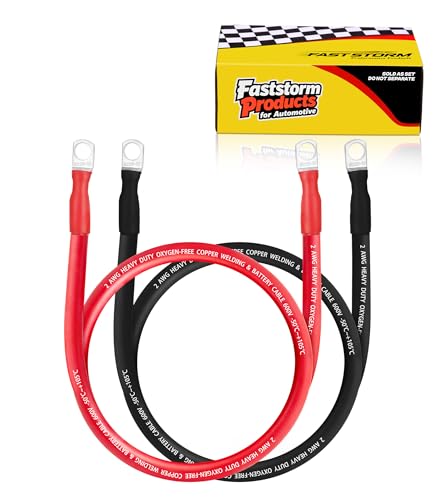
FASTSTORM 2 AWG Battery Cable 2FT Red + Black Pair
FASTSTORM 2 AWG Battery Cable 3FT Red + Black Pair

FASTSTORM 6 AWG Battery Cable 20Ft Black + 20Ft Red

TKDMR 10 PCS 4 AWG – 3/8 Battery Cable Lugs Copper Ring Terminals

ELFCULB XT60i to O Ring Terminal Cable 10AWG 2FT

Quick Cable Lead Military Style Battery Terminal Pair (USA-Made)

FASTSTORM 4 AWG Battery Cable 3FT Red + Black Pair

FASTSTORM 2 AWG Battery Cable 10Ft Black + 10Ft Red
More Details On Our Top Picks
A bag of bare copper lugs sits in every garage I work in, and this XHF set is the kind of refill that handles most mid-sized repair jobs without overthinking. Each connector is sized for 6 AWG wire with a 5/16 ring, which lines up with a huge share of automotive and marine battery posts. The copper itself is annealed, which simply means it has been heat-softened so it crimps evenly and grips the conductor without cracking.
The kit also includes red and black 3:1 heat shrink tubing, so the finished joint looks tidy and stays sealed against moisture. For most backyard wrenchers, this is the kind of small bundle that pays for itself the first time a stock cable end fails.
Where It Excels
- Annealed copper crimps cleanly and holds shape under vibration.
- 3:1 shrink tubing gives a sealed, corrosion-resistant finish at the joint.
- 10 lugs plus matching tubing leaves spares for future repairs.
- The 5/16 ring fits most common automotive and marine battery studs.
Things To Consider
- Only one stud size is included, so larger 3/8 or 1/2 hardware needs different lugs.
- Proper crimping requires a dedicated crimper, not just pliers, for long-term reliability.
Whose Shelf It Belongs On
DIYers maintaining daily drivers, small boats, or lawn equipment who want a dependable copper lug refill.
Reach For A Different Pick When
Anyone running high-amperage inverter systems should look at the RED WOLF 1/0 Gauge lugs instead for heavier gauge support.
Stepping up to a true 1/0 gauge lug changes the conversation. RED WOLF ships twelve connectors split between 3/8 and 5/16 ring sizes, which covers most large-cable battery posts and inverter studs. The lugs are machined from bare annealed copper with a treated surface that resists corrosion in humid engine bays or bilge areas.
The kit pairs each lug with adhesive-lined 3:1 shrink tubing in red and black, so polarity stays visually clear once the joint is sealed. For vehicle, marine, and off-grid builds pulling serious current, this is a solid lug set without much fuss.
What Pays Off
- 1/0 gauge copper handles high-current inverters and dual-battery banks.
- Mixed 3/8 and 5/16 rings cover both common stud sizes in one pack.
- Treated copper surface slows corrosion in salt-air environments.
- Dual-wall adhesive shrink tubing bonds tight to the insulation.
Trade Offs
- 1/0 copper demands a heavy-duty crimper or hammer-style tool, which most casual toolkits lack.
- Cable to match this gauge is rarely included, so sourcing the wire itself adds a step.
Best Suited To
Off-grid solar installers, marine electricians, and anyone wiring a 1000-watt or larger inverter system.
Where Another Pick Suits Better
For shorter, lighter accessory runs the FASTSTORM 4 AWG cable may be a more manageable gauge.
Short battery jumpers solve a specific kind of headache: linking a second battery, an inverter, or a winch contactor without a coil of excess cable getting in the way. The FASTSTORM 2-foot 2 AWG pair arrives with tin-plated copper 3/8 ring terminals already crimped on, so the install is mostly routing and tightening. The 2 AWG wire is flexible enough to bend around a battery tray without kinking.
Compared to the bare-lug XHF kit, this is the opposite end of the spectrum. Nothing to crimp, just open the box and start bolting. For tight engine bays or compact battery boxes, the short length keeps the run neat.
Positive Points
- Pre-crimped terminals save shop time and a dedicated crimper.
- Tin-plated copper resists corrosion at the lug surface.
- 2 AWG handles high-current inverter or starter circuits.
- Color-coded red and black cables simplify polarity during install.
Worth Noting
- Fixed 2-foot length limits routing options in larger vehicles or long chassis runs.
- Tight battery boxes may still need a small bend allowance when routing.
Who Should Grab It
Anyone adding a secondary battery or inverter in a compact engine bay where cable management matters.
Consider Something Else When
Longer wheelbase trucks and RVs benefit more from the FASTSTORM 3FT pair, which adds reach without much extra bulk.
Three feet is the sweet spot for a lot of dual-battery and inverter setups. The FASTSTORM 2 AWG 3-foot pair adds just enough slack to reach a secondary tray or a cabin-mounted inverter without leaving a bundle of extra cable behind the seat. The wire uses oxygen-free copper, which keeps resistance low over the run.
Tin-plated 3/8 lugs at each end mean corrosion resistance starts the moment the terminals leave the bag. For most installers, this is the length that disappears into the project and rarely needs adjustment.
Useful Highlights
- 3-foot length fits typical truck and SUV battery-to-cabin runs.
- Oxygen-free copper conductor keeps voltage drop modest.
- Tin-plated terminals slow oxidation at the post surface.
- Pre-terminated ends remove one tool from the install checklist.
Honest Caveats
- May run short on longer wheelbase vehicles or rear-mounted battery setups.
- 2 AWG is overkill for small accessory loads, adding unnecessary weight.
The Right Fit
Mid-size truck and SUV owners adding a secondary battery or modest inverter system.
Look Elsewhere When
Van builds and trailers with long cable paths are better served by the 10-foot FASTSTORM 2 AWG run.
Sometimes the job calls for raw cable to cut, route, and terminate however the build demands. The FASTSTORM 6 AWG kit ships 20 feet of red and 20 feet of black flexible welding cable, which is the staple wire for solar banks, marine runs, and custom automotive grounds. The bundle also includes ten tinned copper lugs in 5/16 and 3/8 sizes, plus heat shrink tubing for finishing each joint.
Compared to the short pre-made pairs above, this is closer to a full project kit. The flexibility of welding-grade cable makes routing through tight channels and around chassis corners much easier than THHN house wire.
What Makes Sense
- 40 feet total cable covers most small to mid-size custom installations.
- Included tinned lugs cover both common stud sizes.
- Flexible welding-style insulation bends cleanly around corners.
Points To Keep In Mind
- Crimp tools and a heat source are required to finish the lugs properly.
- 6 AWG limits use to lower-amperage accessory circuits rather than starter cables.
- Storing leftover cable requires a dry, rodent-safe spot to prevent insulation damage.
Key Advantages
Shop owners and serious DIYers running custom solar, marine, or trailer wiring projects.
A Better Fit Elsewhere
For quick plug-and-play jumpers, the FASTSTORM 2 AWG 2FT pair is a faster route.
4 AWG is a versatile middle-ground gauge, heavy enough for amplifier power feeds and most 12-volt accessory circuits, yet still manageable to crimp with a common ratcheting tool. TKDMR bundles ten 3/8 ring lugs with red and black 4:1 adhesive shrink tubing, which gives a polished, sealed joint once heated.
The bare annealed copper surface is treated to slow corrosion. For anyone wiring a sound system, lighting bar, or auxiliary fuse block, this lug pack fits the bill without much extra cost.
A Favorable Mix
- 4 AWG suits a wide range of 12-volt accessory applications.
- 3/8 ring fits many battery posts and distribution blocks.
- 4:1 shrink tubing seals tight around thick insulation.
Small Caveats
- Single stud size limits flexibility for projects needing mixed hardware.
- No cable is included, so matching wire must be sourced separately.
Who Will Love This
Car audio installers and 12-volt hobbyists building accessory circuits on a budget.
Swap It Out When
Higher-amperage inverter work needs the heavier RED WOLF 1/0 lugs instead.
The portable power station crowd has its own connector quirks, and ELFCULB built this short cable to bridge an XT60i plug to a ring terminal. XT60i connectors have a small alignment notch that prevents reversing polarity, which matters when the other end of the cable is heading toward a screw terminal. The 10 AWG tinned copper wire keeps current flow steady for typical 12-volt portable setups.
Where the larger FASTSTORM pairs target vehicle and inverter use, this one solves the much narrower job of adapting a power station to a hardwired load. Two feet is enough for most shelf or panel-mount installs without leaving excess slack.
A Few Highlights
- XT60i plug blocks accidental reverse-polarity connections.
- Tinned copper resists oxidation in frequently relocated setups.
- Short 2-foot length suits compact portable power installations.
Less Ideal Details
- 10 AWG is undersized for high-wattage inverter draws.
- Ring terminal size and stud fit should be confirmed before purchase.
Who Should Grab It
Off-grid campers and van lifers adapting portable power stations to permanent loads.
Not Your Match When
Vehicle and marine battery banks need the heavier gauge FASTSTORM cables covered earlier.
Sometimes the right answer is a chunk of lead bolted right to the battery post. Quick Cable’s military-style terminal pair is cast for the positive and negative side, with long zinc-plated steel fasteners that accept multiple cable lugs at once. The 3/8 stud on the post side matches common battery configurations, and the low-profile 3/4-inch height helps in tight battery boxes.
Compared to the copper lugs and pre-terminated cables above, this is the post-side hardware itself. Owners restoring classic vehicles or adding accessory feeds appreciate the extra terminal space for grounds and accessories.
Where It Delivers
- Long bolts accept multiple cable rings for accessory connections.
- Exceeds military specification for positive and negative posts.
- Low profile suits shallow battery trays.
- Zinc-plated steel fasteners resist corrosion at the clamping point.
Potential Compromises
- Lead terminals require periodic cleaning to prevent oxidation buildup.
- No cable is included, so matching wire must be sourced separately.
- Lead is softer than copper, so overtightening can strip threads over time.
Made For
Classic car restorers and heavy-equipment owners needing robust post hardware.
Skip It When
Compact modern vehicles with side-post batteries may prefer the copper lug approach used elsewhere in this list.
For accessory circuits that need more current than 6 AWG but don’t justify the heft of 2 AWG, this FASTSTORM 4 AWG 3-foot pair is a balanced middle option. Oxygen-free copper conductors keep resistance down, and the pre-crimped 3/8 tin-plated lugs match the most common battery and distribution hardware.
The 3-foot length suits mid-size projects like a rear-mounted amplifier, a lighting relay bank, or a small cabin inverter. Compared to the bare TKDMR lugs, the pre-made pair skips the crimping step entirely.
What Earns Its Place
- 4 AWG handles moderate accessory loads without 2 AWG bulk.
- Pre-crimped ends speed up installs for non-crimping tool owners.
- Oxygen-free copper supports steady current over the run.
- Tin plating reduces oxidation at the connection point.
Things To Weigh
- 3-foot length may be short for longer chassis or trailer runs.
- 4 AWG is not ideal for high-inrush starter applications.
Built With In Mind
DIY installers wiring amplifiers, light bars, and small inverters in mid-size vehicles.
Where Another Pick Suits Better
Heavy inverter banks should move up to the FASTSTORM 2 AWG pair for safer current headroom.
When a project calls for a long run of serious cable, this FASTSTORM kit delivers ten feet each of red and black 2 AWG welding wire along with ten tinned copper lugs and shrink tubing. It’s a near-complete project bundle for someone building a custom inverter setup, a long-bed truck dual-battery system, or a marine house bank routed forward to a console.
The included 5/16 and 3/8 lugs cover both common battery stud sizes, and the spare terminals leave room for errors or future expansion. Compared to the 20-foot 6 AWG kit earlier, this one trades length for current capacity.
Features That Help
- 2 AWG copper supports high-current inverter and starter circuits.
- 20 feet total cable handles long wheelbase and trailer projects.
- Mix of 5/16 and 3/8 lugs covers both common stud sizes.
- Heat shrink tubing included for sealed, tidy terminations.
Practical Considerations
- Crimping tools and a heat source are required for proper finishing.
- 2 AWG cable is stiff, so tight bends need careful routing to avoid kinks.
- Storing leftover cable requires a dry space to protect the insulation jacket.
Perfect Match For
Custom van builders, marine electricians, and off-grid solar installers running extended cable runs.
A Better Fit Elsewhere
Short under-hood jumpers are easier with the FASTSTORM 2FT pre-made pair covered earlier.
Matching Cable Specs To The Job At Hand
Picking battery terminal cables is less about chasing the thickest wire available and more about matching gauge, length, terminal size, and copper quality to the actual load. A wrong choice usually shows up as voltage drop, a warm connector, or an engine that cranks slowly on cold mornings. A few attributes carry most of the weight.
Wire gauge, measured by AWG (American Wire Gauge), is the first decision. Lower AWG numbers mean thicker wire and higher current capacity. A typical car starter pulls hundreds of amps briefly, so 1/0 or 2 AWG makes sense. Smaller accessory loads like lighting or audio amplifiers often run fine on 4 to 6 AWG.
Length matters because every extra foot adds resistance, which translates into voltage drop. Voltage drop is the amount of power lost as electricity travels through the wire. Shorter runs keep that loss minimal. For runs over ten feet, stepping up one gauge size is a common practice.
Terminal size should match the stud on the battery, inverter, or distribution block. 5/16 and 3/8 are the most common automotive sizes, with 1/4 appearing on smaller accessories. A bag of mismatched lugs sits useless in a toolbox.
Copper quality and plating affect corrosion resistance. Bare annealed copper crimps easily and conducts well. Tin plating adds a thin layer that resists oxidation, especially in marine or humid environments. Either works for most installs, but marine and outdoor setups benefit from the plated option.
Insulation type influences flexibility. Welding cable uses fine stranded copper with a rubber or PVC jacket that bends easily around corners. THHN or building wire is stiffer and harder to route in tight spaces. For vehicle and marine use, welding cable is usually the friendlier choice.
Considering Your Use Case
Daily drivers with stock electrical systems rarely need more than a basic copper lug replacement. Marine and off-grid setups lean toward tin-plated lugs and adhesive-lined heat shrink. Custom builds with long cable runs benefit from buying bulk cable and terminating on-site. Each scenario shifts which spec matters most.
Key Considerations Across These Picks
Pitfalls Shoppers Hit
The most common mistake is under-sizing the gauge for the actual load. A 6 AWG cable on a high-amperage inverter will heat up under use and waste energy as voltage drop. Equally common is buying cable that’s far longer than needed, which adds cost and creates slack that has to be managed safely. Skipping the heat shrink seal at the joint is another shortcut that invites corrosion, especially in marine or outdoor installs.
Where The Extra Money Goes
Higher-tier options in this category tend to spend the premium on three things: thicker copper for less resistance, tinned surfaces for corrosion protection, and complete accessory kits that include lugs, tubing, and matching hardware. For casual repairs, the basic annealed copper lugs get the job done. For vehicles facing salt, humidity, or repeated heavy use, the upgrade typically pays off in longer service life and fewer re-crimps down the road.
Frequently Asked Questions
What gauge battery terminal cable do I need?
The right gauge depends on how much current the cable carries and how long the run is. Engine starter cables usually need 1/0 or 2 AWG, while smaller accessory loads like lighting or audio often work with 4 to 6 AWG. When in doubt, stepping up one gauge size adds margin without much extra cost.
Are copper lugs better than aluminum?
Copper conducts electricity more efficiently than aluminum, which is why most battery terminal cables and lugs are made from copper. Aluminum is lighter and cheaper but has higher resistance and corrodes faster in most environments. For battery applications, copper remains the standard.
Can I reuse old battery terminal lugs?
Old lugs can be reused if they’re clean, undamaged, and still crimp tightly to the conductor. Corroded, cracked, or deformed lugs should be replaced. A fresh crimp with a new lug often outperforms a reused one that’s seen years of heat cycles.
Do I need heat shrink on battery cable ends?
Heat shrink adds a sealed layer that keeps moisture and corrosion away from the joint. For basic under-hood repairs it’s optional, but for marine, off-road, or outdoor installs it’s well worth the extra step. Adhesive-lined shrink tubing offers even better sealing at the transition between insulation and lug.
How do I know what terminal size fits my battery?
Check the stud diameter on the battery post or the hardware the cable connects to. The most common sizes are 5/16 and 3/8, with 1/4 appearing on smaller accessories. A quick measurement with calipers or a match against known hardware removes the guesswork.
Closing Remarks
The right battery terminal cable depends on the load, the route, and the environment it lives in. Daily repairs and small accessory taps are well-served by a basic copper lug kit, while inverter, marine, and off-grid builds call for heavier gauge and tinned protection. Match the gauge to the current, keep the run as short as practical, and seal every joint against moisture. With those basics covered, the rest of the electrical system has a much steadier foundation to work from.
