

A working smoke alarm is one of those things I hope I never actually need, but I want it sitting quietly on the ceiling, ready. The trouble is that the category splits into two camps: hardwired models with a battery backup, and battery-powered units that just run on their own. Both keep families safe, but they suit different homes, different renters, and different tolerance for weekend installation projects. I went through nine current options to figure out which ones earn their shelf space and which ones quietly overpromise.
The Choices Worth Comparing

SITERWELL Photoelectric Smoke Alarm 9V Battery Backup

First Alert 9120B Smoke Detector 3-Pack

Heiman Battery Operated Photoelectric Smoke Alarm

Heiman Wireless Interconnected Smoke Alarm 3-Pack
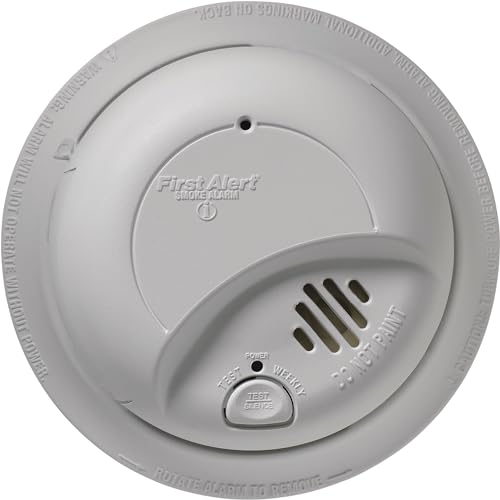
First Alert BRK SMI100-AC Smoke Alarm 6-Pack

Heiman Photoelectric Battery Powered Smoke Alarm

BRK First Alert 9120BFF Smoke Detector

SITERWELL Smoke Detector 9V Battery Operated

SITERWELL 10 Year Battery Smoke Alarm
More Details On Our Top Picks
The SITERWELL Photoelectric Smoke Alarm with 9V Battery Backup is the kind of unit I keep coming back to for whole-home coverage where wiring already exists. It connects into a hardwired system of up to twelve alarms, so a hallway unit can rouse the bedrooms two floors up if smoke shows up in the basement. The 85-decibel horn is loud enough to wake light sleepers, and a 9V battery keeps the circuit alive when the power blinks out.
Compared to the First Alert 9120B three-pack below, this single unit leans more toward expandability than bulk pricing. For homeowners planning a phased install, that flexibility matters.
What It Does Well
- Interlinks with up to twelve compatible units for whole-home alerting
- 9V battery backup keeps the sensor working through outages
- Photoelectric sensing responds well to smoldering fires
- 85 dB horn is loud enough for multi-story homes
Things To Consider
- Requires existing wiring, which is awkward in older homes without prior alarm rough-in
- A single unit covers one spot, so a multi-room plan means buying several
Key Specs
Made For
Homeowners with existing wiring who want a connected, multi-room network without buying a contractor bundle.
Look Elsewhere When
The Heiman Wireless Interconnected Smoke Alarm 3-Pack suits renters who can’t run new wires but still want synced alerts.
The First Alert 9120B three-pack is the bundle I point friends toward when they move into a multi-level house and need to cover a hallway, bedroom level, and basement in one order. Each unit uses an ionization sensor, which leans toward fast-flaming fires rather than slow smoldering ones. The battery backup keeps things running through a blackout, and the 85-decibel horn is the same piercing pitch you’ll hear in most professionally installed homes.
Where the SITERWELL above supports twelve interconnected units, this three-pack focuses on the basics for a smaller footprint. For most families, three is plenty.
A Strong Showing
- Three units in one box covers a typical multi-level home
- Ionization sensor responds quickly to fast-flaming fires
- Battery backup keeps monitoring active during outages
- Compatible with other BRK and First Alert units for future expansion
Worth Noting
- Ionization sensors are more prone to nuisance triggers near kitchens
- Hardwired install needs a junction box, so older homes may need an electrician
Best Suited To
Families settling into a multi-level home who want a familiar, widely installed hardwired setup in one purchase.
Consider Something Else When
Anyone in a smaller rental should look at the Heiman Photoelectric Battery Powered Smoke Alarm for a wire-free install.
The Heiman Battery Operated Photoelectric Smoke Alarm caught my eye because it skips the chunky industrial look most alarms fall back on. It runs on batteries alone, so renters don’t need to ask a landlord about drilling into junction boxes, and the low-profile shell disappears into a white ceiling. The photoelectric sensor leans toward catching smoldering fires, which fits bedrooms and living rooms where upholstery tends to be the first thing at risk.
Compared to the SITERWELL above, this unit trades whole-home interconnection for a simpler, single-room footprint. That’s the right call for studio apartments.
Strong Points
- Compact, low-profile design fits modern interiors
- Pure battery operation means no wiring needed
- Photoelectric sensor suited to slow-smoldering fire risks
- Simple mounting works well for renters
Points To Note
- Single-unit coverage, so multi-room homes need several
- Battery replacement falls on the owner, no hardwired backup option
Feature Snapshot
Right Fit For
Renters and design-conscious households who want a discreet ceiling unit without rewiring.
Skip It When
Larger homes that need every alarm to sound together should consider the Heiman Wireless Interconnected 3-Pack instead.
The Heiman Wireless Interconnected Smoke Alarm 3-Pack solves the problem that hardwired systems can’t: getting every alarm in the house to sound at once without running a single wire. The three units talk to each other over a wireless link, so a smoke event in the kitchen triggers the bedroom unit at the far end of the house. The three-pack format covers a typical family home right out of the box.
Unlike the First Alert 9120B above, this set doesn’t rely on your home’s wiring. That makes it a smart fit for retrofits and additions.
Well-Handled Touches
- Wireless interconnection eliminates the need for new wiring
- Three-pack format fits most homes in one purchase
- Synchronized alerting helps wake occupants on far ends of the house
- Installs cleanly in retrofits and additions
Trade Offs
- Battery-only operation means periodic swaps on every unit
- Wireless range can be reduced by thick masonry or metal framing
Perfect Match For
Homeowners retrofitting an older property who want whole-home alerts without opening walls.
Reach For A Different Pick When
Those who already have hardwired boxes should consider the First Alert BRK SMI100-AC 6-Pack for a contractor-style install.
The First Alert BRK SMI100-AC 6-Pack is built for projects, not just one bedroom. Six hardwired ionization units arrive in a single box, which lines up with whole-building coverage for larger homes, duplexes, or light commercial spaces. The contractor-grade packaging assumes you have junction boxes ready to go, and the units link with other compatible BRK or First Alert alarms.
Compared to the Heiman wireless three-pack, this is the hardwired, professional-style equivalent. For anyone running new cable anyway, the bulk format is the practical pick.
What Pays Off
- Six units in a single order covers large floor plans
- Ionization sensor tuned for fast-flaming fire response
- Battery backup maintains monitoring through outages
- Compatible with existing BRK and First Alert networks
Honest Caveats
- A loose neutral wire at the junction box can cause device malfunction, so wiring must be verified
- Six units is overkill for apartments or small starter homes
- Ionization sensors may trigger nuisance alarms near kitchens
Whose Shelf It Belongs On
Contractors and homeowners with multi-room new-build or renovation projects needing bulk coverage.
A Better Fit Elsewhere
Small-space dwellers should look at the SITERWELL 10 Year Battery Smoke Alarm for a simpler single-room solution.
The Heiman Photoelectric Battery Powered Smoke Alarm is the renter’s friend. There’s no wiring to negotiate with a landlord, no junction box required, and the photoelectric sensor catches the slow, smoldering fires that tend to start in couches or wiring behind walls. The compact shell doesn’t dominate a small ceiling, which matters in studios where every visual inch counts.
Compared to the First Alert 9120B above, this skips hardwired interconnection entirely. For one or two rooms, that’s a clean tradeoff.
Points In Its Favor
- Pure battery operation needs no electrical work
- Photoelectric sensor handles smoldering fire risks well
- Low-profile housing suits tight ceiling spaces
- Straightforward ceiling install with basic hardware
Soft Spots
- Battery replacement is purely the owner’s responsibility
- Single-unit footprint, so larger apartments need multiples
Quick Technical Notes
Who Should Grab It
Apartment dwellers and short-term renters who need solid protection without any electrical commitment.
Where Another Pick Suits Better
Anyone wanting interconnected alerts across rooms should consider the Heiman Wireless Interconnected 3-Pack instead.
The BRK First Alert 9120BFF is the single-unit version of the 9120 series for replacing one tired alarm at a time. It runs hardwired with a battery backup, so it drops into a standard junction box and keeps monitoring through outages. The ionization sensor is the same workhorse you’d find in the multi-pack, just packaged for one-room replacement.
For anyone who just needs to swap one chirping unit, this is a no-fuss answer without buying extras they’ll store in a closet.
Bright Spots
- Single-unit format avoids overbuying for one-room replacement
- Hardwired with battery backup for continuous monitoring
- Ionization sensor responds to fast-flaming fires
- Compatible with other BRK and First Alert alarms
Minor Gripes
- Ionization sensors can nuisance-trigger near cooking areas
- Single pack doesn’t help homes that need multi-room upgrades at once
Who Will Love This
Homeowners with one expired alarm to replace and no plan for a multi-room overhaul.
Not Your Match When
Anyone outfitting a whole property should jump to the First Alert BRK SMI100-AC 6-Pack for bulk value.
The SITERWELL 9V Battery Operated Smoke Detector leans into a familiar design that favors replaceable batteries over sealed cells. That means the alarm can run for years with a fresh 9V swapped in annually, and the photoelectric sensor watches for the kind of smoldering fire that starts in upholstery or wiring. The simple ceiling-mount hardware makes it a reasonable add-on for guest rooms and finished basements.
Compared to the SITERWELL 10-year sealed unit below, this version trades long battery life for cheaper long-term upkeep.
Useful Strengths
- Replaceable 9V battery keeps long-term costs predictable
- Photoelectric sensor suited to smoldering risks
- Simple ceiling mount with included hardware
- Compact footprint fits hallways without crowding
A Few Limitations
- Annual battery swaps are easy to forget
- Single-unit coverage, so multi-room homes need several
Best Suited To
Homeowners who prefer the simplicity of a replaceable battery over a sealed ten-year cell.
Another Choice May Suit
Anyone wanting a true set-and-forget install should look at the SITERWELL 10 Year Battery Smoke Alarm instead.
The SITERWELL 10 Year Battery Smoke Alarm is the closest thing in this list to a true install-and-forget option. The sealed lithium cell means no battery swaps for the full ten-year service life, and the unit ships with a pull-tab that has to be removed to activate it before ceiling installation. That tab is a small thing, but skipping it is the most common reason new alarms fail to power on.
For households that forget about ceiling fixtures until they chirp at 3 a.m., this is a quieter answer than the replaceable 9V unit above.
Practical Advantages
- Sealed 3V lithium battery runs the full ten-year service life
- Pull-tab design makes activation obvious at install
- No annual battery swaps to remember
- Compact ceiling mount fits standard junction layouts
Room For Improvement
- Once the battery dies, the entire unit is replaced
- Single-room footprint, so larger homes need multiples
Feature Card
Right Fit For
Busy households that want a true install-and-forget alarm without battery reminders on the calendar.
Swap It Out When
Anyone with existing wiring should look at the SITERWELL Photoelectric Smoke Alarm 9V Battery Backup for a hardwired network.
What Matters Most Before Choosing Battery Powered Smoke Alarms
Sensor type is the first fork in the road. Photoelectric sensors respond better to slow, smoldering fires, which fits living spaces and bedrooms where upholstery is the first thing at risk. Ionization sensors react faster to fast-flaming fires, which makes them common in hallways and older code-compliant installs. Many homeowners end up with both, leaning on photoelectric in sleeping areas and ionization near utility rooms.
Power source changes the install more than anything else. Hardwired alarms tie into the home’s electrical system and pair well with interconnected networks, but they need junction boxes and a battery backup for outages. Battery-only units skip the wiring entirely, which is why renters gravitate toward them. Sealed lithium cells run ten years without swaps, while replaceable 9V batteries trade convenience for cheaper long-term upkeep.
Interconnection matters in multi-story homes. When one alarm triggers, every linked unit sounds, so a fire in the basement wakes bedrooms two floors up. Wireless interconnection makes this possible without new wiring, which is the easiest path for retrofits. Hardwired interconnection is the more reliable long-term choice for new builds.
Placement and code still drive most decisions. Local code expects alarms inside each bedroom, outside sleeping areas, and on every level of the home. That often dictates quantity before brand or sensor type ever does.
Key Considerations Across These Picks
Mistakes Worth Dodging
The biggest miss I see is buying one alarm for a whole multi-level home and assuming coverage is done. A single unit in the hallway won’t wake a child in a closed bedroom on a different floor. Plan for at least one alarm per level, and one inside each sleeping area when code or peace of mind calls for it.
Another trap is ignoring sensor type. Photoelectric and ionization catch different fire profiles, and matching the sensor to the risk in each room pays off. Skipping the activation step on sealed-battery units is more common than it should be, so always pull the tab before ceiling install.
When Paying More Pays Off
The jump from a basic ionization unit to a photoelectric or interconnected model usually buys faster response to the fires that actually happen in homes, plus smarter nuisance-alarm handling. Sealed ten-year lithium cells cost more up front but eliminate the annual battery ritual, which adds quiet value for anyone who forgets calendar reminders. Interconnected packs look pricier on the surface, but they replace the need to buy singles over time, so the total cost often lands close to piecemeal buying with better whole-home coverage.
Frequently Asked Questions
How long do battery powered smoke alarms actually last?
Most battery-only alarms run for ten years on a sealed lithium cell, while replaceable 9V models last as long as the battery is changed and the sensor stays within its service window.
Where should I place battery powered smoke alarms?
Code expects one inside each bedroom, one outside sleeping areas, and one on every level of the home, with ceiling placement at least a few inches away from walls.
Do I need both ionization and photoelectric sensors?
Many safety guides suggest mixing them, since ionization catches fast flames quickly and photoelectric responds faster to smoldering fires in furniture and wiring.
How often should I test a battery powered smoke alarm?
Most manufacturers recommend pressing the test button monthly and replacing the unit at the end of its ten-year service life, even if the chirp test sounds healthy.
Can interconnected alarms work without wiring?
Yes, wireless interconnected models like the Heiman 3-Pack link over radio instead of running new cable, which is helpful in older homes without existing alarm wiring.
Closing Remarks
Smoke alarms are unglamorous until the moment they’re essential, so the right pick is the one that fits the home and stays on the ceiling without reminders. For hardwired networks, the SITERWELL and First Alert units earn their place. For wire-free installs, the Heiman and SITERWELL battery models cover everything from apartments to multi-level retrofits. Match the sensor type to the room, plan for interconnection in larger homes, and the rest tends to fall into place.
