

The outlet never lands where you need it. The fridge sits six inches too far from the wall, the dryer plug doesn’t match the new four-prong outlet, and the patio outlet is just far enough away to ruin a string of lights. I pulled together ten appliance extension cords that solve the most common reach problems around a house, a garage, and a yard, so you spend less time wrestling with plugs and more time using the things you plugged in.
Your Options, Compared

HONDERSON 12/3 SJTW Outdoor Extension Cord 30FT White
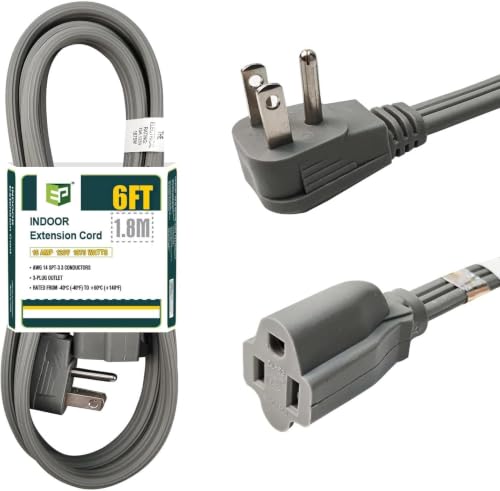
EP 6 Ft Heavy Duty Appliance Extension Cord Gray

EP 15 Ft Heavy Duty Appliance Extension Cord White

EP 3 Ft Heavy Duty Appliance Extension Cord Black

SPARKING 6-Inch Short Power Extension Cord Black

FSTSN 3 ft 12/3 SJTW Heavy Duty Extension Cord

DEWENWILS 25FT White 3 Outlet Flat Plug Extension Cord

DEWENWILS 25FT Flat Extension Cord 3 Outlet Black

DEWENWILS 25FT 14/3 Black 360° Rotating Flat Extension Cord
RVMATE 4 Prong SRDT Dryer Cord 5 Feet
A Deeper Look At The Lineup
I think of this 30-foot cord as the workhorse of the outdoor list. The 12-gauge rating (the thickness of the copper wire inside) gives it real headroom for mowers, hedge trimmers, and that one heavy-duty blower you only pull out twice a year. The jacket is SJTW, which is the outdoor-rated thermoplastic sheathing that shrugs off sun, rain, and the cold snap you forgot was coming.
The lighted end is the small touch that pays off, since it glows when power is flowing so you don’t have to guess whether the run is live. A grounded three-prong plug keeps things safer on a wet driveway. For most suburban yards, 30 feet hits that sweet spot between “barely enough” and “too much to coil.”
Good Reasons To Consider
- 12-gauge copper handles high-draw tools without voltage drop on long runs.
- Lighted female end confirms power at a glance.
- SJTW jacket stays flexible across temperature swings.
- 30 feet covers most front-yard or driveway appliance needs.
- UL listing signals third-party safety verification.
Things To Consider
- White sheath shows yard grime quickly and benefits from occasional wiping.
- Heavier gauge means a thicker cable to coil and store after use.
Who Will Love This
Homeowners running lawn tools or patio setups who need a rugged outdoor cord that doesn’t complain about the weather.
Reach For A Different Pick When
The EP 15 Ft Heavy Duty Appliance Extension Cord is a better fit for short indoor appliance gaps where you don’t need a 30-foot run.
The whole point of this cord is that it disappears. The flat plug hugs the wall, so you can shove a washer or dryer a few inches closer to the outlet than a chunky right-angle plug would allow. Six feet is short on purpose, since this is the kind of cable you use to nudge an appliance into a tight laundry alcove.
The 14 AWG wire (a lighter-duty gauge than the 12-gauge cords above) handles most major appliances fine, assuming a standard 15-amp household circuit. ETL listing adds a layer of safety review for anyone who plans to leave it plugged in for years. For renters and small-space dwellers, the gray finish blends nicely with appliances.
The Practical Payoff
- Flat plug tucks behind tight-fitting appliances.
- 14 AWG wire is rated for typical 15-amp appliance loads.
- ETL listing covers safety standards verification.
- Six feet is enough to bridge most laundry-room gaps.
- Neutral gray finish hides behind appliances.
Worth Noting
- Six feet may fall short if the outlet sits across the room.
- Lighter gauge than a true heavy-duty shop cord.
Key Specs
Made For
Apartment dwellers and laundry-room owners who need just enough slack to push an appliance flush against the wall.
Swap It Out When
The HONDERSON 12/3 SJTW Outdoor Extension Cord handles outdoor use cases where flat-plug geometry doesn’t matter.
Stepping up from the six-footer, this 15-foot EP version handles the mid-size problem: a fridge that needs to reach an oddly placed outlet, or a window AC that wants to plug in across the room. The flat plug keeps things tidy, and the white finish blends into most laundry and kitchen walls.
It uses the same 14 AWG wire as its shorter sibling, so the trade-off compared with the HONDERSON cord above is gauge, not length. For a standard 15-amp circuit and an appliance drawing under 1,875 watts, this cord stays comfortably within spec. It’s the in-between choice for layouts that don’t quite work at six feet but don’t need 25 feet either.
A Few Highlights
- 15 feet reaches mid-room appliance placements.
- Flat plug fits behind furniture and appliances.
- White sheath matches light-colored walls.
- 14 AWG copper handles standard 15-amp appliance circuits.
Room For Improvement
- 15 feet can leave excess cable to bundle if your run is shorter.
- Lighter gauge than 12/3 outdoor cords.
Right Fit For
Homeowners with mid-sized gaps between an appliance and the nearest wall outlet.
A Better Fit Elsewhere
The EP 6 Ft Heavy Duty Appliance Extension Cord is a cleaner pick when the appliance-to-outlet distance is under four feet.
Three feet is barely a cord at all, but that’s the point. This is the bridge you buy when an appliance’s built-in plug is too short to reach the wall outlet cleanly, or when you want to keep a piece of furniture a few inches off the wall without yanking the cord. The black sheath hides behind dark furniture legs and AV gear.
The flat plug is the real story here, since it lets you push a media console or nightstand flush against the wall. Compared with the SPARKING mini jumper below, this is the heavier-duty option built for actual appliances rather than power strips. Owners commonly report using it behind TVs and fridges where a stiff right-angle plug won’t cooperate.
Practical Advantages
- Three-foot length closes small reach gaps without slack.
- Flat plug fits flush behind furniture and appliances.
- Black finish disappears behind TVs and consoles.
- 14 AWG handles standard appliance loads.
Points To Note
- Three feet is too short for many room-scale layouts.
At A Glance
Built With In Mind
Anyone who wants a short, tidy extension behind a fridge, media console, or nightstand without a coil of extra cable.
Skip It When
The EP 15 Ft Heavy Duty Appliance Extension Cord serves you better if the outlet is across the room.
This is a six-inch jumper, plain and simple. Its job is to add just enough length so a chunky wall-wart adapter doesn’t cover the second outlet on your power strip, or so a UPS battery backup sits a few inches away from the wall. Think of it as an outlet saver, not a real extension cord.
At 16 AWG, it’s lighter gauge than the appliance-focused cords above, so I’d keep it to 13 amps and standard home electronics. Anyone with a wall-mounted TV, a desk full of chargers, or a server closet full of small bricks will likely reach for one of these eventually. It’s a tiny tool that solves a tiny but persistent problem.
A Favorable Mix
- Six inches adds clearance without adding slack.
- Keeps bulky plugs from blocking neighboring outlets.
- Works with UPS units, surge protectors, and tight setups.
- Compact form factor fits behind desks and TVs.
- Grounded three-prong design for safer connections.
Honest Caveats
- 16 AWG wire is lighter duty than appliance-rated cords.
- Not suited for high-draw appliances or tools.
Quick Facts
Whose Shelf It Belongs On
Homeowners and remote workers dealing with oversized plugs that hog two outlets at once.
Not Your Match When
The EP 6 Ft Heavy Duty Appliance Extension Cord is the better pick for actual appliance reach problems.
Three feet is short, but with a 12-gauge core this cord carries serious muscle. The reinforced blades help the plug survive being yanked out of a socket thousands of times, and the SJTW jacket stays flexible in cold weather, which matters in an unheated garage or workshop.
Rated at 15 amps, 125 volts, and 1,875 watts, it covers the typical heavy shop tool or appliance without breaking a sweat. I think of it as a short, beefy patch cable for a workbench where the outlet is just out of reach of a miter saw or compressor. The bright color (per the source data) makes it easy to spot on a crowded shop floor.
Positive Takeaways
- 12-gauge copper handles high-amperage tools and appliances.
- Stays pliable in cold temperatures.
- Reinforced blades resist bending and breaking over time.
- Compact 3-foot length suits benchtop appliance layouts.
Trade Offs
- Thick jacket is stiffer to coil and store than lighter cords.
- Three feet is too short for across-the-room tool placement.
Feature Snapshot
Best Suited To
Workshop owners and DIYers running high-draw tools from a benchtop outlet.
Look Elsewhere When
The HONDERSON 12/3 SJTW Outdoor Extension Cord is a smarter pick when the tool needs a longer outdoor reach.
This is the household version of an extension cord: 25 feet, three outlets built into the female end, and a flat plug that disappears behind a bookshelf. The SPT-3 insulation (a heavier indoor cord rating than the typical SPT-2) gives it a chunkier feel that holds up to daily use.
The triple-outlet design is the real value here, since one cord replaces a short power strip plus a regular extension. It works well behind a TV, a bedside lamp plus a clock plus a phone charger, or a craft table with a lamp, a glue gun, and a cutting mat light. ETL listing is the safety nod for an indoor cord that lives behind furniture year-round.
Notable Gains
- Three grounded outlets built into the female end.
- Flat plug fits flush against baseboards and furniture.
- 25 feet covers most living-room and bedroom layouts.
- SPT-3 insulation supports regular indoor appliance use.
- White finish blends with light-colored walls and trim.
Some Limits To Know
- 16 AWG wire limits high-draw appliance use.
- 25 feet of cable needs a tidy storage plan when not in use.
Perfect Match For
Families needing one cord to power a lamp cluster, a small entertainment center, or a bedside charging setup.
Another Choice May Suit
The DEWENWILS 25FT 14/3 Black 360° Rotating Flat Extension Cord handles heavier loads when you need that extra amperage headroom.
Same three-outlet, 25-foot formula as the white version above, just dressed in black. If your entertainment center, computer desk, or speaker setup leans dark, this cord vanishes into the background instead of standing out like a white stripe across the floor.
The SPT-3 insulation and 16 AWG wire match its sibling, so this is still an indoor electronics cord rather than a true appliance cord. For monitors, lamps, and game consoles, it handles the load fine. Compared with the rotating plug version below, you lose the swivel feature, though the flat profile still tucks behind most furniture.
Notable Upsides
- Three grounded outlets cover typical entertainment setups.
- Black finish disappears behind dark electronics.
- Flat plug fits behind tight-clearance furniture.
- 25 feet reaches across most living-room layouts.
Practical Considerations
- 16 AWG wire is lighter than a 14 AWG appliance cord.
- Lacks a rotating plug for tight outlet angles.
Right Fit For
Anyone running a TV, monitor, or computer setup where a discreet black cord is easier on the eyes than white.
Consider Something Else When
The DEWENWILS 25FT 14/3 Black 360° Rotating Flat Extension Cord suits you better when you need the rotating plug feature.
Step up to 14 AWG wire, and this cord crosses into true appliance territory while still looking like a tidy indoor extension. The rotating flat plug is the clever bit, since it pivots 360° so the cord can exit in the direction that suits the outlet, not the other way around. The hanging hook on the outlet block is a small touch that keeps a workshop or craft-room cord off the floor.
The lighted triple outlet gives a quick visual cue that the cord is live. For a workbench, a sewing room, or a basement bar setup, this is the most flexible DEWENWILS in the lineup. Owners commonly report using it for medium-draw appliances where the lighter 16 AWG siblings would feel marginal.
The Case For It
- Rotating flat plug fits outlet boxes at any angle.
- 14 AWG wire handles heavier indoor appliance loads.
- Triple lighted outlets confirm power at a glance.
- Hanging hook keeps the outlet block off the floor.
- 25 feet covers most indoor workshop and craft-room layouts.
Worth Bearing In Mind
- Black finish shows dust on lighter-colored walls.
- Rotating plug mechanism adds a small moving part that benefits from gentle handling.
Feature Rundown
Who Should Grab It
Workshop owners and crafters who want a flexible indoor cord that handles a mix of lighting and small appliances.
Where Another Pick Suits Better
The DEWENWILS 25FT White 3 Outlet Flat Plug Extension Cord is a cleaner fit for white-walled living rooms where black would stand out.
Strictly speaking, a dryer cord isn’t an “extension cord” in the casual sense, but it solves the exact same kind of problem: the plug on the appliance doesn’t match the outlet on the wall. Modern dryers ship without a cord so the owner can match the house outlet: a 4-prong NEMA 14-30 configuration (the industry-standard 30-amp, 4-wire layout) is what most homes need today.
The 10 AWG wire, SRDT jacket (a higher-heat-resistant thermoplastic), and 30-amp, 250-volt rating put this in serious appliance territory. The flame-retardant PVC sheath and 100% copper conductors are the right ingredients for a connection that lives behind a dryer for a decade or more. Five feet is the common length for a snug fit behind the appliance.
Key Advantages
- 30A / 4-prong configuration matches modern dryer outlets.
- 10 AWG copper supports heavy dryer loads safely.
- SRDT jacket tolerates higher temperatures near laundry rooms.
- ETL certification confirms third-party safety review.
Less Ideal Details
- Limited to dryers and similar 4-prong 30A outlets.
- Five-foot length may be too short if the outlet sits high on the wall.
Best Suited To
Homeowners installing a new dryer that needs a 4-prong NEMA 14-30 cord for their laundry outlet.
Wrong Turns To Avoid
Using a standard indoor extension cord on a dryer, since the amperage draw would be unsafe and the gauge far too light.
Picking The Right Appliance Extension Cord for Your Setup
Matching an extension cord to the appliance is less about brand loyalty and more about reading a few numbers on the label.
Wire gauge and amperage. A 12 AWG cord handles heavier loads than a 16 AWG cord. For appliances drawing close to 15 amps (shop tools, space heaters, dryers), 12 AWG or thicker is the safer pick. For lamps, TVs, and small electronics, 14 or 16 AWG is fine.
Length and voltage drop. Longer cords lose a bit of voltage over distance. A 25-foot cord running a circular saw is fine, but a 100-foot cord doing the same job may cause the tool to bog down. For most household uses, anything under 30 feet keeps performance loss minimal.
Plug style and clearance. Flat plugs save inches behind washers, dryers, and media consoles. Right-angle plugs help when the outlet sits behind a couch. A 360° rotating flat plug, like the one on the DEWENWILS above, combines both worlds for awkward outlet positions.
Indoor versus outdoor rating. Outdoor cords use a tougher jacket (SJTW or similar) that handles moisture, sun, and cold. Indoor cords with SPT ratings are softer and lighter, but they don’t tolerate yard weather. The wrong cord outdoors is a common, avoidable safety problem.
Certification markings. UL and ETL listings both indicate the cord was tested against recognized safety standards. Either mark is a reasonable signal that the cord is built to spec.
A Few Details Worth Watching
Pitfalls Shoppers Hit
A common slip is choosing a 16 AWG indoor cord for an appliance that pulls real current, then wondering why the cord feels warm after an hour. Appliances with motors or heating elements (shop vacs, window ACs, pressure washers) want 14 AWG or thicker.
Another trap is buying an outdoor cord that’s the right gauge and the wrong jacket. A garden-variety indoor cord left outside will crack, then expose copper. SJTW is the marking to look for in outdoor cables.
Why Top Tier Costs More
Premium cords tend to cost more because they use thicker copper conductors, higher-grade jackets, and often add thoughtful touches like rotating plugs, lighted outlets, or reinforced blades. For occasional lamp duty, those extras don’t matter much. For a dryer you plug in once and forget about, or a shop tool that sees daily use, the upgrade typically pays for itself in longevity and safety margin.
Frequently Asked Questions
Can I use an appliance extension cord permanently behind a dryer or refrigerator? Most cord manufacturers design their cords for permanent appliance connection, so a properly rated cord (matching amperage and outlet type) is generally fine for the long haul. Confirm the gauge and amperage rating meet or exceed the appliance spec.
What’s the difference between 12 gauge and 14 gauge cords? A 12 gauge cord uses thicker copper wire than a 14 gauge cord. Thicker wire carries more current safely over distance, so 12 gauge is the pick for heavier appliances and 14 gauge handles standard 15-amp circuits.
Are flat plug extension cords safer than regular plugs? Flat plugs aren’t inherently safer, but they reduce strain on the outlet by allowing furniture and appliances to sit closer to the wall. Less bend behind the plug can mean less wear over years of use.
Can outdoor extension cords be used indoors? Yes, an outdoor cord works indoors, though it’s typically heavier and less flexible. The reverse, using an indoor cord outdoors, is the problem to avoid, since indoor jackets aren’t built for moisture or sun.
How long should an appliance extension cord be? Buy just enough length for the actual run, with a small slack loop for flexibility. Excess cord is bulk to store and can create voltage drop on heavy loads, so longer isn’t always better.
The Takeaway
The right appliance extension cord is the one that matches the gauge to the load, the jacket to the environment, and the plug style to the gap behind the appliance. Measure twice, then pick the shortest cord that comfortably bridges the gap.
