

Picking the right aluminum wire starts with knowing what job you actually have in front of you. Run a 200-amp service into a mobile home and you need serious SER cable rated for the load, while a basement subpanel might only call for a 4 AWG feeder. Smaller projects like automotive speakers or floral arrangements live in a completely different world, often using thin CCA wire or anodized craft wire that bends by hand. Aluminum 4/0 wire is simply a measurement system: the “4/0” means “four-aught,” and the bigger the aught number, the thicker the conductor. I’ll walk through seven solid options across service, distribution, low-voltage, and craft use so you can match the wire to the work, not the other way around.
Your Options, Compared
FairySandy 75′ 4/0-4/0-4/0-2/0 SER Aluminum Service Entrance Cable

Nassau Electrical Supply 140′ 4-4-4-4 Tulsa Quadruplex Aluminum URD Cable

NAOEVO 10 Gauge Wire 2 Conductors, CCA Red Black, 100FT

Copkim 125Ft 4-4-4-6 SER Aluminum Service Entrance Cable 600V

4 AWG XHHW-2 Aluminum Building Wire (100Ft Cut)

BENECREAT 20 Gauge 770FT Aluminum Craft Wire, Copper Tone
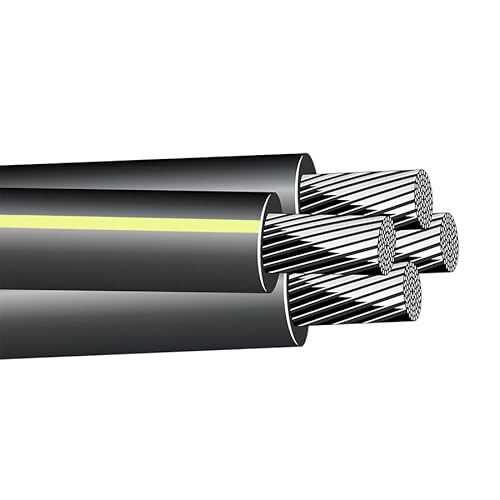
Nassau Electrical Supply 225′ 2/0-2/0-2/0-1 Syracuse Quadruplex URD Cable
Meet The Standout Selections
FairySandy’s 75-foot SER cable is built for serious service entrance work, specifically mobile homes and residences pulling a substantial main feed. The cable carries three 4/0 AWG conductors plus a 2/0 AWG ground, all rated at 600V, which is the typical residential service voltage in North America. For homeowners running power from a meter base to a panel inside a manufactured housing unit, that conductor sizing covers the kind of 150- to 200-amp services that these structures often demand.
Compared to the smaller Copkim 4-4-4-6 SER cable covered later, this is a noticeably heavier, fatter build designed for the full main feed rather than a subpanel branch. Most electricians working on standard residential drops should find the 75-foot length enough for a typical run plus service-loop slack. You may find the bare aluminum surface oxidizes slightly over long outdoor exposure, so anti-oxidant compound at the lugs is worth using.
The Value In It
- Three 4/0 conductors plus 2/0 ground handle full 200-amp mobile home service entrance runs
- 75-foot length gives working slack for terminations and bends without forced splicing
- Rated for above-ground service entrance and distribution access in standard installations
- Soft, flexible aluminum strips and bends cleanly with proper cable cutters
Things To Consider
- At roughly 75 feet, longer property runs may require an additional pull or parallel set
- Aluminum oxide buildup at terminations is common, so antioxidant paste is a real ownership step
Who It Suits Best
Electricians and experienced homeowners running a primary service drop to a manufactured home or detached outbuilding that needs a real 200-amp feed.
Where Another Pick Suits Better
For a smaller garage subpanel that does not need the full 4/0 sizing, the Copkim 125Ft 4-4-4-6 SER cable is a leaner, easier-handling alternative.
The Nassau Tulsa 4-4-4-4 quadruplex is purpose-built for direct burial, the practice of running cable straight into a trench without conduit. It uses compact-stranded 8000-series aluminum alloy conductors wrapped in crosslinked polyethylene (XLPE) insulation rated USE-2, which is the standard insulation designation for underground service entrance cable. The triple yellow-striped neutral makes phase identification easier when you open the trench years later.
At 140 feet, it covers most residential lateral runs between a house and a detached shop or outbuilding. The UL 854 listing and ICEA S-66-524 compliance mean inspectors generally accept it where local code recognizes those standards. You may find the cable stiff in cold weather, so warming it in the sun before uncoiling helps avoid kinks during the pull.
Practical Advantages
- XLPE insulation rated USE-2 handles wet and direct-burial conditions without extra conduit
- Triple yellow-striped neutral simplifies terminations and future troubleshooting
- 140-foot coil suits typical house-to-outbuilding lateral distances
- Compact-stranded 8000-series alloy improves flexibility over older AAC designs
Worth Noting
- Underground runs still require proper trench depth, typically 24 inches, for code compliance
- The heavier reel is awkward to position without a cable stand or helper
Made For
Property owners running a buried feed to a detached garage, shop, or barn where pulling through conduit feels like overkill.
Look Elsewhere When
For a heavier service that needs to push more amps over a longer lateral, the Nassau Syracuse 225-foot 2/0 quadruplex is the upgrade path.
NAOEVO’s 10-gauge CCA wire is a different animal from the heavy service cables above. CCA stands for copper-clad aluminum, meaning an aluminum core is wrapped in a thin copper coating to improve conductivity and corrosion resistance while keeping weight and cost down. The red and black color coding follows standard DC convention, where red is positive and black is negative or ground.
Two conductors run parallel inside the jacket, which is the layout most automotive and marine installers prefer for tidy routing. CCA is generally accepted for low-voltage 12V and 24V DC applications like car audio, solar battery banks, and LED runs. For most trunk-mounted amp installs, the 100-foot length leaves plenty for the run plus service loops. You may find that very high-amperage automotive demands benefit from true OFC (oxygen-free copper) wire instead.
Where It Excels
- Lighter and more flexible than pure copper for tight automotive or solar routing
- Color-coded red and black pairs speed up tidy two-conductor runs
- 100-foot spool covers most single-vehicle installations with slack to spare
Points To Keep In Mind
- CCA is not the right call for high-amperage subwoofer or inverter runs where true copper is safer
- Strand count and jacket thickness vary, so confirming the rating before pulling high current matters
Best Suited To
Car audio hobbyists, solar DIYers, and LED installers running moderate 12V or 24V DC circuits where weight savings matter.
A Better Fit Elsewhere
For a full 200-amp home service entrance, the FairySandy 75′ 4/0-4/0-4/0-2/0 SER cable is the appropriate scale.
Copkim’s 125-foot SER cable is the mid-size option for above-ground subpanel feeders. The 4-4-4-6 designation means three 4 AWG phase conductors and a 6 AWG neutral, which is the typical sizing for a 100-amp subpanel run in a garage or workshop. UL listing at 600V gives inspectors the certification trail they look for.
Where the FairySandy 4/0 SER handles the main service drop, this Copkim cable is the lighter, easier-bending choice for branch feeders off an existing panel. It is rated for surface use only, meaning direct burial or underground conduit is off the table, so plan your run accordingly. In most basements and attached garages, surface-mount raceway or interior framing cavities are exactly where this cable belongs.
Where It Delivers
- UL-listed 600V rating covers typical residential and commercial subpanel feeders
- 125-foot pre-cut avoids splicing for standard subpanel distances
- Three 4 AWG conductors plus 6 AWG neutral suit a 100-amp subpanel cleanly
- Lighter than 4/0 SER for easier handling on ladder work
Trade Offs
- Surface use only, so trenching this cable without conduit is a code violation
- Not sized for full 200-amp main service drops
Who Should Grab It
Homeowners and contractors adding a 100-amp subpanel to a garage, basement, or addition where the run stays above ground.
Swap It Out When
For a full main panel rather than a feeder, the FairySandy 4/0 SER cable has the conductor mass that 200-amp service requires.
Stock Wire’s 4 AWG XHHW-2 is a single-conductor building wire designed to live inside conduit or recognized raceways. XHHW-2 is the cable type designation, where XLPE insulation is rated for wet locations and high heat up to 90°C. That higher temperature rating gives it more ampacity headroom in shared conduit runs.
The compact-stranded aluminum conductor hits a 75-amp ampacity rating, and the 0.055 lb/ft figure means a 100-foot pull lands at roughly 5.5 pounds. For branch circuit wiring feeding a subpanel, an HVAC disconnect, or a heavy workshop tool, this single-conductor format is what most electricians stock. UL 44 and ASTM B800/B801 certifications cover both the insulation and the conductor metallurgy. You may find single conductors less convenient for travelers who need a multi-conductor cable bundled.
What Makes Sense
- XHHW-2 insulation rated for wet, dry, and high-heat environments up to 90°C
- Single-conductor format pulls cleanly through EMT and PVC conduit runs
- Lightweight 0.055 lb/ft makes ladder work and long pulls manageable
Honest Caveats
- Single conductors require buying multiple spools for full multi-wire feeders
- Must be installed in conduit or recognized raceway, so this is not a standalone cable
The Right Fit
Electrical contractors and serious DIYers wiring feeders and branch circuits through conduit in workshops, basements, and outbuildings.
Reach For A Different Pick When
For a bundled multi-conductor run that skips the conduit step, the Copkim 125Ft 4-4-4-6 SER cable is the simpler bundled alternative.
BENECREAT’s 20-gauge aluminum wire is a different category entirely. Anodized in a copper tone, this 0.8mm wire is solid aluminum (not stranded), which is why it bends by hand and holds its shape once shaped. The 770-foot spool is sized for jewelry makers, floral designers, and hobbyists who go through wire steadily across multiple sessions.
For wire-wrapped pendants, beaded floral stems, and garden craft projects, the rust-free and tarnish-free anodized finish keeps pieces looking good over time. Compared to the heavy electrical cables above, this wire would not carry any meaningful current. It is purely a crafting material with the word “aluminum” in common. In most craft rooms, the softness means even pliers can shape it without fatigue.
Reasons It Performs
- Solid aluminum bends easily yet retains form for wire-wrapped jewelry and floral work
- Anodized copper tone stays vibrant and resists tarnish over time
- 770-foot spool covers many small projects before needing a replacement
Small Caveats
- Anodized color can vary slightly between dye lots, so mixing spools may show subtle differences
- Solid aluminum will kink if forced into sharp bends, unlike stranded craft wire
Whose Shelf It Belongs On
Jewelry makers, florists, and craft hobbyists shaping decorative pieces, plant supports, and ornamental wraps.
Not Your Match When
For any actual electrical current carrying, the NAOEVO 10-gauge CCA wire is the proper functional choice.
The Nassau Syracuse quadruplex sits at the top of the underground distribution category. The 2/0-2/0-2/0-1 designation means three 2/0 phase conductors plus a full 1 AWG neutral, a substantially heavier build than the Tulsa 4-4-4-4 model covered earlier. At 225 feet, it covers long residential or small-commercial laterals in a single pull.
The 225-amp direct-burial ampacity rating puts this cable in range for feeding a large outbuilding, a secondary dwelling, or even a small workshop cluster. With a 664 lb per 1000 feet weight figure, this reel is genuinely heavy, so plan for a cable jack or two helpers during deployment. You may find the larger conductor mass needs heavier pull lubricant for long runs through curves.
Benefits That Matter
- 225-amp direct-burial ampacity covers large outbuildings and secondary dwellings
- 225-foot length handles long residential laterals without splicing
- Three 2/0 phase conductors with 1 AWG neutral support heavier 240V loads
Things To Weigh
- Heavier reel needs a cable jack or helper for safe deployment
- Overkill for small garage runs where lighter quadruplex is plenty
Built With In Mind
Contractors and property owners building a long underground feed to a large workshop, barndominium, or accessory dwelling unit.
Where A Sibling Pick Shines
For a shorter residential lateral under 150 feet, the Nassau Tulsa 4-4-4-4 is a more manageable, lighter alternative.
What Matters Most Before Choosing Aluminum 4 0 Wires
Match The Cable Type To The Run
SER (Service Entrance Rated) cable is for above-ground service drops and feeders, while URD (Underground Residential Distribution) cable is rated for direct burial. Using the wrong one is a code violation regardless of conductor size. SER cannot go in the ground without conduit, and URD is overkill for interior runs.
Conductor Size And Ampacity
Bigger aught numbers mean thicker conductors and higher ampacity. A 4/0 SER cable handles 200-amp service, while 4 AWG is more typical for a 100-amp subpanel feeder. Undersized wire runs hot under load, while oversized wire wastes money and adds handling weight.
Insulation And Listing
Look for UL listings, ASTM conductor standards, and insulation ratings like XHHW-2 or USE-2 that match your environment. Wet-location ratings matter for underground and outdoor work, while dry-location ratings suit interior conduit runs.
Length And Project Scale
Pre-cut 75- or 125-foot coils work for typical residential drops. Longer reels at 140 to 225 feet suit property runs between buildings, while smaller craft and low-voltage wire comes in spools sized for hobby use.
Key Considerations Across These Picks
Pitfalls Shoppers Hit
The most common error is grabbing SER cable for a burial run, since SER is not rated for direct contact with soil. Another frequent miss is underestimating length, so a 75-foot coil falls short on a 90-foot driveway crossing. Always measure the route with slack in mind and confirm cable type against local code before ordering.
Where The Extra Money Goes
Spending more on premium cable typically buys heavier conductor mass, longer listed insulation ratings, and recognized certifications like UL 854 or REA approval. The upgrade pays off on long underground laterals, heavy service drops, and projects that will face inspection. For a small garage subpanel or a craft project, the premium tier is not necessary.
Frequently Asked Questions
What does 4/0 mean on aluminum wire?
The “4/0” notation, read as “four-aught,” refers to the American Wire Gauge system where larger aught numbers mean thicker conductors. A 4/0 aluminum conductor is heavier than 2/0 or 1/0 and is typically used for full 200-amp residential service entrance runs.
Can SER cable be buried underground?
No. SER (Service Entrance Rated) cable is rated for above-ground use only. For direct burial or runs through underground conduit, URD cable with USE-2 or XHHW-2 insulation is the proper choice, and inspectors generally reject SER in burial applications.
Is CCA wire safe for home electrical use?
Copper-clad aluminum wire is generally accepted for low-voltage 12V and 24V DC applications like automotive, marine, and solar battery work. It is not the right choice for residential 120V/240V AC branch circuits, where full copper or proper aluminum SER/URD cable is the standard.
How long does aluminum service entrance cable last?
Properly installed aluminum SER and URD cable generally lasts decades, though owners commonly report that antioxidant compound at the termination points helps prevent oxidation-related performance issues over long outdoor exposure.
Do I need an electrician to install aluminum service cable?
Local code typically requires a licensed electrician for service entrance work and most subpanel feeder installations. Low-voltage CCA wire and craft wire are usually safe for homeowner installation, but always check local regulations before starting any wiring project.
Wrap Up
The right aluminum wire depends entirely on the job, from heavy 4/0 service cable down to flexible craft wire for jewelry. Match the cable type and conductor size to your actual run, confirm the listings and insulation ratings for your environment, and pick a length with slack for terminations. With those basics in place, any of the seven picks above should serve the project you have in mind.
