

Solar charging makes sense when you need power beyond a wall outlet, whether that means a campsite, an RV lot, a van setup, or a backup kit at home. The strongest options here split into two camps, portable foldable panels for travel and larger rigid-style panels for fixed installs. You’ll also see a clear gap between models built for phones and power banks and units sized for power stations and off-grid systems.
This roundup focuses on practical fit: output level, portability, port selection, water resistance, and how much setup complexity you can live with. Some panels are ready for a weekend bag, while others are better left on a roof, deck, or rack. The right call depends on where you store it, what you charge, and how often you move it.
Quick Look At The Shortlist

Renogy 200W Portable Solar Panel with Kickstand

ZOUPW 100W Portable Solar Panel Mono Foldable Charger
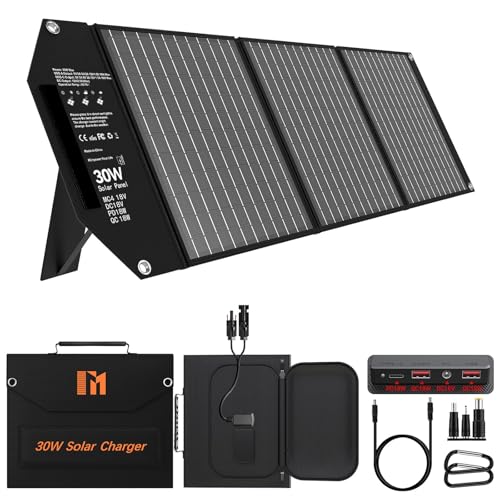
30W Solar Panels Charger Portable Foldable with USB-C USB-A MC4 DC

FlexSolar 100W Foldable Portable Solar Panel Charger IP67 Waterproof

FlexSolar 60W Foldable Portable Solar Panel Charger IP67 Waterproof

200W Portable Solar Panel 24% High Efficiency ETFE Foldable Charger

N-Type 16BB 400W Bifacial Solar Panel 2Pcs 200 Watt Solar Panel for 12V/24V Systems
More Details On Our Top Picks
For RV trips, cabin backups, and long camping weekends, this Renogy panel sits in the useful middle ground between portability and real charging muscle. The foldable format keeps storage simple, and the kickstand helps you aim the panel without turning setup into a project. Its USB-A and USB-C outputs give you more direct charging options than the bigger system-style panels in this list.
The trade-off is weight and footprint compared with smaller 30W or 60W picks, so it suits storage space that can spare a little room. IP65 water resistance also matters in the field, where dust and light moisture are part of normal use. For someone building a blackout kit or powering a station from a porch or campsite, that balance is hard to ignore.
Strong Points
- 200W output suits larger portable power stations.
- Kickstand design makes aiming easier at camp.
- USB-A and USB-C outputs support direct device charging.
- Foldable format stores more neatly than rigid panels.
- IP65 rating fits dusty or damp conditions.
Things To Consider
- It takes more storage room than the 30W and 60W options.
- Portable panels like this still need careful unfolding and stowing.
- The bigger size is useful, but not casual hand-carry gear.
Feature Snapshot
Who It Suits Best
You get the most from this panel in an RV, a home backup kit, or a campsite setup where storage space is not tight.
A Better Fit Elsewhere
TWELSEAVAN’s 200W portable panel suits tinkerers who want ETFE construction and a solar angle guide for more deliberate positioning.
ZOUPW lands in the practical middle for anyone who wants enough output for a power station without jumping straight to a heavier 200W panel. The 23.5 percent efficiency claim is a useful signpost, because higher conversion efficiency usually matters most on shorter setup windows or in mixed light. That makes it a sensible match for van trips, weekend camping, and emergency kits.
Compared with Renogy’s larger portable unit, this one asks less of your storage space and transport setup. The IP67 rating is also a step up on paper, since that level is designed for tighter protection against dust and stronger water exposure. The honest read is that the lower wattage still sets the ceiling, so you should expect a smaller charging footprint than the biggest items here.
What We Like
- 100W size stays easier to move than the 200W models.
- 23.5 percent efficiency helps make the panel space count.
- Mono panel design suits steady portable charging use.
- IP67 rating fits harsher outdoor conditions than many foldables.
Softer Spots
- 100W output is fine, though slower than the larger options here.
- The foldable format still needs careful packing after each trip.
- You may want a larger panel for more demanding station loads.
Core Details
Made For
You benefit most from this panel on camping trips, in compact vans, or in emergency kits where portability matters more than maximum output.
Another Choice May Suit
Renogy’s 200W portable panel fits you better when your power station needs a larger charging ceiling and you have room for a bigger foldable unit.
This is the lightest-duty option in the group, and that makes it appealing for backpacking, day hikes, and travel bags where every ounce matters. The direct USB-C, USB-A, MC4, and DC options give it unusual flexibility for such a small panel, so you can think of it as a bridge between personal devices and small power setups. For phones, power banks, and compact gear, that versatility is the whole point.
Compared with ZOUPW’s 100W foldable charger, this one gives up charging headroom in exchange for easier carrying and simpler storage. That trade-off is obvious, not hidden, and it works well for shorter trips or lighter loads. You may also find the smaller panel area less forgiving in less-than-ideal sun, which is part of life at this size.
Highlights
- 30W format stays easy to pack.
- USB-C, USB-A, MC4, and DC widen compatibility.
- Good match for phones, power banks, and small gear.
- Foldable build fits travel and backpack use.
Minor Gripes
- 30W output is clearly for light-duty charging.
- Smaller area means less cushion in weaker light.
- Not the right scale for large power station needs.
At A Glance
Whose Shelf It Belongs On
You should look at this panel for backpacking, short travel setups, and compact emergency kits where portability outranks output.
Where A Sibling Pick Shines
FlexSolar’s 60W foldable panel suits you better once your tablet, small station, or multi-device routine needs more headroom.
FlexSolar takes the 100W portable slot and gives it more device-facing flexibility than a barebones charger. PD 3.0 USB-C, QC 3.0 USB-A, and DC ports make it a practical camp companion for phones, power banks, and smaller stations that benefit from direct charging choices. It’s the sort of panel that feels organized rather than fussy.
Against ZOUPW’s 100W model, this one leans harder into port variety instead of headline efficiency. The IP67 rating also supports rougher outdoor use, which matters when a panel is going in and out of a vehicle or tent all weekend. The trade-off is straightforward, since a feature-rich foldable panel still needs space and a careful packing habit.
What We Like
- PD 3.0 USB-C supports modern device charging setups.
- QC 3.0 USB-A adds another fast-output option.
- DC port keeps it useful for broader gear ranges.
- IP67 rating helps in dusty or wet outdoor conditions.
- 100W size stays manageable for camping trips.
Worth Noting
- It still sits in the same mid-power class as other 100W panels.
- Multiple ports help, though cable organization matters in travel use.
- Foldable panels always ask for a bit of careful storage.
Details At A Glance
Right Fit For
You get the best match here in a camping setup or a vehicle kit that needs several direct output choices without moving into a huge panel.
Look Elsewhere When
ZOUPW’s 100W portable panel suits you better when efficiency matters more than port variety and you want a cleaner, simpler travel build.
This 60W FlexSolar panel sits in a useful sweet spot for travel kits that need more than a phone charger but less bulk than a 100W foldable unit. The PD 3.0 USB-C, QC 3.0 USB-A, and DC outputs give it real flexibility for tablets, power banks, and smaller backup gear. In a weekend bag, that size-and-output balance is a better fit than the larger panels above.
Compared with the 100W FlexSolar model, the lower wattage makes it easier to treat as a carry-along rather than a semi-permanent camp fixture. The IP67 rating is still a strong practical feature for outdoor conditions. The trade-off is clear: you are choosing convenience and compactness over faster charging for bigger loads.
Best Bits
- 60W output suits smaller stations and personal gear.
- Compact foldable format travels more easily than 100W panels.
- USB-C, USB-A, and DC cover common portable needs.
- IP67 rating adds confidence in rough outdoor use.
Areas To Watch
- Lower wattage means slower progress on larger batteries.
- It is better for tablets and small kits than full-size systems.
- Foldable storage still asks for sensible packing habits.
Feature Rundown
Perfect Match For
You should look here for travel, tablet charging, and small backup kits where easy carrying matters more than high wattage.
Swap It Out When
Renogy’s 200W portable panel fits you better once your setup moves toward a larger power station or longer off-grid stays.
TWELSEAVAN’s 200W panel is built for shoppers who want a more deliberate off-grid setup, not just a fold-and-go panel for a weekend trip. ETFE, which is a durable fluoropolymer front layer, is a useful material callout because it tends to suit outdoor wear better than soft, casual finishes. Add the solar angle guide and four kickstands, and this becomes a more controlled charging platform.
Compared with Renogy’s 200W portable panel, this one leans harder into setup precision and surface materials. The QC 3.0 USB-A, Type-C 60W, and MC4 output broaden its practical use with power stations and direct-device charging. You may find it especially appealing when you want a panel that feels more engineered than simple.
Reasons To Buy
- 200W output fits larger off-grid charging tasks.
- 24 percent efficiency is strong for a portable panel.
- ETFE front layer supports tougher outdoor use.
- Solar angle guide helps with more accurate positioning.
- Four kickstands make support more adaptable.
Room For Improvement
- The feature list is richer, so setup is less casual than on simpler foldables.
- More parts and angles can mean more attention during packing.
- It still occupies more space than a 60W travel panel.
Technical Sheet
Built With In Mind
You suit this panel best when you want portable high output for RV use, emergency charging, or a power station that benefits from a more structured setup.
Where A Sibling Pick Shines
Renogy’s 200W portable panel is the cleaner fit for someone who wants a simpler foldable build with fewer setup touches.
This is the fixed-install choice in the lineup, and it behaves differently from the foldable panels above. Bifacial means it can capture light from both front and rear surfaces, which can help in the right mounting conditions, while the 16BB cell layout points to more contact lines across the cell structure. For rooftop, van, marine, and home off-grid systems, that kind of setup makes more sense than a carryable kit.
Compared with the portable Renogy and TWELSEAVAN 200W panels, this Callsun setup is more about system planning than travel convenience. The dual-module parallel anti-shade design is a practical note for mixed-light locations, since partial shade can affect solar panels in awkward ways. The catch is obvious: this is the least portable option here, so it belongs where it can stay put.
Positives
- 400W total output suits larger fixed systems.
- Bifacial design can use light from both sides.
- 16BB cell layout supports a more advanced panel structure.
- Anti-shade design helps in less uniform lighting.
- Works across 12V and 24V systems.
Small Caveats
- It is a system panel, not a travel-friendly carry item.
- Installation planning matters more than with foldable models.
- Roof or rack mounting takes more commitment than portable use.
Quick Facts
The Right Fit
You should look here for a rooftop, van, marine, or home off-grid system where the panels can stay mounted and do steady work.
Skip It When
TWELSEAVAN’s 200W portable panel is the smarter choice for anyone who still needs fold-and-store convenience and a lighter setup.
How To Choose The Right Solar Power Panels
Match Output To Your Load
Panel wattage sets the pace. A 30W foldable charger can handle small devices and power banks, while 100W and 200W panels make more sense for power stations, tablets, and longer camping stays.
Larger output usually comes with larger size, more weight, and more setup effort. That trade-off is fine for an RV or off-grid kit, but it feels clumsy in a backpack.
Decide Between Portable And Fixed Use
Foldable panels work best for travel, storage, and quick setup. Rigid or bifacial panels fit rooftop, van, marine, and home systems where the panel can stay mounted.
That split matters because portability and installation stability rarely live in the same product. You usually give up one to gain the other.
Check Ports And Compatibility
USB-C, USB-A, MC4, and DC outputs each solve a different job. USB outputs help with direct device charging, while MC4 is common in solar system connections.
For mixed gear, port variety reduces the need for extra adapters. For a simple phone-and-bank routine, a lighter panel with fewer outputs can still be enough.
Look Closely At Weather And Build Materials
IP ratings tell you how much protection a panel has against dust and water exposure. ETFE front layers, kickstands, and reinforced folds also change how a panel handles travel and outdoor wear.
Those details matter more than marketing language in real use. A panel that packs neatly and tolerates rough handling often feels better after the first season than a flashy spec sheet.
Things Worth Knowing First
Mistakes Worth Dodging
Do not size a panel only by wattage and ignore the rest of the system. A large portable panel still needs compatible charging gear, and a tiny panel will not meaningfully support a heavy load.
Another common miss is buying a travel panel for a fixed rooftop plan. The shape, mounting style, and storage demands are completely different.
What The Higher Tier Buys
Higher-tier panels usually pay for better efficiency, stronger weather resistance, more useful output options, and sturdier support hardware. That is why the TWELSEAVAN and Callsun units sit above simpler light-duty foldables.
You feel the upgrade most in messy real-world conditions, like mixed shade, long trips, or setups where you want less fiddling. The extra cost tends to go into materials, structure, and flexibility rather than just raw wattage.
Frequently Asked Questions
Are foldable solar panels good for camping?
Yes, foldable panels are often the easiest choice for campsite power because they store flat and set up quickly. A 60W or 100W model usually fits that job well.
What does IP67 mean on a solar panel?
IP67 is a protection rating that signals strong resistance to dust and short-term water exposure. It matters most for outdoor use where weather and dirt are part of the routine.
Do USB ports matter on solar panels?
They matter a lot for direct charging of phones, power banks, and smaller electronics. USB-C can be especially handy for newer gear.
Is bifacial worth considering?
Bifacial panels can capture light from both sides, which can help in the right mounting setup. They make more sense for fixed installations than for casual travel use.
What size panel suits a power station?
For many compact stations, 100W is a sensible starting point. Larger stations or longer off-grid stays often benefit from 200W or more.
Final Thoughts
You get the best result by matching the panel to the life you actually live, not the biggest wattage on the page. A 30W charger suits light travel, 60W and 100W foldables cover most camping and backup use, and 200W options make stronger sense for power stations and RVs. For fixed systems, the Callsun pair stands apart because it belongs on a roof, rack, or permanent off-grid setup. Choose the format that fits your storage space and charging habits, and the rest gets simpler.
