

You want solar gear that actually fits your routine, not a panel that looks impressive on paper and then turns awkward in a driveway, campsite, or RV bay. This roundup focuses on portable stations, foldable panels, and home-scale kits that make sense for backup power, travel, and off-grid setups. The trade-off is simple, higher output usually means more size, more setup, or more planning. Your best match depends on how much space you have and how much power you need.
Quick Look At The Shortlist

EF ECOFLOW Delta 3 Classic with 220W Solar Panel

200W Portable Solar Panel for Power Station, 24% High Efficiency ETFE Foldable Solar Panel Charger

Anker SOLIX C200 DC Power Bank Station and 60W Solar Panel

STAR 990 Watt Solar Panel, 2PCS 495W 48V/24V Solar Panels

ECO-WORTHY 400 Watt 12 Volt Premium Solar Panel Kit, 4pcs 100W Panels
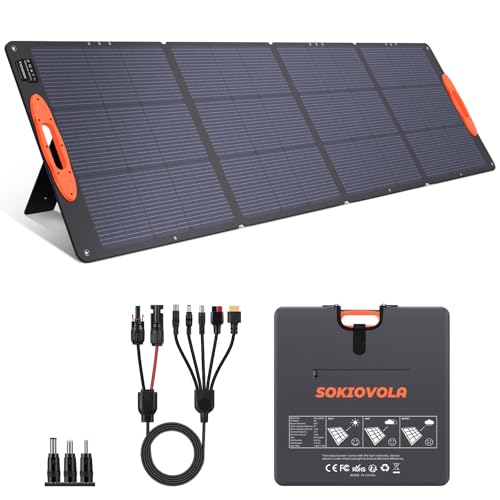
SOKIOVOLA N-Type 16BB 220W Portable Solar Panel for EF/Jackery/Bluetti/Anker Power Station

FlexSolar 100W Portable Solar Panel – 24% High Efficiency
More Details On Our Top Picks
Delta 3 Classic suits you when backup power has to behave like a household tool, not a science project. The 1024Wh battery gives you a meaningful reserve, while the 1800W AC output and 3600W surge rating make it easier to cover more demanding appliances than the smaller travel units below.
The 100W USB-C port helps with modern laptops and fast-charging gadgets, and the 10ms UPS feature means it can bridge a short switchover for gear that dislikes sudden dropouts. The 220W panel adds a practical charging path for camping or emergency use, though the larger station body naturally asks for more storage space.
Strong Points
- Large 1024Wh capacity supports longer gap-filling between charges.
- 1800W AC output covers many home appliances more comfortably.
- 10ms UPS support matters for sensitive electronics in a power cut.
- 100W USB-C output suits newer laptops and mobile gear.
- Included solar panel keeps the setup more self-contained for travel.
Things To Consider
- The larger format takes more room than the smaller Anker and FlexSolar picks.
- Portability is good for a power station, though not featherweight.
- Solar use still depends on sun, angle, and open placement.
Feature Snapshot
Who It Suits Best
You fit this pick best when you want a single portable system for outage backup, cabin use, or car-camping with real household-level headroom.
A Better Fit Elsewhere
SOKIOVOLA N-Type 16BB 220W Portable Solar Panel for EF/Jackery/Bluetti/Anker Power Station suits travelers who already own a compatible station and want a lighter panel-first setup.
This foldable 200W panel feels aimed at campers who want a usable charging surface without lugging a rigid panel rack. The ETFE layer, a tough fluorine-based surface film, helps the panel hold up better than plain fabric-style builds, and the four kickstands plus angle guide make placement less fussy in a driveway or at a campsite.
Type-C output rated at 60W and QC3.0 support add convenient direct charging for small devices, which is handy during short stops or storm prep. The flip side is that a panel like this still depends on sun exposure and a sensible setup angle, so shade or cramped parking can cut into its usefulness fast.
Highlights
- 24% efficiency helps make the most of available sunlight.
- ETFE surface adds a tougher feel for regular outdoor use.
- Foldable layout stores more easily than rigid solar panels.
- Four kickstands help you adjust placement with less guesswork.
- QC3.0 and Type-C output cover small-device charging on the go.
Points To Note
- 200W output is useful, though not enough for larger household backup loads.
- Foldable panels still need careful handling during packing and transport.
- Ground placement and cleaning matter, especially after dusty trips.
At A Glance
Built With In Mind
You fit this panel best when your routine involves camping, RV stops, or backup charging for a compact power station.
Where A Sibling Pick Shines
FlexSolar 100W Portable Solar Panel – 24% High Efficiency is the easier carry for solo travelers who care more about small size than panel output.
Anker keeps this one compact at 192Wh, so it fits the kind of carry-on style backup setup you’d want for travel, short outages, or a packed car trunk. Compared with the larger EcoFlow station, it’s clearly the lighter-duty option, but that’s also why it’s easier to stash beside luggage or a work kit.
The LiFePO4 battery chemistry is a long-life lithium-iron-phosphate design, which tends to suit repeated use and regular top-ups better than older battery types. You may still find the smaller capacity limiting for bigger appliances, yet for phones, tablets, cameras, and similar gear, the balance feels sensible.
Reasons To Buy
- 192Wh capacity keeps the unit compact and simple to carry.
- LiFePO4 battery chemistry suits repeated charge cycles well.
- Paired solar panel gives you a cleaner travel-ready package.
- Small footprint works well in cars, tents, and storage bins.
Softer Spots
- Lower capacity limits longer runtime for bigger gear.
- DC-focused design is better for small electronics than heavy appliances.
- Frequent packing calls for careful cable storage so nothing gets tangled.
- 60W panel output is useful, though slower than larger panel setups.
Core Details
Whose Shelf It Belongs On
You fit this pick best when your backup needs stay light, portable, and mostly centered on small electronics.
Another Choice May Suit
EF ECOFLOW Delta 3 Classic with 220W Solar Panel works better for households that want more AC output and a much bigger reserve.
STAR is the scale play in this group, and that matters the moment you move from portable backup to roof, marine, or off-grid installs. The frame-less design means less of the bulky edging you see on many conventional modules, while the monocrystalline cells, a single-crystal silicon panel type, are aimed at higher conversion in a fixed installation.
Compared with the portable panels here, this set is far less about grab-and-go convenience and far more about installed output. The maintenance-free framing claim sounds attractive for long-term placement, though you still need proper mounting, wiring, and cleaning to keep the system working as intended.
Best Bits
- 990W total output suits larger installed power goals.
- Frame-less design helps create a cleaner installation look.
- Monocrystalline construction fits fixed setups that value conversion efficiency.
- Works across RV, marine, roof, home, and off-grid use cases.
Room For Improvement
- This is an installation panel, not a portable carry-along choice.
- Two-panel format needs proper mounting space and planning.
- Cleaning and wiring still matter for long-term performance.
Quick Facts
Right Fit For
You fit this panel set best when you’re planning a roof, RV, marine, or off-grid installation with serious power needs.
Look Elsewhere When
200W Portable Solar Panel for Power Station, 24% High Efficiency ETFE Foldable Solar Panel Charger is the easier path for campers who need foldable portability first.
This kit appeals to you when you want the solar parts bundled together instead of sourcing each piece separately. The 400W total output, 40A MPPT controller, and Bluetooth module point toward a setup that’s meant to be managed, monitored, and expanded with less guesswork than a bare panel purchase.
MPPT stands for maximum power point tracking, a controller method that helps pull usable power more efficiently as sun conditions shift. That’s valuable in an RV, boat, or camper, though the trade-off is that a full kit asks for more installation attention than a simple foldable panel.
Upsides
- Four 100W panels give you a structured 400W system.
- 40A MPPT controller adds smarter power handling for changing light.
- Bluetooth module supports easier monitoring in a vehicle or cabin setup.
- Z brackets help with mounting in a fixed installation.
Small Caveats
- Installation takes more planning than a plug-and-play portable panel.
- Fixed kits need solid mounting and cable routing.
- Best results come from careful angle and placement choices.
Details At A Glance
The Right Fit
You fit this kit best when you’re setting up a 12V RV, camper, boat, or small off-grid system and want the core pieces together from day one.
Swap It Out When
STAR 990 Watt Solar Panel, 2PCS 495W 48V/24V Solar Panels makes more sense for larger installed systems that need far more output.
SOKIOVOLA is the compatibility-first option in the lineup, because it’s built for popular portable power station brands and skips the guesswork of a generic panel. The N-Type 16BB cell design points to a high-efficiency layout, and the ETFE face plus IP68 rating make it feel geared toward rough weather and dusty trail use rather than tidy patio sessions.
That IP68 rating means the enclosure is built to handle strong dust protection and deeper water exposure than lighter outdoor panels, though you still should not treat any solar gear as something to leave carelessly exposed. For road trips and camp weekends, the foldable format makes storage easier, but the 220W panel still asks for enough open ground to sit properly.
Positives
- 220W output fits a solid portable charging setup.
- Brand-targeted compatibility simplifies pairing with common power stations.
- ETFE surface suits repeated outdoor handling.
- IP68 protection rating gives added confidence in harsh conditions.
- Foldable form helps with storage in a vehicle or camper.
Honest Caveats
- Higher output usually comes with a larger footprint.
- Compatibility still depends on the station and cable setup you own.
- Folded panels need space and care during packing.
Feature Rundown
Perfect Match For
You fit this panel best when you already use an EF, Jackery, Bluetti, or Anker station and want a tougher foldable partner.
Where Shoppers Go Wrong
FlexSolar 100W Portable Solar Panel – 24% High Efficiency makes more sense for people who want a smaller, easier carry for short trips.
FlexSolar feels built for the person who wants a compact panel that can live in a trunk, a camper bin, or a storm kit without much fuss. At 100W, it sits well below the larger portable options here, but that’s exactly why it stays approachable for light charging and smaller stations.
The IP67 waterproof rating, a step down from full submersion-focused designs but still strong for outdoor weather exposure, gives you added peace of mind in wet campsites or damp storage. QC3.0 plus USB-A, USB-C, and DC output also makes the panel more flexible for direct device charging, though you’ll still want to keep expectations modest with its smaller wattage.
Standout Traits
- 100W size keeps the panel easy to pack and carry.
- 24% efficiency helps it make useful power from limited sun.
- IP67 rating adds solid weather protection for portable use.
- USB-A, USB-C, and DC output broaden direct charging options.
- Works well as a backup panel for small power stations.
Areas To Watch
- 100W output suits light use more than larger backup demands.
- Smaller panel area means setup position matters even more.
- Direct-output convenience does not replace a larger battery bank.
Feature Card
The Right Fit
You fit this panel best when your solar setup stays small, portable, and easy to store between trips or outages.
Where Another Pick Suits Better
200W Portable Solar Panel for Power Station, 24% High Efficiency ETFE Foldable Solar Panel Charger suits campers who want more charging headroom from a similar portable format.
How To Choose The Right Most Efficient Solar Powers
Match Output To Your Real Load
Start with the devices you actually want to run, not the biggest number on the box. A 100W panel such as FlexSolar works for smaller stations and direct charging, while a 990W fixed array from STAR belongs in a much larger setup.
Portable stations sit in the middle. EF ECOFLOW covers more home-style backup, and Anker keeps things light for phones, tablets, and travel gear.
Look Past Wattage And Check The Build
Wattage tells only part of the story. ETFE, monocrystalline cells, and N-Type 16BB layouts all point to different durability and efficiency trade-offs, so the material stack matters as much as the headline output.
Foldable panels help on road trips, but rigid or frame-less modules usually make more sense once the system stays in one place. That’s the difference between a trunk-friendly panel and a roof-ready installation.
Think About Compatibility And Setup Effort
Portable panels work best when the connector style matches your power station, and that’s why SOKIOVOLA stands out for popular brands. ECO-WORTHY goes further by bundling the controller, Bluetooth module, and mounting parts, which reduces separate shopping but raises install effort.
For most backyards and RV builds, the honest read is simple: easier setup usually means less flexibility. More complete kits ask for more planning, yet they can save a lot of guesswork later.
Choose For Storage, Travel, Or Installed Use
A compact station like Anker disappears into a car or closet more easily than EcoFlow’s larger backup unit. On the other end, STAR is built for fixed placement, so you need mounting room and a place where you’re happy to leave it.
Pick the format that fits your routine, not the one that looks most powerful on paper. A solar system that lives comfortably in your space gets used more often, and that’s the part that matters.
Things Worth Knowing First
Mistakes Worth Dodging
Many shoppers chase raw wattage and ignore port layout, battery chemistry, or storage space. That leads to awkward setups that are too big, too slow, or simply mismatched to the station already in the closet.
Another common miss is overlooking panel placement. A foldable panel needs clear sun and an open surface, while an installed array needs mounting, cabling, and a plan for cleaning dust or salt residue.
The Upgrade Payoff
Higher-tier models cost more because you’re paying for capacity, tougher materials, better charge handling, or installation hardware. EF ECOFLOW’s larger station and ECO-WORTHY’s bundled controller are good examples of where the extra spend goes.
The upgrade makes sense when you need fewer compromises. If your setup covers household backup, repeated travel use, or a fixed roof system, the extra money usually buys easier ownership rather than just a bigger number.
Frequently Asked Questions
What size solar setup works for camping?
For light charging, 100W to 220W is usually the more practical range. Larger needs, such as appliances or extended backup, call for a much bigger station or panel array.
Are foldable panels hard to store?
They store more easily than rigid panels, which is the main reason many campers choose them. The trade-off is that you need to protect hinges, cables, and the folded surface during transport.
Does waterproofing matter for solar gear?
Yes, because weather exposure is part of real use in campsites, boats, and driveways. Higher protection ratings help with rain and dust, but careful storage still matters.
Why choose LiFePO4 battery chemistry?
LiFePO4, or lithium iron phosphate, is a battery type known for being suited to repeated use. It fits portable power stations that you plan to charge and discharge often.
Is a controller important in a kit?
It matters a lot in a fixed setup because it helps manage how solar power moves into your system. A bundled controller also removes one more compatibility decision from the process.
Closing Thoughts
Your best solar setup depends on how you live, not just how much wattage looks impressive. A compact panel suits travel, a larger portable station fits outage backup, and a fixed array belongs where you can mount it once and leave it alone. The right choice feels easy to store, easy to place, and easy to use again next week. That’s the real measure worth keeping in mind.
