

Long travel days, camping weekends, and stormy backup situations all feel easier when your charge setup is simple. The right battery solar power bank keeps phones, earbuds, and small gadgets alive without turning your bag into a tangle of cords. You’ll see compact picks with built-in leads, larger stations with AC output, and a few hybrid options that suit very different routines.
Quick Look At Our Shortlist

MINRISE Solar Power Bank 40000mAh with 4 Cables

ZeroKor Portable Power Station with 40W Solar Panel
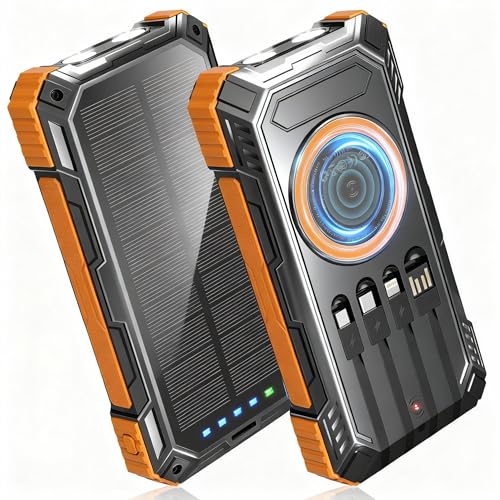
BLASOUL Solar Power Bank 49800mAh Wireless Charger

BLAVOR Solar Power Bank with Hand Crank 20000mAh

Anker SOLIX C200 DC Power Bank Station with 60W Solar Panel
TRASHBINEAN Solar Power Bank 49800mAh Wireless Charging

Luvknit Solar Charger Power Bank 20000mAh
More Details On Our Top Picks
Built-in cables make this MINRISE pick easier to live with than a plain slab-style pack, especially in a car, backpack, or carry-on. The 40,000mAh capacity gives you a lot of headroom for phones and tablets, while the 20W PD, or Power Delivery, output helps keep charging from feeling slow.
The trade-off is size, because a larger battery and extra cord storage usually mean more bulk in daily carry. You may also find the flashlight feature most useful for camping or power outages, not desk use, which is where the simpler Luvknit and Luvknit-style compact options make more sense.
What We Like
- Built-in cables reduce cord clutter on trips.
- USB-C in and out adds practical flexibility.
- Large capacity suits long days away from outlets.
- Flashlights help in tents or outage kits.
Points To Note
- Higher capacity usually means a thicker carry.
- Extra parts can make pocket storage awkward.
- Flashlight value depends on your routine.
Feature Snapshot
Who It Suits Best
Travelers, campers, and phone-heavy commuters get the most from this one, especially when cable organization matters as much as capacity.
Where A Sibling Pick Shines
Luvknit Solar Charger Power Bank 20000mAh fits you better when compact carry matters more than maximum reserve.
ZeroKor moves beyond phone charging and into small-appliance territory thanks to the AC outlet, which is a standard household-style socket. That makes it better suited to a campsite table or an outage shelf than the pure power-bank style of MINRISE, especially for folks who want a more station-like setup.
The 40W panel and 146Wh battery give you a compact solar generator format without the footprint of a full-size home backup unit. The honest read is that this kind of system asks for more storage space and a bit more setup, so it suits campers and RV users more than quick-grab daily carry.
Highlights
- AC outlet broadens what you can power.
- 146Wh capacity suits modest backup needs.
- Panel included, so the bundle is simpler.
- Good match for RV shelves and campsites.
Small Caveats
- More of a station than a pocket pack.
- Setup takes more space than slim chargers.
- Best fit depends on your outlet needs.
Core Details
Made For
Campers, RV users, and households that want a backup station for small devices will get the most from this format.
Another Choice May Suit
BLASOUL Solar Power Bank 49800mAh Wireless Charger suits you better for lighter carry and simpler phone charging.
BLASOUL leans hard into capacity, and that matters when you spend full days away from outlets or keep several devices in rotation. The wireless pad, built-in cables, and 22.5W output make it feel like a loaded travel hub rather than a bare backup battery.
Compared with the ZeroKor station, this one stays in the portable charger lane, so it’s easier to toss in a daypack. The trade-off is that wireless charging can be slower and less efficient than a direct cable, so you’ll get the most from it when convenience matters more than absolute speed.
Upsides
- Large 49800mAh reserve supports long outings.
- Wireless pad cuts cable juggling for compatible phones.
- Built-in cords help keep packing simple.
- 22.5W output gives it useful charging pace.
- USB-C PD 3.0 adds modern device support.
Areas To Watch
- Wireless charging is handy, yet not always the fastest route.
- Large capacity usually brings extra weight.
- Built-in parts can make cleaning and packing a little more involved.
Quick Facts
Who Will Love This
Heavy phone users, hikers, and campers who like a packed feature set will get the most from this unit.
Look Elsewhere When
Luvknit Solar Charger Power Bank 20000mAh suits a slimmer bag better when you care more about carrying less.
This BLAVOR model stands out because the hand crank adds a backup path that the earlier picks don’t offer. That matters most in emergency kits, since the 20,000mAh size is easier to store than the bigger 40,000mAh and 49,800mAh units.
The camping light also makes it feel more survival-ready than commuter-friendly, which is a fair trade-off. In a glove box or a household outage bin, that extra versatility pays off; in a slim work bag, the extra features may feel like more than you need.
Bright Spots
- Hand crank gives you a backup charging route.
- Camping light adds useful utility after dark.
- Four cables reduce the need for extras.
- 20,000mAh keeps the size manageable for storage.
Softer Spots
- Emergency tools add bulk you may not use daily.
- More features mean more parts to keep track of.
- Best fit leans toward preparedness, not minimal carry.
Details At A Glance
The Right Fit
You’ll like this most for emergency kits, road trips, and camping bags where backup features matter.
Swap It Out When
MINRISE Solar Power Bank 40000mAh with 4 Cables suits you better when capacity matters more than hand-crank support.
The Anker SOLIX setup sits in a different tier from the pocket-style chargers because it pairs a 192Wh station with a 60W panel. That combination suits campsites, traveling setups, and outage prep where you want something more structured than a battery pack with cables.
The LiFePO4, or lithium iron phosphate, battery chemistry usually appeals to people who expect regular use and want a steadier ownership story than bargain-grade cells. The trade-off is cost and size, so this feels right for people who genuinely need a power station rather than a throw-it-in-your-bag charger.
Reasons To Buy
- Station format supports a wider use profile.
- 60W panel gives the bundle stronger solar support.
- 192Wh capacity suits longer off-grid stretches.
- LiFePO4 chemistry is a meaningful upgrade point.
- Good fit for camps, travel, and preparedness.
Room For Improvement
- More capable gear usually takes more space.
- Better suited to planned setup than casual carry.
- The feature set may be more than basic phone users need.
Technical Sheet
Best Suited To
You’ll appreciate this most for RV trips, camping setups, and backup plans that need a real station instead of a pocket battery.
Reach For A Different Pick When
BLASOUL Solar Power Bank 49800mAh Wireless Charger fits better for lighter carry and simpler phone-first use.
TRASHBINEAN lands in a familiar spot, but the mix of wireless charging, four built-in cables, and USB-C support gives it broad everyday usefulness. For mixed-device households or campers who hand the same pack around, that flexibility can be more useful than a pure capacity headline.
It shares the same large-capacity feel as BLASOUL, yet the 15W wireless side suggests a gentler approach for supported phones. The honest read is that this makes it handy, not flashy, which is often the point for a travel battery you’ll actually keep packed.
Standout Traits
- Wireless charging adds convenience for supported phones.
- Four cables reduce the need for extras.
- Large capacity works well for longer trips.
- USB-C support keeps it current with newer gear.
Worth Noting
- More built-in parts can mean more upkeep.
- Large packs take more room in carry-on bags.
- Wireless output is handy, yet direct cable use stays the practical path.
Feature Rundown
Whose Shelf It Belongs On
This fits people who keep a travel-ready charger in a car, daypack, or emergency bin and want broad compatibility.
Another Choice May Suit
MINRISE Solar Power Bank 40000mAh with 4 Cables is the cleaner fit when you want similar convenience with a slightly simpler feature mix.
Luvknit is the easiest carry in this lineup, and that alone makes it useful for lighter travel days. The 20,000mAh size, three built-in cables, and USB-C input point toward simple, everyday phone support without the bulk of the larger packs.
Compared with the MINRISE and TRASHBINEAN options, this one trims the feature load a bit and keeps the shape friendlier for handbags, glove boxes, and small backpacks. You may find the dual flashlights handy in a pinch, though most people will choose it mainly for the smaller footprint.
Best Bits
- Compact size suits lighter travel loads.
- Three built-in cables help avoid cord clutter.
- USB-C input keeps recharging straightforward.
- Dual flashlights add useful backup utility.
Minor Gripes
- Smaller capacity means less reserve than the larger picks.
- Less feature density than the most loaded options.
- Best for mobile carry, not long off-grid stays.
Key Specs
Built With In Mind
This suits commuters, weekend travelers, and anyone who wants a smaller backup charger with built-in cord help.
Where Shoppers Go Wrong
BLAVOR Solar Power Bank with Hand Crank 20000mAh fits better for emergency-minded storage, especially when a crank and camping light matter more than size.
How To Choose The Right Battery Solar Power Banks
Capacity, Size, And Carry Comfort
Capacity, usually shown in milliamp-hours or mAh, tells you how much stored charge the pack can hold. Larger numbers matter for longer trips, but they also tend to bring more weight and a thicker body.
You’ll notice that the 20,000mAh options are easier to slip into a day bag, while the 40,000mAh and 49,800mAh picks feel more like travel companions than pocket gear. That trade-off matters most on commutes, flights, and hikes where every ounce starts to count.
Output Type And Device Match
Look closely at output type, because USB-C, wireless charging, built-in cables, and AC outlet support all solve different problems. USB-C is the most broadly useful for modern phones and tablets, while wireless charging is about convenience and AC output is about powering gear that needs wall-style power.
A family car kit benefits from built-in cables, but a campsite setup may need the AC outlet on ZeroKor or the station-style Anker option. Matching the output to your devices keeps you from overbuying features you won’t use.
Solar Role Versus Everyday Charging
Solar in this category usually works best as a backup charging path, not as the only way you keep power flowing. That means panel size, battery size, and your expected time outdoors matter more than the marketing language around sunlight.
If you want a charger for daily desk use, the solar panel may be secondary. If your routine includes camping, RV travel, or outage prep, a paired panel and a larger battery start to make much more sense.
Small Features That Change Daily Use
Built-in cables sound minor until you stop hunting through a bag for the right cord. Flashlights, hand cranks, and battery chemistry also affect how comfortable the pack feels after months of ownership.
LiFePO4 chemistry on the Anker unit points toward a more advanced battery build, while hand-crank support on BLAVOR adds a backup option for emergency kits. Those details won’t matter to everyone, but they can be the difference between a charger you stash and one you actually rely on.
Things Worth Knowing First
Common Shopping Slip Ups
Many people focus on capacity and ignore shape, which leads to a pack that’s too bulky for the bag it lives in. Others buy solar-charging gear expecting the panel alone to do all the work, which sets the wrong expectation from the start.
Another common miss is skipping the output type. A simple phone user does fine with USB-C and a few built-in leads, while someone with a campsite or outage plan may need an AC outlet or a station format instead.
The Upgrade Payoff
Higher-tier models usually cost more because they add stronger battery chemistry, bigger solar panels, and more flexible output options. You’re not just paying for stored charge, you’re paying for the kind of use the unit can handle without feeling fragile or narrow.
That upgrade starts to make sense for RV trips, regular camping, or home backup planning. For quick phone top-offs, the simpler packs stay easier to carry and easier to live with.
Frequently Asked Questions
Can a solar power bank charge well indoors?
Yes, most people use the wall or USB input for routine charging and treat solar as backup support. Indoor light is usually too weak to make solar charging practical.
Is 20,000mAh enough for travel?
It’s a comfortable middle ground for many short trips and daily carry needs. You get useful reserve without jumping into the bulk of the larger packs.
What does PD mean on these chargers?
PD stands for Power Delivery, a charging standard that supports faster and smarter power transfer on compatible devices. It matters most when you want quicker phone or tablet charging through USB-C.
Why choose a power station over a power bank?
A power station usually gives you more output options, including AC, which helps with gear that needs wall-style power. A power bank stays simpler and easier to carry.
Do built-in cables help in daily use?
They help a lot when you hate carrying separate cords or share the pack across devices. The trade-off is that fixed cables can add bulk and are harder to replace than loose leads.
Closing Thoughts
You can keep this choice simple: smaller packs suit daily carry, larger power banks suit travel, and power stations suit campers or outage prep. The best match depends on how many devices you carry, how often you’re away from outlets, and whether you value a lighter bag or a bigger reserve. That’s the real split in this category. Once you sort that out, the right pick usually stands out fast.
