

RV power gets a lot easier once you match the generator to your rig, your hookups, and the places you actually stop. A solid 50 amp-capable unit can keep larger trailers, backup circuits, and longer stays from feeling like a constant balancing act. The picks below lean toward cleaner output, remote starts, fuel flexibility, and the kind of capacity that fits real travel or home-backup use.
You’ll also see a few smaller options in the mix, because not every setup needs the heaviest frame on the lot. For weekend camping, tailgates, or lighter emergency coverage, a more compact inverter can make more sense than a hulking machine.
Quick Look At The Shortlist

Westinghouse 12000 Peak Watt Dual Fuel Portable Inverter Generator
AIVOLT 8000W Dual Fuel Inverter Generator 50A RV Generator
AIVOLT 11250W Dual Fuel Inverter Generator 50A for Home Backup

Champion Power Equipment 4000-Watt Dual Fuel RV Ready Portable Inverter Generator

Westinghouse 8200 Peak Watt Tri-Fuel Portable Inverter Generator

DuroStar DS13000MX 13,000-Watt 500cc Dual Fuel Portable Generator

Oxseryn 5000-Watts Portable Inverter Generator
More Details On Our Top Picks
For larger RVs and backup-minded setups, this Westinghouse makes sense because it brings dual-fuel flexibility, remote electric start, and transfer-switch readiness into one package. Low total harmonic distortion, or THD, matters here since it points to cleaner output for sensitive gear, and the parallel-capable design gives you room to grow.
The trade-off is size and weight, which usually come with this much capacity. That said, the CO sensor adds a practical layer of awareness, and the gas-plus-propane setup gives you more breathing room during long stops or storm prep.
Strong Points
- Dual-fuel operation gives you more fueling options during travel or home outages.
- Remote electric start makes setup less awkward when the unit sits outside the rig.
- Transfer-switch readiness suits backup wiring without extra fuss.
- Low THD output is a better fit for electronics and modern appliances.
- Parallel capability leaves room for expansion later on.
Things To Consider
- Its larger frame will take more storage space in a garage or RV compartment.
- Dual-fuel convenience is helpful, although fuel planning still takes attention.
- Heavier machines like this are less casual to move around camp.
Feature Snapshot
Who It Suits Best
You’re the right fit for this one if your RV or backup setup needs serious output and you want cleaner inverter power for more than just basic charging.
A Better Fit Elsewhere
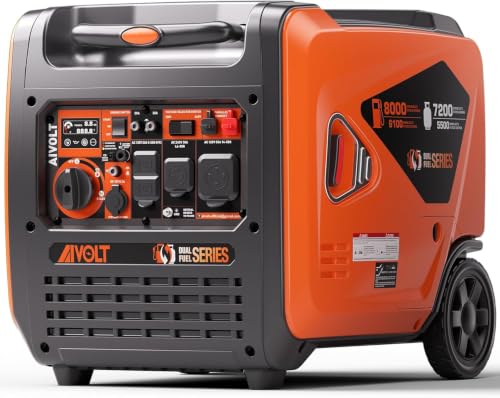
AIVOLT 8000W Dual Fuel Inverter Generator 50A RV Generator suits campers who want a 50 amp-ready option with a quieter footprint and less bulk.
This AIVOLT lands in a sweet spot for campers who want 50 amp RV support without jumping straight to the biggest frame in the group. The 120V/240V output gives it more flexibility for mixed loads, and the 62 dBA noise figure points to a calmer campsite presence than many bulkier gas-first units.
Wheels help with yard-to-patio moves, which matters more than people expect once you’re dealing with a heavy portable generator. The honest read is that its size still asks for some storage planning, but the clean inverter power and electric start make day-to-day use feel less fussy.
What We Like
- 50 amp RV support fits larger hookups with less guessing.
- Dual-fuel operation gives you a backup fuel path.
- 120V/240V output broadens what you can power.
- Electric start simplifies use for travel days and storm prep.
- Wheels make repositioning easier on hard surfaces.
Worth Noting
- Its footprint still needs room in a trailer, shed, or garage.
- Noise is moderate for the class, yet not invisible at a quiet campground.
- Wheeled portability helps, though steep ground can still be awkward.
At A Glance
Who Will Love This
You’re a strong match for this pick if your RV setup needs 50 amp support and you want quiet-leaning inverter power for travel or seasonal backup.
Where A Sibling Pick Shines
Westinghouse 12000 Peak Watt Dual Fuel Portable Inverter Generator suits you better if higher output and transfer-switch readiness matter more than a lighter footprint.
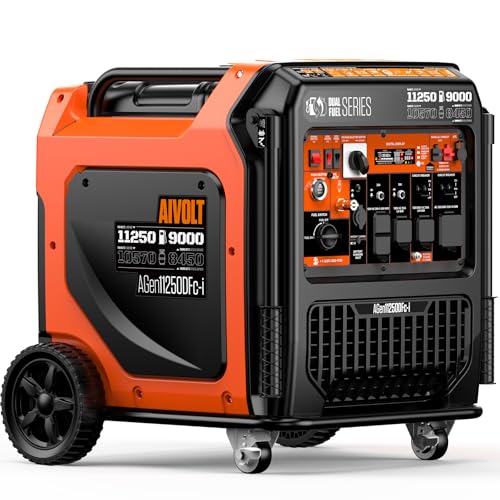
This AIVOLT feels aimed at serious home-backup planning first, with RV use as an added bonus rather than the whole story. Remote start, gas or propane fuel, and a 50A RV-ready setup make it a practical bridge between campsite duty and larger emergency coverage.
The EPA and CARB compliance notes matter for shoppers in regions with tighter equipment rules, and the CO shutoff adds another layer of awareness. Compared with the 8000W AIVOLT above, this one pushes harder for whole-home needs, so the extra capacity comes with a heavier-duty posture.
Bright Spots
- High output suits bigger backup loads at home.
- Dual-fuel design gives you more fuel planning flexibility.
- Remote start makes it easier to handle during outages.
- 50A RV readiness keeps it useful for travel too.
- Compliance notes help it fit stricter regional requirements.
Small Caveats
- Its larger role means more space and storage planning.
- Heavy-duty output can feel like overkill for short weekend camping.
- Propane and gas both need regular storage attention.
Details At A Glance
Built With In Mind
You’re the right match if you want one generator to serve a house outage plan and an RV hookup without settling for a smaller-capacity compromise.
A Better Fit Elsewhere
Champion Power Equipment 4000-Watt Dual Fuel RV Ready Portable Inverter Generator suits lighter travel setups where portability matters more than heavy backup capacity.
Champion’s smaller footprint makes it easier to picture in a travel trailer, garage shelf, or weekend camping kit. Quiet technology is the main draw here, and for many shorter trips that matters more than chasing a huge output number.
The three-year coverage mention adds peace of mind on paper, though you still get a more modest power ceiling than the larger units in this list. Compared with the Westinghouse and AIVOLT heavyweights, this one feels friendlier for casual RV use and lighter storage needs.
Best Bits
- Compact size is easier to store and move.
- Dual-fuel setup gives you another fuel path.
- RV-ready design fits travel use more naturally.
- Quiet operation is appealing near camp or home.
Areas To Watch
- Power capacity is more modest than the larger options here.
- Smaller output can limit what you run at once.
- Compact units still need regular fuel and oil attention.
Core Details
Made For
You’ll like this best for short RV trips, lighter power needs, and spaces where storage room matters as much as output.
Another Choice May Suit
Oxseryn 5000-Watts Portable Inverter Generator is a better fit if you want a little more capacity while still keeping the setup relatively manageable.
Three fuel sources change the conversation here, because you’re not locked into gas and propane alone. Natural gas support matters most for home backup planning, while remote electric start and transfer-switch readiness make the unit feel more settled into a larger system.
Compared with the dual-fuel Westinghouse above, this one gives you more fuel-path flexibility without jumping to the DuroStar’s heavier emergency-first stance. The trade-off is still a larger machine, so storage and movement deserve a little planning before it arrives.
Reasons To Buy
- Tri-fuel support gives you more options during outages or long trips.
- Natural gas compatibility is a strong home-backup advantage.
- Remote electric start lowers the hassle of getting it going.
- Transfer-switch readiness helps it fit backup wiring plans.
Softer Spots
- Three-fuel flexibility comes with more setup choices to manage.
- Larger body size can make storage less convenient.
- Heavier equipment usually asks for more careful maintenance routines.
Feature Card
The Right Fit
You’re in the sweet spot for this one if you want a versatile generator for RV travel and home backup, especially where natural gas is part of the plan.
Where A Sibling Pick Shines
AIVOLT 8000W Dual Fuel Inverter Generator 50A RV Generator is easier to justify for campers who want 50 amp support without adding natural gas into the mix.
Capacity is the main story here, and the DuroStar clearly leans into whole-home backup territory. The 500cc engine size tells you it’s built around stronger output rather than easy-carry convenience, so this is less about casual campground handling and more about serious outage coverage.
Remote electric start and transfer-switch readiness help it slot into a backup plan with less friction. The catch is that a machine this substantial asks for more room, more storage discipline, and a little more comfort with heavy equipment upkeep.
Upsides
- Large output suits home backup and RV use with margin to spare.
- Dual-fuel support gives you two practical fuel choices.
- Remote start makes it easier to bring online quickly.
- Transfer-switch readiness supports a more organized backup setup.
Room For Improvement
- The larger frame will take more storage space than the smaller picks.
- Heavy-duty equipment is less convenient for frequent moving.
- Big output can be more than many simple RV needs call for.
Technical Sheet
Whose Shelf It Belongs On
You’re the right fit if your main concern is whole-home backup and your RV use is part of a broader emergency plan.
Look Elsewhere When
Champion Power Equipment 4000-Watt Dual Fuel RV Ready Portable Inverter Generator is the easier carry for lighter travelers who only need modest camping power.
Oxseryn sits at the lighter end of this list, and that makes it appealing for smaller RV hookups or backup needs that don’t demand a giant machine. The ECO mode is a sensible touch for day-to-day efficiency, though the 30A outlet keeps it in a more modest lane than the 50A-focused models above.
At 60 pounds, it’s still portable in a real-world sense, not just on paper. The honest read is that you give up some headroom versus the larger Westinghouse and AIVOLT units, but you get a simpler, easier-to-handle package in return.
Positives
- More manageable weight makes storage and movement easier.
- ECO mode can help reduce fuel use during lighter loads.
- RV-ready design suits smaller travel power setups.
- Gas-only operation keeps fueling simple.
Points To Note
- 30A output places it below the 50A-capable picks for larger rigs.
- It is better suited to lighter power plans than full-house backup.
- Gas-only operation gives you fewer fueling choices than dual-fuel models.
Quick Facts
Who Should Grab It
You’re a good match if you want a simpler portable inverter generator for smaller RV needs and easier handling around the garage or campsite.
Swap It Out When
AIVOLT 11250W Dual Fuel Inverter Generator 50A for Home Backup suits you better if your RV also needs stronger home-backup capacity.
How To Choose The Right Rv Generator 50 Amps
Match Output To The Way You Travel
A 50 amp label only tells part of the story. You still need enough running capacity for the appliances you actually use, such as air conditioning, a charger, a microwave, or a small kitchen load while parked.
For long-haul travelers, the question is usually balance, not brute force. Bigger rigs and home-backup users benefit from higher output, while weekend campers often do better with a quieter, lighter inverter that still supports their hookup.
Look Closely At Fuel Flexibility
Dual-fuel and tri-fuel setups matter because they change how you plan around trips, storms, and storage. Gas is common, propane stores well for many setups, and natural gas can help in a fixed backup scenario.
The trade-off is complexity. More fuel options can mean more hoses, more switching, and more things to store neatly, so the extra flexibility only pays off when you’ll actually use it.
Check Noise, Start Method, And Output Quality
Quiet inverter units are usually easier to live with in campgrounds or close neighborhoods. Noise figures like 62 dBA give you a rough sense of volume, while remote electric start makes the unit more convenient when it sits outside the rig.
Clean inverter power matters for electronics because it helps keep output steadier than a basic open-frame design. That matters most for laptops, chargers, and modern appliances, while simple tool loads can be less demanding.
Think About Size, Storage, And Handling
A generator that fits your electrical needs but not your storage space becomes a hassle fast. Wheels, handles, and body weight all affect whether you’ll move it easily between the trailer, garage, and campsite pad.
Heavier models often reward you with more capacity and broader backup use. Smaller units are easier to store and handle, but they usually leave less room for future expansion.
What To Weigh Before You Choose
Where Shoppers Go Wrong
A common mistake is focusing only on the 50 amp label and ignoring the rest of the load picture. That can leave you with a hookup that fits, but not enough output for the appliances you want running at once.
Another slip-up is overlooking storage and movement. A generator can look great on paper and still be awkward in a narrow garage, a side compartment, or a campsite with little room to spare.
Where The Extra Money Goes
Higher-tier units usually bring cleaner inverter output, remote start, stronger build support, and more flexible fuel choices. That’s especially useful for travelers who want a machine that feels calmer to live with and easier to fold into a larger backup plan.
You also tend to pay for convenience features like wheels, transfer-switch readiness, or natural gas compatibility. For frequent use, those touches can matter more than a modest power bump.
Frequently Asked Questions
What does 50 amp RV ready really mean?
It means the generator is designed to work with a 50 amp RV hookup. That still doesn’t replace checking the total output and voltage your rig needs.
Is inverter power worth it for an RV?
Yes, because inverter output is steadier for electronics and many modern appliances. It also usually runs more quietly than a basic open-frame setup.
Should you choose dual fuel or tri fuel?
Dual fuel is simpler and covers the most common RV setups well. Tri fuel makes more sense for backup-minded use where natural gas becomes part of the plan.
How much size matters for travel use?
Size matters a lot because storage and movement are part of owning the unit. A lighter generator is easier to live with for short trips and smaller compartments.
Can a 50 amp generator also help at home?
Yes, especially the models that are transfer-switch ready. Those are the ones that fit more naturally into larger backup plans.
Closing Thoughts
The right Rv Generator 50 Amps setup depends on how much you travel, how much you store, and how much of your rig you want to power at once. Big dual-fuel and tri-fuel units suit serious backup planning, while smaller inverter models make more sense for lighter trips and easier handling. Start with the hookup, then match the capacity to your real daily load. That path usually leads you to the generator you’ll be glad to own.
