

Portable power feels very different once you need it for an outage, a weekend trip, or a garage setup that has to run more than a phone charger. You want enough output for the gear you actually use, a battery size that matches how long you stay off-grid, and solar pairing that does not turn setup into a chore. The eight picks below cover small travel units, mid-size camping stations, and heavy-duty home backup options. Some are light and easy to carry, others are closer to a household anchor.
Quick Look At Our Shortlist

Jackery Explorer 2000 v2 Portable Power Station 2042Wh 2200W AC Output

Portable Power Station with 40W Solar Panel 100W Solar Powered Generator

Anker SOLIX C300 Portable Power Station with 60W Solar Panel 288Wh 300W

Jackery HomePower 3000 and 2x200W Solar Panels 3072Wh 3600W AC Output

Jackery Solar Generator 300 and 40W Solar Panel 292Wh 300W AC

Jackery HomePower 3600 Plus Portable Power Station with 2X 200W Solar Panels 3600W AC Output 3584Wh LFP Solar Generator
BLAVOR Portable Power Station 1600W Peak 3200W Built-in Solar Panel 1024Wh LiFePO4 Battery 100W USB-C Fast Charge
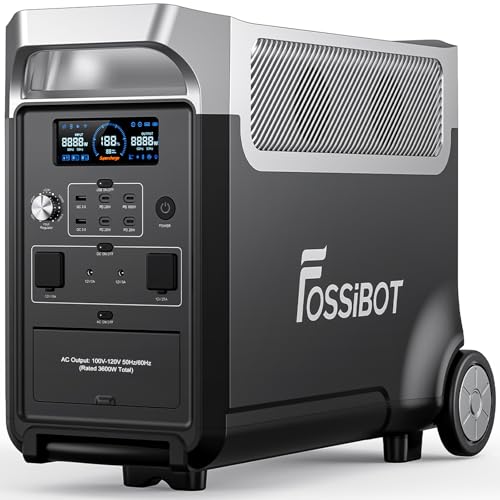
FOSSiBOT F3600 Portable Power Station 5x120V AC Output 3600W 3840Wh LiFePO4 Battery Expandable to 11520Wh
For you, this is the sort of station that makes sense when outages are more than a quick inconvenience. The 2042Wh battery and 2200W AC output give you room for larger household gear, while the LiFePO4 chemistry means lithium iron phosphate, a battery type known for stable long-cycle use and a practical fit for repeated charging.
Compared with the smaller Jackery 300 and the Anker C300, this one sits much closer to backup-power territory than travel territory. The trade-off is obvious: it takes up more space and asks more of your budget, but you get a lot more breathing room for fridges, routers, and camp setups that feel closer to car-camping base camp than a day pack.
Strong Points
- Large 2042Wh capacity supports longer sessions between charges.
- 2200W AC output opens the door to heavier home gear.
- USB-C PD 100W suits modern laptops and fast phone charging.
- LiFePO4 battery chemistry usually fits frequent use better than basic pack styles.
- A solid match for outage prep, not just weekend trips.
Things To Consider
- Its size makes it less handy for quick carry-in, carry-out use.
- Solar panel support is optional, so the full setup takes planning.
- Heavy loads can drain capacity faster than small-device use, which is normal for stations in this class.
Feature Snapshot
Who It Suits Best
You fit this pick best when you want a serious home-backup station that can also travel to a campsite or RV pad without feeling underpowered.
Where A Sibling Pick Shines
Jackery Solar Generator 300 and 40W Solar Panel suits you better for lighter carry and simpler charging needs.
This ZeroKor kit makes the most sense as a small backup bundle for phones, lights, and modest campsite electronics. The included 40W solar panel helps you stay mobile, and the 146Wh battery keeps the footprint far smaller than the Jackery 2000 v2 or HomePower units.
The honest read is that you are trading capacity for convenience, so large appliances are simply outside its lane. That said, for road trips, tailgates, and short outages, it keeps the setup simple and easy to stash in a car trunk or a closet shelf.
What We Like
- Small battery size keeps the kit easy to store and move.
- Included solar panel gives you a ready-to-use starter setup.
- DC battery pack design fits light electronics and portable charging.
- Works as a simple backup for short interruptions.
Minor Gripes
- 146Wh is modest, so runtime stays limited for heavier use.
- The 40W panel is more about topping up than fast recovery.
- You may find the smaller format less satisfying for family-level power needs.
Details At A Glance
Made For
You suit this pick best when you want a starter solar power kit for travel, short backup use, or a small kit bag.
Another Choice May Suit
Anker SOLIX C300 Portable Power Station with 60W Solar Panel is a stronger fit for you when you need more capacity without jumping to a full-size home unit.
The C300 sits in a sweet spot for you if the ZeroKor feels too small and the Jackery 2000 v2 feels like overkill. Its 288Wh LiFePO4 battery and 300W output are sized for laptops, phones, compact appliances, and the kind of backup use that keeps your desk or tent running without extra bulk.
Two-way fast charging matters here because it shortens the wait in both directions, which is helpful during travel days or brief outage windows. One thing worth considering is that the 300W ceiling keeps it in the small-device lane, but that also helps it stay approachable for everyday carry and storage.
Upsides
- 288Wh capacity gives more breathing room than tiny travel units.
- 300W output fits laptops and other moderate electronics.
- Peak 600W headroom helps with short bursts of demand.
- 140W two-way fast charging supports quicker turnaround.
Softer Spots
- It is still a compact station, so large appliances stay out of range.
- Panels and cables can add clutter if you store everything in one bag.
Core Details
Whose Shelf It Belongs On
You fit this model well when you want a compact station that feels useful for both desk work and weekend carry.
Where Shoppers Go Right Instead
Jackery Explorer 2000 v2 Portable Power Station 2042Wh 2200W AC Output is the better match for you if backup depth matters more than portability.
This Jackery setup leans hard into home backup, and that shows in the 3072Wh battery and 3600W AC output. The included 2x200W solar panels matter just as much, because you are getting a fuller starting point than the power stations that leave solar as an add-on.
Compared with the Explorer 2000 v2, this unit is the more household-focused choice, especially for refrigerators, routers, and other essentials that need more headroom. The trade-off is simple: it is less casual to move, but that extra weight brings a calmer feeling during power interruptions that stretch beyond a few hours.
Bright Spots
- 3072Wh capacity supports longer home-backup sessions.
- 3600W AC output handles a broad set of household equipment.
- 7200W surge rating helps with startup spikes.
- Two included 200W panels reduce the need to piece together a kit.
Areas To Watch
- Its size makes it more storage-minded than travel-minded.
- Home backup gear usually asks for a clear place to stage, charge, and move it.
At A Glance
The Right Fit
You fit this one best when you want serious backup for home essentials and do not want to assemble the solar side piece by piece.
Swap It Out When
Jackery HomePower 3600 Plus Portable Power Station with 2X 200W Solar Panels suits you better if expandable storage matters more than a bundled setup.
Lightweight carry is the whole point here. At 7.5 lb, the Explorer 300 is easy to move with camping gear, and the integrated handle helps it feel less awkward than many small power boxes that fight your grip.
The 292Wh battery and 300W output keep it aimed at laptops, cameras, drones, lights, and small devices rather than full household backup. That makes it a sensible match for travel and blackout basics, especially when you care more about simple packing than raw output.
Highlights
- 7.5 lb weight keeps carry-in simple.
- Integrated handle helps during hikes and campsite moves.
- 2 AC outlets plus USB-C and USB-A ports support multiple small devices.
- 120W car port adds flexibility for road travel.
- Pure sine wave AC output suits sensitive electronics better than rougher power shapes.
Small Caveats
- Its modest battery size fits short sessions rather than long outages.
- Heavy device loads are outside the comfort zone.
- Accessories can spread across a bag quickly, so storage organization helps.
Feature Rundown
Who Should Grab It
You fit this pick best when you want the least cumbersome option for camping, travel, or grab-and-go outage support.
Look Elsewhere When
Anker SOLIX C300 Portable Power Station with 60W Solar Panel suits you better once you want a little more capacity without leaving the small-station class.
This is the model you look at after you decide the usual portable stations are not enough. The 3584Wh LFP battery, 3600W AC output, and expandable capacity up to 21kWh point toward serious home backup, RV stays, and longer off-grid stretches.
Compared with the HomePower 3000, the big difference is headroom, especially for users who want room to grow into the system. The trade-off is that expansion only matters to you if you plan to build around it, so this station makes the most sense for households that know their power profile already.
Reasons To Buy
- 3584Wh battery gives generous starting capacity.
- Expandable design reaches far beyond a basic portable setup.
- 3600W AC output supports demanding household gear.
- Two 200W panels help anchor the solar side from day one.
- LFP battery format fits repeated home-backup use.
Room For Improvement
- Expandable systems ask for more planning than compact stations.
- It is better suited to a fixed storage spot than frequent lifting.
Technical Sheet
Best Suited To
You suit this station best when you want a long-range home backup path and like the idea of growing capacity over time.
Reach For A Different Pick When
Jackery HomePower 3000 and 2x200W Solar Panels is the simpler fit for you if you want a bundled backup setup without expansion planning.
BLAVOR takes a middle path that can suit both home backup and travel, especially for you if a 1024Wh battery feels like the right compromise. The built-in solar panel is the hook here, because it trims some of the extra setup that separate-panel kits ask for.
Compared with the Jackery 300, this model gives you much more output room, and compared with the FOSSiBOT F3600, it stays easier to imagine moving around the house or RV. The catch is that built-in solar convenience rarely replaces a larger external panel array, so the design favors simplicity over scaling.
Best Bits
- 1024Wh battery lands in a useful middle zone.
- 1600W output supports more demanding gear than compact units.
- Peak 3200W helps with short startup spikes.
- Built-in solar panel reduces the number of loose parts to manage.
- 100W USB-C fast charge helps with modern devices.
Points To Note
- Built-in solar convenience usually means less flexibility than separate panels.
- The station still asks for a clear storage place because of its size.
Core Details
Whose Shelf It Belongs On
You fit this pick best when you want a mid-size station that balances output, portability, and simpler solar setup.
A Better Fit Elsewhere
FOSSiBOT F3600 Portable Power Station suits you better when garage-style backup and much larger expandability matter more.
FOSSiBOT aims at serious output needs, and the five AC outlets make that plain. With 3600W of AC power, 3840Wh of storage, and expansion to 11520Wh, it speaks to garage use, off-grid living, and RV setups that need more than a casual weekend reserve.
Compared with the Jackery HomePower 3600 Plus, this pick feels especially strong on outlet count and expansion ceiling. The trade-off is that this much capability also means more station to manage, so it fits best where the power lives in one place for long stretches.
Positives
- Five AC outlets give you more room for multiple devices.
- 3600W output works well for larger loads.
- 3840Wh base capacity supports extended use.
- Expansion to 11520Wh gives real growth headroom.
- LiFePO4 battery format fits frequent cycling and long-term planning.
Honest Caveats
- The large format fits better in a fixed setup than a quick carry routine.
- Expansion is valuable only for you when you plan to build around it.
Feature Card
Built With In Mind
You fit this station best when you want a serious garage, home, RV, or off-grid power hub with room to grow.
Where A Sibling Pick Shines
Jackery HomePower 3600 Plus Portable Power Station with 2X 200W Solar Panels is the cleaner fit for you if you want a bundled home-backup path with less planning around expansion.
How To Choose The Right Portable Solar Power Generators
Match Battery Size To Your Real Routine
Battery capacity, measured in watt-hours, tells you how much energy the station stores before you need to recharge. A 292Wh or 288Wh unit suits phones, tablets, small lights, and a laptop session, while 2000Wh-plus models are far more comfortable for outage prep and larger electronics.
You get better value by matching capacity to the job instead of chasing the biggest number. A compact station is easier to live with every day, while a larger one makes sense when your gear list includes appliances, routers, or long nights away from shore power.
Check Output Before You Check Port Count
AC output, measured in watts, matters because it limits what can run at the same time. USB-C and USB-A ports are useful, but they do not replace enough AC output for a refrigerator, CPAP-style device, or power tool.
Peak output matters too, since some gear needs a quick startup burst before settling down. That is where the bigger Jackery and FOSSiBOT units separate themselves from the smaller travel picks, which stay better suited to electronics than hard-working appliances.
Decide How You Want To Charge
Solar panels are handy, but the panel wattage changes how practical charging feels in real use. A 40W panel is fine for slow topping up, while 200W panels or bundled pairs give you a much more realistic setup for frequent off-grid use.
LiFePO4 batteries add another layer of value for regular charging, because that chemistry is built for repeated cycling rather than occasional shelf use. For most homes and RVs, the better route is a station that charges the way you actually live, not one that looks good on a spec sheet.
Think About Carry, Storage, And Setup
Weight and size matter more than many shoppers expect, especially once a station has to move from closet to car to campsite. A 7.5 lb unit disappears into travel gear, while a 3000Wh class setup needs a real place in the garage or utility room.
The more solar panels and cables you add, the more setup space you need. That is fine for a fixed emergency kit, but it gets old fast in a crowded apartment or a small hatchback.
Things Worth Knowing Before You Choose
Mistakes Worth Dodging
It is easy to focus on battery size and forget the output limit, which leaves you with stored power that cannot run the gear you planned around. Another common miss is buying a station with solar support, then realizing the panel wattage is too small for practical recharging.
Storage matters too. A bulky unit that lives in a hard-to-reach closet tends to get used less often, while a smaller one stays close at hand and earns its space.
The Upgrade Payoff
Higher-tier stations cost more because they bring larger batteries, stronger AC output, and more durable battery chemistry. You are also paying for features that reduce friction, like bundled solar panels, faster charging, or expansion room for later.
That upgrade makes sense for home backup, RV travel, and off-grid workspaces where downtime hurts. For casual camping or phone charging, a smaller unit often feels smarter because it is easier to carry, store, and recharge.
Frequently Asked Questions
What size Portable Solar Power Generator suits a weekend camper?
A compact station around 288Wh to 300Wh usually covers phones, lights, cameras, and a laptop. The Jackery Solar Generator 300 and Anker SOLIX C300 sit in that helpful middle zone.
What does LiFePO4 mean?
LiFePO4 means lithium iron phosphate, a battery chemistry used in many modern portable stations. It is commonly chosen for regular cycling and long-term use patterns.
Do solar panels charge these stations quickly?
Panel wattage makes a big difference, so small panels take longer and larger panels recover power more comfortably. A 40W panel is fine for topping up, while 200W-class panels are better for more active use.
Can a portable power station run kitchen appliances?
Some larger models can handle certain kitchen gear, but the output rating has to match the appliance draw. High-capacity picks like the Jackery HomePower 3000 and FOSSiBOT F3600 are much better suited than compact travel units.
Which option works best for apartment storage?
The lighter picks are easier to tuck away, especially the Jackery Solar Generator 300 and the ZeroKor starter kit. Larger stations suit a garage or utility closet better than a tight shelf.
Final Verdict
Your best choice depends on how often you need power, what you need to run, and where the station will live between uses. The Jackery Explorer 2000 v2 gives you a strong balance of size and output, while the HomePower and FOSSiBOT options move into serious backup territory. Smaller units still make sense for travel, because carrying less is often the smartest form of convenience. Choose the one that fits your real routine, and the rest gets much easier.
